Archaeology – A Secret History episode 2 – The Search for Civilisation
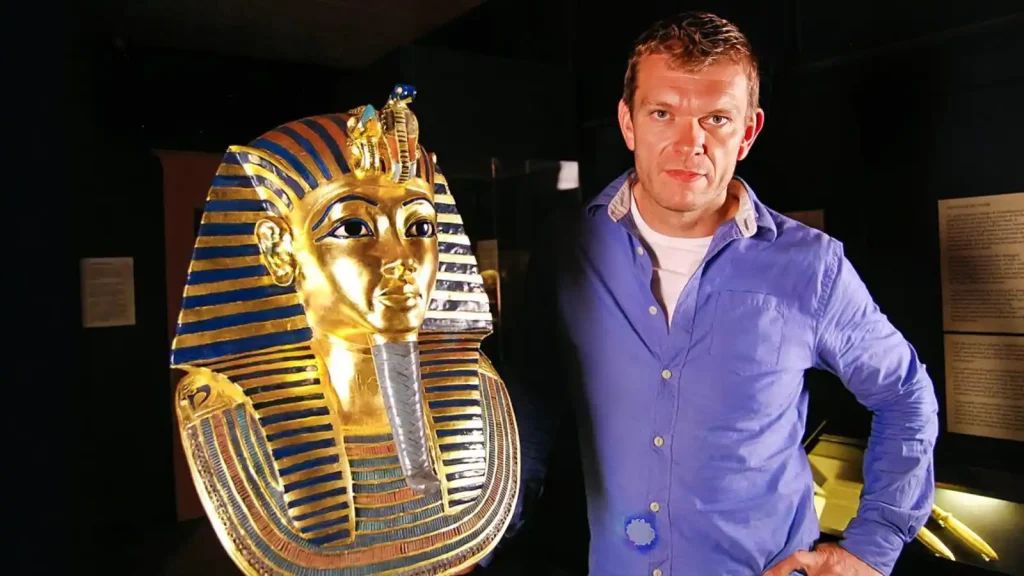
For centuries, humanity has been captivated by its own past. The desire to uncover lost worlds, understand ancient societies, and piece together the origins of civilisation has driven some of the most remarkable discoveries in history. In Archaeology: A Secret History – The Search for Civilisation, archaeologist Richard Miles takes us on a compelling journey through the groundbreaking moments of the 18th and 19th centuries—an era when the understanding of human history was dramatically reshaped.
The 18th and 19th centuries saw a surge in archaeological exploration, fueled by empires eager to assert cultural dominance. As European powers expanded their reach across continents, they not only sought territorial control but also coveted the past, competing to claim the most remarkable ancient treasures. Archaeology, once an amateur pursuit driven by curiosity, transformed into a strategic endeavor where nations vied to “own” history itself.
During this period, discoveries challenged long-held beliefs about the origins of civilisation. Until then, many Western scholars adhered to a Eurocentric view of history, assuming that great societies began in Greece or Rome. However, as explorers uncovered the ruins of Mesopotamia, Egypt, and the Indus Valley, the timeline of human development was pushed further back, revealing a far more complex and interconnected story.
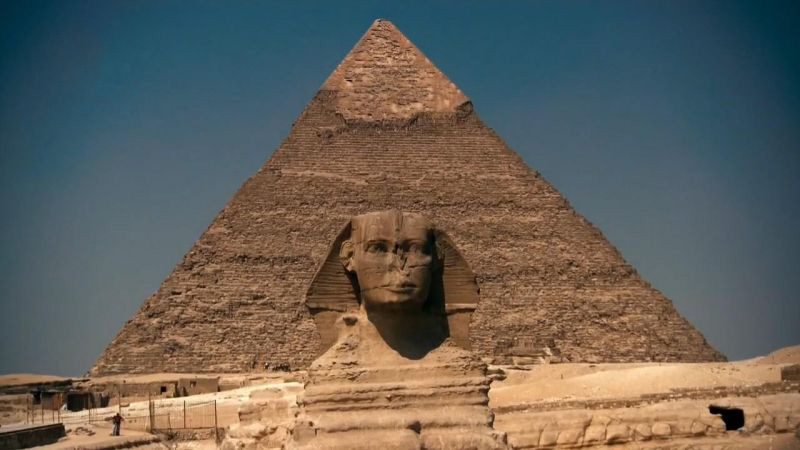
Richard Miles highlights the work of pioneering archaeologists whose findings altered the perception of history. One such figure was Giovanni Battista Belzoni, an Italian explorer whose expeditions in Egypt unearthed colossal statues, hidden tombs, and the famed temple of Abu Simbel. Despite his controversial methods—often employing brute force to extract artifacts—his discoveries provided invaluable insights into ancient Egyptian society.
Meanwhile, in Mesopotamia, the excavations of Austen Henry Layard revealed the splendor of the Assyrian Empire. His findings at Nineveh, including the vast library of Ashurbanipal, contained cuneiform tablets that shed light on early written language, governance, and mythology. These discoveries underscored the fact that complex societies thrived thousands of years before the rise of Greece and Rome.
Further east, excavations in the Indus Valley uncovered the cities of Harappa and Mohenjo-Daro, showcasing advanced urban planning, intricate drainage systems, and evidence of a sophisticated yet mysterious civilisation. Unlike the empires of Mesopotamia and Egypt, the Indus Valley people left behind no grand temples or royal tombs, challenging traditional ideas about power and governance in early societies.
The Changing Face of Archaeology
As the field of archaeology developed, so did the methods used to explore the past. In the early days, excavation was often a destructive process, driven by the desire to recover impressive artifacts rather than preserve historical contexts. However, as scholars recognized the value of careful documentation, archaeology became a more systematic and scientific discipline.
One of the major breakthroughs of the 19th century was the deciphering of ancient scripts. The Rosetta Stone, discovered in 1799, became the key to unlocking Egyptian hieroglyphs, allowing scholars like Jean-François Champollion to reconstruct the rich history of pharaohs, gods, and daily life along the Nile. Similarly, the work of Henry Rawlinson in decoding cuneiform scripts provided a window into the laws, literature, and religious beliefs of Mesopotamian civilisations.
These advancements not only deepened our understanding of early societies but also laid the foundation for modern archaeology. By integrating historical texts with material evidence, researchers began constructing a more nuanced picture of the past—one that went beyond myths and legends to reveal the true complexity of ancient civilisations.
The Legacy of Discovery
The discoveries of the 18th and 19th centuries reshaped the way humanity views its past. No longer could history be seen as a linear progression from simple to complex societies. Instead, the evidence pointed to a world where multiple civilisations flourished independently, each contributing to the broader human story.
Today, archaeology continues to evolve, with new technologies like satellite imaging, DNA analysis, and advanced dating methods allowing us to uncover even more secrets of our ancestors. Yet, the fundamental questions remain the same: Where did we come from? How did early societies develop? What can the past teach us about our future?
Through Archaeology: A Secret History – The Search for Civilisation, Richard Miles brings these discoveries to life, reminding us that history is not just about dates and artifacts—it is the story of human ambition, ingenuity, and the timeless quest to understand who we are.
Archaeology – A Secret History episode 2 – The Search for Civilisation
Archaeology is the study of human activity through the recovery and analysis of material culture. The archaeological record consists of artifacts, architecture, biofacts or ecofacts and cultural landscapes. Archaeology can be considered both a social science and a branch of the humanities. In Europe it is often viewed as either a discipline in its own right or a sub-field of other disciplines, while in North America archaeology is a sub-field of anthropology.
Archaeologists study human prehistory and history, from the development of the first stone tools at Lomekwi in East Africa 3.3 million years ago up until recent decades. Archaeology is distinct from palaeontology, which is the study of fossil remains. It is particularly important for learning about prehistoric societies, for whom there may be no written records to study. Prehistory includes over 99% of the human past, from the Paleolithic until the advent of literacy in societies across the world. Archaeology has various goals, which range from understanding culture history to reconstructing past lifeways to documenting and explaining changes in human societies through time.
Cradle of civilization
A cradle of civilization is a location where civilization is understood to have emerged. Current thinking is that there was no single “cradle”, but several civilizations that developed independently, with the Fertile Crescent (Ancient Egypt, Mesopotamia), Ancient India, and Ancient China understood to be the earliest. The extent to which there was significant influence between the early civilizations of the Near East and those of East Asia (Far East) is disputed. Scholars accept that the civilizations of Mesoamerica, mainly in modern Mexico, and Norte Chico, in the north-central coastal region of Peru, emerged independently from those in Eurasia.
Scholars have defined civilization using various criteria such as the use of writing, cities, a class-based society, agriculture, animal husbandry, public buildings, metallurgy, and monumental architecture. The term cradle of civilization has frequently been applied to a variety of cultures and areas, in particular the Ancient Near Eastern Chalcolithic (Ubaid period) and Fertile Crescent, Ancient India and Ancient China. It has also been applied to ancient Anatolia, the Levant and Iranian plateau, and used to refer to culture predecessors—such as Ancient Greece as the predecessor of Western civilization – even when such sites are not understood as an independent development of civilization, as well as within national rhetoric.