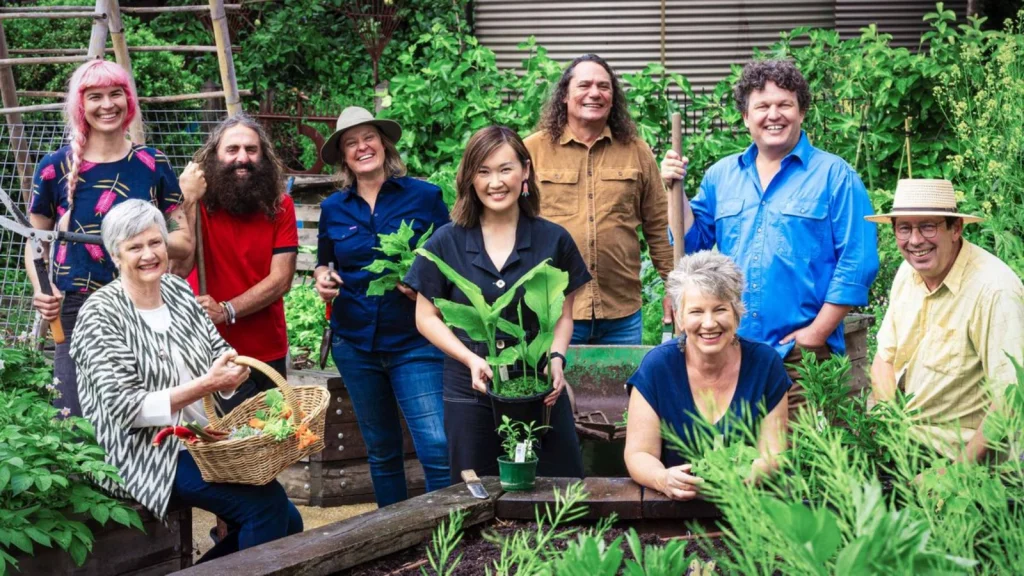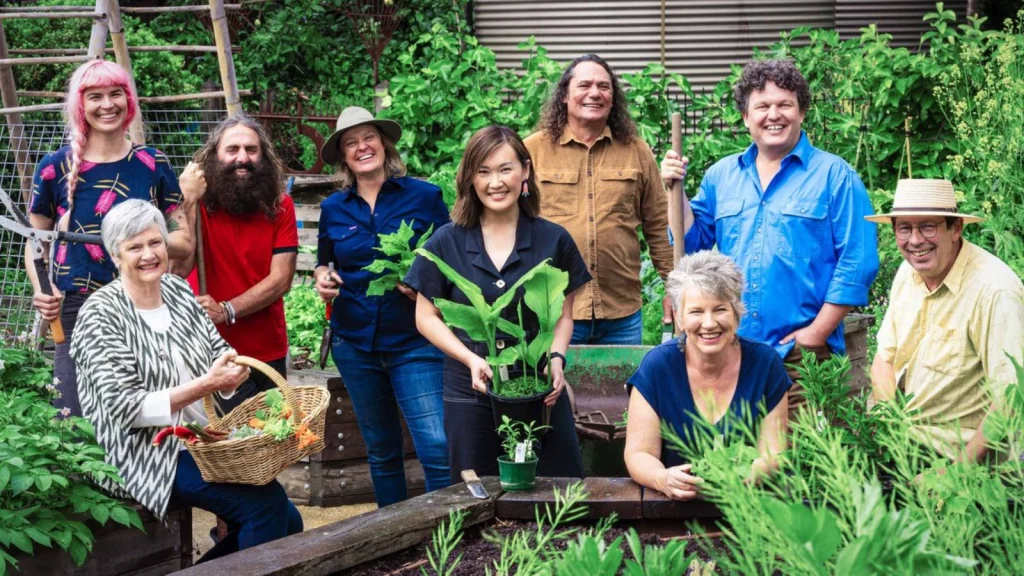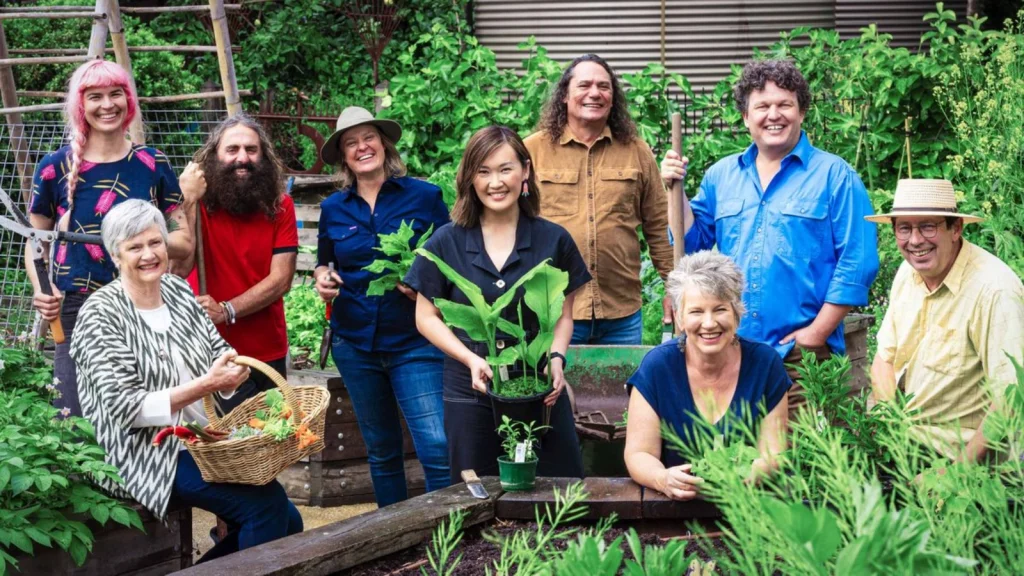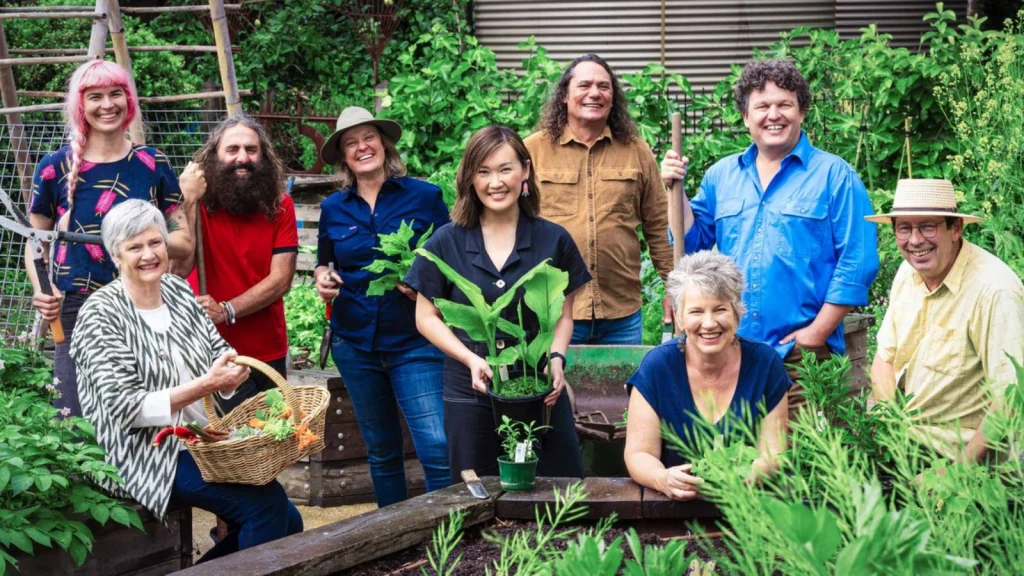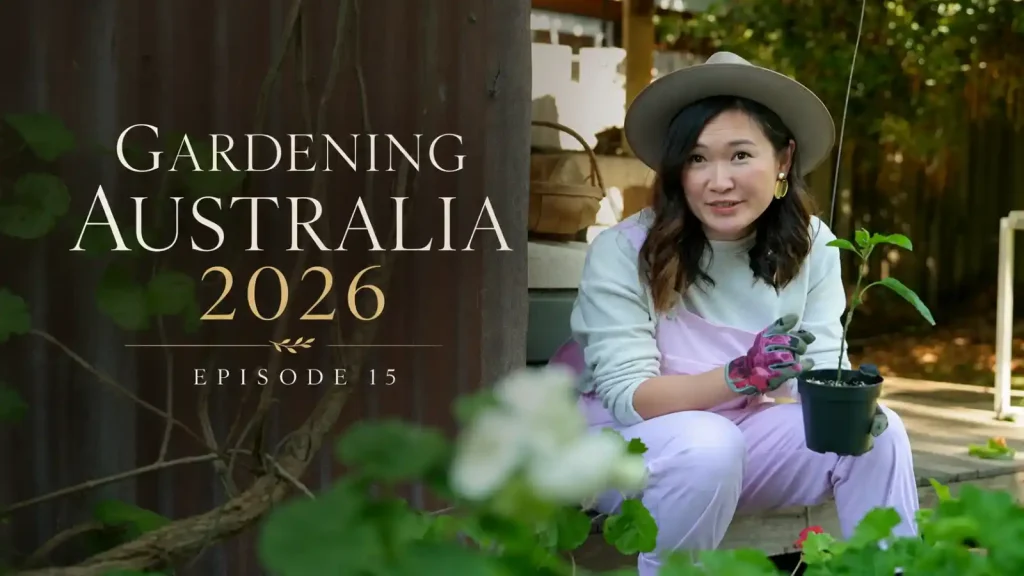
Gardening Australia 2026 Episode 15 delivers one of the most richly varied episodes of the series, bringing together a Mediterranean dry-climate masterpiece in the Barossa Valley, a hand-built country garden carved from Victorian Goldfields basalt, ground-breaking space botany research at the University of Western Australia, and a deep dive into the astonishing ecological power of the superb lyrebird. Across nearly an hour of expert horticulture, botanical science, and DIY ingenuity, this episode makes a compelling case that Australian gardening — in all its punishing, beautiful extremity — is unlike anything else in the world.
The episode moves with real energy from South Australia to Victoria to Perth’s university laboratories. Sophie visits third-generation horticulturalist Aleisha Lynch near the Barossa town of Lyndoch. Millie heads into the wild Goldfields between Daylesford and Castlemaine to discover what two creatives have built from scratch on a historic property. Josh travels to the University of Western Australia, where scientists are working to grow plants beyond Earth’s atmosphere. And Costa closes with a riveting encounter with one of Australia’s most extraordinary ecological engineers — the superb lyrebird.
The Barossa Valley, an hour north-east of Adelaide, is rightly celebrated for its Mediterranean climate and world-class wines. What it is not celebrated for is gardening. The region receives around 500 millimetres of rainfall in a good year — and significantly less in a bad one. Summers can stretch seven to eight months without a drop. It is, by any measure, an extreme environment for anyone wanting a flourishing garden.
Aleisha Lynch moved to a 16-hectare property near Lyndoch with her husband and two children eight years ago. What she inherited was a bare paddock on a steep, north-facing slope. No mains water. No bore water. Just rainwater held in tanks, a biting summer sun, and the kind of challenge that might deter most gardeners before a single seed hits the ground.
Aleisha did not flinch. She spent three years navigating failures, watching plants die, learning the language of the land. Then, slowly, a microclimate began to form. Established plants sheltered new ones. The soil improved. Winter arrived and the garden — defying every expectation — blazed with magenta, lavender, blue and purple blooms.
Gardening Australia 2026 Episode 15
Aleisha Lynch’s Plant Selection Strategy for Dry-Climate Resilience
Aleisha’s approach to plant selection is methodical and deeply informed by climate observation. She does not simply choose plants for flower colour. Shape, form, and leaf morphology all factor into the decision. Small-leaved plants, grey-leaved specimens, and those with fine hairs on the leaf surface, she explains, tend to perform far better in hot, dry conditions. These are not arbitrary preferences — they are structural adaptations to moisture stress, built into the plant over millennia of evolution in climates similar to the Barossa.
Her slopes are covered in mounding, dome-shaped plants chosen deliberately for their ability to cover a steep, north-facing bank prone to water runoff. Gomphrena decumbens, with its compact dome and vivid magenta button flowers, is one firm favourite. Verbena lilacina, which flowers right through winter and draws bees in visible numbers, is another. The garden is predominantly perennial, yet it never goes dull — even in the depths of winter, when the Barossa’s modest rainfall briefly revives the soil, the garden responds with colour and movement.
The Mediterranean climate framework underpins every planting decision. Aleisha draws not just from Australian natives but from plants originating in similar climates worldwide — Mexico, South Africa, the Mediterranean basin. The unifying principle is drought tolerance, not geography. Succulents provide bold architectural texture. Ornamental grasses add movement and personality. Softer perennials fill the spaces between, creating a rhythm across the garden beds that echoes the layered planting philosophy of renowned designer Paul Bangay, under whom Aleisha spent seven years as head gardener at a Barossa cellar door.
Wicking Beds, Drip Irrigation, and the Science of Water Efficiency
In a garden operating entirely on tank water, every drop counts. Drip irrigation keeps the ornamental areas alive through summer. But for food production, Aleisha relies on wicking beds — a system that delivers water from a reservoir beneath the growing medium directly to plant roots by capillary action. Even in the hottest weeks of summer, she tops the wicking beds up once a week and they water themselves. The water saving compared to conventional irrigation is dramatic.
The vegetable garden benefits from additional microclimate engineering. An almond tree shades the beds during the most punishing afternoon heat. Hedges on two sides slow the prevailing wind, which Aleisha notes is far more desiccating than most gardeners realise. These are not incidental features — they were placed deliberately to create a sheltered agricultural zone within a landscape that would otherwise work against productive gardening.
Planting timing is equally calculated. Every plant goes into the ground in autumn or winter. This gives roots six months or more to establish before the heat arrives. Aleisha pairs this with a careful planting mix: composted cow manure and pelletised fertiliser go into the hole, followed by coir-peat soil wetter and a liquid fertiliser drench. The result, over years of consistent effort, is a soil that holds moisture far beyond what its original sandy composition would suggest possible.
A Victorian Goldfields Garden Built Entirely by Hand
Central Victoria’s Goldfields region, between Daylesford and Castlemaine, is not easy country. Frosts bite hard in winter. Summer heat is relentless. The soil, where it exists beneath the basalt, is thin and unforgiving. The small hamlet of Clydesdale — population 62 — sits on the last finger of lava that flowed from Lalgambuk, Mount Franklin, and the volcanic rock that defines the landscape makes every act of construction a negotiation with geology.
Grant and Jeremy bought their aptly named property, The Stones, twelve years ago. The 6.5-hectare holding came with an original miner’s hut — probably from 1854 or 1855 — a basic garden outline, some trees, and an abundance of bulbs. Almost nothing else. What it also came with was atmosphere: a series of spaces that felt organically different from one another, each offering its own vista, its own character. The couple immediately recognised the potential and, crucially, decided to listen to the land rather than impose a design upon it.
The cultivated garden now covers almost a hectare. Every wall, every step, every structural feature has been built by hand — no professional contractors, no imported materials beyond what was already on site. Grant taught himself dry-stone walling over a decade, learning the peculiarities of irregularly shaped basalt that resists neat courses but locks together reliably when the right combination of stones is found. The result is a garden held together by the same material that sits beneath it, a sense of deep belonging that you can only achieve through years of physical conversation with the land.
How Two Creatives Shaped a Country Garden Around Contrast and Sanctuary
Grant and Jeremy run a Melbourne vintage store — a world of colour, pattern, and relentless visual stimulation. When they designed their country garden, they made a conscious decision to move in the opposite direction. No riot of colour. No busy planting combinations. Instead, the palette became foliage-led, soft, and quiet — a place of visual restoration after the saturated world of their professional lives.
What they didn’t entirely plan for was how decisively the environment would enforce this aesthetic. The extreme climate dictated survival of the fittest; what thrives in Clydesdale is a specific cast of tough, drought-and-frost-tolerant plants, and that cast happens to align perfectly with the muted, textured look the couple wanted. The garden became foliage-driven not merely by preference but by necessity, and the two arrived at the same destination from different directions.
The tension between the two gardeners — Grant more controlling, Jeremy wilder and more expressive — produces its own design dynamic. Clipped forms sit alongside unruly growth. A handmade willow arbour, woven from creek cuttings and trained over several seasons with soft garden ties, shows how patient craftsmanship transforms the most modest materials into genuine beauty. The grape vine growing over the structure will eventually become woody and self-supporting — Grant is training it in that direction with care and time, rather than shortcuts.
Peppercorn trees line a ridge behind the cultivated beds, their evergreen grey-green tones threading throughout the garden as a unifying element. The trees are not native — they arrived with Californian gold miners who came to this district in the 1850s, an exchange that sent eucalypts back across the Pacific. They have been in this landscape long enough to read as part of it, an accidental legacy of the gold rush that now anchors one of central Victoria’s most admired private gardens.
The Passion Fruit Pruning Principles Every Australian Gardener Needs
Gardening Australia 2026 Episode 15 takes time for practical diy gardening instruction with a detailed guide to managing passion fruit vines through the cooler months. The central principle is simple but often missed: passion fruit only flowers and fruits on new-season growth. All old growth is unproductive, and the vine must be cut back by at least a third each year to stimulate the new wood on which the following season’s crop depends.
Pruning should target tangled sections and lateral growth to open up airflow and expose leaves to sunlight. Once pruned, remaining vines are trained horizontally along wires and secured with soft garden ties. The plant looks bare briefly — but as temperatures rise, buds swell along pruned stems and growth accelerates. By late spring, fifty centimetres of new growth in a fortnight is achievable.
Feeding follows pruning: blood and bone supports vegetative growth, while potash or a fruit-tree fertiliser boosts flowering and helps fruit set. Passion fruit hate waterlogged soil, so drainage is non-negotiable. Most commercial Australian plants are grafted onto disease-resistant rootstock — any rootstock shoots that appear below the graft union must be removed immediately, as they produce nothing edible. A four-year-old vine approaching the end of its productive life warrants a new plant alongside it, so the transition to fresh, vigorous growth is seamless.
Growing Plants in Space: The University of Western Australia’s Plants for Space Initiative
The episode’s most extraordinary segment takes Josh to Perth, where researchers at the University of Western Australia are working on one of the most ambitious questions in contemporary botany: how do plants survive and function in space? The Plants for Space research initiative, now two years into a seven-year programme, involves around 200 scientists working across several connected research areas.
Molecular biologist Professor Ryan Lister frames the problem precisely. Humans need plants for food, oxygen, fuel, medicines, and mental wellbeing — on Earth and, eventually, in space. The challenge is not just sustaining plants in microgravity but engineering them to perform specific functions that space missions will require. Plants, in this vision, become programmable biological factories. Instead of carrying pharmaceutical manufacturing infrastructure into orbit, a mission could carry seeds genetically modified to produce anti-inflammatory drugs, or antibodies with therapeutic properties, when activated by a chemical signal, a change in temperature, or a shift in light spectrum.
Gene editing sits at the heart of this capability. Researchers can introduce genes encoding specific compounds — originally of human origin — into a plant genome so that the plant produces those compounds precisely where and when required. The precision of modern gene editing tools means this is not a scatter-shot intervention but a highly controlled one: the gene can be turned on and off, its expression localised to specific tissues or specific moments in the plant’s development.
Microgravity, Drowning Roots, and the Clinostat Simulation
A neighbouring laboratory at UWA tackles what sounds like a purely physical problem but is, in practice, deeply biological. Dr Troy Miller and research associate Jess Gugliotta are investigating how plants interact with water in the absence of gravity. On Earth, convection continuously mixes oxygen into water, and plant root hairs absorb that dissolved oxygen from the surrounding soil. In microgravity, convection does not occur. The water around the root zone uses up its oxygen rapidly, and without convection to replenish it, the roots effectively drown — not from too much water, but from too little oxygen within it.
Testing this problem on Earth requires a device called a clinostat — a machine that spins plants slowly to simulate the absence of directional gravity. In microgravity, roots lose their sense of which way is down, growing in all directions rather than downward. The clinostat recreates this disorientation on Earth and allows researchers to observe and measure how the plant responds genetically. The UWA team has a direct connection to real-world space data through a NASA collaboration: lettuce grown on the International Space Station was returned to Perth for genetic analysis, allowing comparison between actual space-grown plants and clinostat specimens grown under simulated conditions.
Duckweed is among the candidate plants receiving serious attention. It doubles in mass every two days, carries strong natural nutritional content, and could theoretically be modified to produce biodegradable plastics or pharmaceutical precursors. The combination of rapid growth, minimal space requirements, and biological versatility makes it an ideal candidate for long-duration space missions where resources are finite and multifunctionality is essential.
Costa’s Podocarpus Hedge and the Design Logic of Slow Pruning
Between the major segments, Costa shares a design tip that rewards patience: Podocarpus henkelii grown as a formal hedge. Costa notes he had never seen podocarpus hedged before, and the result demonstrates how unconventional choices often yield the most distinctive outcomes. The specimen has been planted roughly a metre apart and maintained at around 800 millimetres wide and four to four and a half metres tall.
The critical insight is timing. A hedge of this kind must be grown slowly, with consistent pruning from the beginning. Each pruning event disturbs the plant sufficiently to stimulate the production of lower branches — and those lower branches are what give a hedge its density and privacy at ground level, which is exactly where most people need it. Rush the process, let the plant get away before the pruning regime is established, and the lower trunk will bare out. The new growth after each cut emerges as a fresh lime green, a seasonal flourish that adds textural interest to what might otherwise be a static green wall.
The Superb Lyrebird: Australia’s Most Powerful Ecosystem Engineer
Costa’s encounter with wildlife ecologist Dr Alex Maisey at Sherbrooke Forest in the Dandenong Ranges is the episode’s closing revelation — and perhaps its most profound. The superb lyrebird is known popularly as a mimic, a bird that can reproduce the calls of other species with uncanny accuracy. In person, the performance is astonishing: whipbird, grey shrikethrush, black cockatoo, red wattlebird, treecreeper, kookaburra, boobook owl, and even the introduced European blackbird all rendered in seamless sequence, before the lyrebird switches back to its own territorial whistle.
Maisey, a La Trobe University research fellow who has devoted his career to lyrebirds, explains the mimicry in terms of sexual selection. Female lyrebirds judge males on the breadth and accuracy of their mimicry repertoire. The ability to reproduce multiple complex calls correctly, while also coordinating an elaborate tail fan display and rhythmically precise dance steps, demonstrates cognitive capacity, physical fitness, and genetic quality simultaneously. A male lyrebird capable of all of this in a productive territory, without being taken by foxes, is advertising exceptional genetic value. The females judge accordingly, and they judge harshly.
How Lyrebirds Move More Soil Than Any Other Animal on Earth
The mimicry is extraordinary, but Maisey directs attention to something even more remarkable: the lyrebird’s ecological impact through foraging. Lyrebirds scratch through forest litter and soil continuously in search of invertebrates, burying organic surface material and integrating it into the mineral earth below. The scale of this activity is staggering — lyrebirds move an estimated 150 to 200 tonnes of material per hectare in these forests. Bandicoots, themselves impressive soil disturbers, manage around six to eight tonnes per hectare. No other organism on the planet, by the records currently available, comes close to the lyrebird’s output.
The consequences ripple through the entire forest system. Buried litter decomposes far faster underground in moist mineral soil than it would on the surface, dramatically reducing the load of fine fuels available for fire. The entire fire regime of a forest can shift depending on lyrebird density. Exposed seed banks, suddenly freed from the insulating layer of litter, receive sunlight and moisture for the first time and germinate in clusters around foraging pits. Meanwhile, the varied microhabitats created by lyrebird digging — exposed mineral earth, mounded compost-like deposits, undisturbed patches — support different invertebrate communities, enriching biodiversity at every level.
Lyrebirds, Maisey explains, are essentially a stabilising disturbance force in these forests. Their constant, intensive foraging keeps fuel loads low, nutrient cycling active, and seed germination occurring at a steady background rate. Climate change threatens this balance directly — altered fire frequencies in the forests where lyrebirds live could undermine the very conditions on which the birds and the ecosystems they sustain both depend. Keeping pets away from national parks, reducing consumption, and thinking carefully about individual environmental impact all matter, because the lyrebird’s work is too valuable to lose.
The lyrebird nest, Maisey shows, is a masterpiece of solitary female engineering: over a thousand sticks gathered from the ground and assembled into a domed, waterproof structure that uses the host tree as a back wall, directing rain runoff away from the interior. A lining of grey feathers. A last decorative detail of fresh eucalypt sprigs tucked into the roof. The female raises her chick alone, removing its droppings and depositing them in soil or water to eliminate scent trails that foxes might follow back to the nest.
Gardening Australia 2026 Episode 15 leaves the viewer with a sense of how interconnected the act of gardening is with larger ecological realities — from a woman in the Barossa learning to work with drought rather than against it, to scientists in Perth asking whether plants can sustain human life among the stars, to a bird in a Victorian fern gully quietly remaking the forest floor one scratch at a time.
FAQ Gardening Australia 2026 Episode 15
Q: How can you grow a beautiful garden in a dry climate with no mains water?
A: Choose drought-tolerant plants from climates similar to your own, install drip irrigation, and use wicking beds for vegetables. Plant exclusively in autumn or winter so roots establish before summer heat arrives. Build soil water-holding capacity over time by adding composted manure and organic matter each season. A microclimate develops naturally as plants establish, making the garden progressively easier to maintain.
Q: What leaf characteristics indicate a plant will survive hot, dry conditions?
A: Small leaves, grey leaves, and leaves covered in fine hairs are reliable indicators of drought tolerance. These structural adaptations reduce water loss through transpiration in hot, exposed conditions. Plants with these leaf types evolved in arid or semi-arid climates and carry built-in resilience, making them far better candidates for low-rainfall gardens than large-leaved, soft-textured species.
Q: When is the best time to prune passion fruit vines in Australia?
A: The cooler months — autumn and winter — are the ideal time to prune, plant, and feed passion fruit vines. Passion fruit only flowers and fruits on new-season growth, so cutting back old growth by at least a third each year is essential. After pruning, train remaining vines horizontally along wires and apply blood and bone plus a potash or fruit-tree fertiliser to support vigorous new growth.
Q: Why are scientists trying to grow plants in space?
A: Humans depend on plants for food, oxygen, fuel, medicines, and mental wellbeing — the same needs apply in space. The Plants for Space initiative at the University of Western Australia is engineering plants to serve as programmable biological factories aboard spacecraft. Instead of transporting pharmaceutical manufacturing equipment, missions could carry seeds genetically modified to produce drugs or anti-inflammatory compounds on demand.
Q: How does microgravity affect plant roots and why is it a problem?
A: On Earth, convection continuously mixes oxygen into water around root zones. In microgravity, convection stops — root cells deplete the dissolved oxygen and it cannot replenish, effectively drowning the plant. Roots also lose their gravitropic response and grow in all directions rather than downward. Researchers use a clinostat, a spinning device that simulates directional disorientation, to study and address these challenges on Earth.
Q: What makes duckweed a promising plant for space missions?
A: Duckweed doubles in mass every two days, making it one of the fastest-growing plants known to science. It carries strong natural nutritional content and requires minimal space. Researchers can also introduce genetic pathways that allow it to produce biodegradable plastics or pharmaceutical precursors. This combination of rapid growth, compact size, and biological versatility makes it an ideal candidate for long-duration space travel.
Q: How do lyrebirds engineer the forest ecosystem through foraging?
A: Lyrebirds scratch through forest litter and soil to find invertebrates, burying surface organic material and integrating it into the mineral earth below. They move an estimated 150 to 200 tonnes of material per hectare — more than any other recorded organism. This activity buries fine fire fuels, accelerates decomposition, triggers seed germination, and creates a mosaic of microhabitats that support diverse invertebrate communities, fundamentally shaping forest fire regimes and nutrient cycles.
Q: Why do male lyrebirds mimic other bird species?
A: Mimicry evolved in lyrebirds primarily through sexual selection. Female lyrebirds judge males on the breadth and accuracy of their vocal repertoire, alongside tail display quality and the coordination of dance steps. Accurately reproducing multiple complex calls demands significant cognitive effort and extended practice, signalling genetic fitness and territorial quality. A male that mimics well, maintains a long elaborate tail, and avoids predators is advertising exceptional health to prospective mates.
Q: How do you build a productive DIY garden in a harsh climate on a limited budget?
A: Work with what the land provides — stone, timber, found materials — rather than importing expensive resources. Build soil gradually using compost and organic matter. Use on-site rocks for walls and raised beds, which also deter rabbits. Plant what survives rather than forcing unsuitable species. Tackle one area per year rather than attempting the whole garden at once. A patient, incremental approach consistently outperforms ambitious plans that exceed the available budget or labour.
Q: How do you create a dense, full hedge using Podocarpus henkelii?
A: Plant specimens roughly one metre apart and begin a consistent pruning regime immediately — do not let the hedge grow unchecked before establishing the cutting programme. Each pruning event stimulates lower branch production, which delivers the ground-level density and privacy most gardeners need. Grow the hedge slowly to a target height of four to four and a half metres. The species handles low winter light and responds to summer sun with vigorous bushy growth.