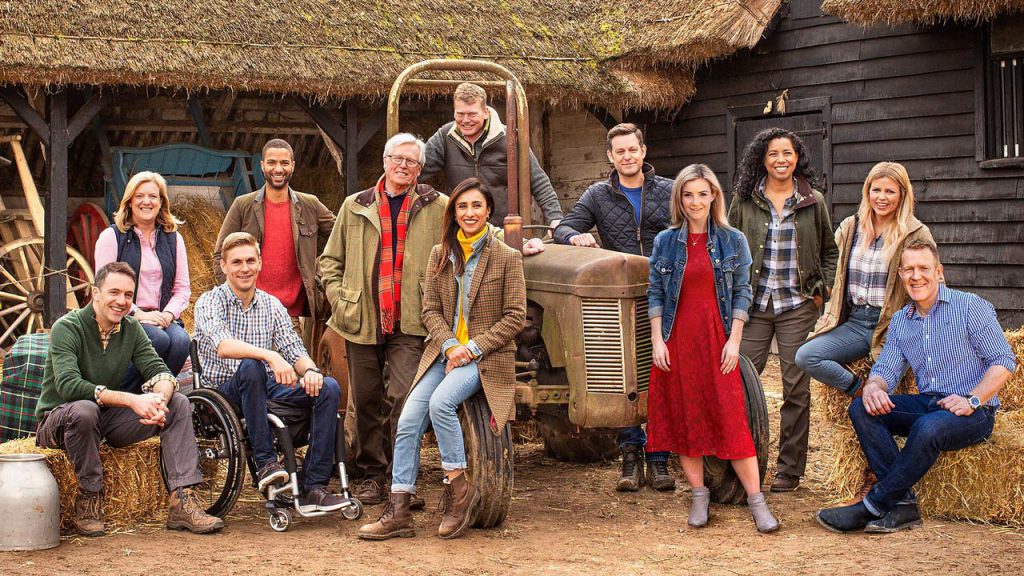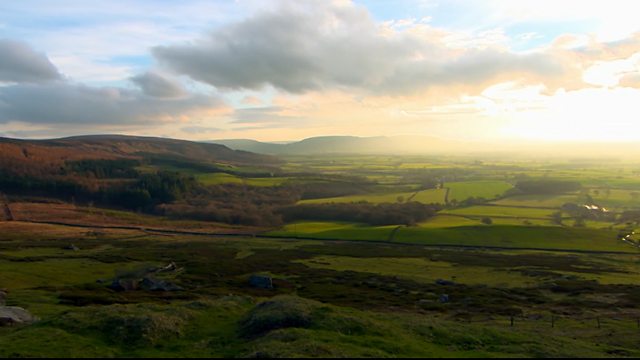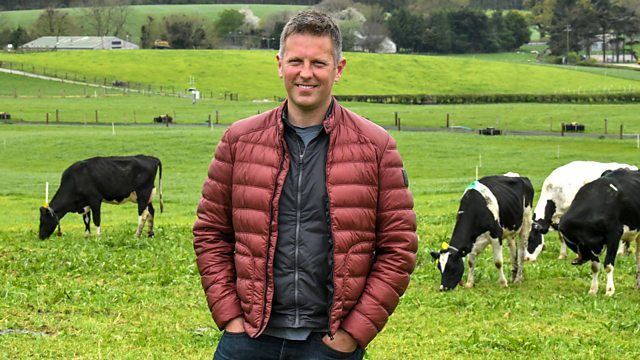
Strawberries are at the heart of Landward episode 12 2026, as the programme arrives in the East Neuk of Fife at the peak of Scotland’s berry season. Presenter Dougie meets a Crail fruit grower who has stretched the strawberry season from a few short weeks into half the year. Across the rest of Landward episode 12 2026, the team explores a rising wool market in the Borders, a record-breaking tree nursery in Moray, scent-detection dogs hunting invasive grey squirrels in Aberdeen, and a professional sheep dresser preparing livestock for the Royal Highland Show.
Midsummer sets the tone. It is berry season, shearing season, and the moment when Scotland’s farming calendar moves at full tilt. The episode threads together five distinct stories from across the country, each rooted in the same theme: how rural Scotland adapts, innovates, and earns its living from the land.
What follows is a closer look at the people, places, and practical insight behind one of the most varied editions of the series this year.
Scotland has long been famed for its soft fruit. Long, bright summer days combine with rich soil to produce some of the juiciest berries anywhere. Yet for decades that abundance was fleeting. Back in the 1970s, you could expect strawberries for perhaps six weeks a year, and then the season was gone.
That has changed dramatically. Some growers now stretch the strawberry season across six months, and Landward episode 12 2026 visits one of them to understand how. At Barnsmuir near Crail, Tim Stockwell has been producing berries since 2004. Alongside strawberries, the farm grows raspberries and blackberries, supplying supermarkets at a relentless pace.
The secret lies in the polytunnels. Growers first adopted them in the 1970s and 1980s, mainly as weather protection. Today they do far more. Tim uses small and large tunnels strategically, because each behaves differently through the year. The smaller ones heat up faster, warming earlier in spring, so they hold his earliest fruit. The larger tunnels crop through the bulk of the season.
This careful staggering keeps the operation running smoothly. Different plant types and different planting dates spread the harvest evenly. The goal is a steady supply through the packhouse and consistent work for the pickers, rather than one overwhelming glut followed by silence.
Landward episode 12 2026
The Wood-Fired Boilers and Early Heating That Beat Imported Fruit to Market
Even with tunnels, those smaller structures stay chilly in early spring. To push the season forward, Tim turns to heat. The farm buys in timber, chips it on site, and burns it in two enormous boilers. Hot water then pipes through ten acres of polytunnels.
The heating begins at the start of January, when planting starts, and generally runs until May. That investment allows Tim to begin picking in the middle of April, weeks ahead of an unheated crop. The commercial logic is simple and powerful.
Early Scottish fruit replaces imported berries on supermarket shelves. By arriving first, growers command stronger early-season prices. The same trick works in reverse at the other end of the year. If Tim fires the boilers again in October, he can keep cropping into autumn, securing a premium on his last fruit as well as his first.
This is precision farming driven by economics. Heat costs money, so every decision balances the price of fuel against the value of fruit reaching market when competitors have none. The result is a far longer, far more profitable season than the brief summer windows of the past.
Inside the Packhouse Where 100,000 Punnets Move From Field to Shelf in a Day
The scale of modern berry production is staggering. At peak times, 350 staff work across the farm, split between the tunnels and the packhouse. The packhouse alone can push around 100,000 punnets through in a single day, a figure that astonishes on first hearing.
Speed defines everything. Fruit must leave the field within an hour of picking and go straight into the chiller. From there, it can reach supermarket shelves within 24 hours. Strawberries picked one morning could be eaten in someone’s kitchen the very next day, hundreds of miles away.
The workforce behind this has transformed too. Once, local children picked fruit during the school holidays. Now, with the long season and unforgiving supermarket deadlines, the pickers are mostly migrant workers recruited through the UK government’s Seasonal Workers Scheme.
Supervisor Marius Ciocan, originally from Romania, has picked at Barnsmuir for more than a decade. He demonstrates the proper technique: hand cupped underneath, fingers to the side, a clean pull from the stalk leaving a one-centimetre stem, all without bruising the fruit. Many of the pickers he manages come from Kazakhstan, Uzbekistan, and Turkmenistan, and they are formidable, reaching 50 kilos an hour. Pickers earn at least the legal minimum wage, but the fastest among them can earn considerably more.
Could technology stretch the season further still? Adding artificial light to the tunnels is one possibility. But once daylight runs out, producing fruit becomes expensive. For now, the Scottish strawberry remains a seasonal treat, simply a much longer one than before.
Why the Price of Wool Is Bouncing Back to a Ten-Year High
From soft fruit to soft fibre, Landward episode 12 2026 turns to a story sheep farmers have waited years to hear. The price of wool is finally on the up. Each summer, millions of sheep are shorn across Scotland, and a huge share of their fleeces passes through British Wool’s grading depot in Selkirk, the largest of eight across the UK.
The depot sits at the centre of a cooperative owned by 30,000 British sheep farmers. The organisation collects, sorts, and auctions their wool. For a long time this was a story of loss, with farmers earning less than the cost of shearing for a fleece worth almost nothing.
Now demand is rising, and prices have reached a ten-year high. Jim Robertson, chair of British Wool and a farmer himself, has felt the difference. His Cheviot wool now fetches around 80p a kilo, up from roughly 55p the previous year. Every breed has seen a similar percentage jump. In practical terms, Jim can now expect roughly £2 a fleece.
Several forces explain the rebound. The worldwide sheep flock has declined, so there is simply less wool around. At the same time, demand for eco-friendly natural fibre is growing, and expanding markets in China and India are hungry for it. Processors, in short, cannot get enough. As Jim puts it, people have realised how good wool is for the environment, how good it feels to wear, and that it is genuinely amazing stuff.
The Forgotten Art of Wool Grading and the Surge in British-Made Cloth
Shearing earns the limelight, yet grading is the quieter craft that determines a fleece’s true worth. At Selkirk, Billy Hewitson has been grading wool for 30 years. The depot sorts fleeces into more than 100 grades, separating the good types from the indifferent to return better value to farmers and offer buyers more variety at auction.
Billy reads each fleece with practised hands. He checks the length of the staple and the fineness of the fibre. With Scottish Blackface, grey fibres always run through the wool, and too much grey pushes a fleece into a lower grade. Yet nothing is wasted. In his view there is no truly bad wool, only different grades, and every type finds a use. He expects a bumper crop this season, with the depot processing perhaps 4.5 million kilos and running solidly until April.
The renewed demand is visible just down the road. Lochcarron of Scotland, led by managing director Leah Robertson, weaves premium kilt-weight cloth in Selkirk. The company switched from southern hemisphere yarn to British wool as part of a sustainability drive. The numbers are striking: the yarn now travels 400 miles instead of 15,000. Customers were delighted by the move to locally sourced wool and the support it gives British farming. For farmers like Jim, that shift is exactly the kind of long-term trend they hope is here to stay, rather than a short-lived blip.
How Scent-Detection Dogs Are Saving Aberdeen’s Native Red Squirrels
Aberdeen is famous for its grey granite, but it is the grey squirrels that conservationists are determined to remove. Back in 2009, red squirrels were a rare sight in the city. Greys dominated, outcompeting reds for food and carrying a virus that is fatal to the native species. They had come close to wiping the reds out entirely.
The greys are not native to the UK at all. Those in Aberdeen are likely descendants of zoo escapees from the 1970s. Living at far higher densities, they pushed red populations out towards Banchory and as far south as Stonehaven, threatening key habitat. As one conservationist puts it, greys are basically a red’s worst nightmare.
The Scottish Wildlife Trust has worked for 17 years to reverse this. James Kennedy explains that the red squirrel population in Aberdeen city has increased dramatically since the project began, a clear sign of success. A 2025 map, built largely from public sightings, now glows red where it was once dominated by greys. After landscape-scale control in the early years, only the last few greys remain.
That final stretch is the hardest, and it is where the dogs come in. The trust’s secret weapon is a pair of remarkable noses: Australian kelpie Sika and springer spaniel Tarka. Handler Libby Welbourn has trained them to recognise the scent of a drey, the squirrel’s nest, using bedding material and hair as training aids. Over years of work, the searches have grown steadily harder, with samples placed higher and higher in the trees.
In a training exercise, presenter Leanna watches Sika find a hidden decoy drey packed with nesting material, scat, and grey squirrel fur. The dog circles, working out where the odour concentrates among the canopy and leaves, then pinpoints the right tree. Crucially, the dogs never make contact with squirrels. They simply signal a find, allowing James to set a humane trap. No greys have been detected this year, though some holdouts may remain. If the project succeeds, it will be the first eradication of an invasive non-native urban mammal anywhere in the world.
Inside the UK’s Biggest Tree Nursery Growing 19 Million Saplings a Year
Forestry is worth £1 billion to the Scottish economy and supports 34,000 jobs, yet all of it begins with tiny seedlings. In Moray, presenter Shahbaz visits Newton Nursery near Elgin, where those seedlings are produced on an industrial scale. The Forestry Commission first opened a nursery here in 1931 to restock its forests, and the site has been a place of innovation ever since.
Now run by Forestry and Land Scotland, the nursery received a £27 million redevelopment, opening a new super-site just last year by consolidating several smaller nurseries. At its heart sits a glasshouse covering a full hectare, roughly two football pitches, making it the largest in the UK. Tour guide Emma Ritchie reveals the staggering stock: around 16 million trees in a fabric tape system and about 2.5 million cell-grown.
The tape system is the clever twist. Borrowed from growing lettuces, leeks, and vegetables, it holds 840 trees per tray, with a seed injected into each pocket. Seedlings grow in the glasshouse for about three months, harden outside for a month, then head to the fields. A planting machine can set over a million trees a day, against just 60,000 by the old methods. That speed solves a real problem: when planting once took months, May-planted trees grew far bigger than those planted in August, so uniformity suffered. Tape delivers the consistent product foresters want.
The technology runs deeper still. A precision sowing line uses a vacuum to lift each seed and drop one into the centre of every cell. A camera-equipped transplanter photographs each plant, identifies living trees, discards anything that is not green, and replants the survivors into larger trays at a rate of 10,000 to 15,000 an hour. Where broadcast sowing once managed a 40% success rate, Scots pine now reaches 90%, with other species expected to approach 100%.
The purpose behind all this efficiency is straightforward. Forestry and Land Scotland needs 24 million trees a year, and the nursery supplies most of them, with the rest coming from private growers. Before the new glasshouse, output stood at 7 million a year; it has now more than doubled. Emma believes the nursery workers of the 1930s would be amazed and pleased, and she expects the technology to keep advancing.
The Sheep Stylist Turning Pedigree Livestock Into Royal Highland Show Champions
The episode closes in North Lanarkshire, where presenter Cammy meets a man who turns ordinary-looking sheep into show-ring stars. At this time of year, thousands of pedigree livestock are dressed to perfection in the hope of coming out on top. Few people do it better than Kenny O’Connor, a professional sheep dresser and pedigree breeder.
At his farm near Glenboig, Kenny’s own Bleu du Maines get an unusual treatment: time outdoors. The sun tans their skin and brings out the deep blue colour judges prize at the Highland Show. With little hair on a Bleu du Maine’s bare face, it is the skin underneath that catches the light, and that striking blue is exactly what wins attention in the ring.
Kenny works for other breeders too, travelling with what amounts to a mobile salon. He compares dressing to DIY. Some breeders enjoy doing it themselves; others lack the time, or doubt their own ability, and call in an expert for that extra edge. At Wester Hassockrigg Farm near Shotts, Kerry Hill breeder Sophie McCarlie has trusted Kenny with her sheep since she first started showing. She knows she has only one day for her animals to look their best, so she leaves it to someone who will do a better job.
The craft is meticulous. Kenny starts with the top, shaping a flat, level back, a prized commercial trait, blending away any high spots with shears. Different breeds demand different shapes; a Beltex wants a big rear, while a Kerry Hill needs that proud, upright neck. As Kenny says, you want a sheep that sees you before you see it. The final stage is carding, lifting and straightening the wool with a brush, then levelling it like a mower to give the animal more bulk in the ring. Sophie, who won breed champion at last year’s Highland Show, is in good hands.
With one immaculately coiffured tup ready for Edinburgh, the episode points ahead to a special programme from the Royal Highland Show, where Landward will celebrate its golden anniversary, marking 50 years at the event. From berry fields to show rings, Landward episode 12 2026 captures rural Scotland at its busiest and most inventive, finishing where so much of the year’s farming effort is ultimately judged.
FAQ Landward episode 12 2026
Q: How do heated polytunnels make strawberry growing more profitable?
A: Heating lets growers start picking in mid-April, weeks ahead of an unheated crop. Early Scottish fruit replaces imported berries on supermarket shelves, commanding stronger prices. The same logic works in autumn. Firing the boilers again in October secures a premium on the last fruit. Every decision balances fuel cost against the value of fruit reaching market.
Q: How are Scottish polytunnels heated for early strawberry crops?
A: The Barnsmuir farm near Crail buys in timber, chips it on site, and burns it in two enormous boilers. Hot water then pipes through ten acres of polytunnels. Heating begins in early January when planting starts and generally runs until May, pushing the season forward well beyond the natural summer window.
Q: How many strawberry punnets can a packhouse process in one day?
A: A large Fife operation can push around 100,000 punnets through its packhouse in a single day. At peak times, 350 staff work across the farm, split between the tunnels and the packhouse. The scale reflects relentless supermarket demand and the tight deadlines that govern fresh fruit supply.
Q: Can technology extend the strawberry season beyond six months?
A: Adding artificial light to the tunnels is one possibility under consideration. However, once daylight runs out, producing fruit becomes expensive. For now, growers expect the Scottish strawberry to remain a seasonal treat, simply a much longer one than the brief six-week window of the 1970s.
Q: How much can sheep farmers earn for a fleece now?
A: With prices at a ten-year high, a farmer can now expect roughly £2 a fleece. Cheviot wool fetches around 80p a kilo, up from about 55p the previous year. Every breed has seen a similar percentage rise after years of farmers earning less than the cost of shearing.
Q: What is British Wool and how does the cooperative work?
A: British Wool is a cooperative owned by 30,000 British sheep farmers. It collects, sorts, and auctions their wool. The grading depot in Selkirk is the largest of eight across the UK. By separating fleeces into grades, the cooperative returns better value to farmers and offers buyers more variety at auction.
Q: Why are manufacturers switching to British wool?
A: Sustainability drives the shift. Lochcarron of Scotland moved from southern hemisphere yarn to British wool, cutting the journey from 15,000 miles to just 400. Customers welcomed the locally sourced fibre and the support it gives British farming. Specifically, this rising demand helps explain why wool prices are climbing again.
Q: Could Aberdeen achieve a world-first squirrel eradication?
A: If the project succeeds, it will be the first eradication of an invasive non-native urban mammal anywhere in the world. After 17 years of work by the Scottish Wildlife Trust, only the last few greys may remain. No greys were detected this year, though some holdouts could still exist.
Q: What is the fabric tape system used to grow saplings?
A: Borrowed from growing lettuces, leeks, and vegetables, the tape system holds 840 trees per tray. A seed is injected into each pocket. Seedlings grow in the glasshouse for three months, harden outside for a month, then head to the fields. Crucially, it produces the uniform stock foresters want and speeds up planting enormously.
Q: Why do show sheep get placed in the sun before competing?
A: Bleu du Maine sheep go outside because sunlight tans the skin and deepens the prized blue colour judges reward at the Highland Show. With little hair on their bare faces, it is the skin underneath that catches the light. That striking blue helps the animals stand out in a competitive ring.