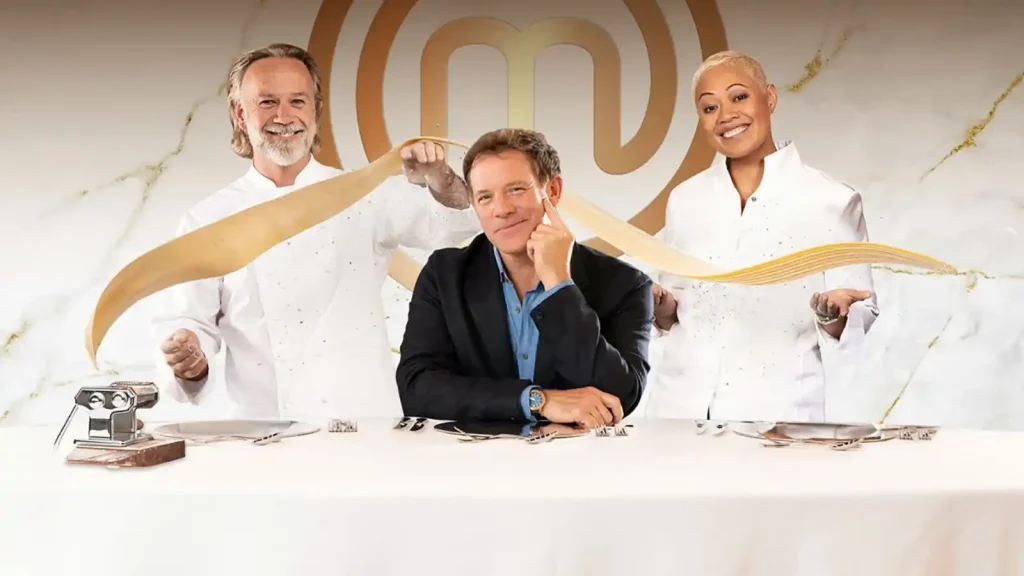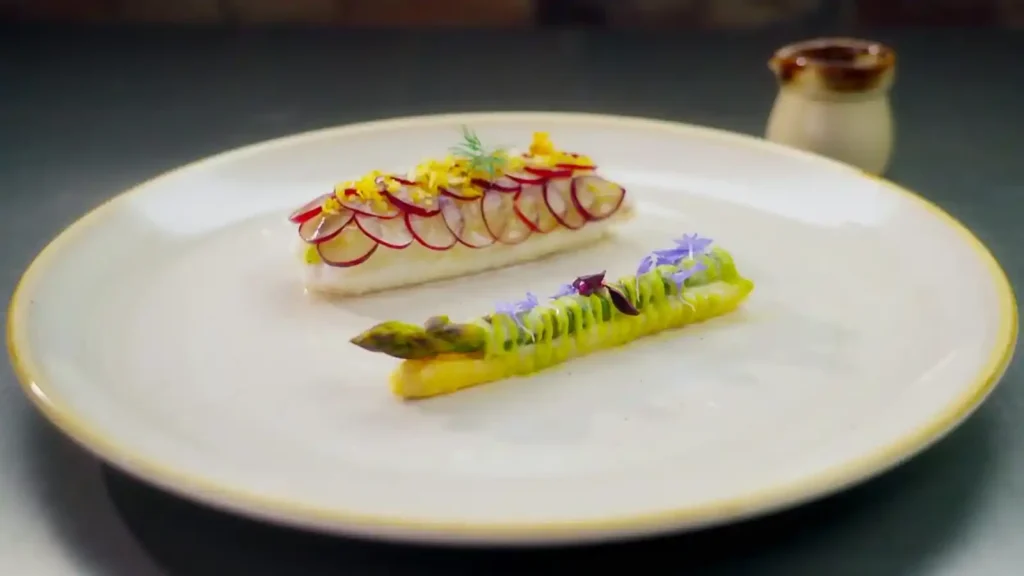
The kitchen is heating up. MasterChef The Professionals 2026 episode 10 marks the start of the final week of heats, and the pressure has never felt more real. Only eight chefs remain on the outside, waiting for their shot at glory. This episode welcomes the first group of four, each stepping into one of the most demanding culinary competitions on British television. Every chop, every sauce, every plated dish could make or break their dreams. The journey ahead is thrilling, and it all starts right here.
Monica, Marcus, and Matt don’t set the skills test alone this week. Instead, they call on former finalist Matthew Ryle to raise the bar. Matthew competed in MasterChef 2018 and left a lasting impression with his breathtaking French classical cookery. Since then, he has built a remarkable career. He opened two celebrated French restaurants — Café François and Maison François — and authored a book titled French Classics. Clearly, French cuisine runs through his veins. So naturally, his two skills tests reflect exactly that passion.
The first two chefs face a deceptively elegant dish. Matthew’s red mullet with braised fennel, citrus salad, and sauce maltaise is the challenge. Sauce maltaise, for those unfamiliar, is essentially a hollandaise enriched with blood orange. It sounds simple, but achieving real depth of flavour in just 20 minutes is genuinely tough. Furthermore, the chefs must fillet their fish cleanly. One misplaced bone on the plate could end their hopes entirely.
All the ingredients are provided, so there are no excuses. However, instinct and confidence separate good cooks from great ones. The judges watch closely, looking for precision, timing, and understanding of classic technique. Matthew himself provides feedback alongside Monica, Marcus, and Matt. Their combined expertise leaves nowhere for a struggling chef to hide.
Next, the final two chefs in the group step up. Their challenge is Matthew’s roasted poussin, served with a rich peppercorn sauce and a potato garnish of their own choosing. This dish demands both technical skill and creative thinking simultaneously. Poussin — a young chicken — requires careful roasting to avoid drying out. Meanwhile, a peppercorn sauce demands confident seasoning and precise timing.
The potato garnish choice also reveals something important about each chef. Do they play it safe with a classic dauphinoise? Or do they take a creative risk? In a culinary competition this fierce, bold decisions often separate finalists from those going home. The 20-minute clock makes every second feel like a countdown to destiny.
After the skills tests, the format shifts entirely. Now, the chefs present their own food — dishes they have cooked countless times before. These are signature plates, refined through years of practice and personal experience. In many ways, this round feels even more exposing than the skills test. Here, the chefs cannot blame an unfamiliar recipe. Everything on the plate is a reflection of who they are as cooks.
The creations this episode are genuinely diverse and exciting. One chef presents beautifully prepared lamb racks with precise, elegant execution. Another delivers a refined fish dish, surprisingly paired with grapes, offering a sweet and savoury contrast. Perhaps most striking is a dessert shaped like a sunflower — a bold, artistic statement that could either impress or overwhelm the judges.
In MasterChef Professionals, originality matters enormously. However, originality without technical delivery counts for very little. The judges taste with precision, considering balance, texture, seasoning, and overall vision. Consequently, even the smallest detail — an under-seasoned sauce, an overcooked protein — can cost a chef their place in the competition.
MasterChef The Professionals 2026 episode 10
That phrase — “the finest of details” — truly defines what this cooking show is all about. MASTERCHEF 2026 isn’t simply a test of who can cook. It’s a test of who can cook consistently, brilliantly, and under extraordinary pressure. Each heat episode reinforces this message. Even accomplished professional chefs with years of restaurant experience can crumble when the cameras roll and the judges lean in.
Moreover, this is the last week of heats. There is no room for sentiment. Monica, Marcus, and Matt have seen it all before. They know what a quarter-finalist looks like. They also know when a chef — despite talent — simply isn’t ready for the next level yet.
At the end of the heat, Monica, Marcus, and Matt deliberate carefully. They review every dish, every moment, every decision made under pressure. Then, they announce which chefs have earned a place in the last quarter-final. For those selected, it’s a moment of pure, overwhelming joy. For those sent home, it’s a difficult walk away from the kitchen — wondering what one different decision might have changed.
Reality TV rarely delivers moments as raw or as real as this. The chefs on MasterChef Professionals pour genuine emotion into every plate they serve. They’re not performing for cameras. They’re fighting for careers, for recognition, and for the chance to prove they belong at the very top of their profession.
MasterChef The Professionals 2026 episode 10
MasterChef The Professionals 2026 episode 10 begins the final week of the preliminary heats with an intensity that matches the high stakes of the competition. As the search for a new professional MasterChef champion narrows, the kitchen in Birmingham welcomes four ambitious hopefuls ready to test their mettle against the industry’s most rigorous standards. This specific heat represents a critical junction in the series, serving as the penultimate hurdle before the quarterfinal stages. The atmosphere is thick with a mixture of apprehension and adrenaline, as these chefs realize that years of training have led to this singular, televised moment of truth.
The significance of this stage in the culinary competition cannot be overstated, as it marks the last chance for emerging talent to secure a place in the later rounds. For the viewers and the contestants alike, food becomes a language through which personal heritage and professional discipline are expressed. Each participant arrives with a unique story, ranging from corporate fine dining backgrounds to private catering for high-profile international clients. This diversity of experience ensures that the judges are not merely looking for technical proficiency but for a distinct culinary voice that can stand out in a crowded field.
This article explores the intricate details of the challenges presented in MasterChef The Professionals 2026 episode 10, focusing on the technical demands of the Skills Tests and the creative freedom of the Signature Dish round. The scope of this analysis includes the specific techniques required for seafood preparation and poultry butchery, alongside the emotional journeys of the chefs as they navigate the pressure of reality TV. By examining the critiques provided by the judging panel, we can gain a deeper understanding of what differentiates a competent cook from a potential superstar.
Drawing from the events of the transcript, the background of this episode is rooted in the return of a former finalist who now sets the pace for the newcomers. Matthew Ryle, who reached the final four in 2018, returns to the kitchen not as a competitor but as a mentor and judge for the initial phases. His transition from a nervous contestant to a successful restaurateur with two establishments and a massive online following provides a roadmap for the current hopefuls. His presence reminds the chefs that while the pressure is temporary, the platform provided by the show can be life-changing.
The rhythm of the episode is dictated by the ticking clock and the sharp, insightful commentary of judges Monica Galetti, Marcus Wareing, and Matt Tebbutt. As the first two chefs face their initial trial, the tone shifts from introductory excitement to focused, silent labor. The transition from the Skills Test to the Signature Dish round allows for a broader expression of flavor and spice, moving from the rigid requirements of French classics to the personal interpretations of global cuisines. This shift in direction reveals the true character of the chefs, showing who can maintain composure when their own recipes are on the line.
Success in this environment requires more than just a mastery of heat and timing; it demands a psychological resilience that few other professions require under such public scrutiny. The chefs must manage their nerves while simultaneously performing complex tasks like pin-boning delicate fish or emulsifying sauces with precise fats. Meanwhile, the judges act as both critics and observers, searching for the subtle cues that indicate a chef’s potential for growth. The following sections will detail the specific hurdles faced by Natasha, Caroline, Gokul, and Giuseppe as they vie for two coveted spots in the next round.
Technical Mastery in the Red Mullet Skills Test
The first phase of MasterChef The Professionals 2026 episode 10 involves a rigorous test of classical French technique centered on the preparation of red mullet. Matthew Ryle designs this challenge to encompass several fundamental skills, including fish filleting, sauce-making, and vegetable braising. The dish requires the chefs to produce a perfectly cooked fillet of red mullet served with braised fennel, a citrus salad, and a Sauce Maltese. This particular sauce is a variation of a classic hollandaise, distinguished by the addition of reduced blood orange juice, which adds both acidity and a vibrant color.
Preparation begins with the reduction for the hollandaise, a mixture of shallots, thyme, white wine, and white wine vinegar that must be cooked down by half to provide the necessary flavor base. The timing of this reduction is critical because it needs to infuse and cool slightly before being incorporated into the egg yolks. Simultaneously, the fennel must be braised in vermouth under a cartouche—a parchment paper lid—to ensure even cooking and moisture retention. Any delay in starting these components puts the chef at a significant disadvantage, as the twenty-minute time limit leaves no room for error or retracing steps.
The filleting of the red mullet presents its own set of difficulties, primarily due to the abundance of pin bones within the fish. A professional approach requires clean, organized work and the use of tweezers to ensure every bone is removed before the fish hits the pan. The fish is then cooked in a medium-hot pan for just a few minutes, as its delicate flesh can easily overcook. When executed correctly, the dish is a symphony of classic skills and balanced flavors, but as the contestants discover, the pressure of the MasterChef kitchen can cause even experienced chefs to overlook basic steps.
Comparative Performance in Seafood Execution
During the initial Skills Test of MasterChef The Professionals 2026 episode 10, the contrast between Natasha and Caroline highlights the impact of nerves on professional performance. Natasha, a senior chef de partie with nine years of experience, begins the challenge with impressive speed, filleting the red mullet in mere seconds. However, this haste leads to significant technical oversights, most notably the failure to remove the pin bones. Her hollandaise preparation also suffers from a lack of traditional reduction and seasoning, resulting in a sauce that the judges describe as tasting primarily of fatty butter without the necessary sharpness.
Conversely, Caroline approaches the same task with a level of organization and composure that immediately impresses the judging panel. She correctly prioritizes her reductions and the braising of the fennel, ensuring that all components of the dish are progressing simultaneously. Her knife skills are described as “textbook,” and her ability to maintain a clean workspace while managing four different pans demonstrates a high level of professional discipline. Caroline even remembers to use tweezers for the pin bones, a detail that Natasha missed in her frantic attempt to finish on time.
The judges’ feedback for these two chefs underscores the importance of consistency under pressure. While Natasha’s citrus salad is praised for its bold use of chili and mint, her technical lapses in the more complex elements of the dish are seen as a major drawback. Marcus Wareing notes that it seemed as though she left her skills in the changing room. In stark contrast, Caroline receives some of the highest praise ever given during a Skills Test, with the judges stating they wish every chef in their own kitchens worked with her level of precision and focus.
Poussin Butchery and the Peppercorn Sauce Challenge
The second group of chefs in MasterChef The Professionals 2026 episode 10 faces a different but equally demanding task: roasting a poussin on the crown. This challenge, also set by Matthew Ryle, focuses on poultry butchery, temperature control, and the creation of a rich, unctuous peppercorn sauce. The chefs are required to remove the wings and the bottom of the carcass to create a “crown,” which is then seared in a pan with butter, garlic, and thyme before being finished in the oven. This method ensures the skin is perfectly colored and crisp while the meat remains succulent.
A key element of this dish is the sauce, which utilizes the roasted trimmings of the bird to build deep layers of flavor. The peppercorn sauce involves a sophisticated process of toasting white and black peppercorns to extract their oils, followed by a flambé with brandy and a reduction of white wine and vinegar. The sauce is finished with double cream and chopped green peppercorns, which are softer and more pleasant to eat than their dried counterparts. The final plate is rounded out by a potato garnish of the chef’s choice, allowing for a small amount of creative input within a rigid technical framework.
This test is designed to see if the chefs can handle the “jacuzzi of butter” roasting technique while simultaneously managing a multi-stage sauce reduction. The butchery must be precise to avoid damaging the delicate breast meat of the small bird. Resting the meat is another crucial step; the poussin should reach an internal temperature of approximately 60 degrees before being allowed to rest in the pan. This resting period allows the juices to redistribute, ensuring the bird is at its peak quality when carved and served to the judges.
Analyzing the Butchery Skills of Gokul and Giuseppe
The execution of the poussin challenge in MasterChef The Professionals 2026 episode 10 reveals a wide gap in the butchery experience of Gokul and Giuseppe. Gokul, a head chef specializing in South Indian cuisine, struggles significantly with the initial preparation of the bird. He spends several minutes “massaging” the poussin with oil and seasoning without performing any of the required butchery. When prompted by the judges, he opts to spatchcock the bird instead of roasting it on the crown, a departure from the specific instructions of the test that indicates a lack of familiarity with classical European poultry techniques.
Giuseppe, on the other hand, demonstrates an immediate and confident understanding of the task. He completes the butchery of the poussin in seconds, successfully removing the back and legs to create a clean crown for roasting. His speed, however, becomes a double-edged sword; he moves so quickly that he finishes the majority of his tasks with seven minutes remaining on the clock. The judges observe that he could have used this extra time to further roast his chicken trimmings and reduce his sauce more effectively to achieve a deeper, more concentrated flavor profile.
Despite their differing levels of technical success, both chefs receive constructive criticism regarding the final details of their plates. Gokul’s sauce lacks the necessary depth because he did not use the bird’s trimmings, and his inclusion of whole black peppercorns is criticized as being potentially hazardous to eat. Giuseppe’s sauce is better received due to its layers of brandy and crushed peppercorns, but his potato garnish—thin matchstick fries—is described as being “rough around the edges” due to his hurried cutting. These results set a tense stage for the final Signature Dish round.
Heritage and Identity in the Signature Dish Round
The final round of MasterChef The Professionals 2026 episode 10 provides the four chefs with ninety minutes to prepare a dish that represents their culinary identity. For Natasha and Gokul, this is an opportunity to redeem themselves after disappointing performances in the Skills Tests. Natasha chooses to showcase her West African heritage by preparing a Suya-spiced lamb rack. Suya, also known as chichinga in Ghana, is a popular spice blend featuring roasted peanuts and various peppers. Her dish is an ambitious combination of cultural roots and high-end technique, featuring a yam and sweet potato croquette and a lamb fat jus.
Gokul also turns to his roots, presenting a dish inspired by his travels across India. His “Chettinad Beef” features a complex masala made from sixteen different spices, including black cardamom, star anise, and curry leaves. This dish is designed to be a “diary of his travels,” merging traditional Indian flavors with local British produce like bone marrow for his mash. The level of ambition in his spice work is significant, as he attempts to create a sauce that usually takes over an hour to develop within the constrained timeframe of the competition.
The inclusion of personal history adds an emotional layer to the cooking process. Natasha speaks of her dream to open a small restaurant in her father’s old family house in Ghana, while Gokul discusses the philosophies of his roots that he incorporates into his fine-dining career in the UK. This round is not just about technical skill; it is about the “cherry on the cake,” as Giuseppe describes it—the ability to tell a story through flavor. The judges look for how these personal narratives translate onto the plate, seeking a balance between bold spice and refined presentation.
Evaluating Global Flavors and Technical Execution
As the ninety-minute clock winds down in MasterChef The Professionals 2026 episode 10, the chefs scramble to plate their complex creations. Natasha’s Suya lamb rack is a visual success, and the judges enjoy the flavor of her lamb fat jus, which she emulsified by adding rendered fat back into the sauce. However, her execution of the primary spice element is criticized. The peanut-based Suya marinade, which she was so excited to share, gets lost during the searing process. Additionally, her lamb is slightly undercooked near the bone, a common casualty of the high-pressure environment.
Gokul’s Chettinad beef sauce is hailed as “incredible” and “full of energy,” proving that his mastery of spice is his greatest strength. Marcus Wareing notes that the sauce is so well-made that it almost saves the dish. Unfortunately, like Natasha, Gokul suffers from inconsistent cooking of his protein; his beef is seared unevenly and remains raw in the center. His coconut-glazed carrots are also criticized for being “rock hard,” suggesting that he spent so much time on the complex sauce that the other elements of the plate suffered. The “crossover” between his Indian travels and his current cooking style does not quite harmonize for the judges.
The critique of these dishes highlights a recurring theme in professional cooking: the most delicious individual component cannot compensate for a lack of balance across the entire plate. While the judges recognize the “very good cook” within Gokul and the potential in Natasha’s heritage-driven menu, the technical flaws in their signature dishes are impossible to ignore. In a competition of this caliber, every element must be executed to a high standard to secure a place in the quarterfinals.
Sophisticated Seafood and Dessert Artistry
The performance of Giuseppe and Caroline in the final round of MasterChef The Professionals 2026 episode 10 cements their positions as the frontrunners of the heat. Giuseppe prepares a Dover sole ballotine stuffed with a fish and herb mousseline. He uses pickled grapes to resemble fish scales, a visual technique that displays his banqueting background and attention to detail. While the judges find the mousseline filling to be slightly grainy and disappointing, they are highly impressed by the “beautiful” white wine reduction sauce and the overall precision of the dish. His energy, though sometimes chaotic, results in a plate that is both stylish and flavorful.
Caroline takes a significant risk by choosing to serve a dessert as her signature dish. Her “Sunflower” is a set honey custard on an almond sable base, featuring poached apricots and a delicate honey tuile. The dish is an “ode to her father,” who loved sunflowers, and its beauty is so striking that Matt Tebbutt remarks he doesn’t want to eat it. Beyond its aesthetic appeal, the dessert is technically flawless. The custard has the perfect “wobble,” the apricots are gently poached to retain their texture, and the elderflower gel provides a necessary sharp kick to balance the honey’s sweetness.
The judges’ reaction to Caroline’s dessert is overwhelming, with Matt Tebbutt declaring it “one of the nicest desserts” he has ever eaten. Monica Galetti notes the emotional weight of the dish, stating that Caroline’s father would be proud of the artistry displayed. This combination of high-level technical skill—specifically the difficult task of setting a custard in a bain-marie at the correct oven temperature—and deep personal meaning makes it the standout dish of the episode. Caroline’s ability to transition from a perfect savory Skills Test to a “magnificent” dessert demonstrates a versatility that is rare in the early heats.
Final Decisions and Quarterfinal Advancement
MasterChef The Professionals 2026 episode 10 concludes with the difficult task of selecting which two chefs will advance to the quarterfinals. The judging panel reflects on a day filled with “passion and emotion,” acknowledging that all four contestants represented themselves with pride. However, the disparity in performance makes the final decision relatively straightforward for the experts. Caroline is the first chef chosen to progress, having delivered what the judges describe as an “almost perfect” day in the kitchen. Her consistency across both the seafood preparation and her complex dessert sets a high bar for the remainder of the competition.
The choice for the second spot is between Giuseppe, Natasha, and Gokul. Despite the graininess of his mousseline, Giuseppe’s overall precision and the quality of his sauces across both rounds give him the edge. His ability to work at “the speed of light” and still produce a beautiful, cohesive plate impressed the judges enough to overlook his minor technical flaws. Consequently, Giuseppe is named the second quarterfinalist, leaving Natasha and Gokul to exit the competition. Both departing chefs express disappointment but remain grateful for the opportunity to have shared their culinary heritage on such a prominent stage.
The episode ends on a high note for the two successful chefs, with Giuseppe looking forward to a “cold beer” and a warm shower to decompress from the intense pressure. Caroline’s victory is particularly meaningful, as she managed to combine her Brazilian influences and personal memories into a winning formula. As the competition moves toward the quarterfinals, the standards have been set exceptionally high. The journey to find the next professional MasterChef champion continues, with only those who can balance speed, technical skill, and deep flavor moving closer to the ultimate title.
FAQ MasterChef The Professionals 2026 episode 10
Q: What happens in MasterChef The Professionals 2026 episode 10?
A: Episode 10 launches the final week of heats, so the tone turns ruthless. First, four chefs face two Matthew Ryle skills tests in just 20 minutes each. Next, they cook a signature dish that represents their identity. Consequently, judges Monica Galetti, Marcus Wareing, and Matt Tebbutt reward consistency, not just flashes of brilliance. Finally, they choose two chefs to reach the quarter-final stage.
Q: Who is Matthew Ryle, and why does he set the skills test?
A: Matthew Ryle is a former MasterChef finalist who now cooks and leads as a restaurateur. Additionally, he is known for French classical technique, which suits a precision-heavy skills test. He brings an outsider’s empathy and a professional’s standards to the judging line. Therefore, his presence raises the bar and keeps the brief uncompromising. It also signals that the competition expects restaurant-level execution, not home-cook improvisation.
Q: What makes the red mullet and sauce maltaise test so difficult?
A: Red mullet punishes messy filleting, because pin bones ruin the eating experience instantly. Furthermore, the dish demands multiple timings at once: braised fennel, citrus salad, and a precise sauce. Sauce maltaise is hollandaise finished with blood orange, so it needs balance, not sweetness. However, emulsions break when chefs rush heat control. In 20 minutes, even a small wobble turns into a full collapse.
Q: How do chefs avoid breaking hollandaise-style sauces under time pressure?
A: First, chefs keep the bowl warm, not hot, so the yolks thicken without scrambling. Additionally, they add butter steadily while whisking to build a stable emulsion. They also season early, because acid and salt shape the final balance. However, they must taste as they go, not at the end. Think of it like building a wall: each small, straight brick prevents a dramatic collapse later.
Q: Why is roasted poussin with peppercorn sauce a classic MasterChef trap?
A: Poussin is small, so it dries out quickly when chefs chase color too long. Meanwhile, a peppercorn sauce needs controlled reduction, or it tastes thin and harsh. Additionally, chefs must build flavor from trimmings, not shortcuts. The potato garnish adds strategy, because it reveals confidence and time management. Therefore, the test measures technique and judgement together. It is like juggling knives: one slip cuts the whole routine.
Q: What potato garnishes work best in a 20-minute skills test?
A: In 20 minutes, chefs should choose fast, reliable potato work. For example, matchstick fries can succeed if the knife work stays even and the oil is hot. Alternatively, crushed potatoes or quick fondant-style rounds can deliver clean results with simple control. However, dauphinoise and elaborate pommes structures often demand more time than the clock allows. Consequently, a smart garnish shows restraint, not fear.
Q: What does the signature dish round reveal that the skills tests cannot?
A: The signature dish removes the safety net of an imposed recipe. Therefore, chefs cannot blame unfamiliar steps or surprise ingredients. Instead, they must prove clarity of vision, personal style, and repeatable execution. Additionally, judges look for cohesion, because every element should support the main idea. However, originality alone never wins in this show. A signature plate must taste complete, like a well-edited story with no loose chapters.
Q: Why do tiny errors matter so much in MasterChef The Professionals?
A: This format rewards consistency, because quarter-finalists must perform repeatedly under scrutiny. Consequently, one bone, one split sauce, or one undercooked center can outweigh a beautiful idea. Additionally, judges evaluate seasoning, texture, and timing with restaurant standards. They also compare chefs directly, which magnifies small differences. However, perfection is not a myth here; professionals practice it daily. In this kitchen, details behave like dominoes: one falls, then the rest follow.
Q: What kinds of signature dishes stand out in episode 10, and why?
A: Episode 10 features variety, which tests the judges’ versatility as tasters. For instance, a lamb rack can shine when the cook nails doneness and builds a precise jus. Similarly, refined fish with grapes can work when sweetness supports acidity, not fights it. Additionally, a sunflower dessert stands out because it blends technique with visual storytelling. However, these ideas only land when the fundamentals hold steady under pressure.
Q: How do judges decide who reaches the quarter-finals from a heat?
A: Judges weigh the whole day, not a single highlight. First, they assess technical obedience in the skills tests, because that shows discipline. Then, they judge the signature dish for identity and control. Additionally, they look for composure, since panic causes repeated errors. However, they still reward ambition when execution supports it. Ultimately, they pick the chefs who could survive knockout rounds, where every plate must hit the mark again.