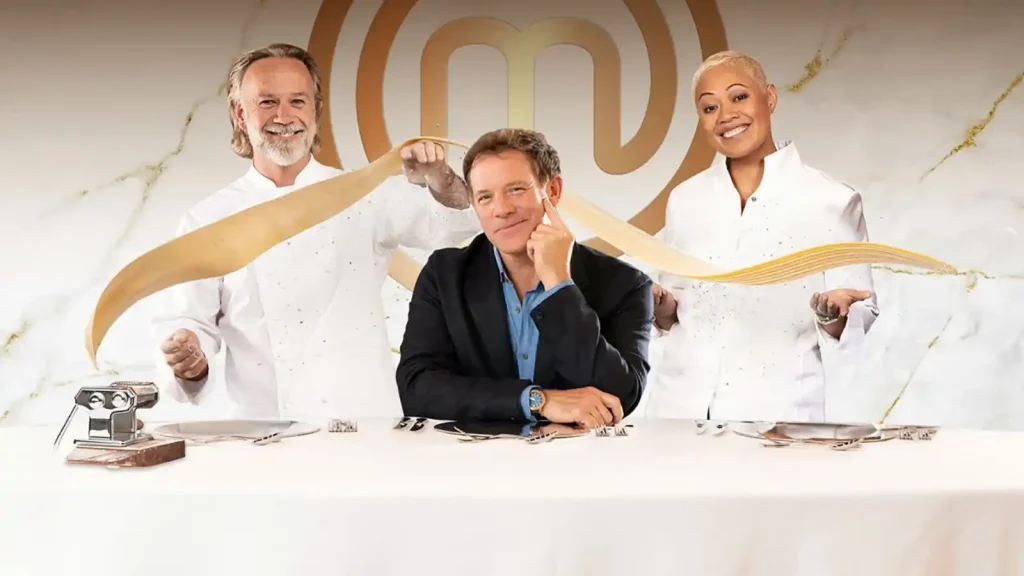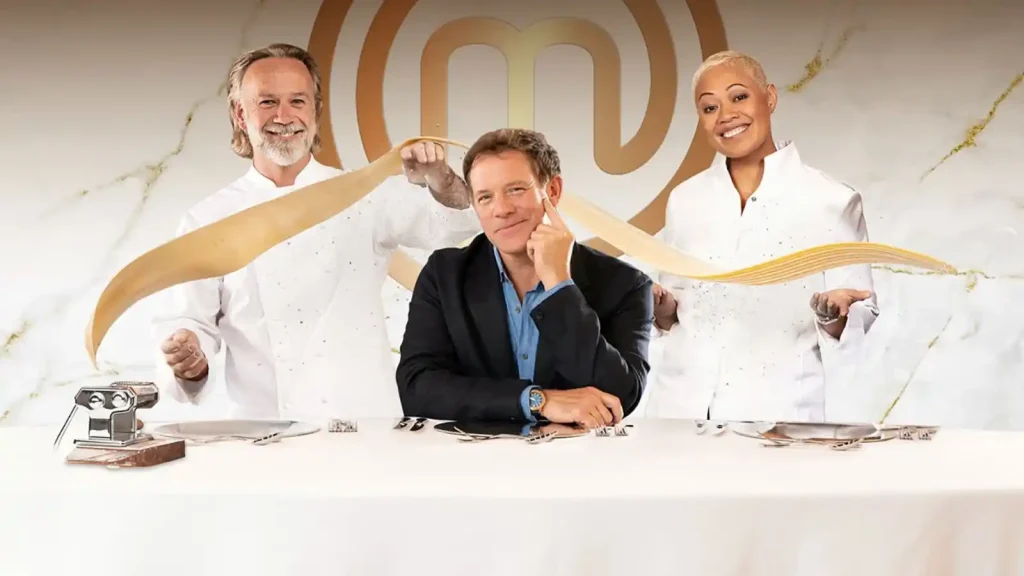
MasterChef The Professionals 2026 episode 9 arrives at quarter-final time, a juncture in the competition where sentiment evaporates and only culinary precision survives. The chefs gathered for this episode are not rookies finding their feet. They are the strongest performers identified across the week, recalled to the kitchen to demonstrate that their earlier success was no accident. The stakes are explicit: impress Marcus Wareing, Monica Galetti, and a panel of the country’s most formidable food critics, and secure a place in knockout week. Fail to deliver, and the journey ends here.
The culinary competition format of MasterChef The Professionals is built on escalating pressure, but the quarter-final represents a particular gear change. There is no gentle warm-up, no scaffolding for confidence. Every plate lands in front of judges who have spent careers distinguishing the genuinely skilled from the merely capable. The chefs understand this dynamic. You can see it in the way they move, the way they pause before answering questions about their food, the way they choose words carefully when describing their intentions.
What makes this episode especially compelling is the layered structure of its challenges. The first test strips back the obvious and forces creativity from constraint. The second opens the kitchen up to an audience far beyond the two resident judges, bringing in voices from professional food writing and criticism. Between these two demands, the chefs must navigate invention, pressure, and the scrutiny of people who eat and evaluate food at the highest level for a living.
The cooking show has always succeeded by placing genuine professionals in genuine jeopardy. These are not amateur enthusiasts discovering that eggs are tricky. These are trained chefs with years of kitchen experience, and yet the challenges devised for MasterChef The Professionals consistently find ways to expose uncertainty, test instinct, and reveal character under pressure. Episode 9 is a concentrated example of everything the competition does well.
Understanding what happens in this episode requires following two distinct phases. The first is the invention test, built around a deliberate misdirect that resolves into a test of how deeply a chef understands a single ingredient. The second is the critics’ table, where a two-course menu must satisfy not only Marcus and Monica but three distinguished guests whose professional reputations rest on the quality of their judgement. Both phases reward chefs who cook with conviction and punish those who hedge.
The episode also carries a particular emotional weight because knockout week sits just beyond it. Every chef in the kitchen knows that the next stage of the competition is where reputations crystallise, where the strongest candidates separate themselves decisively. Securing a place in knockout week is not merely a tactical advantage. It represents recognition that a chef belongs in the conversation about who might become this year’s champion.
MASTERCHEF 2026 has developed a field of strong, characterful cooks. By episode 9, the audience has seen enough of each remaining chef to have formed impressions, preferences, and expectations. The quarter-final either confirms those impressions or complicates them. That tension, between what we expect from a chef and what they actually deliver under maximum pressure, is what sustains attention throughout the episode.
The following sections examine each phase of the episode in detail, tracking the decisions each chef makes, the feedback they receive, and the outcomes that result. The focus remains on the food, the technique, and the judgements delivered by the most demanding panel the competition has assembled this series.
MasterChef The Professionals 2026 episode 9
The Invention Test in MasterChef The Professionals 2026 Episode 9 and the Challenge of Off-Cuts
The invention test opens with a familiar ritual of suspense. Chefs lift their cloches to discover the central ingredient, and the reveal carries its own theatre. The ingredient turns out to be chicken, and there is a visible moment of relief across the kitchen. Chicken is familiar territory. Every professional chef has cooked it hundreds of times. However, the relief is short-lived.
There are no chicken breasts on the bench. Instead, the chefs find thighs, legs, hearts, livers, and wings. The brief is clear and demanding: the dish must scream chicken, must make these secondary cuts the undeniable focus, and must be completed within 70 minutes. This is not a test of whether a chef can cook chicken. It is a test of whether they understand chicken well enough to make its least glamorous parts sing.
Off-cuts demand a different kind of technical thinking. Chicken thighs and legs carry more fat and connective tissue than breast meat, which means they benefit from longer cooking methods but also respond well to high-heat techniques when prepared correctly. Hearts and livers are organ meats with intense flavour profiles that require careful handling to avoid bitterness or toughness. Wings, by contrast, offer gelatin and crisp skin when treated right. Using all of these intelligently in a single dish within 70 minutes is a significant challenge.
The larder is available to the chefs, which means seasoning, aromatics, and supporting ingredients can be sourced. However, the directive that the dish must scream chicken places a constraint on how far supporting elements can travel. The chicken must remain the undeniable star. This rules out approaches where the protein becomes a component in a heavily constructed plate and demands instead that every element amplifies the central ingredient.
Technique and Decision-Making Under Time Pressure
Seventy minutes is simultaneously generous and constraining. A skilled chef can accomplish considerable complexity in that window, but only if decisions are made quickly and commitments are not reversed midway. The invention test rewards those who form a clear plan early and execute it without hesitation. Chefs who change direction halfway through, who second-guess their seasoning or restructure their plating concept, run out of time.
The chefs who perform best in this challenge demonstrate an understanding that off-cuts are not consolation prizes but genuine opportunities. Chicken thighs, handled properly, develop a depth of flavour that breast meat cannot achieve. Livers, balanced with acid and fat, become something approaching luxurious. Wings, rendered down or glazed correctly, provide textural contrast and concentrated savoury intensity. The challenge rewards chefs who think of the ingredient with genuine curiosity rather than strategic resignation.
Marcus and Monica taste each dish with the specificity that defines their judging style. They probe technique, question choices, and identify where a chef’s confidence led them somewhere successful or where ambition exceeded execution. The feedback delivered during the invention test is characteristically direct. Praise is specific rather than general. Criticism names the exact element that failed rather than offering a vague sense of disappointment. This precision is part of what makes the cooking show distinctive at the professional level.
The invention test also functions as a diagnostic tool for the critics’ table challenge that follows. A chef who understands their own cooking style, who can make confident decisions quickly and back them up with articulate reasoning, is likely to translate that confidence into the more formal, high-pressure environment of cooking for the critics. Conversely, a chef who struggles to find their direction in the invention test carries that uncertainty into the next challenge.
MasterChef The Professionals 2026 Episode 9 and the Critics’ Table Format
The critics’ table represents the most scrutinised plates the chefs have yet faced in the competition. Marcus and Monica are joined by Leyla Kazim, Jay Rayner, and Xanthe Clay, three figures whose expertise in food writing and criticism spans publications, broadcasters, and decades of professional eating. Together, they form a panel that is extraordinarily difficult to impress and impossible to deceive.
Jay Rayner is one of the most recognised food critics in British journalism. His writing is characterised by precision, wit, and an unwillingness to soften negative assessments when the food does not merit them. Leyla Kazim brings a perspective shaped by her work across food media, with particular attention to flavour integrity and the honest representation of culinary traditions. Xanthe Clay contributes a background in food writing and recipe development that gives her specific insight into how dishes are conceived as well as executed.
The presence of these three critics transforms the dynamic of the challenge. Marcus and Monica are experienced judges, but they are also invested in the development of the chefs in front of them. The critics carry no such investment. They respond purely to what lands on the plate. A future star, as the brief implies, will be visible to this panel. Someone coasting on technique without genuine culinary personality will not survive the same scrutiny.
Each chef must deliver a two-course menu, which adds a dimension of planning and coherence not present in the invention test. A single dish can stand alone, but a two-course menu must make an argument. The first course sets expectations. The main course either fulfils them or surpasses them. Chefs must think not only about individual dishes but about the relationship between them, about how flavour, texture, and concept evolve from one plate to the next.
Cooking for the Critics and the Standard Expected of MASTERCHEF 2026 Chefs
Cooking for critics in the context of MasterChef The Professionals demands a specific kind of courage. It is not enough to be technically correct. The food must have a point of view. Critics respond to cooking that communicates something about the person who made it, that reveals an understanding of flavour and an opinion about how it should be expressed. Safe cooking, cooking designed primarily to avoid criticism rather than to make a statement, is precisely what this panel can identify and dismiss.
The chefs approach this challenge with varying degrees of clarity about what they want to say through their menus. Some arrive with a strong sense of identity, drawing on personal background, regional influence, or a specific culinary philosophy. Others work from a more technical foundation, building their menus around techniques they trust. Both approaches can succeed, but only if executed with total commitment and genuine skill.
The critics deliver their feedback collectively, which means that the chefs receive a layered and sometimes divergent set of responses. One critic might respond strongly to a flavour decision that another finds slightly imbalanced. Jay Rayner’s directness can be a useful corrective to softer assessments, and the interplay between the critics’ perspectives gives Marcus and Monica additional context for their final decisions. The food is evaluated from multiple angles, which makes it harder for any single dish to rely on a single strength.
Leyla Kazim, Jay Rayner, and Xanthe Clay represent an audience that the chefs will eventually need to satisfy if they pursue careers at the highest level. Restaurants that attract serious critical attention are reviewed by people exactly like this panel. Performing well under this scrutiny is therefore not simply a competition exercise. It is a rehearsal for the professional reality that awaits the strongest competitors.
How the Judges Weigh Invention Against Execution in MasterChef The Professionals
One of the central tensions running through MasterChef The Professionals is the balance between creative ambition and technical delivery. A dish can be conceptually bold and technically flawless, technically accomplished and creatively timid, or, in the worst cases, both ambitious and poorly executed. The judges’ role is to weigh these dimensions against each other and reach a judgement about where a chef currently stands and, crucially, where they might go.
Marcus Wareing’s judging is shaped by his background as a chef who built a reputation on disciplined precision. He responds to cooking that demonstrates genuine craft, where every component has earned its place and nothing sits on the plate without purpose. Monica Galetti brings a complementary perspective, with an emphasis on flavour coherence and the ability to translate creative instinct into dishes that deliver on their promise.
Together, they create a judging framework that values both dimensions. A technically perfect dish that says nothing is unlikely to excite them. An inventive concept that collapses under execution will not impress either. The chefs who succeed are those who manage to bring both qualities to the plate simultaneously, making the difficulty of that combination look effortless. That effortlessness, paradoxically, is one of the clearest markers of genuine skill.
The feedback process is collaborative in the sense that the critics’ responses feed directly into the judges’ deliberations. Marcus and Monica take on board what the critics say, weighting it against their own tasting notes and against the arc of each chef’s performance across the episode. A chef who impressed in the invention test but stumbled at the critics’ table faces a different calculation than one who struggled initially but delivered something exceptional in the formal setting.
The Role of Personality and Culinary Identity in the Quarter-Final
Food writing as a discipline cares deeply about culinary identity, about the question of what a chef actually believes and how that belief manifests in flavour. The presence of Leyla Kazim, Jay Rayner, and Xanthe Clay at the critics’ table introduces this dimension explicitly into the competition. These are not simply evaluators of technical proficiency. They are readers of cooking, people trained to identify when a dish carries genuine conviction and when it is a sophisticated but ultimately empty performance.
The chefs who make the strongest impression are those who cook with a legible point of view. This does not require that the food be experimental or challenging. A classic preparation, executed with total commitment and flavoured with precision, can communicate identity as powerfully as something more innovative. What the critics cannot abide is cooking that seems designed by committee, that hedges its bets by including too many elements or by failing to commit to a specific flavour direction.
MASTERCHEF 2026 has produced a group of competitors who each bring something distinct to the kitchen. By the quarter-final, those distinctions have become clearer. Some chefs have developed a recognisable signature, a way of combining flavours or a preference for certain techniques that makes their food immediately identifiable. Others are still in the process of finding that signature, and the critics’ table is an environment that accelerates that process considerably.
Marcus and Monica’s final decisions about who advances to knockout week reflect a holistic reading of each chef’s performance. Individual dishes matter, but so does the trajectory. A chef who has consistently shown growth, who makes better decisions under pressure at each successive stage, presents a compelling case even if a specific element of their quarter-final performance falls short of perfect.
MasterChef The Professionals 2026 Episode 9 and the Path to Knockout Week
Knockout week is the destination that gives the quarter-final its urgency. The chefs who advance from episode 9 enter a stage where the competition concentrates further, where the remaining candidates all have credible claims to the title and where the margin between success and elimination becomes correspondingly thinner. Securing a place in that environment is a significant achievement, and the chefs who earn it carry a momentum that matters.
The judging deliberations at the end of episode 9 distil everything that has been observed across both challenges. Marcus and Monica speak privately, working through what each chef demonstrated, where they showed genuine quality, and where they left questions unanswered. The critics’ feedback informs but does not dictate. The final call belongs to the two resident judges, and they make it on the basis of who they believe has the depth and the instinct to compete meaningfully in knockout week.
For the chefs who advance, the announcement carries obvious relief and satisfaction. For those who do not, it represents the end of a journey that, depending on the individual, may have lasted several weeks. The cooking show handles this moment with appropriate weight. The chefs who leave are not dismissed cursorily. Their journey is acknowledged, and the quality of what they contributed to the competition is recognised.
The Broader Significance of the Quarter-Final in MasterChef The Professionals 2026
MasterChef The Professionals 2026 episode 9 is significant not only as a competitive milestone but as a demonstration of what professional cooking looks like when it is genuinely tested. The quarter-final distils the competition’s purpose: to identify chefs who can perform at the highest level, under conditions designed specifically to find the limits of their skill and composure.
The invention test and the critics’ table together constitute a comprehensive examination. One tests adaptability and speed of thought. The other tests the ability to construct, present, and defend a considered culinary statement to people whose professional judgement is beyond question. A chef who performs strongly in both challenges has demonstrated something close to complete professional competence within the context of the competition.
The culinary competition format works at its best when it creates conditions that cannot be fully prepared for, where a chef’s instinct, knowledge, and character are called upon simultaneously. Episode 9 achieves this. The off-cuts challenge cannot be rehearsed exactly. The critics’ table cannot be anticipated in its specific composition. What the chefs bring to both is the accumulated experience of their careers, filtered through the specific pressure of this competition.
Jay Rayner, Leyla Kazim, and Xanthe Clay bring a dimension to the episode that elevates it beyond a straightforward cooking exercise. Their presence transforms the critics’ table into a genuine test of whether these chefs are ready for the professional world beyond the competition, a world where critics eat your food and write about it, where reputation is built plate by plate and review by review.
Marcus and Monica, watching all of this unfold and then making the decisions that determine who continues, carry the full weight of the competition’s integrity. Their judgements in episode 9 shape the field that enters knockout week and therefore shape the ultimate question of who becomes this year’s MasterChef The Professionals champion. Everything that follows in the competition flows directly from the decisions made in this quarter-final.
FAQ MasterChef The Professionals 2026 episode 9
Q: What happens during the quarter-final of MasterChef The Professionals 2026?
A: The quarter-final brings together the strongest chefs identified throughout the week. They face two major challenges: an invention test using chicken off-cuts and a formal two-course menu cooked for Marcus Wareing, Monica Galetti, and three leading food critics. Successful chefs earn a coveted place in knockout week, where the hunt for the series champion intensifies considerably.
Q: What is the invention test in MasterChef The Professionals 2026 Episode 9?
A: The invention test challenges chefs to cook with chicken off-cuts, specifically thighs, legs, hearts, livers, and wings. There are no chicken breasts available. Chefs must make the dish scream chicken using only these secondary cuts plus ingredients from the larder. Furthermore, the entire dish must be completed and plated within a strict 70-minute window.
Q: Why does the invention test use chicken off-cuts rather than breast meat?
A: Using off-cuts tests genuine culinary knowledge rather than reliance on familiar premium cuts. Thighs and legs offer deeper flavour through fat and connective tissue. Hearts and livers demand careful handling to avoid bitterness. Wings provide gelatin and crisp texture. Additionally, working with these cuts reveals whether a professional chef truly understands the full potential of a single ingredient.
Q: Who are the food critics joining the judging panel in Episode 9?
A: Three distinguished food writers join Marcus and Monica at the critics’ table. Jay Rayner is one of Britain’s most recognised restaurant critics, known for precise and direct assessments. Leyla Kazim brings expertise across food media with a focus on flavour integrity. Xanthe Clay contributes a background in food writing and recipe development, offering insight into both concept and execution.
A: Each chef must design and cook a two-course menu that demonstrates skill, clear culinary identity, and confident flavour decision-making. The first course sets expectations, while the main course must fulfil or surpass them. However, safe or technically correct cooking alone is insufficient. The critics specifically look for food that communicates a genuine point of view and reveals the personality behind each plate.
Q: How do Marcus Wareing and Monica Galetti differ in their judging approaches?
A: Marcus judges with a strong emphasis on disciplined precision, expecting every component to earn its place on the plate. Monica focuses on flavour coherence and the ability to translate creative instinct into dishes that genuinely deliver. Together, they balance technical rigour with creative evaluation. Furthermore, both take on board feedback from the critics before reaching their final decisions about which chefs advance.
Q: What separates the chefs who succeed in the critics’ table challenge from those who struggle?
A: Chefs who succeed cook with a legible and committed point of view. Critics immediately identify food that hedges its bets or includes unnecessary elements without purpose. A classically prepared dish executed with total conviction can impress as powerfully as something experimental. Conversely, cooking that appears designed to avoid criticism rather than make a statement fails to engage professional critics at this level.
Q: What is knockout week and why is it significant in MASTERCHEF 2026?
A: Knockout week is the stage immediately following the quarter-finals, where all remaining chefs carry credible claims to the title. The competition becomes considerably more concentrated at this point, and the margin between success and elimination narrows sharply. Securing a place in knockout week signals that a chef has demonstrated the depth, instinct, and consistency required to compete seriously for the MasterChef The Professionals 2026 title.
Q: How does the 70-minute time limit affect decision-making in the invention test?
A: Seventy minutes rewards chefs who commit to a clear plan immediately and execute without hesitation. Those who change direction mid-challenge or second-guess seasoning choices consistently run short of time. Additionally, off-cuts like thighs and livers require specific timing to develop properly, meaning technical knowledge must combine with decisive planning. The time limit therefore tests both culinary understanding and professional composure under competitive pressure.
Q: How do the critics’ responses influence the judges’ final decisions in MasterChef The Professionals 2026 Episode 9?
A: Marcus and Monica incorporate the critics’ feedback directly into their deliberations, weighting it alongside their own tasting notes and each chef’s overall performance arc across both challenges. The critics provide layered, sometimes divergent perspectives, giving the judges additional context. However, the final decision rests entirely with Marcus and Monica, who assess which chefs demonstrate the depth and instinct required to compete meaningfully in the next stage of the culinary competition.