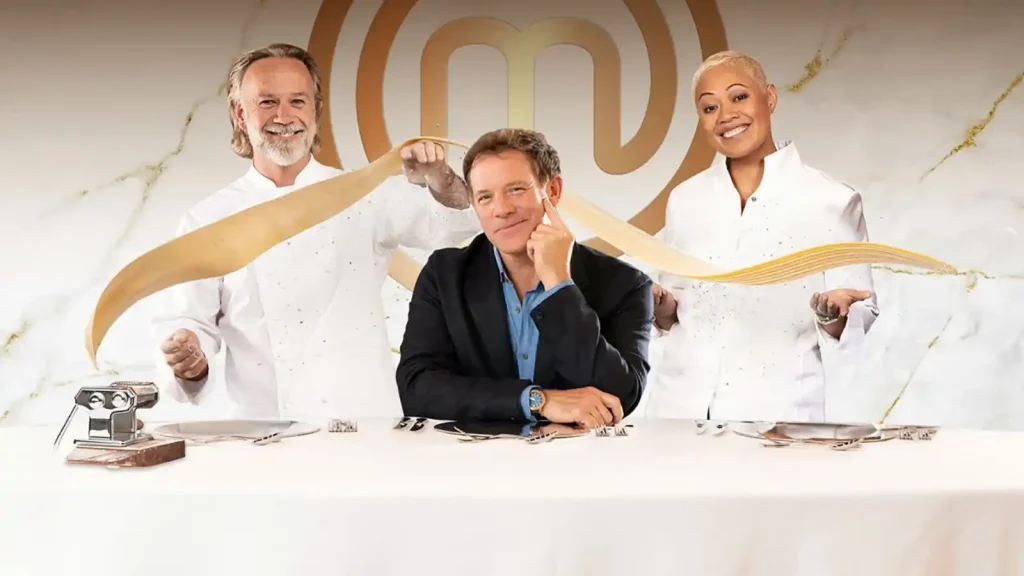
MasterChef The Professionals 2026 Episode 13: Knockout Week Begins
Knockout week has finally arrived on MasterChef The Professionals 2026, and the stakes have never been higher. Thirteen of the most talented chefs in the competition are back. They fought through the heats and quarter-finals to earn their place here. Now, standing on the edge of the semi-finals, every single one of them knows that only ten will survive. This is where ambitions are either realised or shattered, and the kitchen has never felt more electric.
Episode 13 of MasterChef 2026 opens with a familiar but always thrilling challenge: the invention test. For many viewers of this beloved cooking show, the invention test is where true culinary character reveals itself. Marcus Wareing, Monica Galetti, and Matt Tebbut will be watching every decision closely. The larder is generously stocked with an impressive array of ingredients — seafood, meats, vegetables, fruits, herbs, and spices. It reads like a chef’s dream. However, too much choice can quickly become a nightmare.
These chefs are not here by accident, though. Each one has already proven they can deliver brilliance under pressure. Furthermore, they understand that in a culinary competition of this calibre, hesitation is the enemy. The invention test rewards instinct, creativity, and technical precision all at once. So, when faced with a larder full of possibilities, the best chefs don’t freeze — they focus.
After all thirteen chefs present their dishes, the judges face their first major decision of the night. They will select the eight strongest performers from this round. For those chosen, the relief will be enormous. Consequently, their places in the next round are guaranteed, and they can step back and breathe — at least for now. It’s a huge reward for cooking with confidence and clarity when it mattered most.
For the remaining five chefs, however, the journey isn’t over yet. In fact, it’s about to get considerably harder. These five must cook again, and this time, the conditions are tougher. They must work with whatever ingredients remain after the first round has swept through the larder. Think of it like arriving late to a feast — the best cuts are gone, and creativity becomes your most essential ingredient.
There’s an additional twist that raises the pressure even further. If a chef cooked a savoury dish in the first round, they must now produce a dessert. Equally, those who went sweet the first time must now turn to savoury cooking. This is a rule designed to expose any gaps in a chef’s range. In a competition as demanding as MasterChef The Professionals, versatility isn’t optional — it’s essential.
This second-chance cook-off is one of the most revealing moments in the entire MasterChef Professionals series. Some chefs thrive when pushed outside their comfort zone. Others, unfortunately, find that their weaknesses are suddenly impossible to hide. The judges aren’t just looking for competent cooking here. Instead, they want to see adaptability, composure, and genuine skill across the full spectrum of the kitchen.
What makes this stage of MASTERCHEF 2026 so compelling is the human drama woven into every plate. These are real people with genuine dreams. Many have spent years working long shifts in professional kitchens, sacrificing weekends and holidays to master their craft. For them, this isn’t just a cooking show — it’s a once-in-a-lifetime opportunity to prove themselves on the biggest stage in British culinary competition.
The food on display during knockout week is consistently extraordinary. Dishes arrive at the judges’ pass that are imaginative, technically precise, and deeply personal. Some chefs cook food that tells a story — a grandmother’s recipe reimagined, a childhood flavour elevated into something refined and elegant. Others push boundaries with bold flavour combinations that nobody saw coming. Either way, Marcus, Monica, and Matt are tasting food that demands to be taken seriously.
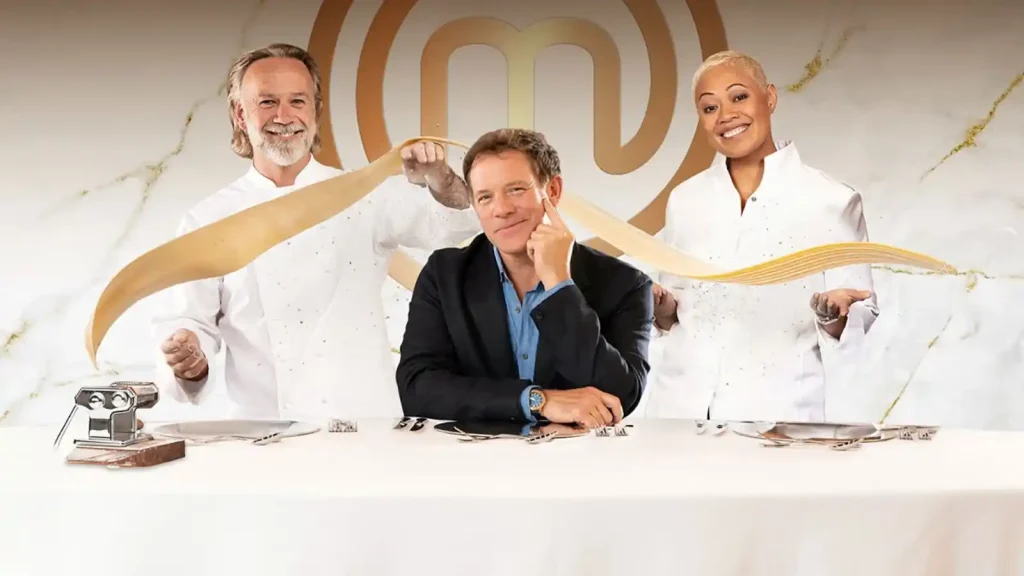
MasterChef The Professionals 2026 episode 13
The judging process, meanwhile, is never easy. These three professionals bring decades of combined experience to every decision. Nevertheless, choosing between talented chefs at this stage of the competition involves more than just tasting. The judges consider consistency, technique, creativity, and the ability to cook under extreme pressure. When the margins are this slim, every detail on the plate counts.
As the episode draws toward its conclusion, the atmosphere in the MasterChef kitchen becomes almost unbearable with tension. The chefs stand together, waiting. Some stare at the floor. Others exchange quiet glances of solidarity. They’ve all cooked their hearts out, and now the outcome is entirely out of their hands. That moment of waiting — suspended between hope and disappointment — is something every fan of this cooking show knows intimately.
Then comes the hardest part of the night. Three chefs will be eliminated. Three journeys that began with such promise will end here, in knockout week. It’s a brutal reality of any culinary competition at this level. Yet, even in elimination, there is dignity. Every chef who walks away from MasterChef The Professionals 2026 does so having demonstrated skill and courage that most people can only dream of.
For the ten chefs who do survive, the road ahead is extraordinary. The semi-finals of MasterChef Professionals represent some of the most exciting and challenging cooking of the entire series. New experiences, extraordinary ingredients, and increasingly complex briefs await. Moreover, the closer these chefs get to the final, the more the competition resembles something truly special — a celebration of everything that makes food so powerful and so deeply human.
Episode 13 of MasterChef The Professionals 2026 is unmissable television. It combines the tension of high-stakes competition with the warmth of genuine human storytelling. Whether you’re a lifelong fan of MasterChef or a newcomer drawn in by the drama, this episode delivers everything you could want. Great food, extraordinary chefs, and moments that remind us all why we love cooking in the first place.
MasterChef The Professionals 2026 episode 13
MasterChef The Professionals 2026 episode 13 marks the most brutal and exhilarating stage of the competition: Knockout Week. Thirteen chefs who have already proven themselves through the heats and quarter-finals return to the iconic kitchen, but only ten of them will advance to the semi-finals. The margin between success and elimination has never been narrower, and the pressure that descends on the kitchen floor is immediate and unrelenting. This is not a moment for consolidation or caution. Every dish, every decision, and every second on the clock carries consequences that could end a culinary career’s most defining chapter.
The structure of Knockout Week is deliberately punishing. Three chefs will leave before the semi-finals begin, and the format is engineered to expose weakness at every turn. Judges Marcus Wareing, Monica Galetti, and Gregg Wallace are watching not just for technical proficiency but for the kind of creative authority that separates a competent chef from a truly exceptional one. The chefs know this. They have watched previous series. They understand that arriving here is an achievement, but surviving here requires something more.
What makes this episode particularly compelling is the diversity of experience in the room. The competing chefs come from different culinary backgrounds, different countries, and different kitchens, yet they are all being measured against the same exacting standard. The cooking show format of MasterChef The Professionals strips away the comfort of a familiar brigade and places each individual entirely on their own terms. There is no head chef to defer to, no sous chef to catch an error. Every plate is a solitary act of professional declaration.
The episode opens with the chefs filing back into the competition kitchen, visibly aware of what is at stake. Some have competed at the highest restaurant levels. Others have built their careers in hotels or private dining. But inside the MasterChef kitchen, those hierarchies dissolve. What remains is only what each chef can produce under pressure, within a time limit, and under the unblinking scrutiny of three of the most experienced judges in British food.
The first challenge of the episode establishes the tone immediately. The chefs are required to cook a dish that represents them — a signature expression of who they are as culinary professionals. This is not a technical test with a prescribed outcome. It is a demand for identity, for the kind of confident self-expression that comes from years of genuine craft. The judges are looking for dishes that tell a story, that demonstrate mastery of technique while simultaneously revealing something personal and distinctive about the chef behind the plate.
What follows over the course of the episode is a masterclass in both brilliance and vulnerability. Some chefs arrive with a crystalline sense of purpose, executing dishes that feel inevitable — as if every element belongs precisely where it has been placed. Others struggle with the weight of the moment, allowing nerves or overcomplicated thinking to interrupt what should be fluid execution. The gap between intention and delivery is rarely more visible than in a high-stakes competition kitchen, and Knockout Week makes that gap impossible to hide.
The judges move through the kitchen with precision, tasting, questioning, and pushing the chefs to articulate their decisions. Marcus Wareing is particularly focused on the relationship between flavour and technique — he consistently asks whether the method serves the ingredient or merely complicates it. Monica Galetti brings an eye for detail that misses nothing, scrutinising textures, temperatures, and the coherence of each component on the plate. Gregg Wallace grounds the assessment in the fundamental question of whether the food is genuinely pleasurable to eat. Together, they form a judging panel that approaches each dish from multiple angles simultaneously.
The collective energy in the kitchen during this episode is unlike anything seen in the earlier rounds. Each chef is acutely aware of the others. The sound of a pan hitting the stove too hard, a brief moment of stillness at someone’s bench, a quiet exhale — all of it registers. This is professional cooking at its most exposed, and the episode captures that tension with remarkable clarity.
MasterChef The Professionals 2026 Episode 13: The Signature Dish Challenge
The signature dish challenge sits at the philosophical heart of Knockout Week. Unlike technical challenges where chefs reproduce a prescribed recipe, or invention tests where they must improvise from a random selection of ingredients, the signature challenge is an act of declaration. Each chef must present a dish that defines their professional identity. For experienced culinary competition veterans, this is both a gift and a trap. Having too many ideas can be as paralysing as having none.
Several chefs arrive with dishes rooted in their cultural heritage. One competitor draws on West African flavour profiles, using bold spicing and layered textures to create a plate that is immediately distinctive. The judges respond to the clarity of intention, noting that the seasoning is precise and the cultural reference is worn confidently rather than worn as a costume. This kind of authenticity is exactly what the challenge is designed to elicit, and when it lands correctly, the result is a dish that generates genuine conversation.
In contrast, another chef presents a technically intricate plate built around classical French technique. The precision is evident — the cuts are clean, the sauce has depth, and the construction is meticulous. However, Marcus Wareing questions whether the dish reveals anything personal about the chef, or whether it simply demonstrates a thorough training. This is a distinction that runs throughout the episode: technical ability is expected at this level of the culinary competition, but technique in service of genuine voice is what the judges are actively seeking.
The signature challenge also produces some of the episode’s most memorable failures. One chef’s concept is sound but the execution falls short in the final moments. A key component is slightly overcooked, altering both the texture and the flavour balance of the entire plate. In a competition at this level, such errors are not forgiven. The chef knows it before the judges have spoken — the moment of realisation visible in the brief pause before plating. The judges are direct without being cruel, but their message is unambiguous: at this stage, the margin for error is effectively zero.
Pressure and Precision in the MasterChef The Professionals 2026 Kitchen
The Knockout Week kitchen operates at a different frequency from any earlier round in MasterChef The Professionals 2026. The chefs who remain are all genuinely talented, which means the differentiating factors are increasingly subtle. Confidence, composure, and the ability to think clearly under extreme pressure become as important as knife skills or sauce-making. The kitchen itself seems to know this — the atmosphere is tighter, the silences more loaded, and the tempo of work somehow both faster and more deliberate.
One of the recurring themes of this episode is the management of complexity. Several chefs attempt dishes with multiple components, each requiring precise timing and independent attention. The risk of this approach is that the kitchen becomes a series of competing demands, and the chef must be capable of holding all of them in mind simultaneously without losing focus on any single element. When this works, the resulting plate has a cohesion and completeness that simpler dishes cannot match. When it fails, the entire construction unravels.
A notable moment comes when one chef — working on a multi-component fish dish — realises mid-cook that one element is behind schedule. The decision made in that moment is instructive. Rather than attempting to rush the element and risk compromising it further, the chef makes the calculated choice to simplify, removing the component and restructuring the plate around what remains. The judges acknowledge this as evidence of professional maturity. The dish is not what was intended, but it is coherent, well-executed, and confidently presented. In a culinary competition of this intensity, the ability to adapt without panicking is itself a form of mastery.
Monica Galetti’s observations during the pressure rounds are particularly sharp. She notes when a chef’s plating lacks conviction — when the arrangement of elements on the plate suggests uncertainty rather than intention. Plating at this level is not decorative but communicative. The way a dish is presented tells the judges how the chef understands the relationship between flavour, texture, and visual harmony. A hesitant plate is often the visible expression of a hesitant cook, and at Knockout Week, hesitation is costly.
The Knockout Judgement: MasterChef The Professionals 2026 Eliminations
The elimination process in this episode of MasterChef The Professionals 2026 is conducted with the gravity it deserves. After both major challenges are completed and every dish has been assessed, the three judges deliberate. The conversations that precede the elimination decisions are substantive — the judges disagree on certain chefs, advocate for particular performances, and weigh inconsistency against potential. The process is serious and the chefs who leave do so having been genuinely considered.
Three chefs are eliminated before the semi-finals. The decisions, when announced, carry visible emotional weight. These are professional cooks who have dedicated significant time and effort to reaching this stage, and the end of their competition journey is not trivial. The show handles these moments with appropriate respect, allowing the departing chefs to speak briefly about their experience and the lessons they carry forward. These are not defeated individuals but professionals who tested themselves at the highest available level in British cooking.
The chefs who survive into the semi-finals emerge with a clarity of purpose that is palpable. Having navigated Knockout Week, they understand more precisely what the judges are looking for and, perhaps more importantly, they understand their own capabilities and limitations with greater honesty. The semi-finals will demand even more, but the ten survivors have demonstrated that they possess the fundamental qualities required to compete at the top tier of the culinary competition.
Gregg Wallace’s commentary during the elimination sequences is characteristically direct. He speaks in terms of flavour and pleasure rather than technique and theory, but his assessments are no less penetrating for that. When he describes a dish as having genuinely moved him, the compliment carries enormous weight. When he expresses disappointment, it is specific and grounded — he can point to the moment on the plate where the experience fell short. This specificity is what makes the judging on this cooking show genuinely educational rather than merely theatrical.
Culinary Range and Ambition Across the Competing Chefs
One of the most striking aspects of MasterChef The Professionals 2026 at this stage is the breadth of culinary ambition on display. The competing chefs are not drawing from the same well. Where one chef constructs a dish rooted in Nordic minimalism — sparse, cold-climate ingredients, restrained seasoning, a focus on fermentation and curing — another builds something entirely different: a richly layered plate drawing on South Asian spicing traditions, bold aromatics, and vivid colour. The range is extraordinary and reflects the diversity of modern British professional cooking.
This diversity is not merely aesthetic. It speaks to the different culinary educations, cultural inheritances, and professional experiences that the chefs bring into the competition kitchen. A chef trained in a Michelin-starred French brigade approaches flavour construction differently from one who learned their craft in a family restaurant focused on traditional regional cooking. Neither approach is superior in the abstract, but in the specific context of a dish on a plate, the judges are asking whether the approach has been executed with integrity and skill.
Several chefs demonstrate the ability to synthesise influences — to draw on multiple culinary traditions and create something coherent and original from the combination. This is among the most demanding forms of creative cooking because it requires not just technical competence in multiple traditions but also the taste and judgement to know when the synthesis is working and when it has become confused. The chefs who manage this successfully in the episode produce some of its most memorable food.
Meanwhile, other competitors stick closely to what they know, executing within a narrower range but with exceptional depth of knowledge. There is a compelling argument for this approach at this stage of the competition. A dish that explores the full potential of a single ingredient or technique, done with absolute authority, can be more impressive than an ambitious multi-cultural construction that loses focus. The judges respond to both approaches, provided the execution is commensurate with the intention.
MasterChef The Professionals 2026 and the Language of Fine Dining
The food produced during this episode of MasterChef The Professionals 2026 reflects the broader language of contemporary fine dining in Britain, while also pushing at its edges. Several dishes engage with current trends — fermented elements, live fire cooking techniques, elevated comfort food aesthetics — but the most compelling plates do so with purpose rather than fashion. The judges are experienced enough to distinguish between a chef who understands why a technique works and a chef who has simply observed that it is currently in favour.
Marcus Wareing is particularly attuned to this distinction. His questions during tasting frequently probe the reasoning behind a chef’s choices. Why this cooking method? Why this combination of flavours? Why this particular texture at this point on the plate? These are not rhetorical questions — they are requests for the chef to demonstrate genuine understanding. A chef who can answer these questions with confidence and clarity, whose decisions are rooted in real knowledge and considered intention, impresses Wareing in a way that flawless execution alone does not.
The cooking show format of MasterChef The Professionals creates an artificial context — no restaurant service, no real diners, no brigade — but the standards applied within it are entirely authentic. The judges are not applying competition-specific criteria but the same rigorous standards they would apply in any serious professional environment. This is what distinguishes the programme from purely entertainment-driven formats. The cooking is real, the criticism is real, and the standard being pursued is the genuine standard of professional excellence.
Texture is a recurring concern throughout the episode. Judges make specific, repeated observations about dishes where the textural range is either too narrow or inappropriately varied. A plate that offers only soft elements lacks the contrast that makes eating a sustained pleasure. Conversely, a plate that introduces too many competing textures can become fatiguing. The best dishes in the episode demonstrate an understanding of texture as a compositional element — something to be designed rather than allowed to happen by default.
Technical Excellence and Its Limits in This Culinary Competition
At the level of Knockout Week in any culinary competition, technical excellence is a baseline rather than a distinction. Every chef in the room can execute a classical sauce, break down a whole fish, or construct a clean terrine. What the judges in MasterChef The Professionals 2026 are probing for is what exists beyond technique — the creative and personal dimension that transforms a technically proficient dish into a genuinely compelling one.
This is the central challenge of the episode, and it is one that not all the chefs resolve successfully. Some competitors produce dishes of impeccable technical quality that nonetheless leave the judges unmoved. The food is correct in every measurable respect, but it does not generate the kind of response that signals genuine connection between the cook and the food. The judges can identify this quality — or its absence — with remarkable consistency, and they articulate it with a directness that is instructive.
The chefs who succeed most fully in this episode are those who have found a way to make their technical skills serve an expressive purpose. Their dishes are not demonstrations of what they can do but statements of how they think and what they value. This distinction is subtle but it is the difference between passing and excelling in the context of this competition. The judges respond to it immediately and viscerally, and the best moments in the episode are those where a chef’s food generates a visible reaction from all three judges simultaneously.
In this way, the episode functions as a distillation of what professional cooking at the highest level actually demands. It is not enough to have trained rigorously, to have worked in excellent kitchens, or to have accumulated years of experience. All of that is necessary but not sufficient. The additional quality — the creative intelligence, the personal conviction, the ability to make food that speaks — is what Knockout Week is specifically designed to test.
What MasterChef The Professionals 2026 Episode 13 Reveals About Modern British Cooking
This episode of MasterChef The Professionals 2026 offers a genuinely revealing snapshot of where professional cooking in Britain currently stands. The chefs competing here are not representative of cooking in general but of its aspirational leading edge — the generation of professionals who are shaping what British restaurant culture will look like over the next decade. Their preoccupations, techniques, and flavour sensibilities are telling.
Several themes emerge across the dishes produced. There is a strong current of ingredient-led cooking — a commitment to sourcing specific, high-quality produce and allowing that quality to dictate the direction of the dish rather than imposing a predetermined concept. This philosophy, associated most directly with the farm-to-table movement but now thoroughly embedded in fine dining culture, is visible in multiple dishes during the episode. Chefs speak about their ingredients with evident passion, and the judges respond positively to cooking that respects the integrity of its materials.
There is also a striking confidence in cultural specificity. Chefs are less inclined than in previous generations to neutralise their cultural identities in pursuit of a generic fine dining aesthetic. Instead, they are bringing the full weight of their culinary heritage into the competition kitchen and presenting it on their own terms. The result is a richness and variety of flavour reference that makes for an exceptionally interesting episode to watch and, presumably, to taste.
The episode also reveals the psychological demands of elite culinary competition in stark terms. Several chefs who are technically more than capable of producing semi-final-standard food fall short because the pressure of the moment disrupts their concentration. This is not a failure of cooking ability but of the particular mental resilience that competition demands — a quality distinct from professional competence and one that must be developed separately. The chefs who succeed in this episode, who advance to the semi-finals with confidence and authority, have demonstrated both forms of excellence. They can cook at the required level, and they can do so when the cost of failure is highest. That combination is precisely what the semi-finals will continue to test.
FAQ MasterChef The Professionals 2026 episode 13
Q: What is Knockout Week on MasterChef The Professionals 2026?
A: Knockout Week is the stage where the remaining thirteen chefs compete for ten semi-final places. Three chefs are eliminated before the semi-finals begin. It is the most pressurised round in the competition, designed to separate the strongest performers from those who cannot maintain their level under extreme scrutiny.
Q: How many chefs competed in MasterChef The Professionals 2026 episode 13?
A: Thirteen chefs returned for Knockout Week in episode 13. All thirteen had already progressed through the heats and quarter-finals. However, only ten survived to reach the semi-finals. Three competitors were eliminated following the judges’ deliberations at the end of the episode.
Q: What is the signature dish challenge in MasterChef The Professionals 2026?
A: The signature dish challenge requires each chef to present a dish that defines their professional identity. Unlike technical tests with prescribed outcomes, this challenge demands creative self-expression. Judges assess whether the dish reveals genuine culinary voice, not merely technical competence. It is one of the most personally revealing challenges in the competition.
Q: Who are the judges on MasterChef The Professionals 2026?
A: The three judges are Marcus Wareing, Monica Galetti, and Gregg Wallace. Marcus focuses on the relationship between technique and flavour. Monica scrutinises texture, temperature, and plate coherence. Gregg assesses whether the food delivers genuine pleasure. Together, they evaluate every dish from multiple professional perspectives simultaneously.
Q: What do the judges look for beyond technical skill in this culinary competition?
A: Technical excellence is considered a baseline at Knockout Week rather than a distinguishing quality. Additionally, the judges seek creative intelligence, personal conviction, and the ability to make food that communicates something genuine. A dish that is technically correct but emotionally inert will not impress. Chefs must demonstrate both precision and expressive purpose.
Q: How does MasterChef The Professionals 2026 episode 13 reflect modern British cooking?
A: The episode showcases the diversity of contemporary British professional cooking. Chefs draw on West African, South Asian, Nordic, and classical French culinary traditions. Furthermore, a strong current of ingredient-led cooking runs throughout, with chefs prioritising high-quality sourcing. Cultural specificity is embraced confidently rather than neutralised for a generic fine dining aesthetic.
Q: What role does pressure management play in MasterChef The Professionals 2026 Knockout Week?
A: Pressure management is a critical differentiator at this stage of the competition. Several chefs with strong technical ability fall short because the intensity of Knockout Week disrupts their concentration. Composure, clear decision-making, and the ability to adapt mid-cook are as important as classical culinary skills. Mental resilience is a distinct quality the competition specifically tests.
Q: Why is plating considered so important on this cooking show?
A: Plating at this level is communicative rather than purely decorative. The arrangement of elements on a plate tells the judges how a chef understands the relationship between flavour, texture, and visual harmony. Monica Galetti specifically notes when plating lacks conviction. A hesitant presentation often signals a hesitant cook, and at Knockout Week that hesitation carries a real cost.
Q: How do chefs handle mistakes during MasterChef The Professionals 2026 Knockout Week?
A: The strongest chefs adapt rather than panic when errors occur mid-cook. In one notable instance, a competitor realised a component was behind schedule and calmly restructured the dish around what remained. The judges regarded this as professional maturity. However, errors such as overcooking a key element are rarely forgiven at this stage, as the margin is effectively zero.
Q: What qualities do the ten chefs who advance from MasterChef The Professionals 2026 episode 13 demonstrate?
A: The ten chefs who reach the semi-finals demonstrate both technical mastery and the creative authority to make food that generates genuine responses from all three judges. Furthermore, they prove they can perform at their best when the cost of failure is highest. Knockout Week tests not only what a chef can cook but also who they are as a professional under pressure.