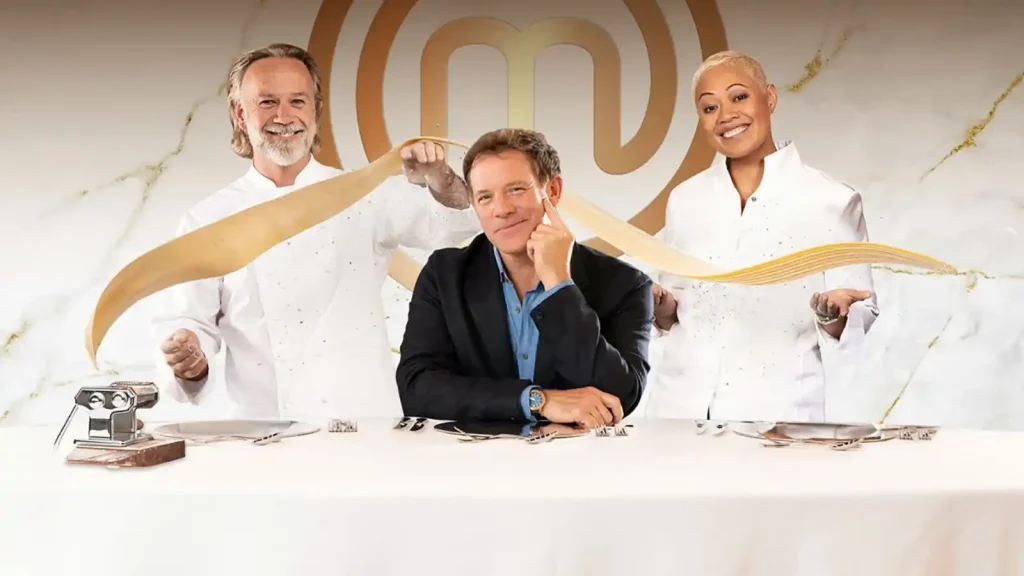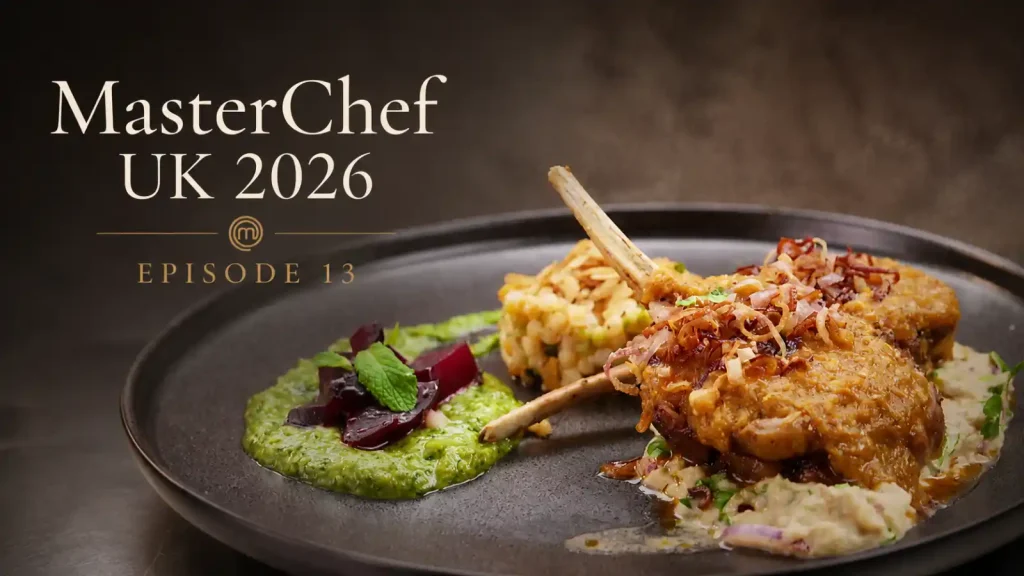
MasterChef UK 2026 episode 13 marks knockout week, and with only 14 amateur cooks still standing, the competition is about to get brutal. Judges Anna Haugh and Grace Dent are turning up the heat, splitting the remaining contestants into groups and demanding the kind of food that earns a place on a real restaurant menu. The stakes could not be higher. Two cooks will go home. The rest will get the chance of a lifetime.
The first group of seven faces that challenge head-on. Anna and Grace have made their expectations clear: one dish, restaurant-ready, good enough to appear on a menu, in a pop-up, or even in a cookbook. Serious technique is non-negotiable at this stage of the competition. The judges need to see precision, ambition, and the ability to thrill a paying customer — not just competent home cooking. Two of these seven will be eliminated. The others will move forward into territory none of them has entered before.
Those five survivors earn a place in a professional kitchen for the first time. Their destination is Roe restaurant in Canary Wharf, a celebrated London venue built entirely around the principles of sustainability and seasonality. For these amateur cooks, walking through the doors of Roe is not simply a prize — it is the closest thing to a professional culinary career most of them have ever experienced. Roe sets a high bar. What happens inside will test everything they have.
Running service that day are Jack Croft and Will Murray, two chefs who built their reputations working alongside Heston Blumenthal. Their backgrounds speak for themselves. Both learned their craft under one of the most technically demanding and creative minds in modern gastronomy, and that standard shapes everything they expect from the people cooking in their kitchen. The contestants will not have one head chef watching them. They will have two.
The menu at Roe reflects the ambition of the restaurant itself. Highlights include a lobster doughnut — precise, technically complex, and unforgiving — alongside honey-glazed lamb skewers and a standout banana dish unlike anything the contestants will have attempted before. Each plate calls on a different set of skills. Each one requires the amateurs to absorb and apply techniques quickly, under real lunch service conditions, with no margin for error. This is not a controlled competition environment. This is a working kitchen, and the food needs to reach the standard of chefs with years of professional experience.
That gap between home cooking and professional service is exactly what knockout week in MasterChef UK is designed to expose. Anna and Grace have always been clear that emotional investment alone does not make a great chef. Skill does. Composure does. The ability to execute a dish under pressure, repeatedly, to the same standard every time — that is what separates the contestants who belong in a professional kitchen from those who do not.
The pressure this episode places on all seven cooks is deliberate. Judges Anna Haugh and Grace Dent are not looking for ambition without delivery. They want to see contestants match their dreams with the technical ability to back them up. Every plate that leaves the pass is a statement. For some, it will be a statement strong enough to keep them in the competition. For two of them, it will not be.
Roe restaurant’s reputation in Canary Wharf makes it a fitting setting for a test of this magnitude. Jack Croft and Will Murray have built a kitchen culture rooted in exacting standards and creative discipline — values shaped directly by their time working under Heston Blumenthal. The amateurs arriving for service will feel that culture the moment they enter. There is nowhere to hide in a kitchen run by chefs of this calibre.
MasterChef UK 2026 episode 13
This year’s MasterChef UK has produced remarkable cooking across the knockout rounds. What episode 13 offers is something different: not just a test of skill in isolation, but a live demonstration of whether these contestants can function as part of a professional team, in a professional space, delivering food to real diners who expect nothing less than excellence. The lobster doughnut alone demands a level of precision that takes experienced cooks years to master. The lamb skewers require timing and control. The banana dish asks for creativity married to discipline. All of it must come together within the controlled chaos of a real lunch service.
The outcome of this episode will define which amateurs are genuinely ready to take the next step and which ones, despite their talent, are not yet there. Grace Dent and Anna Haugh have seen enough competition cooking to know the difference between potential and readiness. Roe restaurant, with Croft and Murray watching from the pass, gives them the perfect conditions to make that call. Only the cooks who deliver under these conditions move forward. The business end of MasterChef UK 2026 has arrived.
MasterChef UK 2026 Episode 13: Knockout Week Cuts Deep as Amateur Cooks Face Their First Professional Kitchen
MasterChef UK 2026 episode 13 marks one of the most consequential turning points in Series 22. Knockout week has arrived, and 48 home cooks have been whittled down to just 14. The first group of seven faces two defining tests in a single day: cook a dream dish worthy of a restaurant menu, then survive a full professional lunch service at one of London’s most talked-about dining destinations. Judges Anna Haugh and Grace Dent have promised the stakes are higher than anything these amateurs have experienced. They were not exaggerating.
The episode’s two-part structure — a knockout cook-off followed by an immediate restaurant shift — is deliberately designed to break the comfortable rhythm contestants have settled into. Reaching knockout week, as one cook puts it, “kind of resets the pressure.” From now on, every dish must shout MasterChef Champion. That is no longer a motivational phrase. For two of the seven, it is their final brief.
The five who survive earn their place at Roe, an acclaimed sustainability-driven restaurant in Canary Wharf run by executive chefs Jack Croft and Will Murray — two trailblazers who met while working under the legendary Heston Blumenthal. What unfolds across these kitchens is a portrait of seven very different people pushing themselves past every limit they knew.
The Dream Dish Brief That Defines MasterChef UK 2026 Episode 13
Anna and Grace frame the knockout task with unusual clarity. Each contestant must cook one dish — a signpost on where they want to go as a cook. It could sit on a restaurant menu, headline a pop-up, or anchor a cookbook. Crucially, it must reflect genuine culinary ambition, not just competence. With one hour and 45 minutes on the clock and two eliminations guaranteed, the psychological weight lands immediately.
The seven cooks bring wildly different answers to the brief. Sean, a plumber from Bolton by way of a very understanding colleague covering his calls, opts for a reverse-seared fillet of beef. Reversing the traditional cooking order — oven first, then sear — he serves it alongside pavé potatoes layered with cream and garlic, fried parsnip crisps, beetroot purée, blue cheese mousse, and a red wine sauce. The pavé alone demands serious knife work: potatoes sliced thin, layered up, cooked, cut out, then fried. Anna observes that the blue cheese mousse could easily overpower everything else on the plate. It’s a bold call for a cook who describes himself as a meat-and-two-veg man whose dishes have gradually developed a “sense of finesse.”
Sean’s dream, casually dropped into conversation, is to travel around Europe tasting different foods. “Sounds like a cookery programme,” says Anna. He grins. You never know.
Jhane’s Pierogi and the Dish That Carried a Family’s Grief
Of all the food stories told in MasterChef UK 2026 episode 13, Jhane’s is the one that lands differently. A technology programme manager, she has consistently stunned the judges with creative, flavour-forward cooking. For her dream dish, she reaches into a deeply personal space.
Her choice is Polish pierogi — dumplings — filled with Jamaican peppered prawns and lobster, spiked with scotch bonnet heat, and served with a lobster and peppered prawn sauce topped with crispy leeks and onions. The cultural mash-up is deliberate. Her partner has a Polish background, and his mother — who passed away recently — made pierogi every Christmas without fail. Last Christmas was the first without her. Jhane made them herself. “This dish,” she explains quietly, “was really my way of showing my family, their family, love.”
Anna calls the fusion idea clever. Grace is more specific in her praise: the pierogi casing is thin and accomplished, and the Jamaican pepper sauce is something she adores. The flavours, Anna notes, are superb. Jhane steps back from the bench emotional. “That was really my family and me on a plate.”
It is, by some distance, the most personal dish of the round.
Daniel’s Ancient Britain Ambition and a Broth That Divides Opinion
Daniel — an actor and writer living with bronchiectasis, a serious progressive lung disease that he speaks about with disarming honesty — cooks for entirely different reasons than most. “No matter what hurdle’s put in front of you, you can still follow your dreams.” His goal is a Welsh restaurant he’d call “Fi Daniel,” meaning Daniel’s Den. The food dream is specific and rooted.
His dream dish leans into ancient and Celtic British cuisine: oak-smoked pork chop with a suet leaf pudding — his take on a traditional nettle pudding using sorrel, watercress, spinach, and fenugreek — served with a pork bone broth lifted with fennel seeds and star anise, pickled walnut ketchup, confit golden beetroot, and a pork crackling crumb. It is inventive, technical, and unmistakably his own.
The judges acknowledge the ambition immediately. The smokiness of the pork is delicious, and the fat is melt-in-the-mouth. The broth has real pork depth. However, Anna finds the broth slightly too sweet, and Grace points out that the leaf pudding lacks enough seasoning to make its character register beyond being a suet pudding. The bacon crumb, she concedes, is great.
Daniel walks away disappointed. He wanted them to want to finish every mouthful. He didn’t quite get there.
Jamie Brings Scotland to the Plate — and Pays for One Decision
Jamie, a senior product manager with dreams of running a boutique Highland hotel, has been championing Scottish produce throughout the competition. His dream dish is a natural extension: pan-fried Scottish venison loin with a juniper and black pepper crust, celeriac fondant wrapped in cavolo nero, black pudding and potato croquette, mushroom purée topped with king oyster and chanterelle mushrooms, and a venison port and blackberry sauce.
The plate represents genuine skill and obvious love for where he is from. The celeriac fondant is buttery and cooked right through. The silky mushroom purée demonstrates technique. The sauce has been made from scratch.
But the venison is too rare. Grace finds it almost so rare in places that she can’t enjoy it. Anna goes further: the juniper crust is too heavy, and the black pepper is aggressively spicy, obscuring rather than enhancing the meat. Jamie knows it himself. “I’ve done that better at home,” he says. The pressure of the clock caught him.
It is the critical error that will cost him.
Antos, Sabina, and Kirsty: Three More Plates with Something to Prove
Antos, a corporate banking relationship manager who dreams of eventually becoming a MasterChef judge himself, is one of the competition’s most distinctive cooks. He takes Polish cuisine and fuses it with influences from around the world — on this occasion, merging Peking duck tradition with classic Polish pierogi. His dish: plum-glazed duck breast alongside Chinese-inspired Peking duck leg pierogis, charred baby leeks and plums, a burnt onion and plum purée, and a duck sauce dense enough that Grace describes it as “the duckiest duck sauce I’ve ever had. Everything but the quack is in there.”
The judges had worried pre-tasting that plum repeated so many times across the plate would become cloying. It doesn’t. Anna calls the pierogis genuinely evocative of Peking duck and says she’d quite like a whole plateful. Grace is warm and enthusiastic. Antos exhales.
There is also an unplanned comedy beat: two separate contestants have chosen pierogi as their dream dish. When Anna points it out to Antos, he laughs with exasperation. “I thought I had carte blanche on Polish food, and now suddenly people are coming in and stealing my thunder.”
Sabina, a charity consultant who describes the competition as having turned her into a far more innovative cook, brings garam masala-spiced lamb chops with homemade baba ganoush, a feta and turmeric-spiced couscous salad, roasted beetroot, and a creamy cashew nut pasanda sauce finished with a vibrant mint and coriander purée. Grace calls the lamb chops a showstopper — beautifully cooked, the pasanda creamy with a pleasant acidity, the baba ganoush smoky and well-matched to the meat. It is, by any reasonable measure, a good plate of food.
Kirsty, a proud Bolton-born Lancastrian, calls her dish “A Northern Embrace.” She builds a Lancashire hotpot alongside a cannon of lamb, a lamb bon bon, glazed balsamic beetroot on celeriac purée, and minted chantenay carrots. Grace loves the heart of the hotpot — a rich, heavenly lamb stew under perfectly layered potato — but finds the surrounding elements drier and less seasoned. Anna dislikes the sauce, which has had fat boiled directly into it, leaving the texture unpleasant. The hotpot itself is a triumph. The execution around it is not.
Two Eliminations and Five Survivors: The Knockout Verdict
Four names are called through without hesitation: Jhane, Antos, Sean, and Sabina. That leaves Kirsty, Daniel, and Jamie competing for the single remaining spot.
The deliberation is taut. Jamie’s venison was underdone and overly spiced despite skilled supporting elements. Daniel’s pork was delicious at its best but the broth ran too sweet and the leaf pudding lacked seasoning punch. Kirsty’s hotpot was genuinely wonderful but the broader plate was under-seasoned and the sauce was flawed. All three had errors. Only one place remained.
Jamie is eliminated first. He leaves with grace and honesty: the competition has reignited his passion for food, and he intends to keep pushing himself. Kirsty is the second to go. She is visibly proud. “I’ve really pushed myself out of my comfort zone. I will never, ever forget this.”
Daniel survives to face the professional kitchen.
Roe Restaurant in Canary Wharf: Where the Real Work Begins
There is no time to celebrate. The five survivors — Jhane, Antos, Sean, Sabina, and Daniel — are told to get a good night’s sleep and then head to London’s Canary Wharf to cook at Roe restaurant.
Roe opened in 2024 as the latest venture from Croft and Murray, who founded their sustainability-driven Fallow restaurant together in 2019 after bonding over gastronomy while working for Heston Blumenthal. Jack recalls the moment Will arrived on trial in Blumenthal’s Dinner kitchen, where Jack was chef de partie: the sous chef brought Will over, introductions were made, and almost immediately the response was a pointed direction to get started. “Green beans. Go.” The partnership that would define both men’s careers began in that kitchen.
Today Fallow can handle a thousand covers on a Saturday without breaking a sweat. Their social media presence — sharing techniques on everything from perfect steak temperatures to every sauce derivable from a velouté — has earned them 3.5 million followers. Roe, by contrast, is bold and unapologetically in your face. Jack describes it as being as much about theatre and service as about the food itself. The amateurs are walking into an arena designed to push even experienced professionals.
Each contestant has three hours to prepare and will cook through a full booked lunch service under two head chefs simultaneously.
The Lobster Doughnut and the Pizza Oven: Technical Extremes in a Professional Service
Antos handles the starter station and faces the restaurant’s showpiece dish: the lobster doughnut. A ring doughnut fried to order, coated in miso icing and lobster mayonnaise, topped with two precisely cooked pieces of lobster tail and finished with lobster butter. The visual is engineered to recall the nostalgia of a fairground ring doughnut while delivering fine-dining luxury. Will makes clear from the start that the cooking on the lobster tail will be particularly demanding — the target temperature is 56 degrees on a very hot grill, using very expensive lobster. There is no room for error.
Antos has never cooked lobster. He has never made a doughnut. He understands both things as he steps in front of the fryer. The opening orders arrive immediately — six lobster doughnuts — and the early doughnuts are misshapen and burning through the batter supply. Three tables are waiting. Will is direct: they are running out of mix, and they cannot afford more waste. Antos finds the pressure traumatising. “Everything’s needed five minutes ago.”
Sabina manages the second starter: octopus flatbread. Two whole octopus are cleaned and butchered, the meat diced and mixed with fried crispy shallots, garlic, and red chillies. The flatbreads are made to order and cooked in a 350-degree pizza oven, a heat environment demanding constant attention to avoid burning. Will scores her first attempt a solid nine out of ten. She gets there. By contrast, Antos’s doughnuts go out after the flatbreads for the early tables — the reverse of what the restaurant intended.
The turnaround in Antos’s story, however, is the most satisfying arc of the service. By the final orders, his technique has clicked. Will stops at the pass: “These are absolutely next level.” Antos, who had been traumatised barely an hour earlier, calls the last doughnuts perfect himself.
Skewers, Venison, and a Dessert Built to Deceive
On mains, Sean is responsible for the honey-glazed lamb shoulder skewers with burnt onion yoghurt, spiced carrot, crispy curry leaves, pickled chillies, and a tandoori mushroom and cabbage shawarma. Coordinating two skewers with very different cooking requirements — the lamb wants a charred crust while the spiced mushroom will colour and burn quickly — is the central challenge. On a busy service, the grill can carry 25 simultaneously. Sean takes to it methodically. By his final skewers of the day, Jack calls them the best of the service. Will agrees: the cookery throughout has been great.
Jhane handles the venison haunch, the most technically demanding main. Venison haunch is supremely lean — no fat means overcooked very quickly. She has never cooked venison before and admits she’s finding speed to be her biggest obstacle. But she keeps her head down, builds pace, and sends plates that earn genuine praise. The walnut harissa pesto with creamy mashed potato is called excellent alongside the beautifully cooked, pink-centred meat.
Daniel handles dessert: a fake banana. It is, visually, a replica of a ripe banana — built from a frozen mascarpone and caramel jam construction piped into a banana-shaped mould. The kitchen heat becomes the immediate enemy. Once plated, the dessert begins melting. The margin is seconds. Daniel learns to work faster than he has ever worked before, developing his rocher technique by necessity under fire. The final plates, Jack and Will agree, are executed beautifully.
Anna and Grace, tasting across the service, are impressed in aggregate. The quality of the food ramped up with every plate sent. “It was sink or swim,” says Anna. “They really excelled today.” Grace simply wants to know if the second group of seven can match it.
For these five amateur cooks — a plumber, a technology programme manager, a corporate banking manager, a charity consultant, and an actor living with a chronic lung condition — the answer is already yes. They showed up to a professional kitchen for the first time in their lives, cooked under the scrutiny of chefs who built their careers under Heston Blumenthal, and sent plates that paying guests were genuinely delighted to eat.
MasterChef UK 2026 episode 13 doesn’t simply test cooking ability. It tests what happens when someone who has dreamed of a professional kitchen finally stands inside one — and has to deliver before the dream has time to feel real.
FAQ MasterChef UK 2026 episode 13
Q: What happens during Knockout Week in MasterChef UK 2026 Episode 13?
A: Knockout Week divides the remaining 14 amateur cooks into two groups of seven. Each group faces two consecutive challenges: a dream dish cook-off, where two contestants are eliminated, followed by a professional kitchen service at a top London restaurant. The five survivors from each group earn the right to continue in the competition.
Q: What is the dream dish challenge in MasterChef UK 2026 Episode 13?
A: Judges Anna Haugh and Grace Dent ask each cook to produce one dish that reflects their personal food dream — whether that is a restaurant, pop-up, or cookbook concept. The dish must demonstrate serious skill and restaurant-worthy quality. Additionally, it must feel distinctive and personal, acting as a culinary signpost for where each cook hopes to go professionally.
Q: Which contestants are eliminated in MasterChef UK Series 22 Episode 13?
A: Jamie and Kirsty are eliminated at the end of the dream dish cook-off. Jamie’s Scottish venison loin was judged too rare and over-spiced with juniper and black pepper. Kirsty’s Lancashire hotpot impressed with its central stew, but the surrounding elements were under-seasoned and her lamb sauce had an unpleasant, fatty texture that ultimately cost her a place.
Q: What is Roe restaurant, and why do the contestants cook there?
A: Roe is a bold, sustainability-focused restaurant located in Canary Wharf, London, opened in 2024 by executive chefs Jack Croft and Will Murray. The five knockout survivors cook there as their first professional kitchen experience. Furthermore, Roe’s theatre-driven dining philosophy and fully booked lunch service create exactly the high-pressure environment the MasterChef producers need to test amateur cooks at the next level.
Q: Who are Jack Croft and Will Murray, and what is their connection to Heston Blumenthal?
A: Jack Croft and Will Murray are co-founders of both Fallow and Roe restaurants. They first met while working under Heston Blumenthal at his acclaimed Dinner restaurant. Jack was chef de partie when Will arrived on trial; the two connected over a shared passion for gastronomy and founded Fallow together in 2019. Their social media presence has since attracted 3.5 million followers.
Q: What dishes do the contestants cook during the Roe restaurant service?
A: Antos manages the lobster doughnut starter — a ring doughnut with miso icing, lobster mayonnaise, and grilled lobster tail cooked to precisely 56 degrees. Sabina handles an octopus flatbread with chilli dressing and whipped cod’s roe cooked in a 350-degree pizza oven. Sean grills honey-glazed lamb and tandoori mushroom skewers. Jhane cooks venison haunch with walnut harissa pesto. Daniel produces a visually deceptive fake banana dessert.
Q: How does Jhane’s pierogi dish connect to her personal story in Episode 13?
A: Jhane’s dream dish fuses Polish pierogi dumplings with Jamaican peppered prawns, lobster, and scotch bonnet heat. Her partner has Polish heritage, and his late mother made pierogi every Christmas. After her passing, Jhane made them herself for the first time. Consequently, the dish carries deep emotional significance, representing family, love, and cultural identity. Both Anna and Grace praised the thin, accomplished casing and the vibrant peppered prawn sauce.
Q: What challenge does Antos face with the lobster doughnut during service at Roe?
A: Antos had never cooked lobster or made doughnuts before arriving at Roe. During the opening orders, his doughnuts were misshapen and he burned through the batter supply rapidly. Three tables waited while Sabina’s flatbreads went out first, reversing the intended order. However, Antos dramatically improved as service progressed. By his final orders, Will Murray called his doughnuts absolutely next level, praising his persistence and growth under intense pressure.
Q: What makes Daniel’s fake banana dessert technically impressive at Roe restaurant?
A: Daniel’s dessert is a visually convincing replica of a ripe banana, constructed from frozen mascarpone, caramel jam, and a piped caramel centre. The kitchen’s intense heat makes the frozen element melt within seconds of plating, demanding extraordinary speed and precision. Additionally, Daniel refines his rocher technique entirely on the job, adapting in real time. Jack Croft praises his smooth execution and describes him as genuinely capable of delivering a beautiful dessert.
Q: What do judges Anna Haugh and Grace Dent conclude after the Roe restaurant service in MasterChef UK 2026?
A: Both judges are genuinely impressed by the group’s overall performance. Anna notes that the quality of the food ramped up with every plate sent throughout service. Grace summarises the experience succinctly: it was sink or swim, and they swam. Furthermore, Jack Croft and Will Murray confirm there is exceptional talent within the group, with several cooks exceeding the standard expected of first-time professional kitchen participants.