Meet the Ancestors episode 1: In the heart of the rugged Yorkshire Dales, a group of potholers makes an astonishing discovery deep within a cave—remnants of human burials and ancient prehistoric footprints, preserved for thousands of years. This is the gripping premise of Meet the Ancestors, a fascinating archaeological series that delves into the mysteries of the past, unearthing secrets hidden beneath the surface.
In the very first episode, titled The Wolf Den, presenter and archaeologist Julian Richards teams up with a group of experts to explore the findings uncovered in the remote cave. What began as a routine exploration for the potholers soon turned into an extraordinary encounter with the distant past, as they stumbled upon remains dating back to ancient times. As they descended into the dark, twisting passages, they found not only the telltale signs of ancient human activity but also footprints that had lain undisturbed for millennia.
The cave, aptly named “The Wolf Den,” proved to be a treasure trove for the archaeologists and researchers involved. Human bones, thought to belong to people who lived in the area thousands of years ago, were discovered buried within the cave’s depths. These bones, carefully examined by specialists, hint at the burial practices and rituals of these early inhabitants. Were these people members of a long-lost tribe? How did they live, and what led them to this cave? The experts aim to answer these questions as they work to reconstruct a vivid picture of life in prehistoric Yorkshire.
Julian Richards, known for his engaging and insightful approach to archaeology, plays a key role in leading the investigation. He brings to life the process of uncovering history, guiding viewers through the painstaking excavation work. In The Wolf Den, viewers witness not only the thrill of discovery but also the meticulous care required to preserve the ancient finds. Every piece of evidence—whether it’s a shard of pottery, a fragment of bone, or a footprint—becomes a vital clue in piecing together the story of the cave’s former inhabitants.
But the cave holds more than just human remains. Among the findings are prehistoric footprints, frozen in time, that offer a direct connection to the people who once walked these paths. These prints, potentially dating back tens of thousands of years, provide an invaluable glimpse into the daily lives of early humans. Were they hunters seeking shelter in the cave? Or perhaps they were part of a larger, migratory group passing through the region? The episode leaves no stone unturned in its quest to reveal the significance of these traces of the past.
Meet the Ancestors episode 1
To further understand the context of the cave’s ancient occupants, the programme enlists the expertise of specialists in geology and anthropology. Together, they analyze the environmental conditions of the time, offering insights into the landscape that shaped the lives of the prehistoric people who once called this cave home. Was the climate harsher, forcing these early humans to seek refuge in caves? Or were they drawn to the cave for its spiritual or cultural significance? These are some of the intriguing questions explored in The Wolf Den.
The episode also touches on the challenges faced by the modern-day team as they navigate the technical difficulties of excavating in a cave environment. Tight spaces, limited light, and the delicate nature of the remains all contribute to the complexity of the work. Yet, despite these challenges, the team’s dedication to uncovering the truth shines through, demonstrating the lengths to which archaeologists go to preserve history.
As The Wolf Den unfolds, viewers are taken on a journey through time, guided by the voices of experts and the clues left behind by those who came before. This captivating episode is not just about the thrill of discovery but also about the importance of understanding our shared human history. Every find, no matter how small, adds another piece to the puzzle of who we are and where we came from.
Meet the Ancestors succeeds in making archaeology accessible and exciting, allowing viewers to witness the unfolding of history in real-time. The Wolf Den sets the tone for the series, combining scientific rigor with an engaging narrative that invites audiences to step into the shoes of our ancient ancestors, if only for a moment.
Unearthing Ancient Secrets: The Wolf Den Discovery
A Diver’s Unexpected Find
Deep in the heart of the Yorkshire Dales, where limestone cliffs rise like sentinels guarding ancient secrets, an extraordinary tale began to unfold. It was January, a time when most people hunker down against the winter chill. Yet for cave divers Andrew Goddard and Phil Murphy, it was a moment of unparalleled excitement.
As they navigated the narrow, boulder-choked passages of an underground river, little did they know they were on the brink of a discovery that would rewrite history. The cold water lapped against their wetsuits, their breath echoing in the confined space. Suddenly, they surfaced in an uncharted chamber, their headlamps piercing the darkness that hadn’t seen light in millennia.
The Significance of the 3,500-Year-Old Cave
At first glance, the chamber seemed unremarkable. However, as their eyes adjusted, a startling realization dawned. Scattered across the cave floor were bones – not just any bones, but human remains. Moreover, a set of bare footprints were perfectly preserved in the soft clay, silent witnesses to a long-forgotten past.
This wasn’t just another cave; it was a time capsule. Further investigation revealed that these remains were an astounding 3,500 years old. In one serendipitous moment, Goddard and Murphy had stumbled upon one of the most significant archaeological finds of the century. The Wolf Den, as it came to be known, wasn’t just a burial site. It was a window into the Bronze Age, offering unprecedented insights into the lives of our ancestors.
Meet the Ancestors: A Journey Through Time
The discovery of the Wolf Den marks the beginning of an extraordinary journey. It’s not just about unearthing bones and artifacts; it’s about breathing life into the past. This cave, hidden for millennia, holds the power to transport us back in time, allowing us to walk in the footsteps of our Bronze Age forebears.
As we delve deeper into this subterranean world, we’re not just exploring a cave. We’re embarking on a quest to understand who these people were, how they lived, and what their world was like. The Wolf Den isn’t merely a burial site; it’s a bridge spanning 3,500 years, connecting us to our distant ancestors in ways we never thought possible.
Inside the Bronze Age Burial Chamber
Imagine plunging into the icy depths of an underground river, your senses heightened as you navigate through a labyrinth of submerged passages. This was the reality for our intrepid cave divers as they ventured deeper into the Wolf Den. The water, cold and unforgiving, embraced them like a long-lost friend, whispering secrets of the past.
As they pushed through 120 meters of narrow, water-filled tunnels, the divers’ hearts raced with anticipation. Every twist and turn held the promise of discovery. Finally, they emerged into an air-filled chamber, their headlamps piercing the darkness that had reigned supreme for millennia. The cave seemed to exhale, releasing a breath held for 3,500 years.
Unveiling Human Remains and Wolf Bones
Upon surfacing in the uncharted chamber, the divers were greeted by an eerie sight. Bones, both human and animal, littered the cave floor like fallen leaves in an autumn forest. Each bone told a story, a fragment of a life lived long ago. The human remains, carefully arranged, spoke of ritual and respect.
Intermingled with the human bones were the remnants of wolves, their presence adding an air of mystery to the burial site. Were these fierce predators guardians of the dead, or did they claim the cave as their den long after the humans were laid to rest? The juxtaposition of human and wolf remains painted a vivid picture of a time when our ancestors lived in closer harmony – and conflict – with nature.
Ancient Footprints: A Glimpse into Prehistoric Life
Perhaps the most startling discovery was a set of human footprints preserved in the soft clay floor. These weren’t just any footprints; they were a direct connection to our Bronze Age ancestors. Perfectly preserved, they offered a tangible link to the past, as if our forebears had just walked through the chamber moments ago.
The footprints told their own tale. Some were small, belonging to children who had ventured into the cave, perhaps out of curiosity or as part of a sacred ritual. Others were larger, adults who had come to lay their loved ones to rest. Each imprint in the clay was a snapshot of a moment in time, frozen for millennia, waiting to be discovered and interpreted.
The Challenges of Cave Archaeology
Exploring the Wolf Den wasn’t without its challenges. The team had to contend with treacherous terrain, unstable rock formations, and the constant threat of flooding. Every step had to be carefully calculated, every artifact meticulously documented before it could be disturbed.
The fragility of the site added another layer of complexity. The bones, preserved for thousands of years in the cave’s stable environment, could quickly deteriorate once exposed to air and light. The team had to work swiftly yet delicately, racing against time to uncover the cave’s secrets before they were lost forever. It was a delicate dance between curiosity and conservation, with the ghosts of the past as their silent audience.
Reconstructing the Past: From Bones to Faces
The Art and Science of Facial Reconstruction
Imagine holding a skull fragment in your hands, feeling the weight of history and the potential to unlock ancient secrets. This is where the fascinating journey of facial reconstruction begins. It’s a delicate dance between art and science, where skilled forensic artists breathe life into long-forgotten faces.
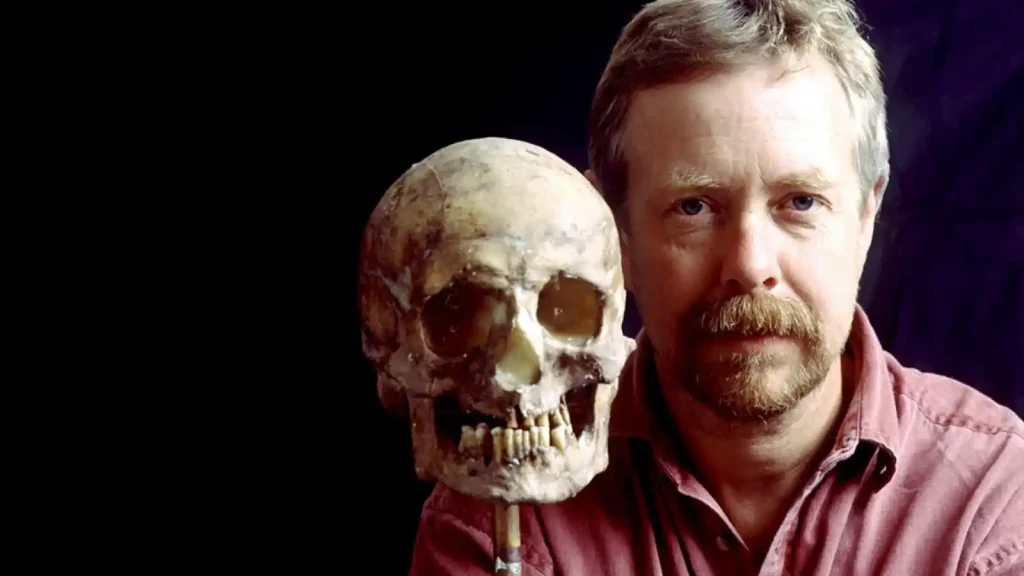
Richard Neeve, a top specialist in facial reconstruction at Manchester University, faced this challenge head-on. With only a few skull fragments from the Wolf Den, he embarked on a meticulous process. His studio became a time machine, where past and present collided. Each careful measurement, each sculpted feature, was a step closer to unveiling the face of our Bronze Age ancestor.
Determining Age Through Dental Analysis
Who was this woman from the Wolf Den? How old was she when she died? The answers lay hidden within a single tooth. Enter David Whitaker, the forensic orthodontist from Cardiff Dental Hospital, armed with a unique method of age determination.
Like a detective examining clues, Whitaker sliced the tooth to a mere tenth of a millimetre. Under the microscope, the tooth revealed its secrets. The transparent changes in the root, spreading like frost on a window pane, told a story of passing years. After careful calculations, the verdict was in: our Bronze Age woman was approximately 48 years old when she died – a respectable age for her time.
Bringing Our Bronze Age Ancestor to Life
With age determined, Richard Neeve could now add the finishing touches to his reconstruction. Layer by layer, muscle by muscle, he built up the face of our ancestor. It was like watching a photograph develop in a darkroom, slowly revealing features lost to time.
As the final layer of “skin” was applied, a face emerged that hadn’t been seen for 3,500 years. It wasn’t a face of perfection, but one of character. The lines etched by time, the slight asymmetry – all spoke of a life lived fully. This wasn’t just a scientific reconstruction; it was a bridge across millennia, allowing us to look into the eyes of our prehistoric past.
What the Footprints Reveal About Ancient Children
While Neeve worked on facial reconstruction, Bill Sellars at Edinburgh University focused on another intriguing aspect of the Wolf Den: the footprints. These weren’t just any footprints; they were a snapshot of prehistoric life, frozen in time.
Sellars’ analysis revealed a surprising discovery. The footprints belonged to children – an eight-year-old and a five-year-old. But what were children doing in this burial cave? Perhaps they were herding sheep on the hills above and sought shelter from rain. Or maybe they were part of a sacred ritual. Whatever the reason, their presence adds a touching human element to our understanding of Bronze Age life.
Conclusion Meet the Ancestors episode 1: Bridging the Gap Between Past and Present
The Importance of Cave Archaeology in Understanding Our Ancestors
Cave archaeology serves as a unique window into our distant past, offering invaluable insights that surface sites often can’t provide. The Wolf Den discovery exemplifies this perfectly, presenting us with a treasure trove of well-preserved artifacts and remains. These findings paint a vivid picture of Bronze Age life, customs, and beliefs.
Moreover, caves act as natural time capsules, protecting delicate organic materials from the ravages of time and weather. The footprints, bones, and other remnants found in the Wolf Den have survived for millennia, allowing us to piece together a more complete understanding of our ancestors. This level of preservation is rare in archaeology and underscores the critical role cave exploration plays in expanding our knowledge of human history.
Future Possibilities for the Wolf Den Site
The Wolf Den site holds immense potential for future research and discovery. As technology advances, new methods of analysis and interpretation may reveal even more secrets hidden within the cave’s depths. For instance, DNA analysis of the human remains could provide information about the genetic makeup of Bronze Age populations in the region.
Furthermore, the site could become a valuable educational resource. Virtual reality reconstructions of the cave and its contents could allow people worldwide to experience the thrill of discovery firsthand. This immersive approach to history could inspire a new generation of archaeologists and historians, ensuring the continued exploration of our past.
Preserving Our Prehistoric Heritage for Future Generations
The discovery of the Wolf Den underscores the importance of preserving our prehistoric heritage. These sites are irreplaceable repositories of human history, and their protection should be a priority. However, preservation efforts must balance the need for scientific study with the imperative to maintain the integrity of the site.
To this end, careful documentation and limited excavation are crucial. The use of non-invasive techniques, such as 3D scanning and ground-penetrating radar, can provide valuable data without disturbing the site. Additionally, educating the public about the significance of these discoveries can foster a sense of shared responsibility for our collective heritage.
As we continue to unearth the secrets of our past, we gain a deeper appreciation for the long journey of human civilization. The Wolf Den serves as a poignant reminder of our connection to those who came before us. By preserving and studying sites like these, we honor our ancestors and ensure that their stories continue to inform and inspire future generations.
F.A.Q. Meet the Ancestors episode 1
Q.: What is the main discovery featured in Meet the Ancestors Episode 1?
A.: In Episode 1, titled The Wolf Den, a group of potholers discovered ancient human remains and prehistoric footprints in a cave in the Yorkshire Dales. The remains and artifacts, believed to be over 3,500 years old, provide insight into Bronze Age burial practices and daily life.
Q.: Who leads the investigation in The Wolf Den episode?
A.: Julian Richards, an experienced archaeologist and presenter, leads the investigation. He works closely with a team of experts to analyze the discoveries and uncover the historical significance of the site.
Q.: What types of artifacts were found in The Wolf Den cave?
A.: The cave contained human bones, prehistoric footprints, and remains of wolves. These findings suggest that the cave was used for ritualistic burial practices and possibly as a shelter for ancient humans.
Q.: How do experts determine the age of the remains found in The Wolf Den?
A.: Specialists use methods such as dental analysis and carbon dating to determine the age of the remains. In the episode, a forensic orthodontist used dental techniques to estimate that one of the individuals was about 48 years old at the time of death.
Q.: What challenges did the archaeological team face while excavating the cave?
A.: The team had to navigate tight spaces, unstable rock formations, and low light while ensuring the preservation of the delicate remains. Working in a cave environment posed significant logistical and safety challenges.