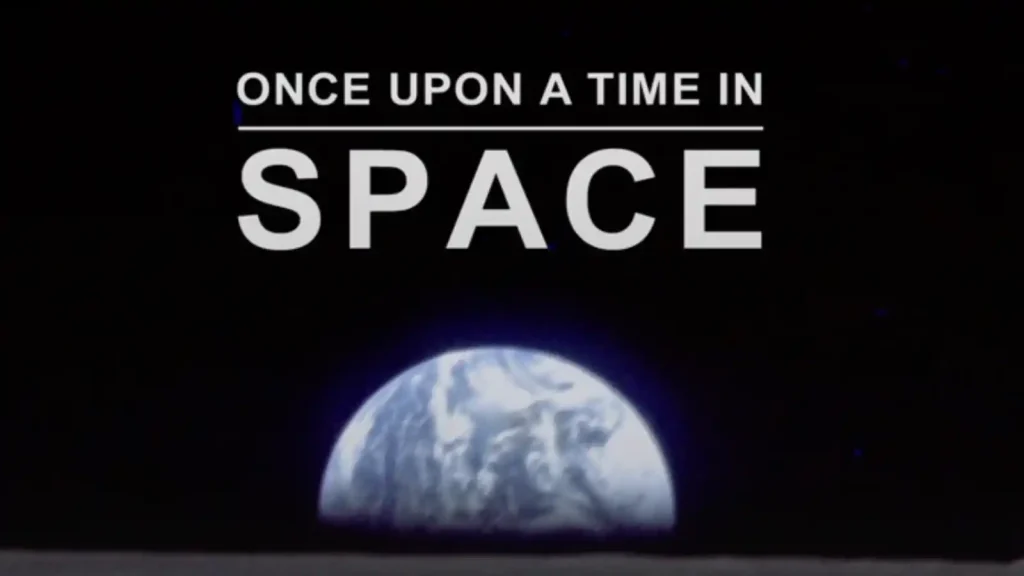
The documentary Once Upon a Time in Space episode 1 chronicles a pivotal era in the American space program. It explores the transition from the Apollo moon landings to the development of the Space Shuttle. This new phase was not just about exploration. It was about creating a reusable, economical space vehicle. The shuttle was designed to reinvigorate the nation’s ambitions. It also aimed to meet growing military and commercial demands in Earth orbit.
The context for this shift was the intense 1970s space race. The United States had been deeply embarrassed by a series of Soviet firsts. Russia had launched the first satellite and the first man into space. Consequently, the American public demanded that their nation lead. The Space Shuttle was presented as the definitive answer. It was designed to be a reliable workhorse, not just a vehicle for singular triumphs. This strategic pivot would define the next two decades of NASA history.
This installment, Once Upon a Time in Space episode 1, details this complex transition. It examines the immense pressures placed upon the new Space Shuttle program. For the shuttle to be economical, NASA needed it to fly frequently. The agency planned for missions as often as every two weeks. This relentless schedule became a critical, and stressful, factor in nearly all decision-making.
A key change in this new era was the astronaut corps itself. For the first time, NASA was not just seeking elite military pilots. The agency actively recruited scientists, engineers, and doctors as mission specialists. This policy shift opened the door for women astronauts. It also created unprecedented opportunities for new diversity in space exploration. The program was explicitly committed to giving women and minority groups a chance to participate.
The narrative of the episode is driven by extensive astronaut interviews. These firsthand accounts reveal the profound personal stakes of the program. Aspiring astronauts found themselves battling decades of segregation and sexism. They faced entrenched, hard-wired prejudices to secure a ride to space. Their stories provide a deeply human perspective on the American space program. They detail the personal sacrifices required to join this elite group.
The program’s journey was one of dramatic highs and devastating lows. The early successes bolstered a sense of national pride. However, this momentum led to a feeling of overconfidence. The era’s optimism ultimately culminated in the devastating 1986 space tragedy. This event would ground the shuttle fleet for years. It forced a painful national reckoning. The events that shaped the Once Upon a Time in Space episode 1 narrative, however, began decades earlier in the shadow of the Cold War.
Once Upon a Time in Space episode 1
The Cold War Imperative
The generation that built the shuttle was born from the Cold War. Astronaut Richard Mullane, for example, grew up in the 1950s fascinated by the sky. His father was a World War II aviator, and Mullane wanted to be a fighter pilot. He and his friends had a rocket club in high school. Their chemistry teacher taught them to make solid propellant rocket fuel. Mullane recalls building home-made rockets, which he now describes as “literally a pipe bomb.”
This youthful enthusiasm ran parallel to a deep national anxiety. The launch of Sputnik by the Soviet Union on October 4, 1957, was a profound shock. Mullane recalls his father reading the paper, “mad as hell.” His father, like many Americans, had no idea what a satellite was. He only knew the Russians had done it first. He was angry at President Eisenhower for being “asleep at the switch.”
This event occurred during the “deepest, darkest days of the Cold War.” Russia was the dreaded enemy. Suddenly, that enemy had a satellite orbiting overhead. People feared it could have a bomb in it. This fear was compounded as the Soviets continued to dominate the 1970s space race. They launched Yuri Gagarin, the first man in space. They also launched Valentina Tereshkova, the first woman.
America was embarrassed by its own, very public, failures. The American public was clamouring for a victory. President Kennedy responded by framing the challenge as a “race to space” that America must lead. This patriotic fervor fueled the Apollo program. Twelve years after Sputnik, the world watched as America landed a man on the moon. For many, it was a defining moment of national pride and unity.
A Tale of Two Americas
However, the moon landing did not resonate with everyone. For Black Americans living under segregation, it was a distant event. Carl McNair, the brother of astronaut Ron McNair, recalls his perspective. “There was no black people doing that,” he states. “So that wasn’t our world.” He and his friends were more concerned with the Vietnam War, where many did not come back.
In 1969, his hometown of Lake City, South Carolina, was still segregated. McNair describes a childhood of knowing his “place as black people.” He recalls the “white” and “coloured” water fountains. He and other children wondered if the white water was better. He remembers getting the courage to take a sip, only to find “it was just water.”
He and his brothers lived in a dilapidated house. He and Ron slept in the same bed. For them, the only connection to space was the television show Star Trek. They were smitten with the character Lieutenant Uhura, portrayed by a Black woman. She was an officer, fourth in command of a starship. This representation was powerful. It told them a future in space was possible.
Ron McNair, in particular, took this possibility seriously. He was exceptionally bright, earning a PhD in Physics from MIT by the age of 26. But the path to space seemed impossible. In the 1970s, astronauts were almost exclusively white men and military pilots. Carl McNair notes the probability of his brother becoming an astronaut “wasn’t there.” This reality, however, was about to change.
The Dawn of the Space Shuttle Program
The announcement of the Space Shuttle program marked a revolution. The shuttle was designed to be reusable, like an airliner. Its key purpose was to lower the cost of space flight. The shuttle had a large cargo bay, partially designed to military specifications. It could carry satellites and, crucially, scientists into orbit. This new focus on science and commerce changed the criteria for astronauts.
NASA began accepting applications for mission specialists. For the first time, candidates did not need to be pilots. This opened the door for scientists, doctors, and engineers. Furthermore, the agency was “committed to give women and members of minority groups a chance to participate.” This was the opportunity Ron McNair had been waiting for.
The selection process was incredibly competitive. Between 9,000 and 10,000 people applied for just 35 spots. Anna Fisher, who would later become the first mother in space, was one applicant. She was inspired by Alan Shepherd’s first flight. Growing up, her options were limited to being a nurse, teacher, or secretary. She chose medicine, hoping she could one day be a doctor on a space station.
Her husband, William Fisher, also applied. He had been “rocket-conscious” since 1952. In the first round, Anna was selected, but William was not. He recalls feeling no resentment, only happiness for her. He would later be selected in the second group of astronauts. Ron McNair also applied. His brother Carl thought he was crazy. “How many people applied?” Carl asked. “9,000, 10,000.” “How many are they looking for?” “35.” Carl thought his brother had lost his mind. But then, Ron was selected.
Forging a New Astronaut Corps
The 35 new candidates began two years of “unisex, interracial” training. This new class marked a turning point in NASA history. It included six women, such as Sally Ride and Judith Resnik, and several African-American men, including Ron McNair. Richard Mullane, a white male pilot from the military, was also in the class. He admits in his astronaut interviews that he felt “invisible” to the press. The media focused entirely on the women and minority astronauts.
Mullane also harbored suspicions about his new colleagues. He had never worked with civilians or women before. As a combat veteran from Vietnam, he felt his flying experience made him superior. He was arrogant, questioning if the civilians could “fill the role of an astronaut.” This attitude was something he later reflected on with “a sense of shame.” He realized the women and civilians were “incredibly smart people” and felt privileged to be around them.
The new astronauts faced intense scrutiny. The women, in particular, dealt with sexist questions from the media. One reporter asked an astronaut if she would “cry if things went wrong.” Another asked if she was “too cute to be an astronaut.” Anna Fisher recalls the immense pressure. She thought to herself, “Now, don’t screw up.” She and the other women knew they had to succeed. Their performance would determine if future women would have the same opportunities.
The training was grueling. The class performed survival training in mangrove swamps. They had to muscle themselves into life rafts, a difficult task for both men and women. Charles Bolden, who would later become NASA administrator, was inspired by Ron McNair. Bolden was a test pilot and saw a Black man, McNair, get out of a NASA jet. McNair asked him if he was going to apply. Bolden said, “They’d never pick me.” McNair replied, “That is the dumbest thing I ever heard.” Bolden applied and was selected in the next class.
From Slavery to Space: The First Flights
The Space Shuttle program needed to prove itself. The very first shuttle launch was a high-stakes event. The new astronauts knew their careers were theoretical until the vehicle actually worked. When the main engines cut off and the shuttle safely reached orbit, the office erupted in cheers. The successful landing was seen around the world. It put America “firmly in the lead in space” and was a huge boost to national morale.
The shuttle quickly began its work. This included flying secret payloads for the military. Mullane, who flew on these missions, confirms they carried “secret satellites.” This information remains classified today. The shuttle was fulfilling its dual purpose for science and defense.
For the new astronauts, these flights were historic. Ron McNair became the second Black American in space. His first flight was a momentous occasion. His father, an eighth-grade dropout, was “thrilled to death.” He watched the launch from his auto body shop, telling reporters his son was “perfick.” Ron’s brother, Carl, was stunned by the celebration in their hometown. The town named a boulevard after Ron. Carl saw as many white people as Black people celebrating their shared hero. “From slavery to space in four generations,” he remarked.
This success created a feeling of momentum. The astronauts were young, brash, and eager to fly. They felt they had the “right stuff.” The shuttle was operating with reliability. There was a feeling that the “garden of dreams was in full blossom.” But this success also bred a dangerous sense of urgency.
The First Mother in Space in Once Upon a Time in Space episode 1
As the shuttle program matured, the astronauts faced new personal challenges. Anna Fisher became the first astronaut to get pregnant. She faced a dilemma: her career and her family. She gave birth to her daughter, Kristin, on a Friday. She was back at work on Monday. This decision brought intense public scrutiny. Articles questioned, “Is she a good mother?”
Kristin, the episode’s narrator, reflects on this. She notes that this is a question people were not asking the men. She feels torn. Part of her thinks, “Fuck yeah! Go! Achieve your dream.” Another part of her thinks, “Don’t go!” This risk was not theoretical. NASA officials had told the astronauts to expect a 1-in-25 failure rate, or 4%. The astronaut office chief, John Young, told them if that 4% bothered them, they should leave.
Anna Fisher knew the risk. She recorded hours of videos for her infant daughter. She wanted Kristin to know who she was, in case she did not return. In the videos, she points to a toy shuttle and says, “Mommy’s going to fly on the Discovery in six weeks.” Kristin, watching them now, is thankful she was too young to understand. The pressure to fly was immense, but the personal stakes were just as high. This risk became a reality with the 1986 space tragedy.
The Challenger Disaster and its Aftermath
The Space Shuttle program was built on the promise of 24 missions a year. This relentless schedule created immense pressure. Astronauts and managers alike were focused on “what’s this going to do to the schedule?” The desire to fly and maintain the schedule, Mullane admits, “trumped everything else.” This pressure was the backdrop for the 25th shuttle mission.
Ron McNair was assigned to the crew of the space shuttle Challenger. He was planning to leave NASA after this flight. He had an offer to become a professor at the University of South Carolina. He wanted “one more flight.” Before the mission, he visited his brother Carl. He was obsessed with the footage from his first launch. He kept rewinding the tape, turning up the volume to feel the roar. He blew out one of his brother’s speakers, trying to recapture the sensation.
On January 28, 1986, the space shuttle Challenger lifted off. Just over a minute into the flight, the vehicle exploded. Flight controllers stared at their screens in disbelief. The public affairs officer announced, “Obviously a major malfunction.” The shuttle, and its seven-member crew, was gone.
The news was devastating. Carl McNair watched the footage “over and over and over again.” For more than a year, he held out hope. He thought “maybe they’ll find them marooned on an island.” William Fisher’s first thought was to see his daughter, Kristin. He realized it could have been him. He realized he might not have come back to her. Richard Mullane was shattered. These were his friends. He had flown with Judy Resnik. The “garden of dreams” was over.
A Nation in Mourning: The Once Upon a Time in Space episode 1 Tragedy
The Challenger disaster, the worst 1986 space tragedy, brought the American space program to a halt. NASA was “devastated, demoralised.” The agency canceled the rest of the schedule. The Space Shuttle was grounded for nearly three years. This response frustrated some of the astronauts.
William Fisher was deeply disappointed. He felt NASA was quitting. He had been taught that when you get knocked down, you fix the problem and proceed. He compared the agency’s response to a movie. “It’s like Rocky got knocked down and didn’t get up for three years,” he said. He felt they should have shown fight.
The loss of the space shuttle Challenger was more than the loss of a vehicle. It was the loss of seven lives and the end of an era of optimism. The Challenger disaster exposed the flaws in the program’s aggressive schedule. It forced NASA to re-evaluate its entire approach to human spaceflight.
A New Front in the Space Race
While the American program remained on hold, its old rival was moving ahead. Just weeks after the Challenger disaster, the Russians launched the Mir space station. It was a sophisticated, permanently manned base in orbit. The Soviets had pivoted their strategy. They were not focused on a reusable shuttle. They were focused on long-duration space flight.
This new strategy was forward-thinking. The Soviets were learning how to prepare for sending humans to Mars. They were studying how to build a base on the Moon for long periods. While the U.S. shuttle was grounded, the Russians were building a new future in space. In this new phase of the 1970s space race, the Russians were once again “YEARS ahead.”
The Unfinished Journey: Legacy, Loss, and the Long Road Ahead
The story of America’s Space Shuttle program is ultimately a story about us—our ambitions, our vulnerabilities, and the price we sometimes pay for reaching beyond what seems possible. From the Cold War anxieties that birthed the program to the devastation of Challenger, this era revealed both the soaring heights of human achievement and the tragic consequences of pushing too hard, too fast.
What makes this chapter of space exploration so compelling isn’t just the technological marvel of a reusable spacecraft or the geopolitical rivalry with the Soviet Union. It’s the human transformation embedded within it. When NASA opened its astronaut corps to scientists, engineers, women, and people of color, it wasn’t simply filling seats—it was fundamentally reimagining who belonged among the stars. Ron McNair’s journey from a segregated South Carolina town to the cosmos, Anna Fisher’s determination to pursue both motherhood and space flight, and Sally Ride breaking through decades of gender barriers—these weren’t footnotes to the shuttle’s story. They were the story.
Yet this progress came with a devil’s bargain. The relentless pressure to fly every two weeks, to prove the shuttle economical and justify its existence, created a culture where schedule trumped safety. The 4% failure rate that John Young warned about wasn’t an abstract statistic—it was seven human beings lost in 73 seconds, watched by millions. Carl McNair’s heartbreaking vigil, rewatching footage of his brother’s death and hoping for a miracle that would never come, reminds us that every launch carried not just astronauts but the dreams and fears of families left behind.
The Challenger disaster exposed an uncomfortable truth: innovation and ambition, unchecked by prudence, can turn deadly. While William Fisher saw the three-year grounding as NASA losing its fighting spirit, that pause was perhaps the program’s most necessary mission—a painful reckoning with the reality that glory and schedules matter less than bringing people home.
Meanwhile, the Soviet Union’s Mir space station revealed another path forward. While America’s shuttle sat grounded, Russia was quietly mastering long-duration spaceflight, building the foundation for future Mars missions and lunar bases. The space race hadn’t ended—it had simply evolved into something more patient and enduring.
Today, as we witness a new era of commercial spaceflight and renewed lunar ambitions, the shuttle’s legacy remains deeply relevant. It teaches us that diversifying who participates in exploration strengthens our capacity for innovation. It reminds us that speed without safety is hubris. And it demonstrates that setbacks, however devastating, don’t have to mean surrender.
The garden of dreams that Richard Mullane spoke of may have withered on that January morning in 1986, but seeds were planted that continue to grow. The question facing us now isn’t whether we can reach space—it’s whether we can do so sustainably, safely, and inclusively. The astronauts of the shuttle era paid dearly for the lessons we inherited. Honoring their sacrifice means learning from their mistakes while preserving their courage, ensuring that the road to the stars remains open for everyone willing to make the journey.
FAQ Once Upon a Time in Space episode 1
Q: What was the main purpose of the Space Shuttle program?
A: The Space Shuttle program aimed to create a reusable, economical spacecraft that could fly frequently—potentially every two weeks. Unlike the Apollo missions focused on singular achievements, the shuttle was designed as a reliable workhorse to serve military, commercial, and scientific needs in Earth orbit. This strategic shift represented NASA’s transition from exploration-focused missions to establishing a sustainable presence in space while meeting growing demands for satellite deployment and orbital research.
Q: How did the Space Shuttle program change astronaut requirements?
A: For the first time in NASA history, the Space Shuttle program opened astronaut positions to non-pilots, recruiting scientists, engineers, and doctors as mission specialists. Furthermore, NASA explicitly committed to giving women and minority groups opportunities to participate. This revolutionary policy shift transformed the astronaut corps from an exclusively white, male, military-pilot group into a diverse team representing different backgrounds, expertise, and communities. Between 9,000 and 10,000 applicants competed for just 35 spots in the inaugural class.
Q: Who were some pioneering astronauts in the shuttle program?
A: The 1978 astronaut class included groundbreaking figures like Sally Ride and Judith Resnik, among six women selected. Ron McNair became the second Black American in space, while Anna Fisher became the first mother to fly in space. Additionally, Charles Bolden, inspired by McNair’s example, joined the subsequent class and later became NASA administrator. These trailblazers faced intense scrutiny and pressure, knowing their performance would determine whether future generations would have similar opportunities in space exploration.
Q: What role did the Cold War play in the Space Shuttle’s development?
A: The Cold War rivalry with the Soviet Union provided critical context for the shuttle program. America had been embarrassed by Soviet achievements—Sputnik, Yuri Gagarin, and Valentina Tereshkova—which fueled public demand for American leadership in space. Consequently, the shuttle was presented as the definitive answer to Soviet competition. The vehicle even carried classified military payloads, fulfilling dual purposes for science and national defense during this tense geopolitical period that defined the 1970s space race.
Q: How did Ron McNair’s background influence his space journey?
A: Ron McNair grew up in segregated Lake City, South Carolina, where he and his brother Carl shared a bed in a dilapidated house. The moon landing felt distant to Black Americans facing segregation and the Vietnam War. However, Star Trek’s Lieutenant Uhura showed McNair that space could be his world too. Earning a PhD in Physics from MIT by age 26, he defied impossible odds when NASA changed its requirements. His journey represented, as his brother noted, a transformation “from slavery to space in four generations.”
Q: What pressures did the aggressive shuttle schedule create?
A: NASA planned for 24 shuttle missions annually to prove the program’s economic viability. This relentless schedule created immense pressure where maintaining timelines “trumped everything else,” according to astronaut Richard Mullane. Moreover, astronauts accepted a disclosed 1-in-25 failure rate (4%), with officials telling them to leave if that risk bothered them. The schedule-driven culture ultimately contributed to decision-making flaws that would have devastating consequences, prioritizing frequency over comprehensive safety evaluations.
Q: What challenges did female astronauts face in the program?
A: Female astronauts endured sexist scrutiny that male colleagues never experienced. Media asked whether they would “cry if things went wrong” or were “too cute to be astronauts.” When Anna Fisher became the first astronaut to get pregnant, articles questioned whether she was a good mother after returning to work three days postpartum. These women carried enormous pressure, knowing their performance would determine whether future women received similar opportunities in space exploration and astronaut selection.
Q: What happened during the Challenger disaster?
A: On January 28, 1986, the Space Shuttle Challenger exploded just over a minute after liftoff, killing all seven crew members including Ron McNair. Flight controllers watched in disbelief as the public affairs officer announced an “obvious major malfunction.” The tragedy devastated NASA and grounded the shuttle fleet for nearly three years. Carl McNair watched footage repeatedly for over a year, hoping his brother might be found alive. The disaster exposed fundamental flaws in the program’s aggressive scheduling priorities.
Q: How did the Soviet Union respond after Challenger?
A: Just weeks after the Challenger disaster, the Soviets launched the Mir space station—a sophisticated, permanently manned orbital base. While America’s shuttle remained grounded for nearly three years, the Russians pursued a different strategy focused on long-duration spaceflight rather than reusable shuttles. They were learning to prepare for Mars missions and lunar bases, positioning themselves years ahead in this new phase of space competition while NASA underwent painful reevaluation of its entire human spaceflight approach.
Q: What lasting legacy did the shuttle era leave?
A: The Space Shuttle program fundamentally transformed who could access space, demonstrating that diversifying participation strengthens innovation capacity. However, it also provided crucial lessons about the dangers of prioritizing schedules over safety. The Challenger tragedy forced a necessary reckoning with risk management in human spaceflight. These experiences—both triumphant and tragic—continue informing modern space exploration, from commercial spaceflight to renewed lunar ambitions, ensuring that courage and caution balance appropriately in humanity’s continuing journey beyond Earth.