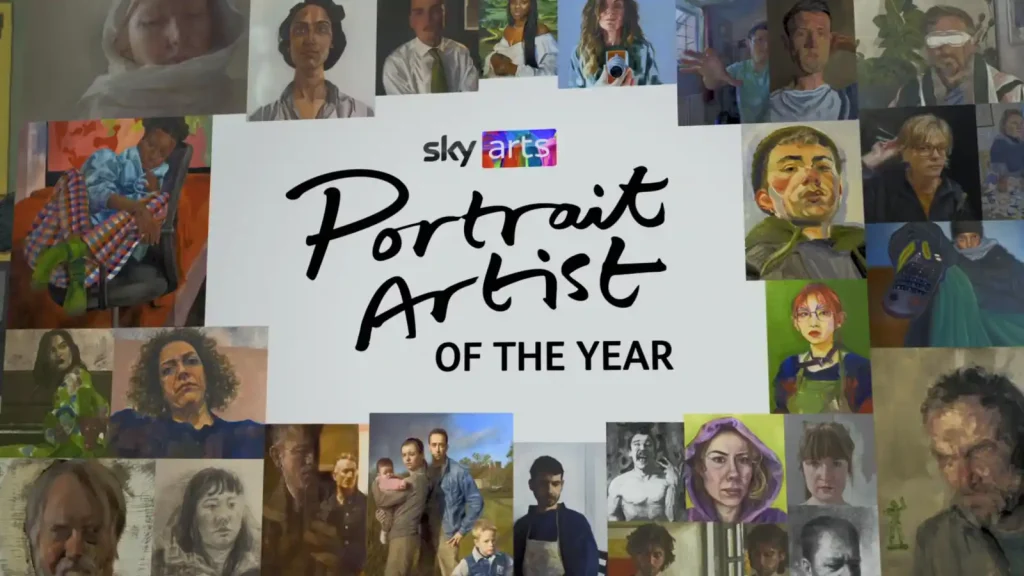
The Portrait Artist of the Year 2025 episode 6 showcases a dramatic and focused convergence of talent, pressure, and artistic interpretation. This installment of the renowned art competition brings together nine artists, each with a distinct style, to compete for a coveted spot in the semifinal. The episode highlights the intense challenge of capturing a likeness under extreme time constraints. Moreover, it delves into the diverse materials and methods that define contemporary portraiture. The artists must impress a panel of discerning judges, but they also face the immediate scrutiny of the subjects themselves.
The stakes for the overall competition are exceptionally high. The winner will receive a prestigious £10,000 commission. This commission involves painting the award-winning mathematician and broadcaster, Professor Hannah Fry. The resulting artwork will be housed by the Royal Society. This specific commission celebrates a significant milestone: the 80th anniversary of the first women elected to the Royal Society fellowship. Those women were Professor Kathleen Lonsdale and Professor Marjorie Stevenson. This context adds historical weight to the Portrait Artist of the Year 2025 prize.
This particular heat, Portrait Artist of the Year 2025 episode 6, tests the nine competitors in a single, grueling four-hour session. They are tasked with creating a portrait from life, working against the clock. This specific painting challenge is designed to test not only technical skill but also instinct and decision-making. The artists must quickly establish a composition, manage their medium, and capture the essence of their sitter. This format leaves no room for hesitation or significant revisions.
The competition is adjudicated by three expert judges: art historian Kate Bryan, curator Kathleen Soriano, and award-winning artist Ty Shan Sheeranberg. Their role begins before the four-hour clock starts. They first assess each artist’s submitted self-portrait. This initial review provides a crucial baseline of the artist’s established style, technical proficiency, and unique voice. The judges use this portrait painting submission to understand what each artist is capable of under ideal studio conditions. This evaluation frames their expectations for the live challenge.
The nine artists competing in this heat bring a wide array of backgrounds and specializations. The group includes Laura Cronin, a portrait painter from Dublin, and Robert MacLeod, an art student living in Salford. Nigerian artist Uthman Wahab, based in Kent, joins them. Ash Tyson, a tattoo artist from London, also competes. From New Zealand, Emma Alexandra, who lives in Bath, presents her work. Rick Roberts, a painter and decorator from Ashton Underline, steps up to the easel. John Matta, a motion graphics designer and musician, is also in the running. Finally, art student Talia Elliott from Sunderland and former photographer Lizzie Patterson complete the diverse roster.
The challenge pivots on the depiction of three celebrated figures. The artists are split into groups to paint these sitters. The first is Beth Rigby, the political editor at Sky News and presenter of the Electoral Dysfunction podcast. The second is Gabby Logan, an MBE-awarded sports broadcaster and former international gymnast. The third sitter is Shane Lynch, a member of the band Boyzone and now a professional race car driver. The creation of these Celebrity Portraits forms the central drama of the day.
Portrait Artist of the Year 2025 episode 6
The Artist Submissions: A Study in Self-Expression
The judges began their day by analyzing the submitted self-portraits, which revealed the artists’ core philosophies. Kate Bryan noted the “essentials” were all present: palettes, brushes, and even toenails. This remark referred to Lizzie Patterson’s humorous oil and collage self-portrait, showing her cutting her toenails. The judges praised it as a self-conscious picture, full of character, with a real intensity of gaze and beautiful, jewel-like colors.
In sharp contrast, Uthman Wahab’s charcoal self-portrait depicted him in a meditative state, performing a Sufi chant. The judges observed its “classical academy painting” roots. They highlighted its use of different tones in “extreme juxtaposition.” The work was described as a “shadowy figure” with a “beautiful round head,” sculpted from charcoal.
Robert MacLeod’s submission demonstrated “extraordinary technical expertise.” His medium was colored pencils, which he used to create a painstaking and time-consuming piece that took over 20 hours. The judges marveled at his ability to conjure amazing surfaces, noting he reveled in showing what the medium could achieve.
Ash Tyson, a tattoo artist, submitted a self-portrait drawn as a Tondo, a circular format. She used a simple biro pen, rotating the work to achieve a smooth finish. The judges loved the precise placement of the “peaceful head” and the care taken in balancing the composition.
Emma Alexandra, a former human rights lawyer, submitted a mixed-media self-portrait. It captured her in the act of painting, holding numerous brushes. The judges noted its focus on “sinuous lines” and a sense of “tumbling” that energizes the otherwise still work.
Laura Cronin’s oil self-portrait was a focused study on her most valued tools: her hands. This choice emphasized her identity as a full-time portrait artist and her deep connection to the craft.
Rick Roberts, a painter and decorator, created his self-portrait in oils using a mirror. The judges noted the work’s “brevity” and intensity. Rick revealed it took only about two hours, showing his capacity for rapid, confident work.
Talia Elliott’s self-portrait, in oils and acrylic, depicted her in her grandparents’ living room. This setting was chosen to reflect the immense support she feels from her family. The judges saw a post-impressionist influence in her treatment of fabric and wallpaper.
Finally, John Matta’s oil self-portrait was a six-hour study. The judges noted its deep, muted brown tones, which immediately established his serious and chromatic style.
The Sitters and Their Stories: More Than a Likeness
The celebrity sitters provided more than just a physical reference; they brought personal stories and significant objects. These items offered the artists deeper insight into their personalities.
Beth Rigby arrived with her “tools of the trade”: a pen and a notepad. The pen was a special gift from her brother, received just after she graduated. She explained that she uses it as her “important pen” when interviewing significant people. For Beth, having a pen and paper makes her feel capable of doing her job. She also expressed a hope that the artists would capture her “down to earth” side, the “normal person in my joggers at home,” rather than just her serious “television face.”
Gabby Logan brought the most dynamic “object”: her two-year-old standard poodle, Maverick. The dog was a surprise 50th birthday present from her husband and daughter. Although she insisted she did not want a third dog, she admitted Maverick was the present she “didn’t realise you really needed.” He quickly became a beloved addition to the family and a calming presence during the sitting.
Shane Lynch brought a striking object representing his second career: a motorsport helmet. He explained that while music was one career, his life now revolves around being a race car driver, competing in drift, rally, and race events. Shane encouraged the artists’ expression, stating he was not worried about whether they included the helmet or his many tattoos. He specifically hoped for “a bit more of the ruggedness” and “less sweet,” avoiding the “clean-cut” image of his boy band past.
The Four-Hour Challenge: Process, Medium, and Pressure
With only four hours, the artists immediately began translating their sitters onto canvas and board. The intense time constraint forced them to rely on their instincts. Ash Tyson, painting Shane Lynch, admitted her self-portrait took over 20 hours. Working in biro, she found the medium “extremely unforgiving” and “a lot harder than tattooing.” However, she quickly established a beautiful composition, leaning on her professional experience as a tattoo artist to place the elements correctly.
Uthman Wahab, painting Beth Rigby, began with numerous sketches. He used this process to familiarize himself with the subject and shed his anxiety. He expressed that he was not worried about the time, as art is “never finished.” He aimed to capture Beth’s “full of life” personality, which he felt was completely different from her television persona. He worked physically, using his whole body as he applied paint.
Robert MacLeod, painting Gabby Logan, prepared a “beautiful gold board,” which he had gridded up. He was inspired by Renaissance and Victoria-era art. He felt the gold would work well with Gabby’s jewelry and create a striking underpainting. He switched from his meticulous pencil style to oil paint, aiming for realism in the face but a looser, more “suggestive” style for the clothes and, of course, the poodle.
Emma Alexandra, tackling Beth Rigby, chose to work large. She felt Beth’s “incredibly powerful, amazing job” and personality “demanded that kind of presence.” She used oil paints for the face and experimented with pure pigments for the background. She noted Beth’s angular haircut and cheekbones, planning to use them as a “contrast to that kind of flow” seen in her own sinuous submission.
Laura Cronin, painting Shane Lynch, started with a monochrome underpainting in burnt sienna. She used this to establish the drawing and tones before switching to color. She acknowledged the risk that this method can sometimes make the final painting look “a bit round,” but she proceeded with confidence.
Rick Roberts, painting Gabby Logan, demonstrated his “straight in” approach. He used no initial sketching, instead “drawing with paint.” He worked across the entire board at once, not concentrating on one bit at a time. Having finished his self-portrait in two hours, he felt comfortable with the four-hour limit.
Talia Elliott, painting Beth Rigby, worked quickly, sketching on the canvas and getting the character down in the first ten minutes. However, she grew unhappy with her acrylics, feeling they “weren’t being my friend.” Mid-challenge, she made the bold decision to switch mediums, painting oils directly on top of the acrylics.
Lizzie Patterson, painting Gabby Logan, balanced oil paint with collage. Her process involved multiple intricate stages. She painted the flesh, which she loves, but planned to simplify Gabby’s clothes and Maverick the dog into flat, collaged shapes. This created a complex workflow, including cutting with scalpels, which she noted was “really intricate when you have a furry poodle.”
John Matta, painting Shane Lynch, began with a raw umber underpainting to establish his muted tones. He planned to add chromatic highlights selectively. He was pleased with his sitter, as Shane had requested a “serious, intense portrait,” which perfectly matched John’s “wheelhouse” and artistic style.
Mid-Point Deliberations: The Judges’ Assessments
At the halfway mark, the judges assessed the works in progress. They expressed concern for the group painting Gabby Logan. They worried about Rick Roberts, stating he was “still finding the likeness.” They found Lizzie Patterson’s collage-paint juxtaposition “interesting.” They felt Robert MacLeod’s piece was technically skilled but needed more “warmth and reality” to avoid feeling like a caricature.
For the Shane Lynch group, the judges felt his “strong look” and tattoos were a “gift” for the artists. They observed that Ash Tyson’s work was “technically precise” but needed to “go beyond that.” They praised John Matta’s “lovely little introductions of flesh tones” as “singing.” They found Laura Cronin’s composition “majestic” but felt it “lacks the darkness” of her submission.
The judges were most critical of the Beth Rigby group. They praised Beth as a “really, really hard” working sitter, to whom all three artists were “responding beautifully.” However, they felt Uthman Wahab’s portrait had “attitude, poise and pose” but lacked likeness. They said Emma Alexandra’s was a “beautiful drawing” but, again, the likeness was “not there.” Talia Elliott’s painting challenge work was “exciting” and had “tension and energy,” but it was “not Beth yet.” The judges concluded that none of the three had yet captured a winning likeness.
The Sitter’s Perspective: Watching the Art Unfold
The sitters themselves had a unique view of the process. Beth Rigby found the experience “very stimulating.” She noted it was the longest she had been “unplugged from a news grid” while awake. She enjoyed being a “voyeur,” watching the artists work and the audience watching her.
Shane Lynch actively engaged with his artists. He remarked that he “really enjoy[s] watching Laura” as she “pulls back away and her eyes open really wide.” He also observed Ash, noting how “down into that desk” she was, drawing the way she tattoos. He was fascinated by their different methods.
Gabby Logan focused on her “little team” of artists. She joked that perhaps she should let Maverick, her dog, choose the winner. She praised her poodle for sitting so well, calling him a “good boy.” Her playful interaction highlighted the relaxed atmosphere she cultivated for her group.
The Reveal and the Sitters’ Choice
As the four hours concluded, the artists stepped back, and the sitters finally saw their Celebrity Portraits. Beth Rigby was visibly moved, calling the works “amazing” and “quite overwhelming.” She told Uthman he “captured my inquisitive busy mind.” She praised Emma for capturing a “softness” that was “delicate and strong all at the same time.” She loved that Talia made her eyes “so green.” After deliberation, Beth chose to take home Emma Alexandra’s portrait.
Shane Lynch was also impressed. He told Ash her drawing was “incredible.” He praised Laura for capturing the tattoos as “subjective,” which he thought was “really cool.” He described John’s piece as “dark and rich” with “beautiful” colors. Shane chose Laura Cronin’s painting to keep.
Gabby Logan was thrilled with her group. She told Rick he “really got me” around the eyes. She was fascinated by Lizzie’s “so different” interpretation, especially the “pink poodle,” and said she “really got an expression that I recognise.” She called Robert’s painting “brilliant.” In a tough decision, Gabby chose Lizzie Patterson’s portrait.
Portrait Artist of the Year 2025 episode 6: Final Judgment
With the sitters’ choices made, the judges began their final, difficult deliberation to select the heat winner. Their decision was independent of the sitters’ preferences.
They analyzed the Gabby Logan group. They felt Robert’s painting captured a “facial expression” they recognized in Gabby, but the paint lacked the high “polish” of his pencil submission. They called Lizzie’s work a “punchy, imaginative” solution for Maverick, admiring the “pink outlined, collaged” dog and the “particularly love[ly]” ankles and shoes. They were critical of Rick’s piece, feeling he “got some of the basic elements wrong” like the jawline, though they praised the “luminosity” of the shirt.
Reviewing the Shane Lynch group, they found John’s painting “certainly caught Shane’s solid head” and its “moodiness.” They called Ash’s biro drawing a “little treasure,” comparing it to “little Holbein drawings,” but wished she had focused more on the tattoos. They loved Laura’s “colour palette” and perspective but felt the “expression” needed more time to reach the “believability” of her submission.
Finally, they focused on the Beth Rigby group. They found Talia’s painting showed her “thinking” and that “she really did find the likeness… it’s all in the eyes.” They described Emma’s version as “from a different era,” with a “dreaminess” to the eyes that was “full of emotion” and “rather beautiful.” They praised Uthman’s portrait for capturing Beth’s “physicality” and “power,” arguing it “doesn’t need that precise likeness… to feel that it’s a good rendition.”
Portrait Artist of the Year 2025 episode 6: The Winner
The judges announced their shortlist. In an unusual turn, all three shortlisted artists—Talia Elliott, Uthman Wahab, and Emma Alexandra—came from the same group, having all painted Beth Rigby. The judges now had to compare these three strong, yet completely different, interpretations of the same sitter.
Kate Bryan described Talia as a “young artist who’s really sort of working out who they are,” making “very intelligent choices” that are “about narrative and storytelling.” Ty Shan Sheeranberg focused on Uthman, noting he “was able to do the same with paint” as he did with charcoal. He praised Uthman for painting “with the guts,” which resulted in a “great attitude.” The judges admired Emma’s work for its “beautiful, sinuous lines” and the “dynamism” it created.
After a final debate, the judges announced their decision. The artist selected to advance to the semifinal of the Portrait Artist of the Year 2025 was Uthman Wahab.
The judges explained their choice, praising Uthman for the “instinctive approach” he took. They felt he “really connected with his sitter” and “instinctively and confidently” applied that insight to the canvas. This resulted in a portrait painting that possessed “a liveliness and a freshness in the brush strokes.” Uthman himself was “excited that your effort pays.” Looking ahead to the semifinal, he pledged to “keep my spontaneity” and approach the next challenge with “a blank canvas, and see what happens.”
The Art of Capturing Humanity Under Pressure
Portrait Artist of the Year 2025 episode 6 delivered something rare in competitive television: a genuine exploration of what happens when artistic vision collides with the unforgiving tick of a clock. Watching Uthman Wahab claim his semifinal spot wasn’t just witnessing technical victory—it was seeing the triumph of instinct over hesitation, of confident brushstrokes over cautious perfection.
The episode crystallized a fundamental truth about portrait painting that extends far beyond this art competition: the best portraits don’t simply replicate features—they capture the invisible essence that makes someone unmistakably themselves. Beth Rigby’s “inquisitive busy mind,” Shane Lynch’s evolution from boy band smoothness to motorsport ruggedness, Gabby Logan’s warmth alongside her poodle Maverick—these weren’t just physical characteristics to document. They were human stories that demanded interpretation, not mere transcription. The artists who succeeded understood this instinctively, translating four hours of observation into works that resonated with both technical skill and emotional intelligence.
What made this heat particularly compelling was its democratic showcase of approaches. From Ash Tyson’s unforgiving biro precision to Lizzie Patterson’s bold paint-and-collage fusion, from Robert MacLeod’s Renaissance-inspired gold board to Talia Elliott’s mid-challenge medium switch, the episode demonstrated that contemporary portraiture thrives on diversity. There’s no single “correct” path to capturing a likeness—only the path that allows each artist to channel their unique perspective most authentically. This variety enriches the entire field, proving that portrait painting remains vibrantly alive as both craft and art form.
The judges’ decision to shortlist all three Beth Rigby portraits underscored another vital lesson: the same sitter, viewed through different artistic sensibilities, yields entirely different truths. Talia’s narrative storytelling, Emma’s dreamlike sinuousness, and Uthman’s powerful physicality weren’t competing interpretations—they were complementary revelations of Beth’s multifaceted presence. This multiplicity of vision is what keeps portrait painting endlessly fascinating. The Celebrity Portraits created in this painting challenge will outlive the competition itself, each one a permanent testament to a specific moment of human connection.
For aspiring portrait artists watching, Uthman’s victory offers powerful guidance: trust your instincts, commit to your vision, and paint “with the guts.” Technical prowess matters—every artist here possessed it—but what separates competent work from compelling work is the courage to make bold choices under pressure. Whether you’re a tattoo artist like Ash adapting to canvas, a former photographer like Lizzie reinventing through collage, or an art student like Talia and Robert refining your voice, the path forward demands both rigorous practice and fearless self-expression.
As Portrait Artist of the Year 2025 moves toward its semifinal, one thing remains certain: the £10,000 commission to paint Professor Hannah Fry for the Royal Society awaits an artist who can balance technical excellence with that ineffable quality the judges kept returning to—the ability to see beyond surfaces and capture the living, breathing humanity beneath. That’s not just great portraiture. That’s art that matters.
FAQ Portrait Artist of the Year 2025 episode 6
Q: What is Portrait Artist of the Year 2025 episode 6 about?
A: Portrait Artist of the Year 2025 episode 6 features nine diverse artists competing in a grueling four-hour painting challenge to secure a coveted semifinal spot. The art competition tests participants’ ability to create celebrity portraits under extreme time pressure while capturing authentic likenesses of three notable sitters: Beth Rigby, Gabby Logan, and Shane Lynch. Furthermore, the episode showcases various artistic approaches, from traditional oil painting to innovative collage techniques, demonstrating the breadth of contemporary portrait painting.
Q: Who won Portrait Artist of the Year 2025 episode 6?
A: Nigerian artist Uthman Wahab, based in Kent, won Portrait Artist of the Year 2025 episode 6 and advanced to the semifinal. The judges praised his instinctive approach and his ability to capture Beth Rigby’s physicality and power through confident, lively brushstrokes. Notably, all three shortlisted artists—Uthman Wahab, Talia Elliott, and Emma Alexandra—had painted the same sitter, creating an unusual final deliberation that highlighted diverse artistic interpretations.
Q: What is the grand prize for Portrait Artist of the Year 2025?
A: The overall Portrait Artist of the Year 2025 winner receives a prestigious £10,000 commission to paint Professor Hannah Fry, an award-winning mathematician and broadcaster. Additionally, the resulting artwork will be housed by the Royal Society, commemorating the 80th anniversary of the first women elected to the Royal Society fellowship—Professor Kathleen Lonsdale and Professor Marjorie Stevenson. This commission adds significant historical and institutional weight to the competition’s ultimate prize.
Q: Who were the celebrity sitters in Portrait Artist of the Year 2025 episode 6?
A: The three celebrity sitters were Beth Rigby, political editor at Sky News and presenter of the Electoral Dysfunction podcast; Gabby Logan, MBE-awarded sports broadcaster and former international gymnast; and Shane Lynch, Boyzone member and professional race car driver. Each sitter brought meaningful personal objects to the sitting: Beth arrived with her important interview pen, Gabby brought her standard poodle Maverick, and Shane displayed his motorsport helmet. Consequently, these objects provided artists with deeper insight into their subjects’ personalities beyond physical appearance.
Q: Who are the judges on Portrait Artist of the Year 2025?
A: The expert judging panel consists of three distinguished art professionals: Kate Bryan, an art historian; Kathleen Soriano, a curator; and Ty Shan Sheeranberg, an award-winning artist. These judges evaluate contestants based on both submitted self-portraits and live painting challenge work. Their assessment process examines technical proficiency, artistic voice, compositional choices, and the ability to capture genuine likeness under pressure, providing comprehensive evaluation of each artist’s capabilities.
Q: What artistic techniques were used in Portrait Artist of the Year 2025 episode 6?
A:A: The nine artists demonstrated remarkable diversity in their painting challenge approaches and materials. Techniques included Ash Tyson’s precise biro pen drawing, Robert MacLeod’s Renaissance-inspired gold board with oil paint, Lizzie Patterson’s innovative oil and collage fusion, and Uthman Wahab’s physical, whole-body painting method. Moreover, Emma Alexandra experimented with pure pigments alongside oils, while Talia Elliott boldly switched from acrylics to oils mid-challenge. These varied approaches underscore contemporary portraiture’s technical breadth and creative possibilities.
Q: How long do artists have to complete their portraits in the competition?
A: Artists receive exactly four hours to complete their celebrity portraits during the live painting challenge. This extreme time constraint deliberately tests not only technical skill but also instinct, decision-making, and compositional confidence. In contrast, submitted self-portraits require no time limit—Robert MacLeod’s colored pencil piece took over 20 hours, while Rick Roberts completed his in approximately two hours. Therefore, the format reveals how artists perform under pressure versus controlled studio conditions.
Q: What made Uthman Wahab’s winning portrait stand out to the judges?
A: The judges selected Uthman Wahab for his instinctive, confident approach that captured Beth Rigby’s physicality and powerful presence through lively, fresh brushstrokes. They particularly appreciated that he painted “with the guts,” creating a portrait with great attitude that didn’t require precise photographic likeness to feel authentic. His charcoal self-portrait had already demonstrated his ability to sculpt form through tonal juxtaposition, and he successfully translated that skill to paint under pressure, connecting genuinely with his sitter.
Q: Which portrait did each celebrity sitter choose to take home?
A: Beth Rigby selected Emma Alexandra’s portrait, praising its delicate yet strong softness. Shane Lynch chose Laura Cronin’s painting, appreciating how she captured his tattoos subjectively and created rich, dark colors. Gabby Logan picked Lizzie Patterson’s portrait, fascinated by its unique interpretation featuring the pink collaged poodle and recognizable expression. Interestingly, the sitters’ preferences differed from the judges’ semifinal selection, demonstrating that artistic merit and personal connection represent distinct but equally valid evaluation criteria.
Q: What backgrounds do the Portrait Artist of the Year 2025 episode 6 competitors have?
A: The nine competitors brought extraordinarily diverse professional backgrounds to the art competition. Participants included full-time portrait painter Laura Cronin, art students Robert MacLeod and Talia Elliott, tattoo artist Ash Tyson, former human rights lawyer Emma Alexandra, painter and decorator Rick Roberts, motion graphics designer John Matta, and former photographer Lizzie Patterson. This diversity demonstrates that portrait painting welcomes practitioners from multiple disciplines, each contributing unique perspectives shaped by their varied experiences and specialized skills.