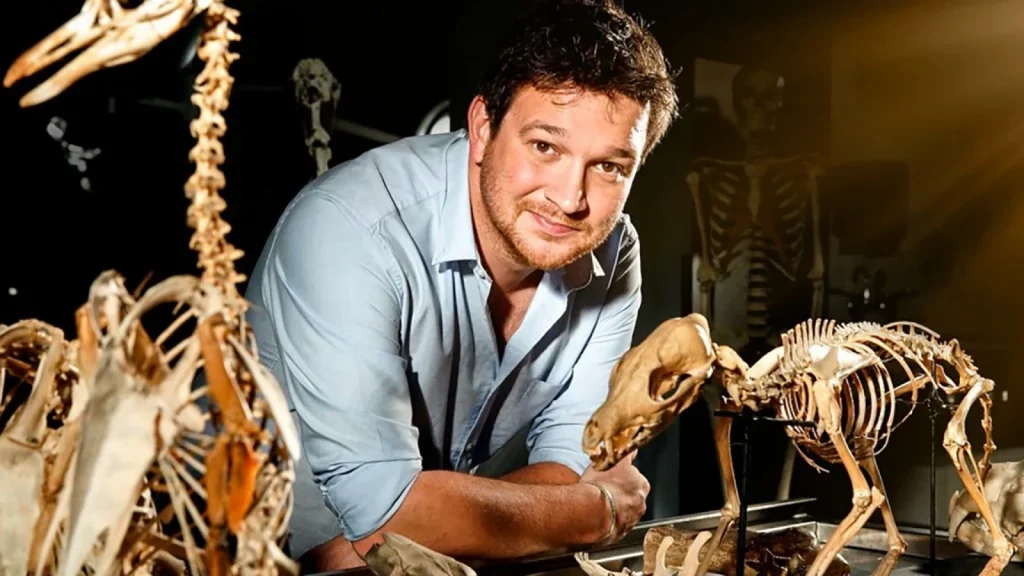
The documentary Secrets of Bones episode 3 reveals how the vertebrate skeleton underwent remarkable transformations to conquer the sky. This exploration uncovers the specific bony secrets that allowed animals to achieve the incredible feat of powered flight. The journey into the air was not a single event but a recurring theme in the history of life, representing a pinnacle of evolutionary innovation. Understanding this process provides crucial insight into the power of adaptation, where a basic anatomical blueprint can be modified for extraordinary new forms of locomotion. The success of flying animals highlights how environmental pressures and new opportunities can drive profound changes in anatomy and function over millions of years.
The principles explored in Secrets of Bones episode 3 are fundamental to our understanding of biodiversity. Flight has allowed vertebrates to exploit new habitats, find new sources of food, escape predators, and migrate across vast distances. This has led to the incredible diversification we see today, with nearly a quarter of all mammal species being bats and around 10,000 species of birds inhabiting every corner of the globe. The story of flight is a testament to the versatility of the vertebrate skeleton, demonstrating how a shared ancestry can give rise to a spectacular array of life forms. This evolution did not happen overnight but was a long process of incremental changes.
This analysis will delve into the specific skeletal adaptations that made flight possible. We will examine the three separate occasions on which vertebrates evolved powered flight, each time modifying a shared ancestral blueprint in a unique way. The article will explore the anatomical trade-offs required for life in the air, from the fusion of bones for strength to the hollowing of skeletons for lightness. By dissecting these changes, as detailed in the documentary, we can appreciate the intricate relationship between form and function. This journey reveals how the same set of bones can be repurposed for gliding, soaring, agile maneuvering, and even “flying” underwater.
The foundation for all vertebrate flight lies in a surprisingly common structure: the pentadactyl limb. This five-digit limb, which first appeared in land animals over 300 million years ago, is the ancestral blueprint for our own hands, the claws of a gorilla, and the wings of every flying vertebrate. The remarkable story of flight is the story of how evolution tinkered with these five digits, elongating some, fusing others, and losing some entirely to create wings. This shared origin underscores a deep connection across seemingly disparate groups of animals, from ancient reptiles to modern birds and mammals.
Powered flight has evolved independently on three separate occasions, each time starting from this five-fingered plan. The first group to master the skies was the pterosaurs, a lineage of flying reptiles. Much later, bats took to the air, becoming the only mammals to achieve true powered flight. Finally, birds emerged, developing their own unique method of flying that would ultimately make them the most successful aerial vertebrates on the planet. Each group followed a different evolutionary path, resulting in distinct wing structures and flight capabilities, a core theme of the documentary Secrets of Bones episode 3.
The journey from a terrestrial existence to a life in the air required a fundamental reshaping of the entire skeleton. It was not enough to simply evolve wings; the entire body had to become a lightweight, powerful, and aerodynamic machine. This involved significant changes to the spine, ribcage, and breastbone. The challenges of overcoming gravity while generating sufficient lift and power demanded a suite of highly specialized adaptations. Consequently, the bones of flying animals provide a clear and compelling record of this profound evolutionary transition, showcasing the intricate dance between constraints and possibilities.
Secrets of Bones episode 3
The First Flyers: Lessons from Pterosaurs and Bats
The first vertebrates to achieve sustained, powered flight were the pterosaurs, which dominated the skies for 150 million years. As explored in Secrets of Bones episode 3, their wings were a dramatic modification of the pentadactyl limb. An analysis of fossils like Pterodactylus antiquus reveals their unique adaptation. While the first three digits of their forelimbs remained as small, grasping claws, and the fifth digit was lost entirely, the fourth digit became extraordinarily elongated. This single “wing finger,” sometimes several metres long, served as the primary support for a leathery wing membrane, a testament to early evolutionary innovation in animal locomotion.
Millions of years after the pterosaurs vanished, another group of vertebrates, the bats, independently evolved a different solution for flight. Instead of relying on a single elongated digit, bats modified four of their five fingers. The thumb remained a small, hooked digit for grasping and climbing, but the other four digits became extremely long and slender. These elongated fingers support the wing membrane, giving bats exceptional control over the shape and curvature of their wings. This skeletal flexibility allows them to perform incredible aerial acrobatics, such as turning 180 degrees in less than half a wingspan, a key to their success as hunters of agile insects.
Comparing these two pioneers of flight reveals divergent evolutionary strategies. Pterosaurs committed to a single, reinforced support structure, creating a relatively rigid wing ideal for gliding and soaring across prehistoric skies. In contrast, bats evolved a more flexible and controllable wing, allowing for greater maneuverability. The bat’s skeleton is also incredibly flexible overall, helping it cope with the extreme forces of flight. This adaptation has been immensely successful; today, there are approximately 1,000 species of bats, accounting for nearly a quarter of all mammal species on Earth, a success attributed largely to their unique skeletal design for flight.
Avian Mastery: Secrets of Bones in Bird Skeletons
While pterosaurs and bats represent remarkable feats of evolution, birds are the undisputed masters of the sky. They developed a third, independent method of flying, once again modifying the five-fingered limb. Instead of elongating digits, the evolutionary path of birds involved fusion and reduction. Some bones in the “hand” fused together, while other digits disappeared completely. This process created a strong, rigid, and simplified platform for the attachment of feathers, which generate lift more efficiently than a simple membrane. This rigid wing structure is a defining feature of the avian skeleton.
To become such successful flyers, birds had to make significant changes throughout their entire skeleton, aiming to be both lightweight and incredibly strong. As highlighted in Secrets of Bones episode 3, this was achieved through extensive bone fusion. Many vertebrae in the spine fused together with the pelvis to form a single, solid superstructure, providing a rigid core for the body during flight. Furthermore, small bony processes evolved to link the ribs together, creating a stiffened ribcage that could withstand the powerful forces generated by the flight muscles. This created a strong but light chassis for movement.
Perhaps the most critical adaptation in the bird skeleton is the breastbone, or sternum, which is modified into a large, flattened structure called a keel. This keel provides a massive surface area for the attachment of the powerful flight muscles, which can account for a significant portion of a bird’s body weight. Alongside these structural reinforcements, the internal architecture of their bones also changed. A cross-section of a bird bone reveals a network of internal, strut-like supports, creating a honeycomb structure that is incredibly light yet strong enough to prevent buckling during flight. This internal scaffolding is a key adaptation that distinguishes bird bones from the dense, marrow-filled bones of mammals.
The All-Rounder: The Pigeon’s Powerhouse Design
The humble pigeon, often overlooked, is presented as an exceptional all-rounder and a model of avian success. With millions thriving worldwide, its survival is largely due to a specialized flight ability rooted in its skeletal structure. The pigeon’s most remarkable skill is its explosive vertical takeoff, allowing it to accelerate from a standstill to nearly 100 kph in under two seconds. This ability is crucial for escaping ground-based or aerial predators, enabling the bird to out-climb even a peregrine falcon in the initial moments of an attack.
This powerhouse performance is a direct result of key skeletal features. A comparison of a live pigeon with its skeleton reveals a disproportionately massive keel for a bird of its size. This large breastbone anchors the incredibly strong flight muscles needed for such a rapid launch. Furthermore, the bone in the upper arm, the humerus, is notably short and stocky. According to specialist bird handler Lloyd Buck, this stout bone provides the leverage for a powerful wing stroke. Combined with strong, flexible legs that initiate the takeoff with a powerful jump, the entire skeleton is optimized for explosive bursts of speed.
The pigeon’s success demonstrates a perfect marriage of strength and efficiency. While capable of incredible acceleration, it is also built for endurance, able to cover up to 800 kilometres in a single day. Its skeletal design represents a balanced approach to flight, combining the muscular power needed for quick escapes with the endurance required for long-distance travel. This makes the pigeon a superb generalist, able to thrive in diverse environments, from wild cliff faces to urban landscapes. Its body plan is a masterclass in versatile vertebrate engineering.
Extreme Specialization: From Gliders to Divers
While the pigeon is an all-rounder, other birds have pushed their skeletons to the extremes of specialization. The albatross, for example, has adapted for a life of marathon gliding. It possesses the longest wingspan of any bird, reaching up to 3.5 metres. Its wing bones are exceptionally long and straight, functioning much like the wings of a glider. A key adaptation, as revealed by X-ray analysis, is a specialized tendon in the shoulder that locks the wing in an open position. This allows the albatross to soar for thousands of kilometres on wind currents with minimal muscular effort, conserving vital energy on epic trans-oceanic journeys.
In sharp contrast, some birds abandoned flight altogether in favour of life on land. The emu and ostrich represent a trade-off where the ability to fly was sacrificed for superlative running ability. Professor John Hutchinson explains that an animal cannot be both a great flyer and a super-fast runner. In these birds, the wings have become tiny, fragile nubs, while the legs have become massive and powerful. Interestingly, despite being ground-dwelling, their leg bones retain the lightweight, hollow, honeycomb structure of their flying ancestors. This retention of light bones contributes to their speed and agility as terrestrial animals.
Penguins represent another dramatic evolutionary path, trading flight in the air for an ability to effectively “fly” underwater. Around 65 million years ago, as land predators disappeared, penguins adapted to a marine existence. Their bones underwent a remarkable transformation, becoming incredibly dense and heavy. Unlike the light, air-filled bones of a pigeon, a penguin’s solid bones act as ballast, allowing it to overcome buoyancy and hunt efficiently underwater. Their wings evolved into stiff, sharp, paddle-like flippers, and their shoulder blades, or scapulae, became enormous to anchor the powerful muscles needed to propel them through the dense medium of water.
The Ultimate Compromise: A Master of Two Realms
The guillemot stands out as a bird that embodies a remarkable compromise, mastering both the sky and the sea. While it may appear clumsy during takeoff, it is a capable flyer, reaching speeds of over 65 kph. Once it hits the water, its versatility becomes fully apparent. It uses its wings, held half-closed to reduce turbulence, to propel itself to astonishing depths of over 150 metres, making it one of the deepest divers among all birds. This dual capability makes the guillemot a true generalist, thriving in two vastly different environments.
The secret to the guillemot’s success lies in the intermediate nature of its skeleton. A simple test illustrated in the documentary—shining a torch through the bones—reveals its unique adaptation. The light passes easily through the nearly translucent, hollow bones of a pigeon, a specialist flyer. Conversely, the light is almost completely blocked by the dense, solid wing bones of a penguin, a specialist diver. The guillemot’s bones are a perfect “happy medium.” The torchlight shines through partially, indicating bones that are denser than a pigeon’s but far less dense than a penguin’s.
This brilliant adaptation provides a skeleton light enough for efficient flight yet heavy enough to counteract buoyancy for deep diving. The guillemot represents a pinnacle of evolutionary compromise, a bony structure finely tuned to the competing demands of aerial and aquatic locomotion. It is a paradox, a bird that excels in two worlds by not being overly specialized for either one. This makes its skeleton one of the most impressive examples of adaptation in the vertebrate kingdom, a testament to the versatility of the fundamental bony blueprint.
Flight, Reimagined: How Bones Became Wings and the Sky Became Home
When we think of flight, we often picture the effortless glide of an eagle or the flutter of a hummingbird. But as Secrets of Bones episode 3 so brilliantly reveals, the truth is far more profound: flight is not effortless—it is engineered. Beneath every wingbeat lies a story written in bone, a record of millions of years of evolution, trial, and adaptation. What began as the humble five-fingered limb—the same one we use to type, cook, and wave—was sculpted by nature into structures capable of navigating air, water, and land with astonishing precision.
At the heart of this transformation is the sheer plasticity of the vertebrate skeleton. The same skeletal plan gave rise to pterosaurs soaring above Jurassic seas, bats zigzagging through moonlit forests, and birds dominating ecosystems from Arctic tundras to tropical rainforests. Each iteration of flight—whether achieved through elongated digits, fused bones, or flipper-like wings—reminds us that evolution is not bound by a single path. It is a toolkit, a set of principles refined over time, honed to meet the unique challenges of different environments.
Consider the penguin and the pigeon—two birds, same ancestors, yet worlds apart in design. One uses wings to carve through the sea; the other uses them to explode skyward from city streets. And then there’s the guillemot, a quiet overachiever mastering both realms. These aren’t just adaptations; they’re living examples of problem-solving in real time, evolution’s way of saying, “There’s more than one way to conquer the world.”
What makes these stories truly resonant is their deeper implication: bones are not static relics—they’re blueprints for innovation. From the hollow struts of a bird’s wing to the dense ballast of a diving penguin, the architecture of bone has been refined into everything from gliders to sprinters to deep-sea divers. And at the core of it all is a theme that touches not only on biology, but on creativity itself—how a limited set of tools can yield seemingly limitless outcomes.
So why should this matter to us? Because the story of bones in flight is also the story of potential. It’s a reminder that constraints can be catalysts for greatness. A single structural origin—a five-digit limb—gave rise to the bat’s agile swoop, the albatross’s endless glide, and the guillemot’s amphibious mastery. If nature can reinvent the same raw material to meet wildly different demands, so can we. Whether in technology, design, or personal growth, the lesson is universal: don’t fear your limitations—learn how to shape them.
Ultimately, Secrets of Bones episode 3 leaves us with more than fascinating facts about bird keels or pterosaur digits. It offers a new way to see the natural world—not as a finished product, but as an ongoing act of invention. Bones, in their quiet resilience, are not just structures. They are stories. They are possibilities. They are proof that with time, pressure, and vision, even the grounded can take to the skies.
So next time you see a pigeon launch from the pavement or watch a gull hover in ocean wind, think beyond feathers and instinct. Think of the bones inside—the scaffolding of a dream millions of years in the making. And remember that, in your own way, you too carry the architecture of possibility.
FAQ Secrets of Bones episode 3
Q: What is the main focus of “Secrets of Bones Episode 3”?
A: “Secrets of Bones Episode 3” explores how the vertebrate skeleton transformed to conquer the skies. The documentary reveals the remarkable adaptations that allowed animals to achieve powered flight, from the elongation of digits in pterosaurs and bats to the fusion of bones in birds. It highlights how the same basic skeletal blueprint was modified in different ways to enable this extraordinary form of locomotion.
Q: How many times has powered flight evolved in vertebrates?
A: Powered flight has evolved independently three separate times in vertebrates. First in pterosaurs, the flying reptiles that dominated the skies for 150 million years. Later, bats developed flight, becoming the only mammals capable of true powered flight. Finally, birds evolved their own unique method of flying, ultimately becoming the most successful and diverse group of flying vertebrates on the planet.
Q: What is a pentadactyl limb and why is it important for flight?
A: The pentadactyl limb is the five-digit (finger or toe) structure that first appeared in land animals over 300 million years ago. This basic blueprint became the foundation for all vertebrate flight. Evolution modified these five digits in different ways—elongating some, fusing others, or losing some entirely—to create wings. This shared origin connects seemingly different animals, from pterosaurs to modern birds and bats.
Q: How did pterosaurs’ wings differ from bats’ wings?
A: Pterosaurs dramatically modified their pentadactyl limb by elongating the fourth digit into a single “wing finger” that supported a leathery membrane, while maintaining three small claws. In contrast, bats elongated four of their five fingers, keeping only the thumb as a small hook for grasping. This gave bats greater wing flexibility and control, allowing for exceptional aerial maneuverability compared to the more rigid pterosaur wing.
Q: What makes birds the most successful flying vertebrates?
A: Birds achieved unparalleled flying success through extensive bone fusion and reduction. Unlike other flyers, birds fused many bones in their “hands” and throughout their skeleton, creating a strong, rigid, and lightweight structure. Their feathered wings generate lift more efficiently than membranes, while their keeled breastbone anchors powerful flight muscles. These adaptations, combined with their hollow bones, make birds masters of the sky.
Q: Why are bird bones hollow?
A: Bird bones are hollow not simply to reduce weight but for optimal strength-to-weight ratio. A cross-section reveals a honeycomb structure of internal strut-like supports that prevent buckling during flight while maintaining lightness. This internal scaffolding is dramatically different from the dense, marrow-filled bones of mammals. The design principle resembles modern aircraft engineering, providing maximum strength with minimal material.
Q: How do pigeons achieve such explosive takeoffs?
A: Pigeons can accelerate from standstill to nearly 100 kph in under two seconds thanks to specific skeletal adaptations. They possess a disproportionately massive keel (breastbone) that anchors powerful flight muscles, paired with notably short and stocky humerus bones that provide leverage for strong wing strokes. Combined with powerful, flexible legs that initiate takeoff, this design enables their explosive vertical escape from predators.
Q: Why did some birds like penguins and ostriches lose the ability to fly?
A: Some birds traded flight for specialized adaptations to different environments. Ostriches and emus sacrificed flying for superior running abilities, evolving tiny wings but powerful legs while retaining lightweight hollow bones for speed. Penguins, meanwhile, transformed their wings into dense, paddle-like flippers for “flying” underwater. Their bones became incredibly dense to overcome buoyancy, allowing efficient hunting beneath the waves.
Q: How can the guillemot both fly and dive underwater?
A: The guillemot achieves its dual mastery through a perfect skeletal compromise. Unlike the ultra-light bones of flying specialists or the dense bones of diving specialists, guillemot bones have intermediate density—light enough for efficient flight yet heavy enough to counteract buoyancy underwater. This brilliant adaptation allows them to fly at speeds over 65 kph and dive to astonishing depths of over 150 meters.
Q: What can we learn from the evolution of flight in vertebrates?
A: The evolution of flight demonstrates nature’s incredible problem-solving capacity and the versatility of basic structural plans. It shows how constraints can inspire innovation rather than limit it. From a single five-digit blueprint emerged diverse solutions for conquering different environments. This reminds us that limitations can be catalysts for creativity, whether in biological systems or human design and innovation.