The Beechgrove Garden 2025 episode 12: Get ready for another delightful episode of The Beechgrove Garden! This week, our beloved Brian sets his sights on the Calendar Border. This special area, designed to offer year-round interest, is currently looking a little sparse. But fear not, garden enthusiasts! Brian, with his signature green thumb, will be planting beautiful geraniums. These vibrant flowers will create a lush ground cover, perfectly complementing the taller shrubs. It’s like painting a masterpiece, adding rich textures and hues to the garden’s canvas.
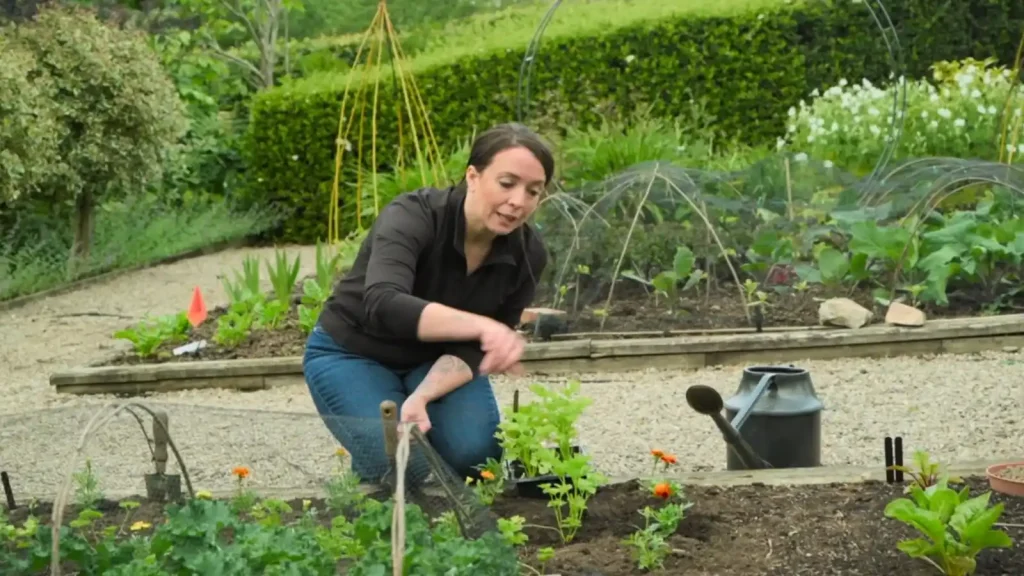
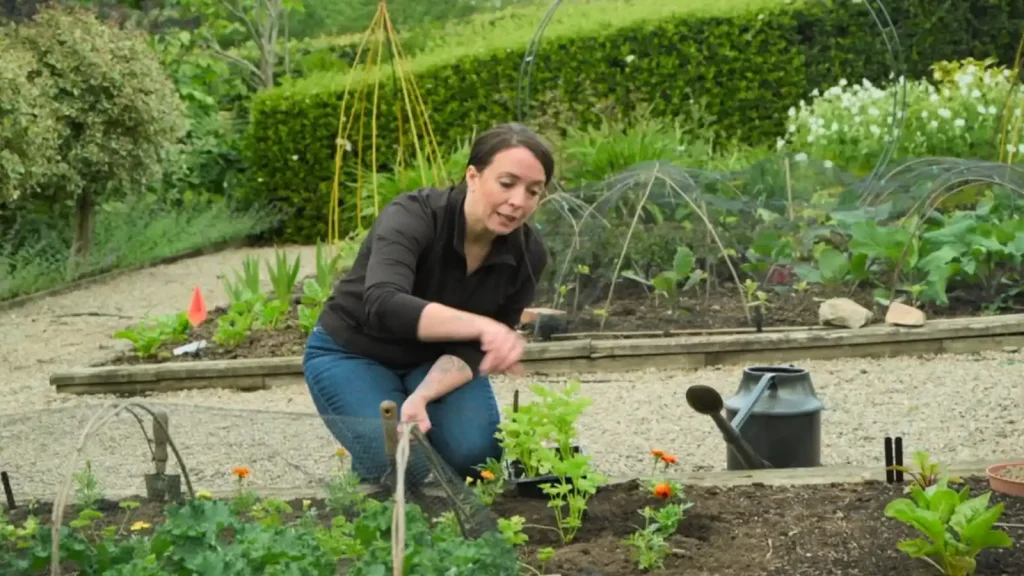
Meanwhile, a friendly competition is heating up! Ruth dives back into her dedicated vegetable plot. She’s fiercely battling her fellow presenters. The challenge? To cultivate the most attractive and productive vegetable border. Expect to see innovative techniques and some good-natured rivalry as they strive for victory. Who will emerge as the ultimate veggie champion? You’ll have to tune in to find out!
Furthermore, Carole embarks on another captivating journey. She’s exploring some of Scotland’s finest gardens. This week, her travels take her to the magnificent Ellon Castle in Aberdeenshire. Imagine stepping into a living storybook, where every path and every plant whispers tales of history and natural beauty. Carole will undoubtedly share inspiring ideas and breathtaking views from this stunning location.
Finally, don’t miss the segment packed with this week’s handy hints. These invaluable tips are always a highlight, offering practical advice for your own gardening endeavors. They’re like little golden nuggets of wisdom, designed to help your garden thrive. Therefore, make sure to grab your notepad. You won’t want to miss a single valuable suggestion!
The Beechgrove Garden 2025 episode 12
The Beechgrove Garden 2025 episode 12 provides a wealth of seasonal guidance, perfectly timed for when a lovely dry spell gives way to rain-fueled growth. This shift in weather energizes plants, leading to luscious new foliage that requires timely attention from gardeners. From the precise trimming of formal hedges to sowing seeds for next year’s blooms, the episode addresses the key tasks that define this period in the gardening calendar. It underscores the importance of working with, not against, the prevailing conditions to ensure a healthy and vibrant garden.
The episode navigates a diverse range of horticultural topics, offering insights for both new and experienced enthusiasts. It explores how to manage established features like box hedging while also planning for the future with the sowing of biennial flowers. The presenters of The Beechgrove Garden 2025 episode 12 also tackle common garden challenges, such as establishing plants in difficult dry and shady areas. Furthermore, a visit to a remarkable historic Scottish garden provides inspiration and a connection to the long, rich history of landscaping and cultivation in the region.
At its core, this installment from The Beechgrove Garden is about thoughtful and proactive gardening. It emphasizes understanding the ‘why’ behind the ‘how’—explaining the principles of plant life cycles, pest deterrence, and propagation. The advice shared encourages a resourceful approach, whether it involves creating an outdoor nursery bed when greenhouse space is full or reusing old compost to minimize waste. This blend of practical demonstration and clear explanation equips gardeners with the knowledge to make informed decisions.
The program also delves into the art of garden design and plant selection. This is showcased through a detailed segment on creating a tapestry of geraniums to solve the problem of planting under large shrubs. Viewers learn not just which plants to choose, but how to arrange them for maximum visual impact, avoiding a scattered “polka-dot effect” in favor of bold, naturalistic drifts. This focus on aesthetics, combined with sound horticultural practice, is a recurring theme that empowers gardeners to create spaces that are both productive and beautiful.
Finally, the episode highlights the sense of community and friendly competition that enriches the world of gardening. An update on the presenters’ competition plot reveals personal stories and creative approaches to growing vegetables, like using wool pellets as a nod to a Shetland heritage. Simultaneously, a visit to Ellon Castle Gardens showcases the incredible results that can be achieved when a community comes together, with volunteers transforming a neglected space into a public treasure. These narratives illustrate that a garden is more than just a collection of plants; it is a space for creativity, heritage, and connection.
Mastering Hedges and Sowing for the Future
The episode provides a masterclass in essential garden maintenance and forward planning, starting with the classic art of hedge trimming. At the Beechgrove garden, the team demonstrates the proper technique for cutting box hedging to maintain its crisp, formal shape. A critical piece of advice is about timing; while the smaller box hedges are ready for a haircut, taller boundary hedges are left until August to protect any nesting birds. This highlights a responsible approach that balances garden aesthetics with wildlife welfare.
The technique itself is broken down into simple, effective steps. To achieve a perfectly level top, the gardeners use a string line as a guide, ensuring a professional finish. Rather than cutting the sides vertically, they recommend a slight angle or “batter.” This simple adjustment serves two key purposes: it allows sunlight to reach the lower parts of the hedge, preventing it from becoming bare at the base, and it helps heavy snow to slide off rather than sitting on top and forcing the hedge open. The episode also clarifies a fundamental principle of hedge management: trimming the top encourages the hedge to become bushier, while trimming the sides promotes upward growth for a taller hedge.
Alongside immediate tasks, the program emphasizes the importance of planning for the next flowering season by sowing biennials. A biennial is defined as a plant with a two-year life cycle; in the first year, it focuses on developing strong roots and lush foliage, and in the second year, it produces flowers and sets seed. Examples of these valuable garden plants include classics like foxgloves, sweet Williams, wallflowers, and forget-me-nots.
For gardeners with limited indoor or greenhouse space, the show presents a traditional and practical solution: an outdoor nursery bed. This is essentially a dedicated, well-prepared patch of open ground used like a giant seed tray. The bed is cleared of stones and firmed down before seeds are sown thinly in drills approximately 15cm apart. After germinating and growing for about six to seven weeks, the young plants will be moved to a temporary home to develop further, before their final planting into their permanent positions in the autumn. This method creates a sustainable cycle, as these plants will eventually set seed themselves, ensuring a continuous supply for years to come.
Creative Solutions for Challenging Garden Spaces
Many gardeners face the challenge of cultivating the ground beneath mature trees and shrubs, where dry soil and deep shade create difficult growing conditions. The Beechgrove Garden 2025 episode 12 tackles this problem head-on, offering a beautiful and effective solution using the versatile geranium. These areas are challenging because the dense canopy above blocks light, while the extensive root systems of established plants compete for every drop of water. The goal is to find plants that can not only survive but thrive in both dry and shady environments.
The episode champions hardy geraniums as garden-worthy plants perfectly suited for this task. Geranium macrorrhizum, in particular, is highlighted as a plant that performs exceptionally well in these conditions, to the point where it could even be considered invasive. However, its rhizomatous roots are shallow and easy to remove, making it simple to manage. To create a rich, textured display, the presenter advocates for using a variety of geraniums, playing with different foliage, flower colors, and heights to weave a living tapestry in the shady pocket.
A selection of standout varieties is showcased to illustrate the diversity available. Geranium renardii is a neat, low-growing option (around 20cm) with sage-green foliage and delicate white flowers marked with lavender veins. For a bolder splash of color, Geranium magnificum offers vibrant violet flowers and flowers for an extended period through to August. Meanwhile, the ‘Wargrave Pink’ variety provides a lighter shade and continues to bloom all the way into September. The importance of foliage is also stressed, with ‘Mrs Kendall Clark’ noted for its beautifully dissected leaves that provide interest even when the plant is not in bloom.
When it comes to the landscaping and planting design, a key tip is to plant in bold groups of three or five rather than dotting individual plants around. This approach avoids a fragmented, “polka-dot effect” and instead creates a more cohesive and naturalistic look, making it seem like one large, intentional drift of plants. To give the plants the best start, the presenter advises finding “sweet spots” for planting holes, often at the edges of canopies where the soil is softer and less congested with roots.
Given the extremely dry soil, incorporating garden mulch into the planting hole is essential to help bulk up the soil and improve its ability to hold moisture. After a thorough watering, a final layer of mulch is applied to the surface to lock that precious moisture in, helping the new plants to establish and eventually colonize the more challenging areas.
A Journey Through Time at Ellon Castle Gardens
The program takes viewers on an inspiring visit to Ellon Castle Gardens in Aberdeenshire, a remarkable space with ancient plantings at its heart. This garden, gifted to the people of Ellon a decade ago, tells a story of rediscovery and renewal, having been lovingly transformed by dedicated volunteers from a very overgrown state. Its centerpiece is a collection of English yews believed to be over 500 years old, which form a breathtaking natural canopy described as a “living cathedral.”
The management of these ancient yews is a lesson in minimal intervention. Alison Craigon, chair of the garden’s trustees, explains that their policy is to “leave well alone as much as possible,” with pruning reserved only for safety hazards. This philosophy allows the trees to grow naturally, including letting their lower branches sweep down to the ground. Incredibly, where these branches touch the soil, they put down new roots, a process that provides immense stability in stormy weather and is key to their centuries-long survival. This natural layering is how yew trees are said to “walk” across a landscape over hundreds of years, as new trees grow from these rooted branches.
Beyond the magnificent yews, the volunteer-run garden boasts other beautifully maintained areas. These include stunning herbaceous borders that come into their own at this time of year, as well as a collection of apple trees. Volunteer Carol Hawthorne demonstrates the technique of summer pruning the apple trees, explaining that removing some of the leafy growth by cutting back to four or five leaves helps direct the tree’s energy into the developing fruit and allows more sunlight to reach them. This contrasts with the harder pruning that is carried out in winter.
The garden also features a thoughtfully designed rose garden created by Katie Reynolds. The design incorporates raised, curved beds, which not only create visual interest but also make the roses accessible for visitors in wheelchairs, allowing them to fully appreciate the stunning perfume. The garden showcases the versatility of roses like ‘Gertrude Jekyll’, which is typically grown as a shrub but is shown here trained as a beautiful climber up an obelisk. Ellon Castle Gardens stands as a powerful testament to community effort and the enduring beauty of a well-tended garden.
The Art and Science of Propagation and Planting
The program offers a deep dive into the rewarding practices of plant propagation and creative planting, blending scientific knowledge with resourceful techniques. In her competition plot, one presenter reveals her theme, “The Modern Crofter,” inspired by her upbringing in Shetland. Her plot focuses on ingredients for soup, including an ambitious and successful crop of lentils, which are not commonly grown in Scotland. To protect her soup staples of celery and parsley from the dreaded carrot root fly, she employs a classic companion planting strategy by interplanting them with French marigolds (tagetes). The strong scent of the marigolds helps to confuse the pests and deter them from finding their target plants.
Her Shetland-inspired theme continues with an ingenious method for protecting chard. She places wool pellets, a product reminiscent of the sheep and lamb from her home, densely around the base of the plants. When watered, these pellets puff up, creating a barrier that deters pests. To give her plants a competitive edge, she applies a seaweed feed to her onions and other crops. This is more than a simple fertilizer; seaweed feed is a bio-stimulant packed with macro and micronutrients as well as plant hormones that give the plants a significant boost.
In another segment, gardener Colin Crosbie demonstrates the next steps for cuttings taken five to six weeks prior. He shows a pot of Helenium cuttings that have successfully developed healthy root systems. He then pots these new plants into a peat-free potting compost, to which he adds a bit of perlite—a personal tip to help him manage watering, as he finds it prevents the compost from becoming either too wet or too dry. He stresses the importance of tapping the pot gently to settle the compost rather than pressing it down, which would drive out essential air.
After potting up, he performs a crucial step known as “pinching out.” He snips off the soft, elongated tips of the new plants. This action redirects the plant’s hormones and energy, encouraging it to form more roots and develop more shoots from the base, resulting in a sturdier, bushier plant. Colin also shares a valuable tip for sustainability: never throw away old compost. He demonstrates how to reuse it by placing a layer in the bottom of a seed tray and topping it with a layer of fresh compost, creating a perfect medium for sowing new seeds like salad leaves.
Practical Tips for a Thriving Summer Garden
The episode concludes with a series of quick, actionable “handy hints” that can make a significant difference to the health and appearance of a summer garden. The first tip addresses a common plant known as a “good doer”: Lady’s Mantle (Alchemilla mollis). While valued for its ability to grow almost anywhere, its prolific self-seeding can become a nuisance, with unwanted seedlings popping up in paths and between other plants. The simple solution is to snip off all the flower heads as they begin to fade. This prevents them from setting seed and spreading everywhere, and as a bonus, it can often reward the gardener with a second flush of flowers.
Next, the focus shifts to buying dahlias, a popular choice for vibrant summer color. The advice is to look for plants that are not yet in full bloom. Choosing plants that are still in bud will ensure they last much longer in the garden once you get them home. Once home, another professional tip is to take a pair of snips and pinch out the main central growing stem, known as the leader. This action stimulates the plant to redistribute its growth hormones, causing it to produce more lateral branches. The result is a bushier plant with significantly more flowers throughout the season.
Finally, a crucial tip is shared for anyone growing tomatoes in a greenhouse or polytunnel. To ensure a good harvest, it is essential to “tickle” your tomato plants every time you walk past them. This advice, passed down from experience working in a nursery, refers to the act of gently shaking or vibrating the plants. This movement is necessary to pollinate the flowers, which is what allows them to develop into fruit. Without this simple action, gardeners may find they have healthy-looking plants but very few tomatoes. Regularly tickling the plants or shaking their support strings is a quick, easy, and vital step for a successful tomato crop.
Where Ancient Wisdom Meets Modern Innovation
This episode of The Beechgrove Garden beautifully illustrates that exceptional gardening isn’t about having the latest tools or the most exotic plants—it’s about understanding the timeless dance between timing, technique, and nature’s own rhythms. From the 500-year-old yews at Ellon Castle that have literally learned to “walk” across the landscape to Ruth’s innovative use of Shetland wool pellets, we see how the best gardening wisdom bridges centuries of accumulated knowledge with fresh, creative problem-solving.
What strikes me most about this episode is how it reveals gardening as both an art and a science, where every challenge becomes an opportunity for elegant solutions. Take Brian’s approach to the sparse Calendar Border—rather than fighting the difficult conditions under large shrubs, he’s working with hardy geraniums to create what he calls a “living tapestry.” This isn’t just about filling empty space; it’s about understanding that successful gardening means choosing plants that will thrive, not just survive, in their designated roles.
The episode also reminds us that gardens are fundamentally about community and continuity. Whether it’s the volunteers who transformed Ellon Castle Gardens from an overgrown wilderness into a public treasure, or the friendly competition spurring innovation in the vegetable plots, gardening connects us to something larger than ourselves. Ruth’s “Modern Crofter” theme isn’t just whimsical—it’s a powerful reminder that our gardens can honor our heritage while embracing contemporary techniques and knowledge.
Perhaps most importantly, this episode demonstrates that great gardening doesn’t require perfection or extensive resources. Colin’s tip about reusing old compost, the outdoor nursery bed for those without greenhouse space, and the simple but crucial act of “tickling” tomato plants—these small, thoughtful actions compound into extraordinary results. It’s the horticultural equivalent of compound interest: modest, consistent efforts that yield outsized returns over time.
As you step into your own garden after watching this episode, carry with you the spirit of experimentation and observation that drives these seasoned gardeners. Notice the microclimates in your space—those tricky dry, shady spots that could become geranium havens, or the perfect sunny corner for a biennial nursery bed. Embrace the rhythm of the seasons, understanding that now is the time for hedge trimming and biennial sowing, while keeping one eye on autumn plantings and next year’s blooms.
Most importantly, remember that every garden tells a story. Whether you’re creating bold drifts of hardy geraniums, training roses up obelisks, or simply pinching out dahlia leaders for bushier growth, you’re participating in an ancient conversation between human creativity and natural beauty. Your garden doesn’t need to be grand or historically significant to be meaningful—it just needs to reflect your own understanding of what it means to work thoughtfully with the land beneath your hands.
Start small, observe closely, and let your garden teach you as much as you teach it. After all, the best gardens grow gardeners just as much as they grow plants.
FAQ The Beechgrove Garden 2025 episode 12
Q: What is the main focus of The Beechgrove Garden 2025 episode 12?
A: This episode centers on seasonal garden maintenance and forward planning during the transition from dry weather to rain-fueled growth. Additionally, it showcases Brian’s work on the Calendar Border using hardy geraniums, Ruth’s competitive vegetable plot with her ‘Modern Crofter’ theme, and Carole’s inspiring visit to the historic Ellon Castle Gardens in Aberdeenshire.
Q: Why is timing important when trimming hedges according to this episode?
A: The episode emphasizes wildlife-conscious timing for hedge trimming. While smaller box hedges receive their summer trim, taller boundary hedges remain untouched until August to protect nesting birds. Furthermore, this approach balances garden aesthetics with wildlife welfare, demonstrating responsible gardening practices that support local ecosystems while maintaining formal garden structure.
Q: What are biennials and when should they be sown?
A: Biennials are plants with two-year life cycles that develop roots and foliage in year one, then flower and set seed in year two. The episode recommends sowing classics like foxgloves, sweet Williams, wallflowers, and forget-me-nots now. Moreover, an outdoor nursery bed serves as an excellent alternative for gardeners lacking greenhouse space.
Q: Which plants work best for dry, shady areas under mature shrubs?
A: Hardy geraniums excel in these challenging conditions, particularly Geranium macrorrhizum. The episode showcases varieties like Geranium renardii with sage-green foliage, Geranium magnificum for violet blooms, and ‘Wargrave Pink’ for extended flowering. These plants thrive where dense canopies block light and extensive root systems compete for moisture.
Q: What makes Ellon Castle Gardens historically significant?
A: The garden features English yews believed to be over 500 years old, forming a breathtaking ‘living cathedral.’ These ancient trees demonstrate natural layering, where branches touching soil develop new roots for stability. Consequently, volunteers have transformed this gifted space from overgrown wilderness into a public treasure, showcasing community dedication and horticultural heritage.
Q: What is the ‘Modern Crofter’ theme in the competition plot?
A: Ruth’s Shetland-inspired theme focuses on soup ingredients, including successfully grown lentils uncommon in Scotland. She employs companion planting with French marigolds to deter carrot root fly, uses wool pellets around chard for pest protection, and applies seaweed bio-stimulant feeds. This approach honors heritage while embracing innovative growing techniques.
Q: How should geraniums be planted to avoid a ‘polka-dot effect’?
A: Plant geraniums in bold groups of three or five rather than individual specimens scattered throughout the space. This technique creates cohesive, naturalistic drifts that appear intentional and unified. Additionally, find ‘sweet spots’ at canopy edges where soil is softer, incorporate garden mulch into planting holes, and apply surface mulch to retain moisture.
Q: What propagation techniques are demonstrated in the episode?
A: Colin demonstrates potting up Helenium cuttings taken five to six weeks prior, using peat-free compost enhanced with perlite for better water management. He emphasizes ‘pinching out’ soft tips to redirect plant hormones, encouraging bushier growth and stronger root development. Furthermore, he advocates reusing old compost by layering it beneath fresh compost for sustainable gardening.
Q: What are the key handy hints for summer garden maintenance?
A: Essential tips include deadheading Lady’s Mantle to prevent excessive self-seeding and encourage second flowering, selecting dahlia plants still in bud for longer garden performance, and pinching out dahlia leaders for bushier growth. Most importantly, ‘tickle’ tomato plants regularly by gently shaking them to ensure proper pollination and fruit development.
Q: How does this episode emphasize community in gardening?
A: The episode showcases community through Ellon Castle’s volunteer transformation, the presenters’ friendly competition fostering innovation, and accessible garden design like wheelchair-friendly rose beds. These narratives illustrate that gardens transcend plant collections, becoming spaces for creativity, heritage preservation, and human connection across generations and backgrounds.