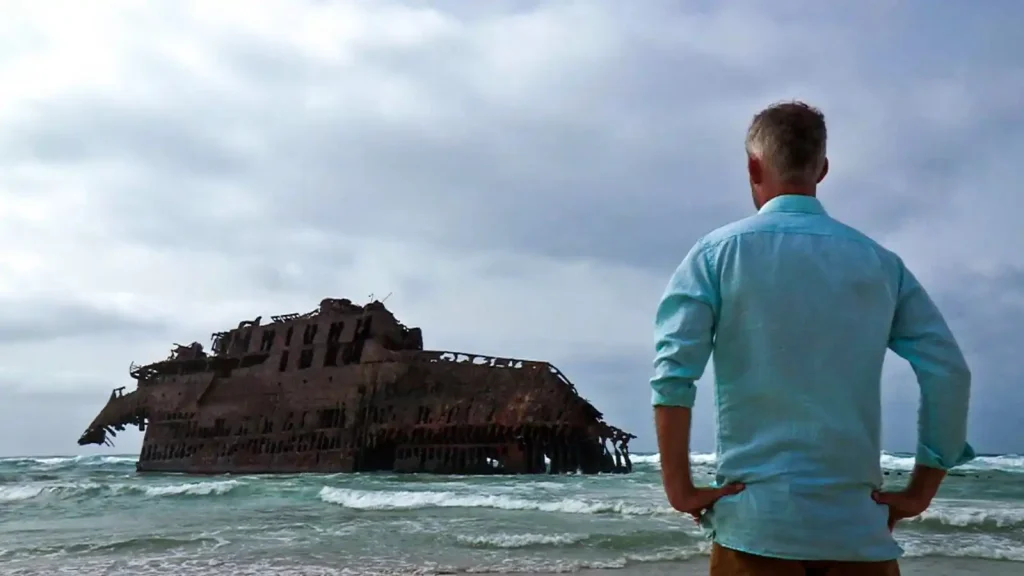
The vast, unforgiving ocean often conceals forgotten nightmares. “Shipwrecks episode 2: Britain’s Sunken History: A World Turned Upside Down” masterfully resurrects these terrors. It explores the profound price Britain paid for maritime supremacy. The documentary posits that Britain’s coastline, littered with wrecks, tells a story of national character. Furthermore, it argues shipwrecks catalyzed technological innovation and deeply gripped the public imagination.
This installment, presented by Sam Willis, delves into the Georgian age. Here, Britain began its ascent to global naval power. However, maritime trade, the engine of this enterprise, faced constant peril from disasters at sea. Great sailing ships symbolized Georgian state power. Yet, the shipwreck became its Achilles’ heel. Mutinous sailors, rebellious slaves, and opportunistic wreckers threatened to capsize Britain’s imperial ambitions by literally turning its world upside down.
The documentary commences with a potent visual metaphor: Théodore Géricault’s “The Raft of the Medusa.” This harrowing canvas immediately establishes the core theme. The fear of shipwreck transcended mere drowning; it encompassed the terror of societal collapse. It depicted the chaos, murder, and cannibalism following a real maritime disaster. Thus, the painting encapsulated Georgian anxieties about the sea’s power to unravel the ordered world of a ship. In the 18th century, maritime trade was indeed the lifeblood of Britain’s economic advancement.
Consequently, it heavily influenced the burgeoning sense of national identity. A British-flagged ship on the high seas was a microcosm of the Georgian state itself: ordered, hierarchical, and often cruel. Every soul aboard knew their designated place. Yet, this rigid structure could shatter in an instant if disaster struck. Shipwreck unleashed not only terror but also the specter of bloody mutiny, violent slave rebellion, and the dread of murderous scavengers. These disasters jeopardized vast fortunes and became deeply embedded in British culture, forging heroes and villains who inspired a unique body of art and literature.
A pivotal narrative anchor is the catastrophic loss of Admiral Sir Cloudesley Shovell’s fleet off the Isles of Scilly in 1707. Returning from a naval engagement, the fleet, due to navigational errors, blundered into treacherous, poorly charted waters. The HMS Association, Shovell’s flagship, foundered, followed by others. In a mere twenty minutes, over 1,000 men perished. This disaster starkly exposed the critical inability to accurately calculate longitude.
The tragedy sent shockwaves through British society, not just for the loss of life, but for the threat it posed to lucrative global trade. The aftermath also revealed grim societal realities. Admiral Shovell received a lavish burial in Westminster Abbey. Conversely, hundreds of common sailors were consigned to mass graves, their deaths a brutal footnote. This event, however, became a catalyst. The ensuing panic and lobbying led directly to the Longitude Act of 1714. This act offered a substantial prize for solving the longitude problem, ultimately leading to John Harrison’s marine chronometer. This invention revolutionized navigation, empowering Britain’s imperial expansion.
With newfound navigational confidence, Britain aggressively expanded its empire. The great sailing ship became central to Georgian identity, an engine of wealth and power. The documentary effectively uses HMS Victory to illustrate the ship as a floating piece of Georgian society. Its physical divisions mirrored the era’s rigid hierarchy. The admiral’s grand cabin contrasted sharply with the dark, cramped, and rank conditions of the lower gun decks where hundreds of sailors lived.
This ordered world, however, remained vulnerable. The wreck of HMS Wager in 1741 off the coast of Chile provides a stark example of this inversion. Separated from its squadron and ravaged by disease, the Wager struck rocks. Anarchy erupted almost immediately. Sailors, no longer under the immediate sway of naval discipline and, crucially, unpaid after the wreck, plundered the ship. They armed themselves and defied their officers. Captain Cheap’s authority crumbled, leading to a fatal shooting and a subsequent mutiny led by John Bulkley.
Though Bulkley and his contingent eventually reached home, as did Captain Cheap later, the ensuing court martial highlighted a critical flaw in maritime law. Consequently, Parliament acted. A 1747 Act ensured that naval crews would continue to be paid even if their ship was wrecked, thereby maintaining military discipline.
Shipwrecks episode 2: Britain’s Sunken History
The documentary then navigates the morally fraught waters of the transatlantic slave trade. Ports like Bristol thrived on this triangular trade. The “middle passage” was a perilous journey, with ships packed with human cargo. The film presents the chilling account of The Phoenix, a slave ship that foundered in 1763. When the ship began taking on water, the crew initially released enslaved individuals to help pump. However, as hope dwindled, the crew, fearing an uprising, killed fifty of the “stoutest” slaves and left the rest shackled to drown.
The newspaper report, read with stark clarity, reveals an utter lack of compassion. The enslaved were commodities; their loss was primarily a financial catastrophe for the owners. This dehumanization is further underscored by the infamous Zong massacre, where over 100 slaves were thrown overboard for an insurance claim, an event that fueled the abolitionist movement and was immortalized by J.M.W. Turner.
As Britain’s empire grew, so did the anxieties surrounding it. The wreck of the East India Company ship Grosvenor off South Africa in 1782 tapped into these deep-seated fears. The ship carried wealthy passengers, including women and children. When it struck rocks, the survivors, marooned on an uncharted coast, faced a desperate situation. Their subsequent overland trek inverted traditional hierarchies. Wealth and status meant little; youth and fitness became paramount.
The strong abandoned the weak. Only 18 of the 140 on board survived. The fate of the upper-class women, rumored to have been assimilated into local tribes, particularly scandalized Georgian society. It challenged the established narrative of white Europeans ordering indigenous populations. This story highlighted the vulnerability of the colonial enterprise and the family unit itself.
Closer to home, another threat emerged: “wrecking.” Along coastlines like Cornwall, isolated communities had long engaged in “harvesting the sea,” salvaging goods from shipwrecks. While romanticized by some, like the Reverend R.S. Hawker of Morwenstow, who chronicled the grim realities, merchants viewed it as plunder. This clash of perspectives led to the punitive Wreckers Act of 1753. This legislation, part of the “Bloody Code,” made stealing from wrecks a capital offense, reflecting the era’s fierce protection of property. The documentary explores the pervasive fear among ship-owners, including unsubstantiated rumors of wreckers luring ships onto rocks with false lights.
However, not all interactions with coastal communities were antagonistic. The wreck of the Halsewell off the Dorset coast in 1786 offered a contrasting narrative. Caught in a snowstorm, the East Indiaman was driven onto rocks. While the captain and his daughters perished, local quarrymen, led by farmer Mr. Garland, executed a remarkable rescue. They hauled 74 sailors to safety up treacherous cliffs. This heroic act, celebrated by King George III and later by Charles Dickens and Turner, provided a much-needed positive story. It fostered a sense of British courage and fortitude, contrasting sharply with perceived foreign conduct.
This theme of national character is powerfully reinforced by the documentary’s concluding comparison. Géricault’s “Raft of the Medusa,” depicting the horrific aftermath of a French shipwreck—marked by abandonment, anarchy, and cannibalism—is juxtaposed with the story of HMS Alceste. Wrecked off Java in 1817, the Alceste‘s crew, under Captain Maxwell’s calm leadership, maintained discipline despite starvation and pirate attacks. All were eventually saved. For the British public, viewing Géricault’s painting shortly after Napoleon’s defeat at Waterloo, the contrast was clear. It affirmed their sense of moral superiority and orderly conduct in crisis.
Sam Willis serves as an engaging and knowledgeable guide throughout this historical journey. His presentation, often on location at key historical sites or interacting with artifacts, brings immediacy to the narratives. The documentary skillfully integrates expert interviews, historical documents, and evocative paintings. This multifaceted approach enriches the viewer’s understanding of the complex interplay between shipwrecks, society, and the state. The visuals, from dramatic seascapes to close-ups of centuries-old texts, are consistently high quality and thoughtfully chosen to support the storytelling.
One of the documentary’s primary strengths is its ability to connect individual maritime disasters to broader historical currents. It effectively demonstrates how shipwrecks influenced law, spurred technological innovation, reflected social hierarchies, and shaped national identity. The narrative is compelling, transforming historical events into gripping human stories. It does not shy away from the brutality and moral ambiguities of the Georgian era, particularly concerning the slave trade and the harsh realities of naval life.
While the focus is inherently British, given the series’ title, this perspective is thoroughly explored, revealing the anxieties and ambitions of a nation forging an empire. Compared to many maritime documentaries that might focus solely on archaeological discovery or naval strategy, “A World Turned Upside Down” offers a richer, more socio-culturally nuanced exploration. It delves into the psychological and cultural wake left by these sunken vessels. The storytelling is vivid, making complex historical themes accessible and engaging.
The Georgian era saw Britain rise as a dominant maritime power, with its great sailing ships serving as potent emblems of the state. These vessels were central to economic progress and helped forge a national identity. Yet, as the documentary powerfully illustrates, the ever-present threat of shipwreck constantly challenged this dominance and exposed the vulnerabilities beneath the veneer of imperial strength. Each disaster at sea, whether leading to mutiny, highlighting inhumanity, or inspiring heroism, forced a reckoning.
It compelled changes in law, technology, and societal attitudes. The stories of these wrecks, from the Scilly Isles to the coast of Africa, became woven into the fabric of British consciousness. They served as stark reminders of the human cost of empire and the capricious power of the sea. As the Georgian period neared its end, with hundreds of ships still lost annually, the profound question of how many more lives Britain was prepared to sacrifice on the world’s oceans lingered ominously.
The Submerged Legacy: How Shipwrecks Shaped a Nation
The waters surrounding Britain tell a story as powerful as any written in ink. These silent depths cradle the remnants of ambition, tragedy, and transformation. Indeed, Britain’s maritime disasters did more than claim lives and fortunes. They fundamentally reshaped the nation’s trajectory.
Throughout the Georgian era, shipwrecks acted as mirrors reflecting society’s deepest fears and highest aspirations. Moreover, they served as catalysts for change. The horror of Admiral Shovell’s fleet disaster birthed navigational breakthroughs. Meanwhile, the anarchy aboard HMS Wager prompted legal reforms protecting naval discipline. Additionally, the horrific Phoenix and Zong tragedies exposed the slave trade’s brutality, fueling the abolitionist movement.
These sunken vessels, therefore, became unwitting architects of British identity. Each wreck tested the nation’s character like a tempest battering a lighthouse. Sometimes, as with the Grosvenor, societal hierarchies collapsed like a house of cards in a gale. Other times, heroism emerged unexpectedly, as when humble quarrymen rescued Halsewell survivors from certain death.
The sea, like an unforgiving teacher, constantly challenged Britain’s imperial ambitions. Yet through these harsh lessons, the nation developed resilience. Furthermore, the stark contrast between the French Medusa’s chaotic aftermath and HMS Alceste’s disciplined response reinforced Britain’s self-image as a beacon of order amidst chaos.
This documentary brilliantly illuminates how maritime disasters rippled through every aspect of Georgian society. Ships weren’t merely vessels of wood and canvas but floating microcosms of Britain itself. Consequently, when they foundered, the very foundations of national identity trembled.
Today, these shipwrecks still speak to us across centuries. They whisper tales of technological innovation born from catastrophe. They reveal humanity’s capacity for both unspeakable cruelty and remarkable courage. Above all, they remind us how fragile our constructed orders remain.
Britain’s rise to global dominance came with a terrible price paid in sailors’ lives. The shipwrecks dotting its coastline stand as solemn monuments to this sacrifice. Like ancient ruins partially visible at low tide, they reveal truths about our past that might otherwise remain hidden. In studying these disasters, we glimpse not just Britain’s maritime history but the very soul of a nation forged in the crucible of the unforgiving sea.
FAQ Shipwrecks episode 2: Britain’s Sunken History
Q: What is the documentary ‘Shipwrecks episode 2: Britain’s Sunken History’ about?
A: The documentary explores how shipwrecks shaped Britain’s national character during the Georgian era. Presented by Sam Willis, it examines how maritime disasters catalyzed technological innovation, influenced laws, exposed social hierarchies, and became deeply embedded in British culture. Furthermore, it reveals how these sunken vessels represented both Britain’s imperial ambitions and their vulnerabilities.
Q: How did Admiral Cloudesley Shovell’s disaster impact British maritime history?
A: Admiral Shovell’s catastrophic fleet loss off the Isles of Scilly in 1707 transformed British navigation forever. Over 1,000 men perished in just twenty minutes due to navigational errors, exposing Britain’s critical inability to calculate longitude accurately. Consequently, this tragedy led directly to the Longitude Act of 1714, which offered a substantial prize for solving the longitude problem. This initiative ultimately resulted in John Harrison’s revolutionary marine chronometer, empowering Britain’s imperial expansion through safer navigation.
Q: How were ships in the Georgian era reflections of British society?
A: Georgian-era ships functioned as floating microcosms of British society itself. The documentary uses HMS Victory to illustrate how a ship’s physical divisions mirrored the era’s rigid social hierarchy. For instance, the admiral’s grand cabin contrasted dramatically with the dark, cramped conditions of the lower gun decks where hundreds of sailors lived. Every person aboard knew their designated place, creating an ordered, hierarchical, and often cruel environment that paralleled Georgian Britain’s social structure.
Q: What legal changes resulted from the HMS Wager shipwreck?
A: The HMS Wager disaster in 1741 off Chile’s coast exposed a critical flaw in maritime law when anarchy erupted after the shipwreck. Sailors, unpaid after the wreck, plundered the ship, armed themselves, and defied their officers. This breakdown in discipline led to a fatal shooting and subsequent mutiny. As a result, Parliament passed a crucial 1747 Act ensuring naval crews would continue to be paid even if their ship was wrecked, thereby maintaining military discipline during disasters.
Q: How did shipwrecks expose the brutality of the transatlantic slave trade?
A: Shipwrecks brutally revealed the slave trade’s inhumanity, as demonstrated by The Phoenix disaster in 1763. When this slave ship began sinking, the crew initially freed enslaved people to help pump water. However, as hope faded, they killed fifty of the ‘stoutest’ slaves and left the rest shackled to drown. Similarly, the infamous Zong massacre, where over 100 enslaved people were thrown overboard for an insurance claim, highlighted slaves’ status as mere commodities. These horrific incidents ultimately fueled the abolitionist movement.
Q: What was ‘wrecking’ during the Georgian era?
A: ‘Wrecking’ referred to coastal communities’ practice of salvaging goods from shipwrecks, particularly along coastlines like Cornwall. While locals viewed it as legitimately ‘harvesting the sea,’ merchants considered it outright plunder. This clash of perspectives led to the harsh Wreckers Act of 1753, making stealing from wrecks a capital offense. The documentary explores ship-owners’ pervasive fears, including unsubstantiated rumors of wreckers deliberately luring ships onto rocks with false lights to profit from the resulting disasters.
Q: How did the Grosvenor shipwreck challenge Britain’s colonial narrative?
A: The East India Company ship Grosvenor’s wreck off South Africa in 1782 upended colonial hierarchies in a striking manner. When survivors were marooned on an uncharted coast, wealth and status suddenly meant nothing while youth and fitness became paramount. Only 18 of the 140 passengers survived the ordeal. Moreover, the fate of upper-class women, rumored to have been assimilated into local tribes, particularly scandalized Georgian society because it reversed the established narrative of white Europeans ordering indigenous populations.
Q: What heroic shipwreck story helped shape Britain’s national identity?
A: The Halsewell disaster of 1786 became a powerful positive narrative in British consciousness. When this East Indiaman was driven onto rocks during a snowstorm off the Dorset coast, local quarrymen led by farmer Mr. Garland executed a remarkable rescue. Despite treacherous conditions, they hauled 74 sailors to safety up steep cliffs. This heroic act, celebrated by King George III and later immortalized by Charles Dickens and Turner, fostered Britain’s self-image of courage and fortitude in the face of maritime peril.
Q: How does the documentary contrast British and French maritime disasters?
A: The documentary powerfully contrasts Géricault’s ‘Raft of the Medusa,’ depicting the horrific aftermath of a French shipwreck marked by abandonment, anarchy, and cannibalism, with the story of HMS Alceste. When the Alceste wrecked off Java in 1817, Captain Maxwell’s calm leadership maintained discipline despite starvation and pirate attacks, ultimately saving everyone aboard. This comparison, particularly powerful for British audiences following Napoleon’s Waterloo defeat, reinforced Britain’s perceived moral superiority and ordered conduct during crises.
Q: What makes this documentary unique compared to other maritime documentaries?
A: Unlike typical maritime documentaries that focus primarily on archaeological discoveries or naval strategy, ‘A World Turned Upside Down’ offers a richer socio-cultural exploration. It connects individual shipwrecks to broader historical currents, showing how maritime disasters influenced law, technology, social hierarchies, and national identity. Additionally, the documentary’s multifaceted approach combines expert interviews, historical documents, and evocative paintings to create a compelling narrative that doesn’t shy away from the Georgian era’s brutality and moral ambiguities.