Singapore 1942: End of Empire part 2: An empire, it was said, on which the sun never set. The magnificent British Empire stood as a colossus of power. It projected an aura of permanence and invincibility. At its heart in Southeast Asia was a jewel. This jewel was the fortress of Singapore. It was considered an impregnable bastion of colonial history. However, in the early days of 1942, this myth would be shattered. The documentary, Singapore 1942: End of Empire part 2, delves into this catastrophic collapse. Consequently, it reveals the story of a stunning imperial defeat. This event would ultimately change the world forever.
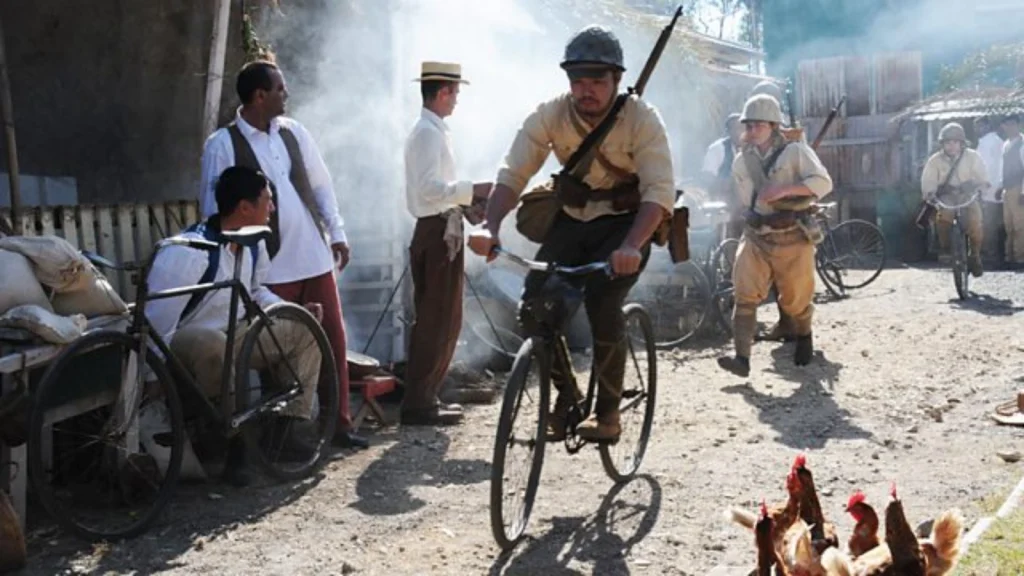
The story of the fall of Singapore does not begin on the island itself. Instead, it starts in the dense, unforgiving jungles of Malaya. Here, Commonwealth forces stood ready, seemingly confident in their numbers and defenses. Yet, they underestimated their opponent completely. A formidable general, Tomoyuki Yamashita, led the Japanese invasion. Known as the “Tiger of Malaya,” he was a master of strategy and speed. His forces moved like a phantom through the jungle. As a result, they consistently outflanked the defenders. They used simple but effective tactics, like utilizing bicycles for rapid movement on plantation roads.
This second part of the documentary, Singapore 1942: End of Empire part 2, picks up as the chaos escalates. It vividly portrays how General Yamashita drove back the reeling Commonwealth armies. The retreat down the Malayan peninsula was a brutal and demoralizing affair. Furthermore, the documentary shows the growing sense of panic and disbelief. The unstoppable British war machine was sputtering to a halt. In fact, it was being systematically dismantled. Every victory for Yamashita was another nail in the coffin of the empire’s prestige. This chapter of World War 2 was unfolding with terrifying speed, leaving the defenders with only one last place to run.
Eventually, the battered remnants of the Allied forces retreated across the causeway. They sought refuge on Singapore island. This was supposed to be the fortress, the final line of defense. The documentary expertly shows the false hope that lingered there. From the sea, Singapore looked formidable. Its massive naval guns pointed out towards the ocean, ready to repel any naval invasion. But Yamashita had no intention of attacking from the sea. Therefore, the island’s greatest strength became its most fatal flaw. The guns were tragically facing the wrong way. The island’s back door, facing Malaya, was left perilously exposed.
General Yamashita now stood at the shores of the Johore Strait. He faced a critical moment in the campaign. On paper, he was actually outnumbered by the defenders on the island. A conventional assault would have been incredibly risky. However, Yamashita was anything but a conventional commander. The documentary provides a chilling insight into his brilliant and audacious bluff. He gathered his troops, skillfully using deception to magnify their apparent strength. He ordered his men to light countless fires and run empty trucks back and forth. Consequently, he created the illusion of a much larger, overwhelming force poised to strike.
The subsequent assault on Singapore island was a masterclass in psychological warfare. The invasion began under the cover of darkness. Japanese soldiers crossed the narrow strait in collapsible boats. They met fierce resistance from Australian units, but the defense was poorly coordinated. Communication lines were in tatters, and leadership was fractured. The documentary uses personal accounts and archival footage to paint a harrowing picture of the battle. It was a desperate, chaotic fight in the mangrove swamps and suburbs. Moreover, it was a fight the defenders were destined to lose before it even began, thanks to the strategic genius of Yamashita.
Singapore 1942: End of Empire part 2
As the Japanese forces pushed deeper into Singapore, the situation grew dire. The city was overwhelmed with terrified civilians and retreating soldiers. Japanese bombers attacked the island relentlessly, targeting reservoirs and infrastructure. Soon, the water supply was on the verge of collapse. The threat of disease and thirst became as dangerous as the enemy soldiers. The morale of the defenders completely disintegrated. The fall of Singapore was no longer a question of if, but when. This pivotal moment of World War 2 showed the world that the British Empire could be broken.
This imperial defeat was cemented in one of history’s most humbling moments. Lieutenant-General Arthur Percival, the British commander, faced an impossible choice. He could fight to the last man, sacrificing countless civilian lives. Or, he could accept the unthinkable and surrender. The documentary brings us into the tense final meetings. Ultimately, Percival walked under a white flag to meet General Yamashita at the Ford Motor Factory. The surrender of over 80,000 Commonwealth troops was the largest in British military history. The invincible fortress had fallen in just over a week. The year was 1942.
The fall of Singapore was more than a military loss; it was a profound psychological blow. The event sent shockwaves across the globe. For the people living under colonial rule, it shattered the myth of European superiority. The British Empire, once a symbol of unshakeable power, had been brought to its knees by an Asian nation. This singular event ignited flames of nationalism across the continent. It marked the beginning of the end for European colonial history in Asia. The world map, and the destinies of millions, were about to be redrawn.
Singapore 1942: End of Empire part 2 is an essential historical document. It does more than just recount battles and strategies. It tells a deeply human story of hubris, courage, and despair. The film gives a voice to the soldiers who fought, the leaders who failed, and the civilians who suffered. It serves as a powerful reminder of the brutal realities of war. Most importantly, it explains how one of the most significant events of World War 2 was not just a battle for a city. It was a turning point that signaled the definitive end of an empire.
Singapore 1942: End of Empire part 2 review
The documentary Singapore 1942: End of Empire part 2 explores the catastrophic collapse of Britain’s so-called impregnable fortress. On December 8th, 1941, with World War II raging, Japan launched a brutal campaign. Their goal was to expand their empire and expel white colonials from Asia. This move set the stage for one of the most humiliating defeats in British military history.
The fall of Singapore represented more than a military loss; it was a psychological blow that heralded the end of an era. For nearly 150 years, Singapore, at the southern tip of the Malaya peninsula, was the jewel in the crown of Britain’s East Asian colonies. The event shattered the long-held myth of the British Empire’s invincibility among its colonial subjects. Ultimately, this pivotal moment in colonial history reshaped the geopolitical landscape of Southeast Asia forever.
This examination of Singapore 1942: End of Empire part 2 delves into the critical errors and misplaced confidence that led to the surrender. It covers the period from the final days before the invasion of the island to the immediate aftermath of the Japanese victory. We will explore the flawed defensive strategies, the underestimation of the Japanese forces, and the diverse collection of troops assembled to protect the island. The narrative reveals how a series of miscalculations and deeply ingrained colonial attitudes contributed to the swift downfall.
In early 1942, as the Japanese army amassed just across the Johore Strait, the colonial population on the besieged island appeared to be in denial. The orchestra still played at the Raffles Hotel, a symbol of the elite’s attempt to maintain normalcy. Many were fooling themselves, clinging to the propaganda of Singapore as an “impregnable fortress.” This mindset was pervasive, with military leaders and civilians alike believing the Japanese would not dare to attack the heart of the British Empire in Asia.
In just 55 days, the Japanese Imperial Army had driven the British Empire forces over 600 miles down the Malay Peninsula. Led by General Tomoyuki Yamashita, the Japanese forces were battle-hardened and strategically brilliant. In contrast, the British command, under Lieutenant General Arthur Percival, was plagued by a series of fatal assumptions about their enemy, setting the stage for a dramatic and decisive confrontation during this crucial phase of the Pacific War.
The Illusion of an Impregnable Fortress
The defense of Singapore was built on a foundation of flawed assumptions. British military planners had long presumed any attack would come from the sea to the south. Consequently, the island’s formidable 15-inch naval guns were pointing the wrong way. While some guns were eventually turned around to face the Japanese forces massing in Johore, they were equipped with the wrong type of ammunition. The shells were designed to pierce the hulls of warships, not for use against ground troops, rendering them largely ineffective.
This strategic oversight was compounded by a dangerous underestimation of the Japanese military. The British held numerous racial and technological assumptions, believing the Japanese soldiers were poor fighters with substandard equipment. They failed to anticipate an overland attack through the dense jungles of Malaya. Each of these assumptions proved to be false, leaving the British tactically and strategically exposed.
Furthermore, General Percival made the crucial error of not constructing proper beach defenses on the northern coast. He believed that such preparations would be bad for local morale, as it would suggest the British were contemplating a Japanese landing. The defenses that did exist were laughably inadequate. One soldier described the wiring at Serangoon as something that “wouldn’t stop a bloody fox terrier!” This lack of preparation created an open invitation for the Japanese to invade the island.
A Multi-Ethnic Defense and Its Flaws
The 85,000 troops under Percival’s command were a multinational, ragtag army. It was a mix of experienced but weary British, Indian, and Australian soldiers who had retreated from Malaya, alongside thousands of untrained reinforcements. Some of the new arrivals were so green they “couldn’t even put a bullet in a rifle.” This loose coalition lacked cohesion and was ill-prepared for the disciplined, battle-hardened Japanese forces they were about to face.
Among the defenders were the jungle-trained Argyll and Sutherland Highlanders, one of the few units that had fought the Japanese effectively in Malaya. Reduced to just 250 men, they were reinforced by 210 Royal Marines to form the “Plymouth Argylls.” In a desperate and unprecedented move, the British also armed local Chinese civilians, creating a new unit called Dalforce. This reversed a century of colonial policy, as the British had long feared arming their subjects, believing it would undermine their prestige.
The Chinese volunteers of Dalforce were motivated by a deep-seated hatred of the Japanese, stemming from the brutal invasion of their homeland. They were prepared to die fighting but were poorly equipped, with some carrying only machetes or shotguns. These brave men were no match for the combat-hardened Japanese infantry and were ultimately described as little more than a “speed bump.” This multinational force, plagued by inexperience and internal tensions, was a fragile shield for the jewel of the British Empire.
The Japanese Invasion and British Miscalculations in Singapore 1942: End of Empire part 2
General Yamashita, the “Tiger of Malaya,” was a master strategist. From his vantage point in the Sultan of Johore’s palace, he had a clear view of the British troop displacements on the north of the island. In a display of colonial decorum that bordered on the absurd, the British had promised the Sultan his palace would not be shelled, effectively giving Yamashita a protected observation post. One British gunner recalled being told, “You’re not allowed to upset the Sultan of Johore.”
Yamashita skillfully deceived Percival about his invasion plans. He created diversionary movements and shelling patterns to convince the British commander that the main assault would occur on the north-east coast. Percival fell for the feint, positioning the bulk of his forces there, leaving the western coastline, with its mangrove swamps, sparsely defended by Australian and Dalforce troops. Despite Australian reconnaissance confirming Japanese preparations in the west, British command dismissed the intelligence.
On the night of February 8th, 13,000 Japanese soldiers crossed the narrowest part of the Johore Strait and landed exactly where the British didn’t expect them. The outmanned Australian and Dalforce units were quickly overwhelmed. The Japanese broke through, forcing a hasty retreat and causing morale among the newly arrived Australian troops to collapse, leading to many desertions. By the time Percival realized his mistake three days later, the Japanese had secured a significant foothold, and the so-called impregnable fortress had been breached.
The Brutality of War and the Humiliation of Surrender
The battle for Singapore was marked by intense brutality. As the Japanese advanced, they unleashed devastating artillery bombardments and relentless air attacks, killing nearly a thousand civilians in January and early February 1942 alone. The fighting at Bukit Timah was particularly fearsome, with Empire troops shocked by the fanaticism of the Japanese soldiers, who charged screaming and wielding swords.
One of the most horrific incidents occurred at the Alexandra Hospital, the main British military hospital. Retreating Indian troops had fired on the Japanese from the hospital grounds. In retaliation, a Japanese company stormed the building, bayoneting and slaughtering doctors, nurses, and over 100 defenseless patients, some even on the operating table. This event underscored the terrifying nature of the conflict for both combatants and non-combatants.
With water supplies cut and ammunition and fuel captured, Percival’s position became untenable. Fearing hand-to-hand street fighting in the crowded city, he sought and received permission to surrender. On February 15, 1942, more than 100 years of British rule ended. The surrender was met with disbelief and heartbreak among the Allied troops. For the local population, the failure of the British to protect them shattered any remaining faith in their colonial masters. As a final humiliation, the Japanese marched the defeated Commonwealth troops through the city streets to Changi Prison, cementing the image of their victory.
The Aftermath and the Beginning of the End for the British Empire in Singapore 1942: End of Empire part 2
The fall of Singapore did not just lead to years of brutal occupation; it ignited the fuse for the end of colonialism throughout Asia. During the Japanese occupation, an estimated 50,000 Chinese Singaporeans were executed in the infamous Sook Ching, or “purification by purging,” campaign. The Japanese also exploited existing ethnic tensions, favoring the Malay community while brutally suppressing the Chinese, sharpening the conflict between the two groups.
The Japanese victory also led to the formation of the Indian National Army. At Farrer Park, some 20,000 Indian soldiers from the defeated British forces were persuaded to switch their allegiance, joining the Japanese to fight for India’s independence. This mass desertion was a powerful sign that European empires in Asia were living on borrowed time. The spectacle of former colonial masters being imprisoned by their former subjects, sometimes guarded by the very Indian soldiers who had once served them, was a potent symbol of the shifting world order.
When the British returned in 1945 after the end of WWII, the world had changed. The local populations of Singapore and Malaya were no longer willing to be subjects. The spirit of independence was in everyone’s heart. Over the next two decades, a wave of decolonization swept across the region. Malaya gained independence in 1957, and Singapore, after a brief and tumultuous merger with Malaysia, became a fully independent nation in 1965. The fall of Singapore, a stunning military defeat, ultimately became a symbol for a new, post-colonial Asia, marking the definitive end of the age of European imperialism that had begun nearly 500 years earlier.
The Empire’s Last Sunset: Why Singapore’s Fall Still Echoes Today
The collapse of Singapore in February 1942 wasn’t just another military defeat—it was the moment the world witnessed an empire’s mortality. In just 55 days, General Yamashita’s forces had shattered what took Britain centuries to build: the unshakeable belief in Western invincibility. Like a house of cards built on quicksand, the entire colonial edifice came tumbling down not because of superior numbers or technology, but because of something far more damaging—the exposure of imperial hubris.
What makes Singapore’s fall so fascinating isn’t the tactical brilliance of the Japanese invasion, though Yamashita’s deception was masterful. It’s how completely the British misread their moment in history. Those 15-inch naval guns pointing uselessly toward the sea serve as the perfect metaphor for an empire looking in the wrong direction while the world changed behind its back. The orchestra playing at Raffles Hotel while Japanese forces massed across the strait captures something profound about imperial blindness—the dangerous comfort of believing your own propaganda.
The human cost was staggering. Beyond the 80,000 Commonwealth troops marched off to Changi Prison, beyond the 50,000 Chinese Singaporeans murdered in the Sook Ching massacres, lay something more intangible but equally devastating: the death of an idea. For colonized peoples across Asia, watching their supposed protectors surrender in humiliation was nothing short of revolutionary. When 20,000 Indian soldiers at Farrer Park switched sides to join the Japanese-backed Indian National Army, they weren’t just changing uniforms—they were changing history.
The real genius of “Singapore 1942: End of Empire part 2” lies in how it connects this single week in February to the broader arc of decolonization. The documentary doesn’t just chronicle a battle; it captures the exact moment when the age of European imperialism began its irreversible decline. Every Asian independence movement that followed—from India in 1947 to Singapore’s own journey to sovereignty in 1965—can trace its psychological origins to those desperate days when the myth of Western supremacy died in the mangrove swamps of Singapore.
Today, as we navigate our own era of shifting global power, Singapore’s fall offers sobering lessons about the dangers of strategic complacency and cultural blindness. The British didn’t lose Singapore because they lacked brave soldiers or powerful weapons—they lost it because they couldn’t imagine a world where they weren’t automatically dominant. In our interconnected age, where new powers rise and old certainties crumble with breathtaking speed, the story of Singapore reminds us that no empire, no matter how powerful, is too big to fail.
The fortress that was supposed to be impregnable became the birthplace of a new Asia. Sometimes the most important victories happen not on the battlefield, but in the minds of those who finally realize they don’t have to remain conquered forever.
FAQ Singapore 1942: End of Empire part 2
Q: What made Singapore’s fall in 1942 so significant in world history?
A: Singapore’s fall shattered the myth of European invincibility and marked the beginning of decolonization across Asia. Furthermore, it demonstrated that Western colonial powers could be defeated by Asian nations, inspiring independence movements throughout the continent. The psychological impact extended far beyond military defeat, fundamentally altering global power dynamics.
Q: Who was General Tomoyuki Yamashita and why was he called the ‘Tiger of Malaya’?
A: General Tomoyuki Yamashita earned the nickname ‘Tiger of Malaya’ for his brilliant tactical leadership during the Japanese invasion. Additionally, he employed innovative strategies like using bicycles for rapid jungle movement and masterful deception tactics. His forces conquered 600 miles of the Malay Peninsula in just 55 days, consistently outflanking British defenders through superior strategy and speed.
A: The massive 15-inch naval guns were strategically positioned to defend against sea-based attacks from the south. However, Yamashita attacked from the north through Malaya, rendering these weapons useless in their fixed positions. Moreover, when some guns were repositioned, they had armor-piercing shells designed for ships rather than appropriate ammunition for ground forces.
Q: What tactical mistakes did Lieutenant-General Arthur Percival make during the defense?
A: Percival made several critical errors, including refusing to build proper beach defenses on the northern coast to avoid damaging morale. Additionally, he fell for Yamashita’s deception, positioning most troops on the northeast coast while the actual invasion occurred in the west. Furthermore, he underestimated Japanese capabilities based on racial prejudices and failed to coordinate his multinational forces effectively.
Q: How did the Japanese create the illusion of having superior numbers at Singapore?
A: Yamashita employed brilliant psychological warfare by ordering his troops to light countless fires and run empty trucks back and forth near the Johore Strait. Consequently, this created the appearance of a massive army preparing to attack. Despite being actually outnumbered by the 85,000 defenders, this deception convinced British commanders they faced an overwhelming force, contributing to their strategic paralysis.
Q: What was Dalforce and why was its creation historically significant?
A: Dalforce consisted of local Chinese civilians armed by the British in a desperate defensive measure. This action reversed over a century of colonial policy forbidding the arming of colonial subjects. Nevertheless, these volunteers, motivated by hatred of Japanese brutality in China, were poorly equipped with machetes and shotguns. Their creation symbolized the collapse of traditional colonial control structures.
Q: What happened at Alexandra Hospital during the battle for Singapore?
A: The Alexandra Hospital massacre became one of the war’s most horrific incidents when Japanese forces stormed the British military hospital. After retreating Indian troops fired from hospital grounds, Japanese soldiers retaliated by bayoneting doctors, nurses, and over 100 defenseless patients. Some victims were killed on operating tables, demonstrating the brutal nature of the conflict and its impact on non-combatants.
Q: How did the fall of Singapore impact the Indian independence movement?
A: At Farrer Park, approximately 20,000 Indian soldiers from defeated British forces joined the Japanese-backed Indian National Army to fight for India’s independence. This mass defection powerfully demonstrated that European colonial rule was ending. Furthermore, the spectacle of former colonial subjects guarding their former British masters in prison camps became a potent symbol of the changing world order.
Q: What was the Sook Ching massacre and how many people died?
A: The Sook Ching, meaning ‘purification by purging,’ was a systematic campaign by Japanese forces to eliminate perceived threats among Singapore’s Chinese population. Tragically, an estimated 50,000 Chinese Singaporeans were executed during this brutal operation. Additionally, the Japanese exploited ethnic tensions by favoring Malays while suppressing Chinese residents, deepening communal divisions that persisted long after the war.
Q: How did Singapore’s fall accelerate decolonization across Asia?
A: The defeat shattered colonial subjects’ faith in European superiority, igniting independence movements throughout Asia. When Britain returned in 1945, local populations no longer accepted colonial rule. Consequently, Malaya gained independence in 1957, and Singapore became fully independent in 1965 after briefly joining Malaysia. The psychological impact of seeing Western powers defeated by an Asian nation proved that colonial empires weren’t invincible.