science

Secrets of Skin episode 1 - Adaptability

Secrets of Skin episode 1 – Adaptability

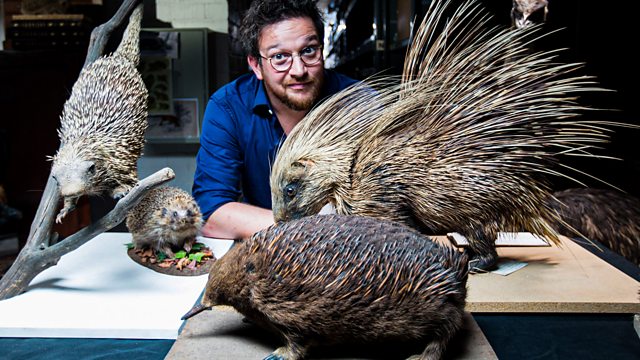
Secrets of Skin episode 1 – Adaptability: Skin is an incredible, multi-function organ that science is still learning so much about. It has adapted to allow animals to conquer virtually every habitat on the planet.     In this episode, Professor Ben Garrod reveals some ground-breaking new science and amazing, specialist, factual insight as he discovers how human skin is an ecosystem in its own right, playing host to demodex mites, that might redefine our understanding of human ancestry. He explores the new science that could pave the way for re-engineering human skin on amputations to make it more robust. […]

Secrets of Skin episode 1 – Adaptability Read More »


Secrets of Size episode 2 - Atoms to Supergalaxies

Secrets of Size episode 2 – Atoms to Supergalaxies

Secrets of Size episode 2 – Atoms to Supergalaxies: In the concluding episode of the series, Jim encounters ever larger cosmic structures to reveal the latest breakthroughs in our understanding of the universe. For example, there’s the heliosphere, a vast cloud of solar plasma that surrounds and protects the solar system. Its unique physics help us understand why life is possible. Larger still, Jim comes face to face with our galactic home the Milky Way, a monstrous structure sculpted by the gravitational forces of dark matter. Jim finds out from pioneering researcher Adrian Fabian about the black hole at its

Secrets of Size episode 2 – Atoms to Supergalaxies Read More »

Secrets of Size episode 1 - Atoms to Supergalaxies

Secrets of Size episode 1 – Atoms to Supergalaxies

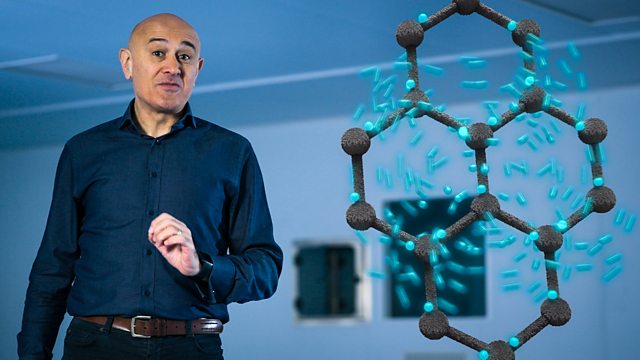
Secrets of Size episode 1 – Atoms to Supergalaxies: What would the universe look like if you were a billion times smaller or a billion times bigger? In this mind-bending series, Jim Al-Khalili will look at the universe across its vast range of size, ranging from the tiniest objects measuring just a few atoms, to vast structures consisting of hundreds of thousands of interconnected galaxies. Investigating these astonishing objects will reveal fundamental truths about our universe. At the end of each film, the audience will see the largest structures ever discovered in the universe and the smallest objects whose images

Secrets of Size episode 1 – Atoms to Supergalaxies Read More »


Seven Ages of Starlight

Seven Ages of Starlight

Seven Ages of Starlight: This is the epic story of the stars, and how discovering their tale has transformed our own understanding of the universe. Once we thought the sun and stars were gods and giants. Now we know, in a way, our instincts were right. The stars do all have their own characters, histories and role in the cosmos. Not least, they played a vital part in creating us.       There are old, bloated red giants, capable of gobbling up planets in their orbit, explosive deaths – supernovae – that forge the building blocks of life and

Seven Ages of Starlight Read More »

The Sky at Night - Exoplanets and Antarctica

The Sky at Night – Exoplanets and Antarctica

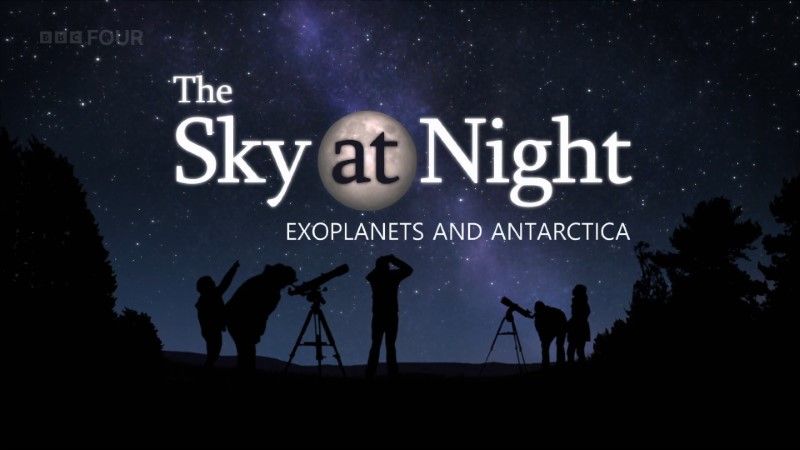
The Sky at Night – Exoplanets and Antarctica: In a month when the tally of confirmed exoplanets passed 5,000, it’s astonishing to remember that just 30 years ago, the notion of planets outside our own solar system was, well – just a notion. Since the first extrasolar planet was discovered in 1992, a staggering array of other worlds have been identified, including many in solar systems quite unlike our own.     Professor Amaury Triaud (University of Birmingham) studies binary systems – two stars locked in mutual orbit – and the planets that have been found orbiting them. Recently, Professor

The Sky at Night – Exoplanets and Antarctica Read More »


How to Sleep Well with Michael Mosley - Horizon

How to Sleep Well with Michael Mosley – Horizon

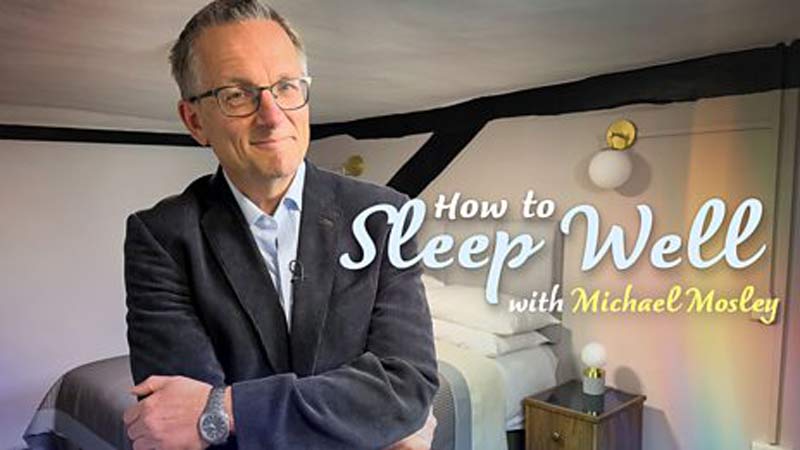
How to Sleep Well with Michael Mosley: A third of the population regularly struggle with our sleep, which rose to one in two during the pandemic – the highest it’s ever been. However, as more and more people seek help, an explosion in sleep science is enabling the study of sleep in ways not possible before. What’s more, recent breakthroughs are uncovering what’s happening in our brains and bodies while we’re asleep, getting us closer than ever to understanding the importance of sleep for our health.     Michael Mosley has struggled with his sleep for years and wants to

How to Sleep Well with Michael Mosley – Horizon Read More »

The Pleasure of Finding Things Out

The Pleasure of Finding Things Out

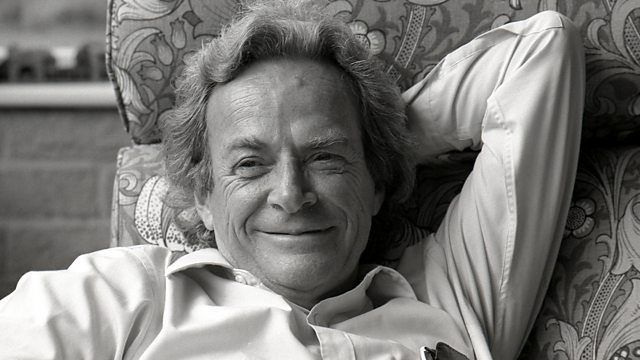
The Pleasure of Finding Things Out: Professor Richard Feynman of Caltech talks about his life and career. In 1981, he gave Horizon a candid interview, talking about many things close to his heart. Richard Feynman was one of the most brilliant theoretical physicists and original thinkers of the 20th century. He rebuilt the theory of quantum electrodynamics, and it was for this work that he won the Nobel Prize in 1965.     This programme is part a collection of BBC programmes specially chosen to celebrate Horizon’s 50th anniversary.   The Pleasure of Finding Things Out – Richard Feynman  

The Pleasure of Finding Things Out Read More »


Earth: The Power of the Planet episode 5 - Rare Earth

Earth: The Power of the Planet episode 5 – Rare Earth

Earth: The Power of the Planet episode 5 – Rare Earth: Life on Earth prospers because it enjoys the right amount of heat from the sun, and the atmosphere prevents meteorite bombardment. Geography series with Dr Iain Stewart.     Our planet is unique within the solar system. Four-and-a-half billion years ago it had a twin named Theia which was absorbed into the Earth, increasing its gravity and allowing it to form an atmosphere. Iain travels to Meteor Crater in Arizona to explore the atmosphere’s role in protecting us from bombardment by meteorites. Life on earth only prospers because it

Earth: The Power of the Planet episode 5 – Rare Earth Read More »

Earth: The Power of the Planet episode 4 - Oceans

Earth: The Power of the Planet episode 4 – Oceans

Earth: The Power of the Planet episode 4 – Oceans: Iain travels to surfers’ paradise Hawaii to learn more about oceans, explaining the difference between waves, tides and currents. In the Amazon, he rides the world’s longest tidal bore. In the beginning, there were no oceans: they are thought to have gradually formed from volcano steam and melted comet ice.     Change continues today: a new sea is forming in Ethiopia, which will separate East Africa from the mainland, and the Mediterranean is drying up. Documentary series in which Dr Iain Stewart reveals the natural forces that have shaped

Earth: The Power of the Planet episode 4 – Oceans Read More »

Earth: The Power of the Planet episode 3 - Ice

Earth: The Power of the Planet episode 3 – Ice

Earth: The Power of the Planet episode 3 – Ice : Documentary series in which Dr Iain Stewart reveals the natural forces that have shaped the earth’s development. Ice isn’t just something to put in a gin and tonic – it has carved out landscapes, unleashed catastrophes and shaped human evolution.     Now it could cause the destruction of our civilisation. Iain visits the Jakobshavn glacier in Greenland which has retreated 10km in the last few years because of global warming.   Earth: The Power of the Planet episode 3 – Ice   Ice is water frozen into a

Earth: The Power of the Planet episode 3 – Ice Read More »

Universe - The Big Bang: Before the Dawn episode 5

Universe – The Big Bang: Before the Dawn episode 5

Universe – The Big Bang: Before the Dawn episode 5: It’s the ultimate question: why are we here? Cutting-edge space missions take us back 13.8 billion years to the very beginning – the origin of the Universe.     Professor Brian Cox asks the ultimate question: how did the Universe come to be? The Universe is daunting in its scale. We live on one planet of eight that orbit just one of the four hundred billion stars in our galaxy. But our galaxy is just one of trillions in the universe. Yet it is amongst those galaxies that we have

Universe – The Big Bang: Before the Dawn episode 5 Read More »

Earth: The Power of the Planet episode 2 - Atmosphere

Earth: The Power of the Planet episode 2 – Atmosphere

Earth: The Power of the Planet episode 2 – Atmosphere: Dr Iain Stewart reveals the crucial natural forces that have shaped the earth’s development. A flight in a jet plane, a trip to the Andes and a trip to Shark Bay in Australia are expensive but necessary to discuss atmosphere.     You can’t see it, you can’t taste it, you can’t smell it and you can’t touch it, yet without it almost all life on Earth would die instantly. The atmosphere is Earth’s protective layer, warding off damaging cosmic rays and providing the life-giving oxygen which people depend on

Earth: The Power of the Planet episode 2 – Atmosphere Read More »

Scroll to Top