The Beechgrove Garden 2026 episode 6: There is something quietly magical about watching a garden wake up in spring. One week it is bare soil and potential. The next, it is bursting with colour, texture, and purpose. The Beechgrove Garden 2026 captures that transformation beautifully, and episode 6 is no exception. Specifically, this instalment delivers a rich mix of practical advice and fresh inspiration for gardeners at every level. Whether you are a seasoned grower or just finding your feet in a home garden, there is plenty here to get your hands dirty with.
Lizzie Schofield wastes no time in The Beechgrove Garden 2026 episode 6. She heads straight to the new cuttings area, where she begins direct sowing with the kind of quiet confidence that only comes from experience. Direct sowing is one of gardening’s most satisfying acts. In other words, you skip the middleman entirely and trust the seed to do what it was designed to do. Consequently, you save time, reduce transplant shock, and often end up with stronger, more resilient plants. Lizzie makes it look effortless, and that is exactly the point.
Meanwhile, Brian Cunningham takes a different path through the green garden. He is working in the zig-zag border, a beautifully named section that already sounds like an adventure. Brian selects tall-growing varieties, specifically choosing flowers and plants that climb skyward without needing support or staking. Think of them as the self-sufficient members of the border community. They stand tall on their own, making them ideal for the back of any plot. For expert garden planning, this approach is both practical and visually striking.
Brian also kicks off something genuinely exciting this episode. He begins cultivating a new collection of plants inside the 6x8ft glasshouse. This is significant because that size is the most common domestic greenhouse in the country. Consequently, Brian’s choices are directly relevant to anyone lucky enough to have one at home. He is not working with some vast professional setup. Instead, he is showing what is achievable in a real, relatable style garden space. His ideas for the season are creative, considered, and thoroughly practical.
Lizzie, meanwhile, steps into her competition plot for the first time this year. The theme is sensory planting, and each presenter has been assigned one of the five senses to work with. Lizzie draws what many would consider the most challenging card of all: touch. It is a fascinating brief for any top garden competitor. Specifically, she must select plants that engage visitors physically, through texture, temperature, and tactile surprise. Soft lamb’s ear, spiky teasel, velvety stachys — the possibilities are as varied as they are intriguing. It is a challenge that rewards creative thinking and bold ecogarden sensibility.
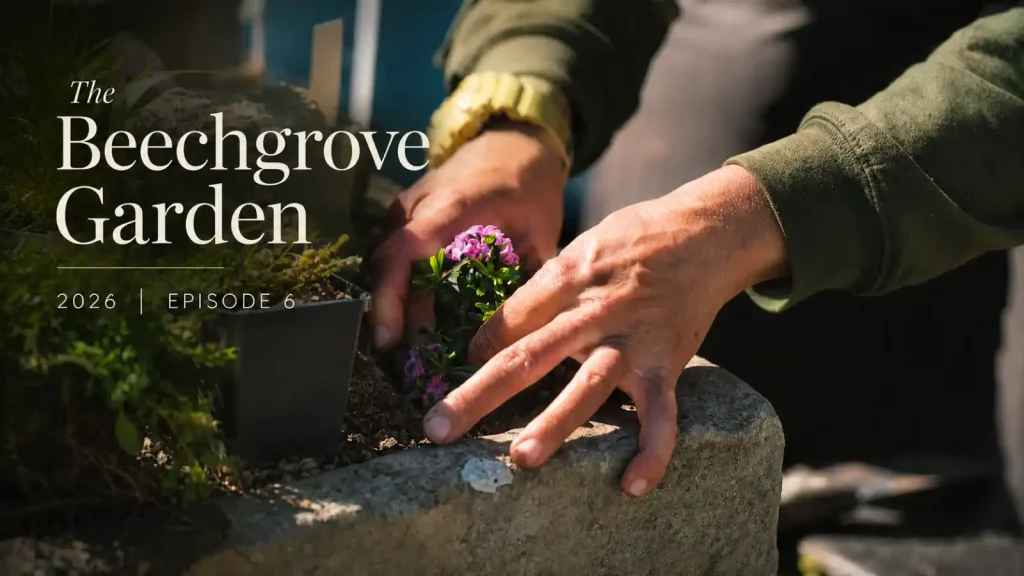
The episode also ventures beyond the main plot. A special report takes viewers to the alpine collection at the Royal Botanic Garden Edinburgh. Alpine plants are a world unto themselves. They are tough, compact, and astonishingly beautiful, shaped by centuries of survival in harsh mountain conditions. In other words, they are the stoics of the plant world. For Beechgrove Garden 2026, this segment adds real depth and variety to an already packed episode.
Planning a cut flower garden is one of the most rewarding decisions a gardener can make. Consequently, seeing Lizzie and Brian both working toward blooms with purpose gives this episode a particularly satisfying throughline. Cut flowers are not simply decorative. They connect the garden to the home, bringing the outside in and extending the joy of growing well beyond the plot itself. Brian’s tall border varieties are perfectly suited to this. Stems with height and strength translate beautifully into vase arrangements. Similarly, Lizzie’s sensory competition plot will almost certainly yield blooms with extraordinary texture and character.
The Beechgrove Garden 2026 episode 6 review
The competition element of The Beechgrove Garden 2026 adds a compelling layer to each episode. Each presenter approaches their plot with a distinct vision, and the sensory theme this year is inspired. Touch is arguably the hardest sense to design for in a garden. We naturally gravitate toward visual appeal or fragrance. However, Lizzie embraces the brief with genuine enthusiasm. Watching her make these early decisions is instructive for any gardener thinking about how to create spaces that feel as good as they look.
What makes The Beechgrove Garden 2026 episode 6 so valuable is its accessibility. The glasshouse segment, in particular, speaks directly to everyday home gardeners. Brian is not using specialist equipment or rare varieties. Instead, he is demonstrating what is possible in a standard domestic setup with careful planning and seasonal awareness. That is the show’s enduring gift to its audience. Furthermore, the handy hints woven throughout each episode offer bite-sized wisdom that is easy to remember and apply immediately.
The alpine report at Edinburgh adds a broader perspective. It reminds viewers that gardening exists on a vast and wonderful spectrum. From a 6x8ft greenhouse to a world-renowned botanic collection, the same principles apply. Observe carefully. Choose thoughtfully. Grow with intention. Consequently, whether you are tending a window box or a sprawling plot, the lessons from this episode of Beechgrove Garden 2026 are universally useful. Episode 6 is, simply put, essential viewing for anyone who loves plants, values craft, and believes that a well-tended garden is one of life’s finest pleasures.
The Beechgrove Garden 2026 episode 6
The Beechgrove Garden 2026 episode 6 arrives at a pivotal moment in the Scottish growing calendar, when the gap between planning and planting finally closes and the real work of the season begins in earnest. Across the country, gardeners are making decisions that will define their plots for months to come — which plants to direct sow, which borders to fill, and how to coax the most from even the smallest protected growing space. At Beechgrove, those decisions are being made with characteristic precision, and this episode captures the team at their most purposeful.
Scotland’s short growing season demands a particular kind of efficiency. Every week of productive weather counts, and the Beechgrove team understand better than most that the window for establishing plants, filling borders, and starting competition plots is narrow. This episode reflects that urgency without sacrificing the depth of knowledge that makes the programme essential viewing for gardeners at every level.
The range of subjects covered is deliberately broad. From direct sowing in a newly established cuttings area to staking-free planting strategies for the back of a border, from a focused glasshouse programme using the most common domestic greenhouse size to a sensory-themed competition plot, the episode moves through multiple growing contexts in a single hour. That breadth is not incidental — it mirrors the reality of what home gardeners face when the season accelerates.
Central to the episode is a recurring emphasis on plants that perform without demanding constant intervention. Whether it is tall-growing border subjects that need no support, or cut flower varieties chosen for their vigour and stem length, the selections made by Lizzie Schofield and Brian Cunningham reflect a philosophy of working with plant habit rather than against it. That approach will resonate with any gardener tired of staking, tying, and propping.
The episode also steps outside the Beechgrove grounds for a visit to the alpine collection at the Royal Botanic Garden Edinburgh, one of the most significant specialist plant collections in the country. That report adds a different register to the programme — more contemplative, more historically grounded — and provides context for a group of plants that home gardeners often admire but rarely grow with confidence.
Running through all of this is the question of how to match plants to place. The zigzag border, the cuttings area, the domestic glasshouse, the competition plot, and the alpine house all present different conditions and different opportunities. The decisions made in each of those spaces are instructive precisely because they are specific, not generic.
Lizzie and Brian approach those spaces with distinct but complementary sensibilities. Lizzie’s work this episode carries a creative charge — her sensory-themed competition plot is built around the concept of touch, and the plants she selects are chosen as much for their tactile qualities as their visual impact. Brian, meanwhile, applies a methodical intelligence to the glasshouse and the border, making choices that are practical, replicable, and well-reasoned.
Together, those two approaches capture something essential about good gardening: that it operates simultaneously at the level of practical technique and considered design. The Beechgrove Garden 2026 episode 6 demonstrates both with clarity and authority, offering a dense and useful hour for anyone who takes their growing seriously.
The Beechgrove Garden 2026 Episode 6 and the New Cuttings Area: Lizzie’s Direct Sowing Approach
The new cuttings area at Beechgrove makes its proper productive debut in this episode, with Lizzie Schofield beginning a programme of direct sowing that will eventually feed into the cut flower operation across the garden. Direct sowing in this context is a deliberate choice rather than a default — Lizzie is working with species that establish better when sown where they are to grow, avoiding the root disturbance that can set back certain plants when transplanted.
The cut flower focus shapes every decision Lizzie makes here. She is selecting for stem length, vase life, and succession, ensuring the cuttings area delivers usable material over as long a season as possible rather than peaking in a single flush. That kind of thinking — planning backwards from the intended use — is one of the hallmarks of a well-managed cutting garden, and Lizzie applies it with visible confidence.
Soil preparation in the cuttings area has been thorough, and Lizzie works into a bed that is clean, well-structured, and ready to receive seed without amendment. The sowing itself is handled methodically — rows are spaced to allow access for weeding and cutting, and seed is distributed carefully to avoid the need for excessive thinning later. It is practical work carried out with economy of effort, and it sets the tone for how the cuttings area will be managed throughout the season.
The choice to direct sow rather than raise under glass and transplant is worth examining. Certain annuals and biennials develop better root systems when they are not disturbed in early establishment. They also tend to be more resilient in exposed conditions, having hardened gradually from germination rather than been introduced suddenly from a protected environment. For Scottish gardens, where late frosts and cool springs can compromise transplants, this approach has real advantages.
Tall Varieties and the Zigzag Border: Brian’s Staking-Free Planting Strategy
Brian Cunningham turns his attention to the zigzag border in this episode, undertaking a planting session focused specifically on tall-growing varieties chosen for their ability to hold themselves upright without staking. The zigzag border is one of Beechgrove’s more structurally interesting spaces — its angled form creates a series of distinct planting bays that allow for grouped plantings with clear definition between them.
The decision to plant tall varieties at the back of the border without staking is grounded in careful species selection. Brian is not simply choosing the tallest plants available and hoping for the best; he is identifying varieties with strong, naturally self-supporting stems, appropriate stem-to-flower-head ratios, and growth habits that do not tend toward flopping or leaning under their own weight. That kind of selection requires familiarity with how plants actually behave in the ground, not just how they are described in catalogues.
The practical advantages of staking-free tall plants are significant for home gardeners. Staking is time-consuming, materials are an added cost, and poorly staked plants can look worse than unstaked ones when ties cut into stems or supports become more visible than the plants themselves. By choosing varieties that stand without assistance, Brian is presenting a genuinely useful model for anyone planting a mixed border where maintenance time is limited.
Positioning is equally important. Plants at the back of a border are partially sheltered by those in front, which reduces wind exposure and the leveraging effect that topples taller subjects. Brian’s placement exploits this natural shelter, using the border’s own structure as a management tool. The result is a back-of-border planting that should remain upright through the season without intervention, providing height and visual weight precisely where the border needs it.
Spacing decisions also feed into this self-supporting strategy. Plants grown with adequate airflow around them develop stronger, more lignified stems than those crowded together and drawn upward in competition for light. Brian gives each plant sufficient room to build the structural strength it needs, which is a point that is easily overlooked when filling a border quickly.
Glasshouse Cultivation in the Beechgrove Garden 2026 Episode 6: Brian’s 6x8ft Programme
One of the most directly useful elements of The Beechgrove Garden 2026 episode 6 is Brian’s programme for the six-by-eight-foot glasshouse — chosen specifically because it represents the most common size of domestic greenhouse in use across the country. By working to that footprint rather than to Beechgrove’s larger professional facilities, Brian is creating a genuinely transferable model that home gardeners can apply directly to their own situations.
The glasshouse programme kicks off in this episode, which means Brian is making foundational decisions about how the space will be used across the season. Those decisions involve staging, cropping sequence, temperature management, and the balance between propagation and growing-on. A six-by-eight-foot greenhouse is large enough to be genuinely useful but small enough that every square foot of bench and floor space matters.
Brian’s approach to the space reflects a clear sense of seasonal sequencing. The glasshouse is not being filled with a single crop or committed to a single purpose; instead, it is being planned as a dynamic space where what is growing changes as the season progresses. Plants that need early warmth for germination give way to those that need the protection of glass to ripen, and the bench space is managed accordingly.
The specific plants Brian introduces to the glasshouse are chosen with that domestic scale in mind. They are not varieties that require specialist equipment or unusual expertise — they are plants that a well-informed home gardener with a standard greenhouse can realistically grow well. That selection criterion is part of what makes Brian’s glasshouse work so valuable as a practical reference.
Temperature management in a small domestic greenhouse is one of the more challenging aspects of growing under glass, and Brian addresses this implicitly through his plant choices and timing. Starting the programme at the right moment — when ambient temperatures support germination without artificial heating — reduces both cost and the risk of damping off, which is a persistent problem in warm, humid glasshouse conditions. The timing of this episode in the Beechgrove calendar is therefore not incidental; it reflects a considered judgment about when the glasshouse season can realistically begin in Scotland without supplementary heat.
The Sensory Competition Plot: Lizzie’s Touch-Themed Planting Design
The competition plot theme running through The Beechgrove Garden 2026 episode 6 introduces a framework that is both creative and genuinely demanding. Each presenter has been assigned a sense around which to build their plot, and Lizzie has been given touch — widely regarded as the most challenging of the five senses to interpret through planting. Unlike colour, scent, or even sound, the tactile qualities of plants are not always immediately legible from a distance, which means Lizzie must design a plot that rewards close engagement and encourages the visitor to interact physically with what is growing.
Lizzie begins her competition plot in this episode, making the initial planting decisions that will define its character for the rest of the season. The plants she selects are chosen with explicit reference to their surface texture, form, and the physical sensation they produce when touched. This means thinking about the difference between soft and scratchy, smooth and ridged, furry and waxy — a vocabulary of touch that most gardeners have never formally applied to plant selection.
The range of tactile qualities available in the plant world is genuinely broad. Lamb’s ear offers a dense, soft-pile surface. Cardoon and globe thistle present architectural roughness and sharp definition. Many grasses produce surfaces that shift between smooth and finely serrated depending on the direction of touch. Succulents offer smooth, cool firmness. Lizzie’s challenge is to build a planting that encompasses enough of that range to be genuinely interesting as a tactile experience, while remaining coherent as a designed space.
The competition plot format at Beechgrove adds a layer of pressure to this work. Lizzie is not simply designing a garden feature for her own interest; she is building toward a judged outcome, which means the planting must succeed on multiple levels — as a functioning garden space, as a coherent response to the brief, and as a demonstration of horticultural knowledge and skill. That triple requirement is apparent in the care with which she approaches even the initial planting decisions.
The plot also needs to work visually. A space designed primarily around touch runs the risk of appearing monochromatic or texturally incoherent from a viewing distance, and Lizzie is clearly thinking about how the plants she chooses will read both up close and from a few metres away. That dual register — the intimate and the viewed — is one of the more sophisticated design challenges in the episode, and it is one that Lizzie approaches with evident creative intelligence.
The Alpine Collection at the Royal Botanic Garden Edinburgh
The report from the Royal Botanic Garden Edinburgh introduces a different scale and context to the episode. The alpine collection there represents decades of specialist cultivation, with plants drawn from mountain environments across the world and maintained under conditions that replicate, as closely as possible, the thin soils, sharp drainage, and intense light of their natural habitats.
Alpine plants occupy a particular place in horticultural culture. They are among the most intensely studied and carefully grown plants in cultivation, demanding conditions that differ substantially from those required by most garden subjects. Their small scale belies their complexity — an alpine house at a botanic garden is one of the most technically demanding growing environments in horticulture, and the Edinburgh collection is a demonstration of what sustained specialist attention can achieve.
The report contextualises the collection within the broader mission of the Royal Botanic Garden Edinburgh, which combines conservation, research, and public education. The alpine plants held there are not simply ornamental subjects; many represent species from habitats that are threatened by climate change, land use pressure, and declining pollinator populations. Holding viable cultivated populations of these species has conservation significance well beyond the aesthetic.
For the home gardener, the Edinburgh report offers a window into plants that can be grown domestically but are rarely treated with the seriousness they deserve. Alpines in containers, in raised beds, or in purpose-built scree gardens can deliver extraordinary seasonal display in a very small footprint. The Edinburgh collection demonstrates what is possible when those plants are given precisely the right conditions, and the report serves as both an inspiration and a practical reference for anyone considering alpine cultivation at home.
The visit also highlights the horticultural knowledge required to grow these plants well. Alpines are not difficult in the way that tropical exotics are difficult — they do not require warmth or humidity — but they are unforgiving of poor drainage, overhead winter wet, and overcrowding. Understanding those requirements, and designing growing conditions that meet them, is the central skill in alpine horticulture, and the Edinburgh collection is a masterclass in how to get that right.
The Beechgrove Garden 2026 Episode 6 and the Principles of Cut Flower Growing
Cut flower cultivation is a thread that runs through several elements of The Beechgrove Garden 2026 episode 6, and it is worth examining the principles that underpin the decisions being made at Beechgrove in some detail. A productive cutting garden is not simply a flower border from which stems are occasionally harvested — it is a managed system designed to produce high-quality, long-stemmed flowers in planned succession across as many weeks of the season as possible.
The distinction between growing flowers for the border and growing them for cutting is fundamental. Border plants are chosen for their garden effect — their spread, their interaction with neighbours, their overall visual contribution from a distance. Cut flower plants are chosen primarily for their stems, their vase life, their ability to be harvested without destroying the plant, and their capacity to regenerate and produce subsequent flushes of bloom after cutting.
Lizzie’s direct sowing in the cuttings area reflects this distinction clearly. The varieties she is working with are selected for cutting performance rather than garden effect, and the spacing and management she applies to them reflects their intended use. This kind of clarity of purpose — knowing exactly what a bed is for and managing it accordingly — is one of the marks of a well-organised productive garden.
Succession sowing is another principle embedded in Lizzie’s approach. Rather than sowing everything at once and accepting a single peak of production, the cuttings area will be sown in stages, ensuring a more even supply of material over a longer period. That approach requires planning and record-keeping but pays dividends in a garden where cut flowers are a priority throughout the season rather than a brief seasonal windfall.
The choice of species also matters enormously in a cutting garden. Some flowers, however beautiful in the border, collapse within hours of cutting. Others last two weeks in water with minimal conditioning. Beechgrove’s selections consistently favour the latter, and the variety choices made in this episode reflect a working knowledge of which plants genuinely earn their place in a productive cutting operation.
Handy Hints and Practical Guidance in The Beechgrove Garden 2026 Episode 6
The handy hints segment is a consistent feature of The Beechgrove Garden 2026 episode 6 format, and in this episode it delivers a series of compact, actionable pieces of advice that complement the longer practical sequences. These hints are calibrated for the current moment in the Scottish growing season — addressing the specific questions and challenges that arise in May, when the garden is accelerating and decisions made now will have long-term consequences.
The hints cover a range of topics and skill levels, from straightforward practical tips that will be useful to relative beginners to more nuanced points that experienced gardeners will find equally valuable. That range is deliberately maintained — Beechgrove understands that its audience includes gardeners at every stage of their development, and the hints segment respects that breadth by not pitching consistently at one level.
Timing is a recurring theme across the hints. Several of the points made relate to when to perform particular tasks, and the answers are often counterintuitive for gardeners who have absorbed advice calibrated for more southerly climates. Scotland’s season runs later than much of the United Kingdom, and the hints reflect that reality rather than defaulting to calendar dates that may not apply north of the border.
The practical emphasis of the hints segment aligns with the overall character of the episode. Beechgrove has always been a programme that values doing over theorising, and the hints reflect that ethos — they are grounded in observable practice, tested at Beechgrove itself, and presented without unnecessary qualification or hedging.
Plant Selection Philosophy Across the Beechgrove Garden 2026 Episode 6
Stepping back from the individual sequences, a coherent plant selection philosophy runs through the entire episode. At Beechgrove, choices are made on the basis of performance rather than novelty, on the basis of appropriateness rather than fashion, and on the basis of what plants actually do in Scottish conditions rather than what they are claimed to do under more favourable circumstances.
That philosophy is visible in Brian’s tall, self-supporting border plants — chosen because they perform reliably without support, not because they are the most floriferous or the most fashionable. It is visible in Lizzie’s cut flower selections — chosen for stem quality and vase life, not simply for colour. It is visible in the glasshouse programme — planned around what a home gardener can realistically achieve in a standard-sized structure, not around what is theoretically possible with unlimited space and equipment.
It is visible, too, in the sensory competition plot. Lizzie’s touch-themed selections are not arbitrary or whimsical — they are carefully reasoned choices grounded in botanical knowledge of surface texture, cellular structure, and the physical properties of plant material. The creative brief is met through plant knowledge, not despite it.
This consistency of approach across very different growing contexts gives the episode its coherence. Beechgrove is not a showcase for extraordinary plants grown under extraordinary conditions; it is a demonstration of what informed, practical, well-timed gardening can achieve in a real Scottish garden. That grounding in the achievable is what makes the programme consistently useful for home gardeners who want guidance they can actually apply.
The plants themselves — whether alpines at Edinburgh, tall border subjects in the zigzag bed, direct-sown annuals in the cuttings area, or touch-textured perennials in the competition plot — are always presented as the products of decisions, not accidents. Understanding those decisions, and the reasoning behind them, is what transforms the episode from entertainment into instruction.
Conclusion: The Beechgrove Garden 2026 Episode 6 as a Model for Seasonal Momentum
The Beechgrove Garden 2026 episode 6 captures a garden in full momentum, with every space in active use and every decision contributing to outcomes that will unfold across the next several months. That forward-looking quality is one of the episode’s most distinctive characteristics — it is not simply about what is being planted today but about what those plantings will become and what they will deliver.
Brian and Lizzie move through their respective spaces with the kind of focused competence that comes from years of practical experience, but they present their decisions in ways that make the underlying reasoning transparent. Whether you are planning a cutting garden, filling a back-of-border position, starting a glasshouse season, or thinking about how to approach a themed planting, the episode offers specific, grounded, applicable guidance.
The alpine report at the Royal Botanic Garden Edinburgh provides a moment of reflection amid the practical work — a reminder that the plants grown in gardens are connected to wider botanical and ecological contexts, and that specialist collections like Edinburgh’s serve purposes that extend far beyond ornamental display.
Taken together, the elements of this episode constitute a genuinely useful guide to May gardening in Scotland. The Beechgrove Garden 2026 episode 6 earns its place in the season’s calendar not by being spectacular but by being consistently, reliably useful — which, in the end, is exactly what good gardening requires.
FAQ The Beechgrove Garden 2026 episode 6
Q: What is The Beechgrove Garden 2026 Episode 6 about?
A: The Beechgrove Garden 2026 Episode 6 focuses on border planting, cut flower growing, and glasshouse cultivation. Lizzie Schofield direct sows in the new cuttings area, Brian Cunningham plants tall self-supporting varieties in the zigzag border, and both presenters advance their season-long competition plots. Additionally, the episode includes a report from the alpine collection at the Royal Botanic Garden Edinburgh.
Q: Why does Brian Cunningham choose tall plants that need no staking for the zigzag border?
A: Brian selects naturally self-supporting tall varieties because staking is time-consuming, costly in materials, and can damage stems if ties are applied incorrectly. Furthermore, plants grown with adequate spacing develop stronger, more lignified stems. Positioning these varieties at the back of the border also provides natural shelter from wind, reducing the risk of toppling without any intervention.
Q: What is the significance of Brian’s six-by-eight-foot glasshouse programme?
A: Brian uses a six-by-eight-foot glasshouse because it represents the most common domestic greenhouse size in the UK. By planning his programme around that specific footprint, he creates a directly transferable model for home gardeners. He focuses on seasonal sequencing, bench management, and plant selection suited to that scale, making his approach genuinely practical for anyone with a standard garden greenhouse.
Q: Why does Lizzie Schofield direct sow in the cuttings area rather than transplanting seedlings?
A: Lizzie direct sows because certain cut flower species establish stronger root systems when sown in situ, avoiding the stress of transplantation. In Scottish gardens specifically, plants sown directly also harden gradually rather than being introduced suddenly from a protected environment. Additionally, this method reduces the risk of transplant failure during unpredictable spring weather, which is a common challenge in northern growing conditions.
Q: What is the theme of Lizzie’s competition plot in The Beechgrove Garden 2026 Episode 6?
A: Lizzie’s competition plot is themed around the sense of touch, considered the most challenging of the five senses to interpret through planting. She selects plants specifically for their tactile qualities, including surface texture, form, and the physical sensation they produce when handled. However, she also designs the plot to remain visually coherent from a distance, balancing intimate tactile interest with broader garden appeal.
Q: What types of plants suit a touch-themed garden plot?
A: A touch-themed plot benefits from a wide range of tactile qualities. Lamb’s ear provides a soft, dense pile surface. Cardoon and globe thistle offer architectural roughness. Many ornamental grasses shift between smooth and finely serrated depending on the direction of touch. Furthermore, succulents contribute smooth, cool firmness. Combining contrasting textures ensures the planting remains genuinely interesting as a tactile experience throughout the season.
Q: What makes a productive cutting garden different from a standard flower border?
A: A cutting garden prioritises stem length, vase life, and succession over visual garden effect. Plants are chosen for how well they perform after harvest, not how they interact with neighbouring plants in a border. Additionally, spacing is managed to allow easy access for cutting, and varieties are selected to regenerate after harvest, producing multiple flushes of bloom rather than a single seasonal peak.
Q: What is the Royal Botanic Garden Edinburgh’s alpine collection, and why does it matter to home gardeners?
A: The Royal Botanic Garden Edinburgh maintains a specialist alpine collection representing mountain species from around the world, grown under conditions that replicate their natural habitats. Many of these species face threats from climate change and habitat loss, giving the collection genuine conservation value. For home gardeners, the collection demonstrates what alpines can achieve with sharp drainage, full light, and protection from overhead winter wet.
Q: How does The Beechgrove Garden 2026 Episode 6 address the specific challenges of gardening in Scotland?
A: The episode consistently calibrates its advice for Scotland’s shorter, cooler growing season rather than defaulting to guidance designed for more southerly UK climates. Brian times his glasshouse programme to align with ambient temperatures that support germination without artificial heat. Lizzie’s direct sowing strategy reduces transplant vulnerability during unpredictable Scottish springs. Furthermore, the handy hints segment addresses timing questions specific to northern growing conditions throughout the episode.
Q: What overall gardening philosophy does The Beechgrove Garden 2026 Episode 6 demonstrate?
A: The episode consistently demonstrates a philosophy of working with plant habit rather than against it. Selections across every growing space prioritise performance and appropriateness over novelty or fashion. Brian chooses plants that support themselves; Lizzie chooses cut flowers for vase life rather than appearance alone. Additionally, every decision is grounded in what home gardeners can realistically replicate, making the episode a practical and authoritative reference for the season.