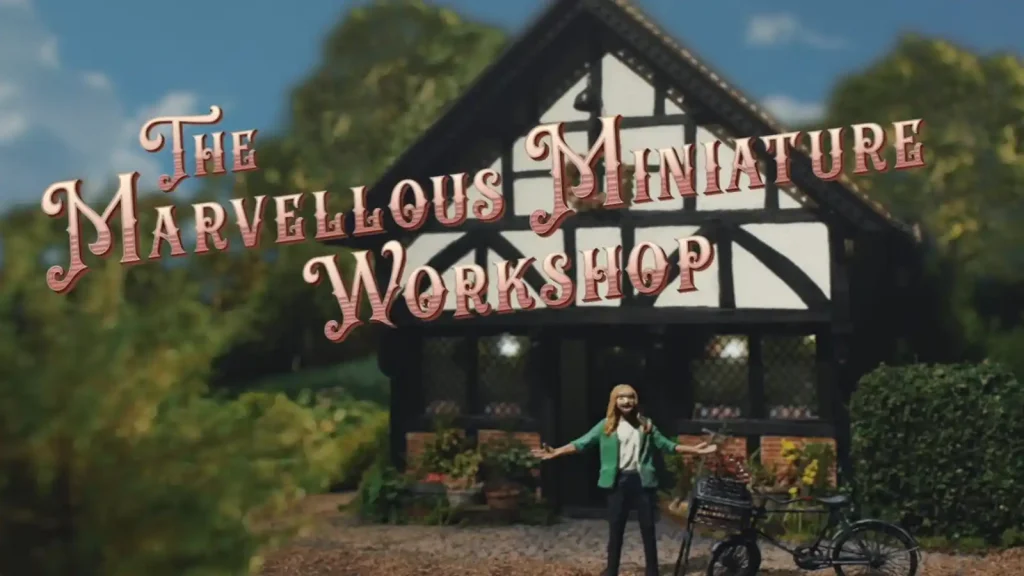
The Marvellous Miniature Workshop Episode 8 brings one of its most emotionally resonant challenges to the workbench, as master craftsman Lee Robinson takes on the task of recreating a lost family bakery in extraordinary 1:24 scale detail. This episode centres on Steven, a fourth-generation baker whose family business once stood at the heart of its local community before disappearing with the passage of time. The commission is not merely a craft exercise; it is an act of preservation, memory, and love rendered in wood, resin, and paint. For viewers who have followed this remarkable documentary series, the bakery episode represents the show at its most powerful — where fine detail and emotional storytelling converge in a single, hand-built object.
Steven’s connection to the bakery runs four generations deep. His great-grandparents founded the business, and it passed through the family line as a living institution, feeding the local community and anchoring neighbourhoods through decades of change. By the time Steven grew up, the bakery had already become something of a legend within the family, a place spoken about with the kind of reverence usually reserved for sacred ground. The loss of that business left a gap that no amount of time has fully closed. His hope, in coming to The Marvellous Miniature Workshop, is that a miniature model might do what memory alone cannot — give the bakery a permanent, tangible form.
The challenge Lee faces is considerable. He must translate a real, working bakery — with its shopfront signage, loaves of bread, display shelves, period fittings, and the particular atmosphere of a family-run business — into a handmade miniature no bigger than a shoebox. Every element must be researched, fabricated, and finished to a standard that will satisfy not just the eye but the heart of a man who carries his family history in every detail he describes. The craft competition element of the show gives this task a structural urgency, but the real pressure comes from something far more personal.
Sara Cox hosts the episode with her characteristic warmth, guiding both Steven and the audience through the emotional weight of the commission while keeping the focus firmly on what Lee is building. The dynamic between presenter, commissioner, and craftsman gives the show its distinctive texture — part documentary series, part heartwarming TV event, part close study in artisan skills. Cox draws out the details that matter most to Steven, allowing him to explain not just what the bakery looked like but what it meant.
The episode unfolds with the careful pacing of a programme that understands its subject. Craftwork of this precision cannot be rushed, and The Marvellous Miniature Workshop never tries to rush it. Instead, viewers are invited into Lee’s workshop to witness each stage of construction, from early planning and material selection through to the final reveal. Along the way, the episode touches on themes of inheritance, loss, community, and the human impulse to hold on to the things that shaped us. It is, in every sense, a study in what handmade miniatures can carry that photographs and words sometimes cannot.
Lee Robinson’s reputation as one of Britain’s foremost miniaturists rests on a career defined by exactly this kind of challenge. His work in 1:24 scale demands a level of concentration and manual precision that most craftspeople never develop, and his approach to each new commission begins with the same fundamental question: what is the emotional core of this piece? In Steven’s case, the answer is clear — it is the shopfront, the smell of fresh bread, and the sense of a family pouring themselves into their work. Lee must translate all of that into a diorama small enough to sit on a shelf.
Abi Trotman, who contributes to the creative process throughout the series, brings her own perspective to bear on the challenges of making collectible models that carry genuine emotional weight. Her involvement in this episode highlights the collaborative nature of the workshop, where different skill sets combine to push individual pieces toward their highest possible expression. The series has always positioned itself as a celebration of hobbyist craft elevated to professional standard, and this episode makes that elevation visible at every turn.
By the time the bakery commission gets fully underway, the viewer understands exactly what is at stake. This is not simply a question of whether Lee can build a technically accurate miniature. The deeper question is whether he can capture the soul of a place that exists now only in the memories of a family who loved it.
The Marvellous Miniature Workshop and the Art of the Personal Commission
Every commission that arrives at The Marvellous Miniature Workshop carries its own emotional freight, but the bakery episode sets a particularly demanding brief. Steven’s request is rooted in generational memory — the kind that accumulates detail slowly over decades, passed down through stories, photographs, and the particular way an older family member’s voice changes when they describe a place they loved. Lee must gather all of this before he can build anything at all.
The initial consultation between Steven and the team is, therefore, as much an act of listening as it is a design session. Steven describes the shopfront in precise terms — the signage, the window displays, the arrangement of loaves and pastries that announced the bakery’s identity to passers-by. He recalls the interior atmosphere, the warmth and the particular smell of a working bakery, and the way customers would gather in ways that turned a simple transaction into a social occasion. These details are the raw material from which Lee will construct his miniature world.
Sara Cox facilitates this exchange with the skill of someone who understands that the most important measurements are not always the ones you can take with a ruler. Her questions encourage Steven to move between the practical and the personal, building a picture that is simultaneously a technical brief and an emotional portrait. The process itself is compelling television — a reminder that craft competition shows can do more than showcase technical skill when they take human stories seriously.
How Lee Robinson Builds in 1:24 Scale for The Marvellous Miniature Workshop
Working in 1:24 scale means that every inch in the model represents two feet in reality. At this ratio, a standard door stands just over three inches tall, a loaf of bread becomes something no larger than a thumbnail, and the texture of a painted shopfront sign must be achieved with brushes so fine they leave marks the naked eye can barely follow. Lee Robinson has spent years developing the techniques required to work at this level, and his approach to the bakery commission draws on every one of them.
The shopfront is the centrepiece of the piece, and Lee begins there. He constructs the framework from carefully cut and shaped materials, building up the architectural detail of the facade before addressing the signage that Steven has described. Period lettering in 1:24 scale is a particular challenge — the characters must be legible without being disproportionate, and the ageing and weathering that gives old shopfronts their character must be applied with extraordinary restraint. Too much and the piece looks theatrical; too little and it loses its sense of time.
The bread itself presents a separate set of technical problems. Lee must create miniature loaves, rolls, and pastries that are convincing in shape, colour, and texture at a scale where a single millimetre of inaccuracy becomes immediately visible. He works with specialised materials that allow him to shape and detail food items with a fidelity that larger-scale work rarely demands. Each loaf must look as though it has been baked that morning — golden-crusted, slightly irregular, carrying the organic imperfection that distinguishes real bread from the industrial variety. The artisan skills required here are among the most demanding the series has presented.
Steven’s Family Legacy and the Emotional Core of The Marvellous Miniature Workshop Episode 8
Steven’s account of his family’s bakery is the emotional engine of the episode. The business was founded by his great-grandparents, which means it survived two world wars, post-war reconstruction, the rise of supermarkets, and the slow erosion of the high street before finally closing. Each generation that ran the bakery added something to its character — a new line of products, a change to the shopfront, a particular way of engaging with customers that became part of the family’s identity.
For Steven, the bakery represents something larger than a business. It is the point at which his family’s private history intersects with the public life of their community. The people who bought their bread there were neighbours, friends, and regulars who became almost part of the family themselves. The closure of the bakery was, therefore, not just a commercial event but a social one — the loss of a gathering point, a landmark, and a daily ritual for everyone who had relied on it.
This context gives the commission an unusual depth. Lee is not recreating a building; he is recreating a relationship between a family and its community, compressed into a diorama small enough to hold in two hands. The handmade miniatures that emerge from this workshop carry meaning precisely because they are made with this kind of understanding. Steven’s cherished memories are the blueprint, and Lee’s task is to honour them in three dimensions.
Craftsmanship and Detail: Inside the Workshop for The Marvellous Miniature Workshop Episode 8
The workshop sequences in this episode are among the most technically illuminating the series has offered. Lee works through the bakery commission in stages, addressing each component with the methodical focus that complex miniature work demands. The shopfront framework comes first, followed by the glazed window, the door, and then the detailed dressing of the window display that will give the piece its period character.
The window display is particularly significant. In a working bakery, the window arrangement is a form of communication — it tells customers what is available that day, signals the quality of the produce, and creates an impression of abundance and care. In 1:24 scale, Lee must achieve all of this within a space no larger than a postage stamp. He arranges miniature loaves, trays, and display items with tweezers and dental tools, working under magnification to ensure that each element sits correctly within the overall composition.
The interior, visible through the window, receives equal attention. Period fittings, display cases, and counter details are all constructed and painted to match the era Steven has described. The floor, walls, and ceiling of the shop interior are finished to a standard that rewards close inspection, even though much of this detail will be partially obscured in the final piece. This commitment to completeness — to finishing what cannot easily be seen — is one of the distinguishing characteristics of fine miniature craft, and it is one of the things that separates a collectible model made with genuine skill from a decorative replica made for visual effect only.
Abi Trotman’s contribution during this phase involves both practical assistance and the kind of critical eye that helps a craftsman see his own work with fresh perspective. Her role in the creative workshops is to push the work toward its highest expression, asking questions and offering observations that prompt Lee to reconsider, refine, and improve specific elements. The collaboration is quiet but consequential.
The Shopfront Sign and Period Detail in The Marvellous Miniature Workshop
The signage above the bakery window is one of the most visually distinctive elements of any traditional shopfront, and in this episode it becomes one of the most technically demanding components Lee must produce. Steven has described the lettering, the colour, and the general style of the sign from memory and from whatever photographic evidence the family retains. Lee must translate this description into a miniature sign that looks authentically of its period while remaining crisp and legible at 1:24 scale.
Period lettering in traditional British commercial signage followed conventions that developed over the nineteenth and early twentieth centuries — serif typefaces, gilded or painted letters, ornamental details that gave each sign its individual character. Recreating these conventions at miniature scale requires not just technical painting skill but an understanding of historical design that goes beyond simple copying. Lee must make interpretive decisions about weight, spacing, and decorative detail that will define the sign’s overall character.
The painting process itself is painstaking. Lee uses brushes with just a few hairs to lay down letterforms that must remain consistent across a sign face measured in centimetres. Any variation in line weight, any wobble in a curve, will be immediately visible under the magnification through which miniature work is always assessed. He applies colour in layers, building up the depth and slight translucency that gives painted signs their particular warmth, finishing with fine detailing that suggests age and use without tipping into damage or neglect.
The completed sign transforms the shopfront. Where before it was a carefully made but generic Victorian commercial facade, the addition of the family name above the window turns it into Steven’s bakery — specific, personal, and immediately recognisable. This is the moment in the build where craft becomes memory.
The Reveal: Emotional Storytelling at the Heart of The Marvellous Miniature Workshop
The reveal sequence in The Marvellous Miniature Workshop Episode 8 carries more emotional weight than almost any comparable moment in the series. Steven has not seen the piece during its construction, and his first view of the completed bakery miniature is filmed in the way such moments always are — with the subject’s face in close-up, the camera ready to catch whatever the object provokes.
What it provokes, in Steven’s case, is immediate and visible recognition. The shopfront, the sign, the window display, the miniature loaves arranged behind glass — all of it corresponds to something he has carried in his memory for years. The model does not simply look like a bakery; it looks like his bakery, the one his family built and ran and eventually lost. Sara Cox gives the moment space, allowing Steven to process what he is seeing before asking him to put it into words.
Steven’s response focuses on specific details — the sign lettering, the arrangement of the window, the particular colour of the paintwork — that confirm Lee has understood the commission at its deepest level. Each detail he recognises is a point of contact between the object in front of him and the memory it represents. The collectible model has become, in this moment, an act of restitution — giving back something that time had taken.
The emotional storytelling that defines this episode at its best is entirely dependent on the quality of the craft. If the miniature were merely competent, the reveal would be pleasant but not moving. Because it is exceptional — because every surface, every fitting, every tiny loaf of bread has been made with full attention to what it means — the reveal becomes genuinely affecting. This is what handmade miniatures can do that no other medium quite replicates.
The Broader Significance of The Marvellous Miniature Workshop in British Craft Television
The Marvellous Miniature Workshop occupies a specific and valuable place in the landscape of British daytime TV. It sits within a tradition of craft-focused programming that includes The Repair Shop and various heritage-based documentary series, but it is distinctive in its focus on creation rather than restoration, and in its sustained attention to the relationship between objects and the memories they carry.
The 2025 TV shows landscape has seen a continued appetite for programming that combines artisan skills with human interest stories, and this series has delivered both with consistency. Each episode takes a real person’s connection to a real place or object and asks what it would mean to preserve that connection in miniature form. The answer is always different, always specific, and always illuminating about both the craft and the human capacity for attachment.
The bakery episode illustrates this formula at its most effective. The commission is simple in outline — make a miniature of a family bakery — but the execution is extraordinarily complex, requiring Lee to balance technical precision with emotional intelligence. The result is a piece that works simultaneously as a fine craft object and as a repository of cherished memories, a diorama that will sit on a shelf and carry an entire family history within it.
Abi Trotman’s work throughout the series has reinforced the importance of collaborative creative workshops in achieving this standard. No single craftsperson commands every skill required for the most demanding commissions, and the workshop model allows individual specialisms to combine in service of a unified vision. The series benefits enormously from this collaborative structure, which gives each episode a sense of collective investment in the outcome.
What The Marvellous Miniature Workshop Episode 8 Reveals About Memory and Craft
The deepest subject of this episode is not the bakery itself but the nature of memory and what we ask of objects when we want to hold on to things that have been lost. Steven’s family could not keep the bakery open. They could not prevent the changes that made the business unviable. What they could do — through this commission — is ensure that the bakery exists somewhere in three-dimensional form, that future generations can look at it and understand something concrete about where they came from.
This is the cultural function that dioramas and handmade miniatures have always performed, long before television turned the process into compelling viewing. In an age when buildings are demolished, businesses close, and communities disperse, a precisely made miniature of a lost place serves as a form of architecture — a structure that preserves not just the appearance of something but its particular character, the accumulated decisions and details that made it singular.
Lee Robinson understands this function instinctively, and it shapes every decision he makes in the workshop. When he chooses the colour of the paintwork, the style of the lettering, the precise arrangement of loaves in the window display, he is not simply making aesthetic choices — he is making historical ones, recording and preserving the specific reality that Steven has described. The 1:24 scale miniature is, in this sense, a form of documentation more vivid and immediate than any written record.
The hobbyist craft tradition from which miniature-making emerges has always carried this preservationist impulse. People make miniatures of houses they have loved, of streets that no longer exist, of interiors that exist only in family photographs. What The Marvellous Miniature Workshop does is bring professional skill and emotional intelligence to bear on this impulse, elevating it from personal hobby to something with the clarity and precision of fine art. The bakery episode is one of the strongest expressions of this ambition the series has yet produced, and it confirms Lee Robinson as a craftsman working at the very highest level of his discipline.
FAQ The Marvellous Miniature Workshop Episode 8
Q: What happens in The Marvellous Miniature Workshop Episode 8?
A: The Marvellous Miniature Workshop Episode 8 follows craftsman Lee Robinson as he recreates a lost family bakery in 1:24 scale miniature. Steven, a fourth-generation baker, commissions the piece to preserve his family’s cherished memories. Sara Cox hosts, guiding Steven and viewers through the emotional and technical journey from brief to reveal.
Q: Who is Steven, and why does he appear on the show?
A: Steven is a fourth-generation baker whose family business once served as a cornerstone of local community life. The bakery has since closed, and Steven longs to see it preserved in miniature form. His commission represents emotional storytelling at its most personal, transforming cherished memories into a tangible, handmade object.
Q: What scale does Lee Robinson use to build the bakery miniature?
A: Lee builds the bakery in 1:24 scale, meaning every inch in the model represents two feet in reality. At this ratio, a standard door stands just over three inches tall. Additionally, individual loaves of bread become no larger than a thumbnail, demanding extraordinary precision and specialised artisan skills throughout the build.
Q: What makes the bakery shopfront so technically challenging to recreate?
A: The shopfront requires period-accurate lettering, painted signage, a glazed window display, and correctly aged paintwork — all at 1:24 scale. Furthermore, each letterform must be applied with brushes carrying just a few hairs. Any inconsistency in line weight becomes immediately visible. Lee layers colour carefully to achieve the warmth of authentic Victorian commercial signage.
Q: How does Lee Robinson recreate miniature bread and bakery products?
A: Lee uses specialised materials to shape and detail miniature loaves, rolls, and pastries at 1:24 scale. Each piece must display the organic irregularity of real baked goods — a golden crust and natural imperfection that distinguishes artisan bread from industrial produce. However, achieving this at miniature scale requires both fine detail work and an advanced understanding of form and texture.
Q: What role does Sara Cox play in The Marvellous Miniature Workshop Episode 8?
A: Sara Cox hosts the episode with warmth and emotional intelligence. She facilitates the initial consultation between Steven and the team, drawing out both practical details and personal significance. Additionally, she gives the reveal sequence the space it deserves, allowing Steven to process the completed miniature before responding. Her presence balances the craft competition elements with the human interest dimension.
Q: Who is Abi Trotman, and how does she contribute to the episode?
A: Abi Trotman contributes a critical eye and collaborative perspective within the creative workshops. She works alongside Lee Robinson, asking questions and offering observations that prompt refinement at key stages of the build. Her involvement reflects the series’ commitment to handmade miniatures produced through genuine collaboration rather than individual effort alone.
Q: How does the reveal scene unfold in The Marvellous Miniature Workshop Episode 8?
A: Steven sees the completed bakery miniature for the first time during the reveal. He immediately recognises specific details — the sign lettering, the window arrangement, and the paintwork colours — confirming that Lee has honoured the brief at its deepest level. Consequently, the moment becomes genuinely moving, demonstrating that exceptional craftsmanship transforms a collectible model into an act of emotional restitution.
Q: Where does The Marvellous Miniature Workshop fit within British daytime TV?
A: The series occupies a distinctive place among 2025 TV shows, combining artisan skills with human interest stories in a format unlike any other British daytime TV programme. It shares the heritage sensibility of shows such as The Repair Shop but focuses on creation rather than restoration. Furthermore, its sustained attention to emotional storytelling elevates it beyond a conventional craft competition format.
Q: Why do handmade miniatures carry such cultural and personal significance?
A: Handmade miniatures preserve not just the appearance of a lost place but its specific character — the accumulated decisions that made it singular. Steven’s bakery diorama will carry four generations of family history within a single shelf-sized object. Therefore, 1:24 scale craft serves a preservationist function: recording cherished memories in three-dimensional form when buildings close, communities change, and time erases what once defined everyday life.