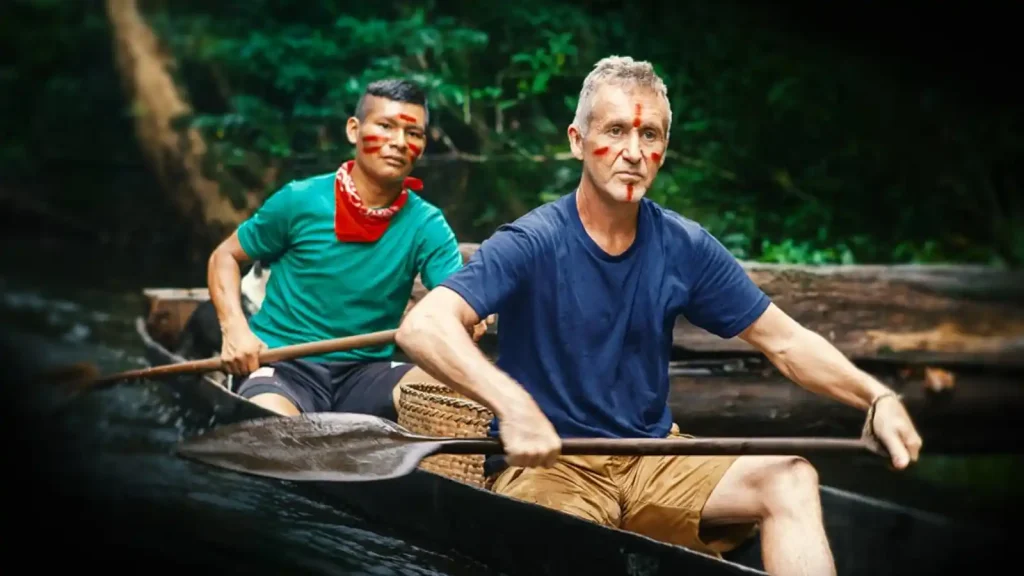
Tribe with Bruce Parry episode 2: Imagine stepping into one of the most demanding landscapes our planet has to offer. Bruce Parry, an explorer known for his deep immersion into remote cultures, takes us on such a journey. He travels to the formidable Namib Desert in Angola. This vast, arid expanse ranks among the driest places on Earth. Here, the sun beats down relentlessly. Furthermore, life clings precariously to existence. Bruce arrives with a compelling question humming in his mind. How do people survive, even thrive, in such an inherently inhospitable environment? Especially now, as global temperatures steadily climb, intensifying the challenge. His quest leads him to a remarkable community: the Mucubal people.
The Mucubal are masters of survival, deeply attuned to the rhythms of the desert. For generations, they have carved out a life where others might see only barrenness. Their resilience is etched onto their faces, like the ancient patterns on the desert floor. They live in relative isolation, shielded by the harsh terrain surrounding them. This seclusion has allowed them to preserve a way of life that feels almost suspended in time. Consequently, their culture remains vibrant and distinct. Bruce seeks not just to observe, but truly to understand their world from the inside. He wants to learn the secrets of their endurance. What ancient knowledge allows them to navigate this extreme climate?
To truly grasp their reality, Bruce immerses himself within a Mucubal family. He finds welcome among a close-knit group of about thirty individuals. This isn’t a fleeting visit; instead, it’s a deep dive into their daily lives. He shares their shelter, eats their food, and participates in their routines. Imagine the intimacy of living side-by-side with people whose worldview is profoundly shaped by the desert. Initially, there might be curiosity and perhaps caution on both sides. However, barriers soon begin to dissolve through shared experiences and genuine human connection. Bruce witnesses firsthand the intricate social fabric that binds the family together. Cooperation is not just valued; it is essential for survival.
Life in the Namib demands extraordinary ingenuity. Bruce observes the Mucubal’s deep understanding of their environment. They possess an encyclopedic knowledge passed down through countless generations. For instance, they know how to find water where none seems visible. They read subtle signs in the landscape, like hidden messages only they can decipher. Moreover, their relationship with their cattle is central to their existence. These hardy animals are more than just livestock; they are companions, status symbols, and a vital resource.
Managing herds in this parched land requires constant movement and careful planning. Therefore, their existence is often semi-nomadic, following ancient grazing routes. Their shelters, crafted from available materials, offer respite from the searing heat. Their survival skills are a testament to human adaptability, honed over centuries of living in harmony with a challenging land. This wisdom stands in stark contrast to our modern reliance on technology.
During his stay, Bruce becomes privy to the Mucubal’s cultural heart – their rituals. The experience is described as visceral, suggesting ceremonies that are raw, powerful, and deeply meaningful. These are not mere performances; rather, they are fundamental expressions of their identity and beliefs. Perhaps these rituals mark important life transitions – birth, adulthood, marriage, death.
They might involve chanting, dancing, symbolic offerings, or tests of endurance. Consider the atmosphere: the rhythmic pulse of drums under a vast, starry sky, the shared emotion binding the community, the connection to ancestors and the spiritual world. These practices reinforce social bonds. They also reaffirm their place within the cosmos, providing meaning and continuity. Maintaining these traditions is crucial for preserving their unique cultural heritage. Indeed, these rituals are the lifeblood of the Mucubal identity.
Their extreme isolation has acted as a protective shield for generations. Living far from bustling cities and modern infrastructure has preserved their unique customs. It’s like finding an untouched island in the vast ocean of globalization. Here, ancient traditions continue to shape daily life, largely undisturbed by outside influences. This remoteness allows their language, social structures, and spiritual practices to flourish. Consequently, they maintain a profound connection to their ancestral ways. However, this isolation is becoming increasingly fragile. The buffer provided by the harsh desert is not impenetrable. Like a shoreline gradually eroded by the tide, external pressures are beginning to encroach.
This brings us to the critical question posed: for how long can this unique way of life endure? The Mucubal face mounting challenges on multiple fronts. Climate change is arguably the most immediate threat. Rising temperatures intensify droughts, making scarce resources like water and grazing land even harder to find. This directly impacts their ability to sustain their families and herds.
Furthermore, the modern world inevitably casts a long shadow. The lure of cities, education, and different opportunities might draw younger generations away. Contact with outsiders can also bring new diseases or disrupt traditional social balances. Additionally, the potential discovery of resources beneath their lands could lead to displacement or conflict. Their future feels uncertain, hanging delicately in the balance. Their resilience is being tested like never before.
Tribe with Bruce Parry episode 2
Through Bruce Parry’s eyes, we gain more than just knowledge about survival techniques. We share in his sense of wonder and deep respect for the Mucubal people. He experiences their warmth, their dignity, and their incredible strength. Witnessing their intimate connection to the land likely offers profound lessons. It challenges modern perspectives on wealth, progress, and happiness. Perhaps Bruce leaves with a renewed appreciation for community and simplicity. He might feel humbled by their ability to find richness in a life defined by perceived scarcity. Ultimately, his journey becomes a mirror, reflecting our own relationship with the natural world and with each other. He carries their story back to a wider audience, fostering understanding and empathy.
In conclusion, Bruce Parry’s time with the Mucubal in the Angolan Namib Desert is a powerful exploration of human endurance. It highlights the incredible adaptability of people living in extreme environments. We see a vibrant culture, rich in tradition and deeply connected to its ancestral lands. The Mucubal demonstrate that survival depends not just on physical prowess, but also on community, knowledge, and spirit. However, their story is also tinged with urgency. Their isolation, once a guardian, is now precarious.
Climate change and the pressures of the modern world pose significant threats to their continued existence. Their future remains an open question, reminding us of the fragility of unique cultures in our rapidly changing world. Indeed, the Mucubal’s journey compels us to consider the value of preserving such diverse ways of life. Their story resonates long after the journey ends.
Conclusion Tribe with Bruce Parry episode 2: Lessons from the Desert
Bruce Parry’s immersion with the Mucubal people reveals profound insights about human resilience and adaptation. Throughout his journey, we witness a community that has not merely survived but thrived in one of Earth’s most unforgiving landscapes. Their story transcends geographical boundaries and speaks to universal human experiences.
The Mucubal’s relationship with the Namib Desert demonstrates an extraordinary equilibrium between humans and nature. Unlike our consumption-driven societies, their existence embodies sustainable principles developed over countless generations. Consequently, their knowledge represents an invaluable repository of environmental wisdom that grows increasingly relevant as climate challenges intensify worldwide.
Their cultural practices, meanwhile, offer a compelling counterpoint to modern individualism. In the Mucubal community, cooperation isn’t optional—it forms the bedrock of daily life. Furthermore, their rituals create cohesion and meaning in ways that modern societies often struggle to replicate. These ceremonies serve as threads connecting past, present, and future generations.
However, the Mucubal stand at a critical crossroads. As global temperatures rise and outside influences penetrate their isolation, their traditional lifestyle faces unprecedented threats. Moreover, younger generations may eventually confront difficult choices between ancestral ways and modern opportunities. Their situation mirrors the broader tensions between preservation and progress that indigenous communities worldwide encounter.
Bruce’s experience reminds us that human ingenuity flourishes even in seemingly impossible circumstances. The Mucubal’s encyclopedic knowledge of their environment, resourceful survival strategies, and rich cultural traditions represent a heritage worth protecting. Additionally, their story challenges us to reconsider our definitions of wealth, progress, and fulfillment.
As viewers, we emerge from this journey with expanded perspectives. The Mucubal’s existence prompts important questions about sustainability, community, and cultural diversity in our increasingly homogenized world. Therefore, their story becomes not just a fascinating anthropological study but also a mirror reflecting our own societal choices.
In the end, the Namib Desert—harsh and beautiful—stands as both backdrop and character in this human drama. Like the ancient patterns etched across its surface, the Mucubal’s way of life represents both remarkable permanence and inevitable change. Their future remains unwritten, yet their legacy of resilience offers valuable lessons for navigating our shared environmental challenges.
FAQ Tribe with Bruce Parry episode 2
Q: Who are the Mucubal people and where do they live?
A: The Mucubal people are a traditional community who inhabit the formidable Namib Desert in Angola. Moreover, they have established a remarkable way of life in one of the driest places on Earth. Their semi-nomadic existence has been shaped over generations by the harsh desert environment, allowing them to develop exceptional survival skills and maintain a distinct cultural identity despite the challenging conditions.
Q: What approach did Bruce Parry take to understand the Mucubal culture?
A: Bruce Parry immersed himself completely within a Mucubal family of approximately thirty individuals. Rather than conducting a brief visit, he participated fully in their daily routines by sharing their shelter, eating their food, and engaging in their activities. This deep immersion allowed him to witness firsthand their social dynamics, survival techniques, and cultural practices from an insider’s perspective.
Q: What special knowledge do the Mucubal possess about their environment?
A: The Mucubal possess encyclopedic knowledge about the desert environment, passed down through countless generations. Specifically, they can locate water in seemingly barren landscapes by reading subtle environmental signs invisible to outsiders. Additionally, they maintain intimate knowledge of ancient grazing routes, understand seasonal patterns, and have developed various survival techniques that allow them to live sustainably in one of Earth’s most challenging habitats.
Q: What role do cattle play in Mucubal society?
A: Cattle are central to Mucubal existence, serving multiple crucial purposes beyond mere livestock. First and foremost, they represent a vital resource for survival in the harsh desert. Furthermore, these hardy animals function as status symbols within the community. The Mucubals’ semi-nomadic lifestyle revolves around managing their herds, following ancient grazing routes across the parched landscape, which requires constant movement and careful planning.
Q: How have the Mucubal maintained their cultural traditions?
A: The Mucubal have preserved their cultural traditions primarily through extreme isolation, which has acted as a protective shield. Living far from urban centers and modern infrastructure, they’ve maintained unique customs, language, social structures, and spiritual practices with minimal outside influence. Consequently, their rituals remain authentic expressions of identity rather than performances, forming the lifeblood of their cultural heritage.
Q: What kinds of rituals do the Mucubal practice?
A: The Mucubal practice visceral, powerful rituals that serve as fundamental expressions of their identity and beliefs. These ceremonies likely mark important life transitions such as birth, adulthood, marriage, and death. Their rituals might include chanting, dancing, symbolic offerings, or tests of endurance under the vast desert sky. Above all, these practices reinforce social bonds and affirm their place within the cosmos.
Q: What major threats do the Mucubal face to their traditional way of life?
A: The Mucubal face mounting challenges on multiple fronts, with climate change representing the most immediate threat. Rising temperatures intensify already severe droughts, making scarce resources like water and grazing land increasingly difficult to find. Furthermore, modern influences may lure younger generations away from traditional lifestyles, while contact with outsiders could introduce new diseases. Additionally, potential resource discovery beneath their lands might lead to displacement or conflict.
Q: How do the Mucubal’s homes and shelters function in the desert environment?
A: The Mucubal craft their shelters from locally available materials, specifically designed to offer respite from the searing desert heat. Since their lifestyle requires mobility to follow grazing patterns, these dwellings necessarily balance durability with portability. The architecture likely incorporates generations of desert wisdom, utilizing natural insulation properties of available materials while maximizing air circulation during intense daytime temperatures.
Q: What lessons did Bruce Parry learn from his time with the Mucubal?
A: Bruce Parry gained profound insights beyond mere survival techniques during his immersion with the Mucubal. Their intimate connection to the land challenged modern perspectives on wealth, progress, and happiness. As a result, he likely developed a renewed appreciation for community and simplicity. Their ability to find richness in a life defined by perceived scarcity offered a powerful counterpoint to consumer-driven societies, functioning as a mirror reflecting our relationship with nature.
Q: Why is the Mucubal way of life significant to the wider world?
A: The Mucubal way of life represents extraordinary human adaptability in extreme environments and offers valuable lessons about sustainability. Their culture demonstrates how survival depends not merely on physical prowess but on community, knowledge, and spirit. In our rapidly changing world, their story highlights the fragility of unique cultures while compelling us to consider the value of preserving diverse ways of life. Indeed, their journey provides insights into human resilience that transcend geographical boundaries.