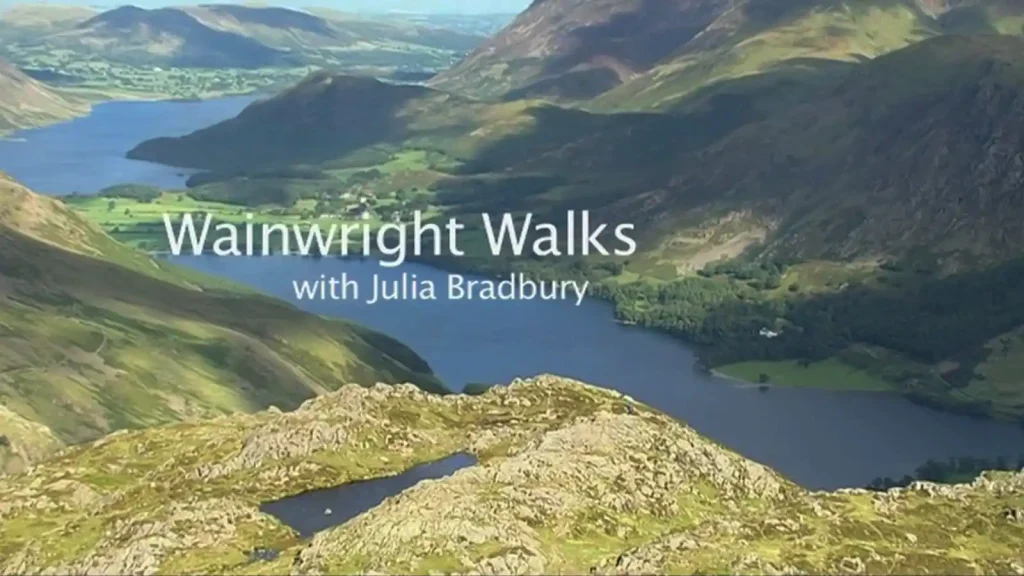
The Wainwright Walks episode 7 explores a magnificent and challenging route through the heart of England’s Lake District, a land defined by its natural beauty. This episode focuses on an ambitious trek that tackles not one, but two of the region’s giant fells: Crinkle Crags and Bowfell. It delves into why the famed author, guide writer, and artist, Alfred Wainwright, considered the path connecting these peaks to be “Lakeland’s best ridge-mile”. Following in his footsteps provides a deep appreciation for the landscape that inspired generations of walkers.
Alfred Wainwright, known to millions who love the Lakes, was perhaps its greatest fell walker. His meticulously hand-drawn Pictorial Guides have become iconic, inspiring countless individuals to roam the fells he documented with such care. Wainwright was an ardent fan of the ridge walk, believing it offered fell walking at its very best. He saw ridges as high-level traverses linking summits, providing ever-changing panoramas and aerial views. His guides reflect this, with each chapter suggesting possible ridge routes from the summit.
This particular walk, featured in Wainwright Walks episode 7, stands out due to its physical demands and the sheer scale of the landscape. Starting in Great Langdale, one of the best-known valleys in the Lake District, the route ascends towards the commanding heights of Crinkle Crags and Bowfell. These fells dominate the head of the valley, offering a challenge that promises immense rewards. The journey covers over a mile of the most exposed land in the Lakes, demanding careful planning and respect for the conditions.
Great Langdale itself is a captivating blend of rugged mountain scenery and traditional upland farming. Visitors flock here to explore streams, tarns, and waterfalls, all set against a backdrop of neatly tiled fields. It serves as the gateway to some of the most dramatic terrain Wainwright ever documented. His routes from Crinkle Crags and Bowfell were among his most comprehensive, opening the door to enormous excursions, though he always left the precise path to the individual walker.
Embarking on such a significant walk highlights the importance of preparation. While Wainwright’s guides are invaluable, they were written over 50 years ago, and landscapes change. It’s crucial to carry a modern Ordnance Survey (OS) map, as illustrated by the Climber’s Traverse on Bowfell. Wainwright strongly recommended this path, yet it doesn’t appear on current OS maps, presenting a navigational puzzle for the modern walker. Understanding the route and checking details beforehand is vital, especially when navigating exposed ridges where weather can change rapidly.
Wainwright Walks episode 7
Charting the Course: Wainwright’s Vision and Modern Realities
Navigating the fells requires a blend of Wainwright’s guidance and contemporary tools. His Pictorial Guides, while foundational, sometimes feature routes, like the Climber’s Traverse, that aren’t on modern maps. This particular path, recommended by Wainwright for its superior views of Bowfell, exists if you know where to look, having been discovered by him and followed by many since. It developed as an access route for rock climbers heading to spots like Bowfell Buttress, offering a unique perspective most walkers miss. The plan for this walk involves tackling Crinkle Crags first from the south, then traversing the entire ridge to Bowfell.
To gain deeper insight, the walk is undertaken with Derry Brabbs, a renowned Lake District photographer who worked directly with Alfred Wainwright. Brabbs, one of the few to collaborate with the famously reclusive author, offers a unique perspective. He recalls Wainwright as dogmatic and knowing exactly what he wanted, but also describes how a tentative relationship developed into an amicable, good working partnership. Initially not a walker himself, Brabbs came to understand Wainwright’s love for the Lakes through their collaboration.
Brabbs confirms the walk’s reputation as one of the best ridge walks, highlighting the jagged edge of Crinkle Crags. He points out key features: the drop to Three Tarns, the cut across the Climber’s Traverse towards Bowfell Buttress, and the hidden Great Slab, a major natural feature. He also mentions the Bad Step on Crinkle Crags, comparing it in jest to Everest’s Hillary Step, a scramble that provides amusement as walkers navigate it, though an easier bypass exists. Brabbs acknowledges the Climber’s Traverse has its moments, requiring some “slithering,” and warns of the “nasty scree slope” near Bowfell Buttress, where the only way is up.
The Ascent: From Great Langdale to Crinkle Crags
The six-and-a-half-mile journey begins at Stool End Farm, the last outpost of civilization at the head of Great Langdale. This working farm also serves as a major hub for fell walkers. From here, the environment quickly becomes wilder. The path heads up Oxendale, crossing the Oxendale Beck via a new footbridge—the previous one was swept away in a storm—before turning sharply upwards. This marks the start of the first intense climb: a relentless 1,100-foot slog up Browney Gill.
The path skirts the dramatic ravine of Browney Gill, which has been carved out since the last ice age. While not technically difficult, the climb is long and provides a strenuous wake-up call. A scramble section can be hazardous in wet weather. Eventually, the climb emerges onto flatter ground at Red Tarn. Wainwright described this tarn as “an unattractive sheet of water,” though useful on a hot day, but it serves as a “walker’s crossroads” with four paths converging. Despite its lack of picturesque charm compared to its Helvellyn namesake, it offers a magical view of Bowfell.
From Red Tarn, the walk changes character. A mile-long path crosses an inspiring high fell plateau with gentle gradients, offering stunning views back down Great Langdale towards Lake Windermere. This grassy plain eventually gives way to the rugged peaks of Crinkle Crags. Wainwright described these undulations as “a scene of desolation and rugged grandeur equalled by few others”. The approach involves scrambling over boulders to reach the first of the five mini-summits. Here, the infamous Bad Step comes into view, blocking the way to the second and highest Crinkle.
Wainwright deemed the Bad Step, a ten-foot high rocky wall formed by chockstones, “quite beyond the powers of the average walker to scale” directly. He suggested “chicken-hearted walkers” would sneak around the side. In practice, it’s a problem-solving exercise; realising a direct climb is impossible, one must choose a route up the side wall using hands, feet, and knees. Successfully navigating this obstacle leads quickly to the true summit of Crinkle Crags, where a breathtaking vista opens up, showcasing Eskdale, Great Langdale, and the Scafell range, with Bowfell prominent ahead.
Traversing Lakeland’s Best Ridge Mile: Crinkle Crags to Bowfell
The summit of Crinkle Crags, standing at 2,816 feet, lives up to its name, defined by its unique, rugged outline. It’s said the early Langdale inhabitants named it, a fitting description both from below and above. Alfred Wainwright himself humorously debated whether it should be “Crinkle Crags is” or “Crinkle Crags are”. From here begins the ridge walk proper, falling and rising as it traverses the remaining Crinkles. The path can be indistinct, and with ravines nearby, clear weather is a blessing. Small detours, like scrambling to Crinkle three, offer rewarding views down Great Langdale and aid in understanding the geography.
This fine ridge once marked the boundary between the historic counties of Cumberland and Westmorland, now united as Cumbria. The view towards Bowfell from here is particularly striking, a “great pyramid of a mountain” that the word “fell” hardly seems to capture. This, according to Wainwright, is the “heart of Lakeland’s best ridge mile,” and he documented it with unique attention to detail. Demonstrating his obsessive thoroughness, he provided plans of the entire ridge not only in one direction but also meticulously redrawn for walkers travelling the opposite way—a true testament to his service.
After a mile of intense scrambling across the rocky spine of Crinkle Crags, the descent towards Three Tarns offers a welcome relief. The ground becomes gentler and grassier, easing the pressure on knees. Three Tarns is a popular pass linking the valleys of Great Langdale and Eskdale, serving as an ideal rest spot. The tarns themselves are small and their number can vary from two to four depending on rainfall. This location marks the transition point, leaving Wainwright’s Crinkle Crags chapter behind and turning attention towards the second giant of the day, Bowfell. This next stage introduces the Wainwright Walks episode 7 viewers to another set of unique challenges.
The Majesty of Bowfell: Climber’s Traverse and the Summit
Bowfell, in Wainwright’s words, “is a mountain of noble aspect and rare distinction… a challenge that cannot be denied”. The immediate challenge is to locate the Climber’s Traverse, the path Wainwright favoured for showcasing Bowfell at its best. Since it isn’t a public right of way and doesn’t appear on OS maps, finding it requires some faith and, ideally, reassurance like that provided by Derry Brabbs. Despite its name, it doesn’t demand technical climbing gear; it’s a path following a ledge around Bowfell‘s supporting walls, offering access to climbing areas like Flat Crags, Cambridge Crags, and the impressive Bowfell Buttress.
This traverse reveals a dramatic side of Bowfell hidden from those on the main route. It leads past the Bowfell Buttress, a great lump of rock jutting into the sky, and offers a welcome stop at a spring. Here, water pours straight from the rock, which Wainwright claimed was “nothing better ever came out of a barrel or a bottle”. This spot provides a moment to refuel amidst bold mountain features before the final push. However, finding the onward route isn’t straightforward; Wainwright recommended against the scree slope, favouring a route called Great Slab.
This leads to an unlikely climb up the side of Cambridge Crag, past the mountain’s most unusual feature: the Great Slab. It’s a vast, gently sloping platform of naked rock, remarkably free of the scree and boulders that cover its surroundings. The view from here, looking towards the Langdale Pikes, is so impressive that Alfred Wainwright dedicated a double-page spread to it in his guide, a detailed hand-drawn picture possibly featuring himself as a tiny figure. Climbing its side is tiring, but the unique perspective is worth the effort.
Rounding the top of the Great Slab, Bowfell‘s summit appears, unmistakable and excitingly close. Wainwright described it as “a shattered pyramid, a great heap of stones and boulders and naked rock. A giant cairn in itself”. It’s a distinctive summit, so rocky that there’s no obvious place for, nor need of, a large cairn or triangulation point. Bowfell was the only fell Wainwright immediately declared one of his very best in his guides; others had to wait for the final volume to learn their rank. His love for Bowfell was clear, and in 1966, he also named Crinkle Crags one of his top six summits, cementing the status of these two fells and their connecting ridge walk.
The Enduring Allure: Walking in Wainwright’s Wake
Completing the traverse from Crinkle Crags to Bowfell is more than just finishing a long walk; it’s an immersion into the very essence of what makes the Lake District a world-renowned destination for walkers. As explored in the Wainwright Walks episode 7, this journey isn’t merely about bagging two significant peaks; it’s about experiencing what Alfred Wainwright passionately believed was “Lakeland’s best ridge-mile”. It’s a physical and sensory pilgrimage, a dialogue between the walker, the rugged landscape, and the enduring spirit of the man who mapped it with such love and obsessive detail.
The expedition underscores the dual nature of fell walking: the undeniable physical challenge and the profound aesthetic reward. The “steady relentless slog” up Browney Gill and the puzzle of the Bad Step serve as gatekeepers, demanding effort and respect. Yet, the rewards are immeasurable. Standing atop Crinkle Crags, with its “great vista” unfolding towards the Scafells, or reaching Bowfell‘s “shattered pyramid” offers a perspective that ground-level views simply cannot match. Wainwright understood this deeply; for him, ridges were the prime routes, offering “ever-changing distant panoramas”. This walk is a masterclass in that philosophy, a high-level traverse that connects summits and souls.
Furthermore, following this route today highlights the living nature of Wainwright’s legacy. His guides remain indispensable, not just for their routes but for their artistry and personal connection. His unique maps, like the double-sided plan for this very ridge, showcase a dedication bordering on obsession. Yet, as Derry Brabbs’ insights and the mystery of the Climber’s Traverse illustrate, these fells are not static museums. Paths evolve, maps update, and each walker must, as Wainwright intended, make their own choices, blending his wisdom with modern awareness. This dynamic interaction keeps the Wainwright experience fresh and relevant.
Ultimately, tackling Crinkle Crags and Bowfell is an invitation. It’s an invitation to test your mettle against a “mammoth expedition”, to breathe the thin, crisp air on an exposed ridge, and to see the Lake District through Wainwright’s eyes. It encourages us to look beyond the obvious paths, perhaps seeking out our own Climber’s Traverse, and to appreciate the “rugged grandeur” that moved him so deeply. Whether you follow this exact route or another inspired by his guides, the real journey lies in discovering that personal connection to the fells, honouring the legacy of Alfred Wainwright by lacing up your boots and heading for the hills.
FAQ Wainwright Walks episode 7
Q: What makes the Crinkle Crags and Bowfell walk significant?
A: The Crinkle Crags and Bowfell walk is famous for its challenging terrain and spectacular ridge views. Alfred Wainwright described it as “Lakeland’s best ridge-mile,” highlighting the route’s impressive vistas, physical demands, and distinctive ruggedness.
Q: Who was Alfred Wainwright, and why is he important to Lake District walkers?
A: Alfred Wainwright was an acclaimed guidebook author and illustrator. His meticulously detailed “Pictorial Guides” to the Lake District fells inspired countless walkers, establishing him as the region’s most influential fell-walking figure.
Q: What challenges does the “Bad Step” on Crinkle Crags pose?
A: The “Bad Step” is a tricky ten-foot-high rocky scramble on Crinkle Crags. Although Wainwright humorously suggested “chicken-hearted” walkers could bypass it, most hikers find it an enjoyable yet demanding obstacle.
Q: Why should modern walkers use current Ordnance Survey maps alongside Wainwright’s guides?
A: Landscapes evolve, and some routes, like the Climber’s Traverse recommended by Wainwright, don’t appear on modern OS maps. Therefore, combining his guides with current maps ensures accurate and safe navigation.
Q: What is the Climber’s Traverse, and why is it notable?
A: The Climber’s Traverse is an unmarked path around Bowfell, praised by Wainwright for its breathtaking views. Although challenging and not officially mapped, it offers a unique perspective on Bowfell’s dramatic terrain.
Q: How physically demanding is the ascent from Great Langdale to Crinkle Crags?
A: The ascent involves a steep 1,100-foot climb up Browney Gill from Stool End Farm. Although not technically complex, its relentless gradient and occasional scrambling sections make it strenuous, especially in wet conditions.
Q: What unique features does Bowfell offer to walkers?
A: Bowfell is distinguished by features like the Climber’s Traverse, the Great Slab, and Bowfell Buttress. Its summit, a rocky pyramid with panoramic views, is among Wainwright’s personal favorite peaks.
Q: Is prior hiking experience necessary for this walk?
A: Yes, prior hiking experience is strongly recommended. Due to exposed ridges, changeable weather, and physically demanding terrain, walkers should be well-prepared, fit, and knowledgeable in basic mountain navigation skills.
Q: How did Derry Brabbs’ collaboration with Wainwright enhance this episode?
A: Photographer Derry Brabbs, who worked directly with Wainwright, offers personal insights into Wainwright’s methods and preferences. Brabbs provides context to key landmarks like the Bad Step, enriching viewers’ understanding of the route.
Q: What makes the ridge walk between Crinkle Crags and Bowfell extraordinary?
A: The ridge connecting Crinkle Crags and Bowfell offers a mile of varied, rocky terrain with sweeping views across Lakeland. Wainwright considered this ridge exceptional for its continuous dramatic scenery and panoramic vistas.