The Pacific: In the Wake of Captain Cook with Sam Neill – Episode 3
In the third episode of “The Pacific: In the Wake of Captain Cook,” Sam Neill takes us on an evocative journey back in time, uncovering the layered history of Captain Cook’s voyages. This episode focuses on Cook’s expedition along the eastern coast of Australia—a route he decided to take as a long detour on his way back to Britain after completing his Admiralty mission.
Instead of heading directly home, Cook’s curiosity compelled him to explore further, leading to a fateful encounter with the mysterious land we now know as Australia. It wasn’t just about charting maps; it was about stepping into uncharted territory and facing the unknown, with all its beauty and complexity.
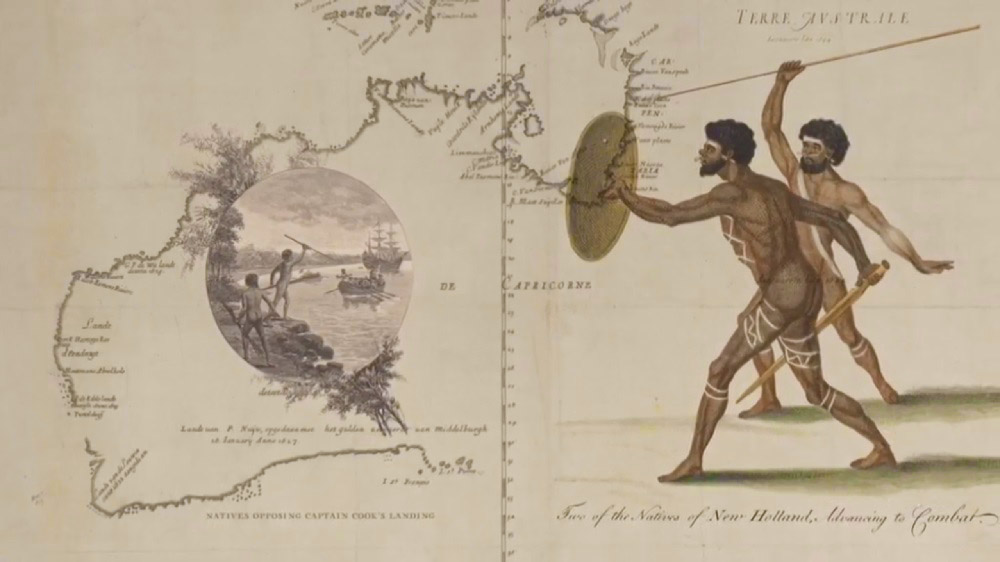
When the crew of the Endeavour first approached the shores, they were met with caution by the Aboriginal people—a stark contrast to the Polynesians Cook had encountered earlier in his voyages. Unlike the warm and somewhat curious reception in Polynesia, the Aboriginal people appeared largely indifferent to these foreign arrivals. They watched the Endeavour from a distance, their expressions betraying neither excitement nor aggression. They simply wanted these strangers gone, a sentiment that Sam Neill suggests was perfectly reasonable, given the sudden intrusion.
This initial reluctance and reserved nature of the Aboriginal people was tragically misinterpreted by Cook and those who came after him. Their desire for distance was seen not as a sign of established ownership or cultural depth, but as a lack of claim—fueling the infamous myth of “Terra Nullius,” a Latin term meaning “nobody’s land.” This myth would later be used to justify colonization, disregarding the presence of thriving, sophisticated communities that had called this land home for thousands of years.
Sam Neill traces Cook’s path from Botany Bay up the east coast to Cooktown, revealing the rich tapestry of life that existed long before European boots touched the soil. Far from being a blank slate awaiting discovery, Australia was home to an ancient civilization—one that was deeply in tune with its environment, with complex social structures and spiritual practices rooted in the land itself.
In Cooktown, Neill listens to the stories of the Aboriginal elders, gaining insight into a culture that, while irrevocably impacted by Cook’s arrival, still endures. He paints a vivid picture of their traditions, their sacred relationship with the land, and the ways in which they viewed these foreign intruders—not with hostility, but with a cautious, weary gaze, as if fully aware of what this contact might mean for their future.
The Aboriginal people, Sam notes, were not passive spectators of their fate. They were stewards of a vast, bountiful land—one rich with resources and spiritual significance. Their response to the Endeavour was not a submission but rather a statement, an assertion of their right to be left undisturbed. Cook, however, was driven by a need to map, to name, to claim—objectives that were in direct conflict with the Aboriginal understanding of their world, where land was not something to be possessed but something to live in harmony with.
As Neill explores these contrasts, he skillfully uses storytelling to reveal the layers of misunderstanding that led to the concept of Terra Nullius. He describes how this myth was not merely a misunderstanding but a tool—one that colonizers wielded to deny the rights of the Indigenous people, effectively erasing their sovereignty in the eyes of the law. It’s a poignant reminder of how narratives can shape history, often to the detriment of those without a voice in their crafting.
The lush landscapes of Australia, as seen through Neill’s journey, are filled with silent witnesses to these historic encounters—the rivers, the towering eucalypts, the open skies—all echoing the stories of those who came long before Cook. Neill captures the grandeur of these lands, juxtaposing them against the cold, clinical maps Cook drew—a powerful metaphor for the difference between understanding a land and simply documenting its existence.
Sam’s journey isn’t just about recounting Captain Cook’s steps; it’s about understanding what Cook might have missed. The Aboriginal people had an intimate knowledge of their territory, passed down through countless generations. They knew every plant, every animal, every change in the wind or shift in the earth. To them, the land was alive, filled with stories, ancestors, and responsibilities. To the Europeans, however, it was something to be conquered, categorized, and used.
In retracing Cook’s path, Neill doesn’t shy away from the difficult truths. He presents the historical narrative with empathy, striving to give a voice to those who were left out of the story for so long. His conversations with Aboriginal elders are not just interviews; they are exchanges, filled with respect and genuine curiosity. Through their words, we hear of a culture that is rich, resilient, and still very much alive, despite the centuries of hardship that followed Cook’s landing.
By the end of the episode, viewers are left with a sense of both wonder and sadness—wonder at the beauty and depth of the Aboriginal culture, and sadness at how easily it was dismissed by those who didn’t understand it. Sam Neill’s exploration is not just about revisiting history; it’s about correcting it, giving space for the stories that were silenced and acknowledging the harm that was done.
“The Pacific: In the Wake of Captain Cook” is more than just a historical documentary—it’s a journey of reconciliation, an attempt to see the past with clear eyes and an open heart. Sam Neill invites us to reconsider the heroic tales of exploration we’ve been told, urging us to look deeper, to understand the cost of these “discoveries” and to appreciate the cultures that existed long before European sails appeared on the horizon.
As he sails away from Cooktown, Neill leaves us with a powerful reminder: history is not a single story. It is a mosaic of voices, and only by listening to all of them can we begin to understand the full picture. The land Captain Cook charted was far from empty—it was alive, rich, and full of meaning. And it still is, if only we take the time to look and listen.
The Pacific In The Wake of Captain Cook with Sam Neill ep. 3
250 YEARS AFTER Captain James Cook began his epic exploration of the Pacific, Sam Neill journeys in the wake, uncovering stories that resonate from those times on both sides of the beach. Visiting the islands and lands where Cook went and meeting the descendants of the people Cook met, Sam hears their stories from oral tradition. What did Cook’s arrival mean to Pacific island cultures then and now?
Across six stunning episodes without a re-enactment or fake quill in sight, Sam takes an epic and thoroughly modern look at 250 years of Pacific history. Sam begins with a disclaimer – he is merely an actor – but the story of Cook, and the impact he has had on the Pacific in the 250 years since his first voyage, has always fascinated him.
“The Pacific made Cook and it killed him too… they are forever bound together. He stitched its islands, its continental borders and its indigenous peoples into the fabric of the global community we know today. Admire him or abhor him, James Cook cannot be banished from its history even now, as peoples of the modern Pacific, we make our own history,” Sam Neill said.
The Pacific: In the Wake of Captain Cook – Conclusion
Sam Neill’s journey in “The Pacific: In the Wake of Captain Cook” is more than a reflection on the past; it’s an invitation to see history with new eyes. As the waves of the Pacific lap at the shorelines Cook once approached, Neill urges us to rethink what those moments meant—not just for the explorers, but for the people who were already there, living rich, interconnected lives. The Aboriginal people, the stewards of their land, stood at the edge of a precipice, facing change that they neither sought nor welcomed. Their stories, often silenced or overlooked, reveal a truth that is both enduring and essential.
Through this exploration, Sam reveals how Captain Cook was more than a seafarer; he was a symbol of the Western desire to map and categorize the unknown. But in his relentless pursuit of discovery, Cook and those who followed neglected the intricacies of the lands they encountered—their people, their cultures, and their stories. To these Indigenous communities, the land was a canvas painted with meaning, a living entity. For Cook, it was a space to be charted, a path to claim.
Yet despite the impact of Cook’s arrival, Sam Neill shows us that the spirit of these Indigenous cultures remains unbroken. Their voices, passed down through generations, are powerful reminders that history is not defined by the loudest conqueror, but by the steady heartbeat of those who endure. In listening to the Aboriginal elders, we are reminded that resilience is woven into every story they tell—a resilience that speaks to the strength of their connection to the land, and the depth of their cultural heritage.
Sam’s journey reminds us that history is not a static tale etched in stone, but rather a flowing narrative—more like a river, winding and changing, its currents shaped by every story it carries. By retracing Cook’s steps, Sam doesn’t just revisit old paths; he gives a voice to those who were left out of the story, encouraging us to appreciate the complexity and beauty that existed long before European explorers arrived.
In the end, “The Pacific: In the Wake of Captain Cook” leaves us with a simple yet profound truth: that every place, every shore, and every community holds stories that deserve to be heard. By embracing these stories, we can better understand not only the past but also the shared future that lies ahead. As Sam sails into the horizon, he leaves us with a sense of duty—to listen, to learn, and to ensure that the history we pass on is richer, more inclusive, and deeply human.
FAQ The Pacific In The Wake of Captain Cook with Sam Neill ep. 3
Q: What is “The Pacific: In the Wake of Captain Cook with Sam Neill – Episode 3” about?
A: This episode focuses on Captain Cook’s exploration of Australia’s eastern coast. Instead of sailing directly home to Britain, Cook decided to take a detour, leading to a significant encounter with the Aboriginal people and the land that would later be called Australia.
Q: How did the Aboriginal people react to Cook’s arrival?
A: Unlike the Polynesian people Cook had previously encountered, the Aboriginal people were more reserved. They observed the Endeavour from afar, seemingly indifferent to the newcomers. Essentially, they wanted the strangers to leave, a perfectly reasonable response to a sudden intrusion.
Q: What is the significance of “Terra Nullius”?
A: “Terra Nullius,” meaning “nobody’s land,” is a Latin term that tragically misrepresented the Aboriginal people’s connection to their land. Their desire for distance was misinterpreted as a lack of ownership, ultimately used to justify colonization and disregard their established presence.
Q: How does Sam Neill present the Aboriginal perspective?
A: Neill effectively gives a voice to the Aboriginal people by incorporating their stories and perspectives. He highlights their deep spiritual connection to the land and their complex social structures, emphasizing their rich culture that existed long before European arrival.
Q: What is the main takeaway from this episode?
A: The episode encourages viewers to reconsider traditional historical narratives and acknowledge the complexities of Cook’s voyages. Furthermore, it emphasizes the importance of understanding the impact of colonization on Indigenous cultures and appreciating their enduring resilience.