INSIDE MUSEUMS EPISODE 6 begins its exploration in Manchester, a city defined by its steely industrial past and its vibrant cultural present. This episode focuses on the Whitworth, a celebrated institution that stands as a testament to the region’s complex history and its evolving identity. The gallery itself presents a striking visual dichotomy, featuring an imposing traditional brick facade that merges seamlessly with futuristic glass structures. This architectural blend signifies the institution’s broader mission: to create a thrilling clash of past and present. By housing a stunning collection from around the world, the Whitworth embraces the necessity of challenging historical narratives while simultaneously preserving them.
The significance of this location extends far beyond its architecture; the city’s specific history has deeply impacted the art contained within these walls. The exhibits provide a profound insight into a shared heritage that spans generations and continents. Furthermore, the gallery serves as a platform for contemporary voices to shine a new light on pressing societal issues. By engaging with these modern perspectives, the institution aims to shape a collective future that is more inclusive and understanding of diverse experiences. The narrative is driven by the belief that art is not merely an object to be observed but a tool for making sense of human struggles.
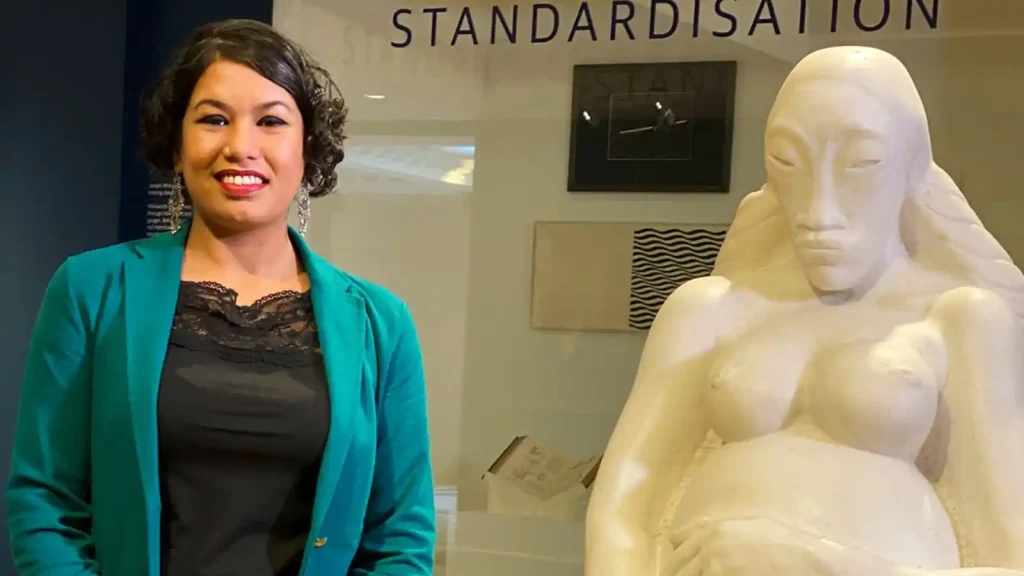
In this detailed examination, we will explore how the Whitworth operates as the beating heart of Northern England’s cultural landscape. The narrative is guided by Diana Ali, an artist, curator, and educator for whom the gallery holds personal significance. Ali’s relationship with the space dates back to the 1990s when she attended an art foundation course, finding inspiration in the collections that would eventually fuel her own career. For Ali, the Whitworth is a sanctuary, a place where pain, struggle, and turmoil are transformed into understanding through the medium of creative expression.
The program highlights how the gallery’s steeliness rests firmly on the foundations of Manchester’s industrial past. This connection between industry and creativity is central to the Whitworth’s identity as a cultural jewel. The narrative weaves through the personal and the political, examining how global history interacts with local memory. From the mechanics of the Industrial Revolution to the intimate grief of bereaved parents, the scope of the collection is vast and emotionally resonant.
Through the lens of INSIDE MUSEUMS EPISODE 6, we see that the gallery is not a static repository of objects but a dynamic entity. It facilitates a dialogue between the art and the viewer, encouraging imagination and unleashing creativity. The featured works capture the imagination and stir emotions, proving that art can influence both the present and the future. This exploration reveals how a collection can evolve to reflect the changing demographics and values of the society it serves.
The journey through the gallery also underscores the importance of accessibility in the art world. It challenges the notion that high art is exclusive, instead presenting it as a window into the lives of everyday people. Whether through the depiction of working-class struggles or the celebration of diverse cultural identities, the Whitworth champions the idea that art belongs to everyone. This philosophy is evident in every acquisition and exhibition discussed throughout the programme.
Consequently, the viewer is invited to reconsider the role of an art gallery in the 21st century. It is portrayed as a space for positive social change, capable of opening up difficult conversations and generating empathy. The interplay between the legacy of empire, the mechanics of production, and the fragility of human life forms the core of this compelling narrative. As we delve deeper into the specific displays, the power of art to bridge divides becomes increasingly apparent.
The following sections will reconstruct the journey taken by Diana Ali, examining the specific artworks and historical contexts that define the Whitworth today. From the legacy of Sir Joseph Whitworth to the avant-garde installations of the present day, we will trace the evolution of this unique institution. The analysis will reveal how INSIDE MUSEUMS EPISODE 6 frames the museum experience as a vital intersection of memory, identity, and community.
INSIDE MUSEUMS EPISODE 6
The Engineering Legacy of Sir Joseph Whitworth
The origins of the gallery are inextricably linked to the industrial might of 19th-century Britain. Founded in 1889, the institution exists as a result of a legacy left by Sir Joseph Whitworth, one of the nation’s greatest mechanical engineers. His contributions to technology were revolutionary, fundamentally changing the way manufacturing operated. Whitworth is credited with revolutionizing precision engineering by creating a standardized system for accurately measuring machine parts, a development that had profound implications for mass production.
Before Whitworth’s innovations, there was no universal standard for mechanical components. He devised the first universal system of screw threads, a seemingly simple invention that paved the way for modern industrial efficiency. These developments made machine parts interchangeable, which they had not been previously. The ability to swap parts seamlessly was pivotal, serving as one of the primary sources of Britain’s wealth and power during the era of industrialization.
The gallery acknowledges this heritage by emphasizing the dialogue between art and industry. Seeing machinery in the gallery setting transforms these functional objects, making them feel like works of art in their own right. This juxtaposition allows the viewer to see that one discipline can learn from and inspire the other. The precision and determination required in engineering are mirrored in the creative processes of the artists exhibited within the same walls.
Capturing the Industrial Soul through Lowry
The industrial success of Manchester would have been impossible without the hard work and determination of its people. This human element of the Industrial Revolution was immortalized by L.S. Lowry, an artist born less than five miles from the gallery. Lowry translated the lives of the people around him in an incredibly relatable way, providing a window into their world. For Diana Ali, Lowry’s work offered a crucial connection to her own history when she was a teenager living near Salford.
Having returned from Bangladesh at the age of six unable to speak English, Ali found that art became a way to understand her new environment. Lowry’s paintings, with their simplicity and subdued colors, allowed for a direct connection to the local culture. The art is familiar because it depicts recognizable buildings and everyday working people preoccupied by daily struggles. The imagery of chimneys pushing out smoke serves as a visual testament to the era that began with the Industrial Revolution.
Lowry’s work demonstrates that art does not need to be complex to be profound. By documenting the “daily struggle” of the working class, he helped to make art more accessible. His paintings validate the experiences of the local population, showing that their lives and their environment are worthy subjects for high art. This inclusivity remains a core value of the Whitworth, reflecting its location in the heart of a city built on labor.
Textile Heritage and INSIDE MUSEUMS EPISODE 6
The textile collection at the Whitworth is described as world-class, a status that directly relates to the region’s history as a global center for cotton manufacturing. Originally, the collection was aimed at inspiring the region’s manufacturers, providing them with examples of excellence from around the globe. For Ali, the textile gallery was a major draw during her formative years. She recalls walking around with a sketchbook, in awe of the craftsmanship on display.
However, the history of cotton production is checkered, and the gallery does not shy away from these complexities. Until the late 18th century, India was the largest producer of cotton cloth. Mechanization in Western Europe drastically altered this economic landscape. By 1850, Lancashire was flooding the Indian market with cheaper copies of handmade textiles, known as “Manchester Goods,” generating enormous profit for Britain while undermining Indian artisans.
The gallery illustrates this economic shift through specific artifacts. A “Palampore,” a hand-printed and painted cotton hanging made in India, is contrasted with a cloth machine-printed in Manchester in the 1940s. The designs are strikingly similar, visually demonstrating how British manufacturers appropriated styles for the export market. This juxtaposition reveals the deep roots of colonialism inherent in the Whitworth’s South Asian textile holdings.
Deconstructing Colonial Narratives
To redress the balance of its colonial origins, the Whitworth actively works with artists who confront these historical issues. INSIDE MUSEUMS EPISODE 6 highlights the work of Raisa Kabir, whose art stems from the history of craft and labor. Her featured piece serves as a deconstruction of colonization, using the medium of textiles to comment on political geography and historical trauma.
Kabir’s work incorporates a map of South Asian geography, treated as a factual baseline. However, the artist carries through the color red from previous pieces, which Ali interprets as representing the bloodshed that occurred during the partition of India. The use of thread in the artwork is particularly powerful; it symbolizes the ripping apart of cultures and people.
The physical construction of the piece adds to its narrative weight. Knots in the material demonstrate a strong voice, representing the uneasiness of how history lies on the surface. It is not a passive object but a confrontation of the violence inherent in the region’s past. Through such acquisitions, the gallery ensures that the story of textiles includes the voices of those who suffered as a result of the industry’s expansion.
Connecting Personal Identity to Gallery Spaces
For Diana Ali, the gallery played a pivotal role in her integration into life in Manchester. After living in Bangladesh from the ages of two to six, she returned to the UK. The gallery allowed her to connect with her memories of Bangladesh, proving that art can travel and bridge cultural gaps. The textiles, in particular, reminded her of the saris, rugs, and furnishings she was surrounded by in her early childhood.
This connection was visceral, recalling memories of her grandmother, aunties, and mother sitting around to weave, embroider, and make things. The artwork became a form of voice for Ali, a reassurance that something familiar could exist in Manchester. This personal history underscores the gallery’s potential to serve as a sanctuary for diverse communities, offering a sense of belonging through shared visual languages.
The narrative emphasizes that art can help individuals make sense of their past and influence their present. By providing a space where different cultural histories intersect, the Whitworth validates the experiences of migrants and their descendants. It transforms the art gallery from a sterile white cube into a repository of living memory and cultural continuity.
Redressing the Balance: New Acquisitions
The Whitworth’s impetus to reflect the times we live in has resulted in a significant change of policy regarding acquisitions. During the year preceding the episode, all new acquisitions were focused on rebalancing the collection in terms of representation. The goal is to ensure that everyone who visits the gallery can experience art that they identify with. This shift is exemplified by the portrait of Althea McNish painted by Sybil Atteck.
Sybil Atteck was a pioneering Chinese-Trinidadian artist and the first to exhibit at the Royal Academy. The subject of her portrait, Althea McNish, was a fellow artist from Trinidad and Tobago who became one of the foremost textile designers of the 1960s. The portrait is described as celebratory, with McNish’s face glowing with vibrancy thanks to Atteck’s use of bold colors and strong brushstrokes.
Atteck used oil and oil sand from South Trinidad to create texture, literally embedding the land of their heritage into the artwork. The eyes of the subject are piercing and expressive, creating a sensation that the figure is leaping off the canvas. For Ali, seeing a diverse woman paint a portrait of another diverse artist evokes a strong sense of pride. It signifies a correction of the historical record, placing women of color at the center of the artistic narrative.
Tropicalizing the British Design Landscape
Althea McNish’s influence extended well beyond the canvas. Her textile designs were inspired by the flora and fauna of her homeland. She often described her work as “tropicalised,” a process of turning the tiny flowers found in British hedgerows into a tropical exuberance. This artistic transformation occurred following her move to the UK in the 1950s.
McNish’s symbols are complex, full of energy and playfulness. She brought life and liveliness to the post-war fashion and textiles industry, which was otherwise often drab. Her unprecedented combinations of patterns and colors made her highly sought after by prestigious companies like Liberty and Heals.
The inclusion of McNish in the gallery’s narrative serves as a reminder of the significant contributions immigrants have made to British culture. Her work challenged the aesthetic norms of the time and introduced a new visual vocabulary to the British public. By celebrating her legacy, INSIDE MUSEUMS EPISODE 6 illustrates how the Whitworth is rewriting the history of design to include those who were previously marginalized.
Melancholy and Masterpieces: Picasso
While the Whitworth places emphasis on emerging artists and diverse voices, it also houses works by names that everyone recognizes, such as Turner, Constable, and Picasso. The episode explores a specific etching by Pablo Picasso, created when the artist was only 23 years old. This piece, titled “The Frugal Repast,” is his first major work in printmaking and reflects the artist’s honest observation of the struggles of his time.
The etching belongs to the end of Picasso’s Blue Period, a phase characterized by a sense of isolation and despondency. During this time, Picasso was reflecting on the melancholy of life, depicting a desperate mood through ill and outcast characters. The artwork captures a profound sense of sadness and marginalization.
What makes this piece particularly remarkable, as noted in the programme, is that Picasso had no formal training in printmaking when he created it. Despite this lack of technical background, his incredible skill resulted in characters that are compelling and emotionally resonant. The work demonstrates the gallery’s commitment to showing the raw, emotional power of art, regardless of the fame of the artist.
Assessing the Past and Present in INSIDE MUSEUMS EPISODE 6
The intersection of fine art and craft is further explored through the work of Brennand-Wood. Ali visits the archives to reunite with pieces she last saw over 20 years ago during her foundation course. These works, collectively titled “Assessment,” struck her in the 1990s for their ability to blend handmade elements with fine art concepts.
The inspiration for these pieces came directly from the Whitworth itself, specifically a historic lace collection Brennand-Wood viewed there. He took the intricacies of lace and enlarged them, embedding pieces of material into carved wooden channels. This technique allowed him to challenge the narrative of lace being solely feminine.
For Ali, these pieces were instrumental in giving her a direction for her own artwork. They provided her with freedom, imagination, and creativity. Seeing them again evokes a nostalgic feeling, highlighting how an art gallery acts as a catalyst for future generations of artists. The ability to request works from the archive ensures that the collection remains a living resource, capable of inspiring new work decades after its creation.
Controversy and the Human Form: Epstein’s Genesis
Art’s role in challenging beliefs is powerfully illustrated by Jacob Epstein’s sculpture, “Genesis.” When Ali encounters the sculpture again, she is reminded that art should be displayed as a voice and a welcoming confrontation to life’s issues. The sculpture is not hidden behind glass, allowing for a direct and intimate interaction. Ali expresses a desire to hug the figure, describing it as calling to her like a mother.
The physique of the sculpture is strong, with large hands that signify a sense of protection. It represents a celebration of all genders, races, and humankind, embodying elements from both eastern and western cultures. However, when “Genesis” was first exhibited in 1930 and subsequently toured the country, it attracted considerable controversy.
Newspaper reports from the time were shocking and racist. Critics suggested the statue belonged in a “Chamber of Horrors” and saw “no latent significance” in the figure, only “monstrosity.” They accused the artist of a “violent obsession with ugliness.” Epstein, conversely, regarded “Genesis” as one of his masterpieces, arguing that ugliness and beauty were merely abstract ideas. The fact that such a piece was once deemed controversial forces the viewer to confront societal prejudices and reflects on how far—or how little—attitudes have shifted.
Documenting Social History: June Street
The unpredictable nature of the Whitworth’s collection is one of its strengths. The narrative shifts from Picasso and Epstein to a homage to the UK’s longest-running soap, “Coronation Street.” This connection is anchored in the “June Street” photography project. In the late 1960s and early 1970s, Granada TV filmed exteriors in June Street, Salford, because it was representative of northern working-class terraces.
In 1973, the community of June Street faced demolition. Two photography students, Daniel Meadows and Martin Parr, documented the residents and their pets in their homes before the destruction. These images provide an incredible social history, capturing the tastes and trends of the era. The photographs show clothes, fireplaces, ornaments, and pictures that bring back memories for many viewers.
The series captures a specific moment in time—June Street was demolished in 1975. One image depicts a woman sitting among memories and objects collected over a lifetime. Ali notes the “fake wooden wallpaper” visible in the photos, recalling her own father’s sentiment: “Why redecorate? Because this is who we are.” These images validate the domestic history of the working class, preserving a reality that has physically vanished.
The Wallpaper Collection
Complementing the social history of June Street is the Whitworth’s extensive wallpaper collection, which contains more than 10,000 samples. The collection ranges from highly embossed, top-end versions to the everyday styles that adorned the walls of ordinary homes. It includes novelty designs of the day as well as functional and flowery patterns.
This collection is not merely about design aesthetics; it is an archive of domestic life. Wallpaper often serves as the backdrop to personal history, and the sheer variety held by the gallery offers a comprehensive look at changing tastes and social aspirations. By preserving these ephemeral materials, the Whitworth elevates the decoration of the home to a subject worthy of study and appreciation.
The ethos of the Whitworth extends beyond the preservation of historical artifacts; it is deeply committed to using art for positive social change. As INSIDE MUSEUMS EPISODE 6 illustrates, the gallery aims to open up difficult conversations and generate empathy by actively addressing what matters most in people’s lives today. This mission is profoundly realized in the “Still Parents” exhibition, which deals with the harrowing subject of baby loss. This display, the first of its kind, brings together pieces from the Whitworth collection and the works of those with first-hand experience of losing a baby during pregnancy or shortly after birth.
The concept for this groundbreaking project originated with Lucy Turner, a project producer at the gallery. Turner’s motivation was intensely personal; she lost her daughter, Jennifer Rose, to stillbirth in 2016. Following this tragedy, she found that art was helpful in processing her own loss. She wanted to share that therapeutic avenue with others, providing a platform for them to have their say. To achieve this, the gallery worked in partnership with the Manchester branch of Sands, the stillbirth and neonatal death charity.
Through this collaboration, the institution connected with families and parents who had been bereaved. The resulting exhibition is a powerful combination of art created by participants, such as drawings and ceramics, alongside selected pieces from the gallery’s permanent holdings. These works tell the parents’ stories and express their feelings, serving as a celebration of their precious babies.
Interpreting Loss Through Visual Art
The selection of artworks for “Still Parents” reveals the complex emotional landscape of grief. One featured piece by Turner is described by Diana Ali as eerie and ghostly. The artist provides the viewer with another dimension, suggesting a trace of a figure in the foreground. This visual ambiguity implies the presence of a family together at the beach, capturing the haunting nature of absence.
Another significant work is a charcoal drawing by Ghislaine Howard. Ali is drawn to this piece because of its fragility and delicacy. The looseness of the charcoal medium conveys a sense of vulnerability, yet simultaneously depicts the permanent stance of a pregnant woman. It is a confrontational, honest, and real representation. The artist highlights the prominent, perfectly formed belly, capturing the moment of pregnancy and the immediacy of birth.
The exhibition also features a piece by Callan that provokes a dual response of serenity and pain. Viewed close up, the artwork evokes physical pain, reminding the viewer of wounds on the flesh. The pins used in the piece look like they are hurting, representing the scars carried by the bereaved. However, from a distance, this visceral pain recedes. The image transforms into a calming, beautiful, and hopeful sky, illustrating the fluctuating nature of grief.
The importance of the “Still Parents” exhibition lies in its ability to bring together people who have traversed deep pain. As INSIDE MUSEUMS EPISODE 6 highlights, the collection allowed parents to be part of something universal, granting them a sense of belonging. This universality is explored through the reinterpretation of classic works. Edvard Munch’s “Two People – The Lonely Ones” takes on a specific, poignant meaning within this context. Reading the title in this room touches the heart differently than it would elsewhere.
Ruth Chester-Lees, a participant in the project, created a drawing that reinterprets Munch’s work based on her own experience. During a counseling session, Chester-Lees described feeling like the woman in the image, standing with her face to the world and being brave. When asked who would be with her, she replied that her daughter, Ada, would be there. She stated it would not just be her facing the grief, but “all of us being brave”.
Discussing this piece became a turning point in her therapy. It finally allowed her to open up and explore her grief. Alongside these artistic reinterpretations, the exhibition includes memory boxes, which are a deeply personal component. Lucy Turner’s box contains a pair of shoes intended for her daughter, Jennifer. She saw them while shopping for her son’s school shoes and thought that if Jennifer had survived, those were the shoes she would have bought for her. These objects anchor the exhibition in the reality of the lives that were lost.
The Ghost Tree: Anya Gallaccio
The displays at the Whitworth extend beyond the interior of the art gallery and into the surrounding park. This expansion creates opportunities for stunning discoveries that merge art with the natural environment. One such discovery is a work by Anya Gallaccio, which explores themes of loss, memory, and physical presence in both nature and architecture.
The site-specific sculpture stands in the exact place where a tree once grew. The original tree had died and was subsequently removed. Fascinated by the absence of the tree, Gallaccio sought to bring back a presence of what was lost. To achieve this, she utilized modern technology, studying the architect’s digital scans of the area created during the gallery’s renovation.
Using this data, Gallaccio produced a sculpture that acts as a ghost of the tree rather than a direct replica. The result is an imposing yet beautiful structure made of steel. Ali notes that this is one piece of work that visitors can touch, offering a tangible connection to the memory of the landscape. The scale is realistic, though slightly smaller than the living trees that surround it.
The placement of the sculpture creates a dialogue between the living and the manufactured. It appears as though the actual trees are protecting the steel structure. Paradoxically, the steel ghost may remain in the park longer than the nature it mimics. The material choice conveys a sense of safety and strength. It stands as a permanent memory of things gone, reinforcing the gallery’s theme of preserving the past while engaging with the present.
Industrial Heritage and The Circle and the Square
Manchester is a city built on migration and labor. This history is personal for Ali, as her family’s story is intertwined with the weaving industry. The textile mills provided employment not only for British men and women but also for those arriving from South Asia. INSIDE MUSEUMS EPISODE 6 investigates this shared history through the lens of Brierfield Mill in Pendle, Lancashire.
For decades, from the 1960s until the mill’s closure in 2010, two distinct communities worked side by side. However, the closure of the mill resulted in a loss of common ground. Despite living in close proximity, the diverse groups began to grow apart. To address this social fracture, American artist Suzanne Lacy collaborated with the residents for a project titled “The Circle and the Square”.
The project culminated in a three-day performance that utilized the power of the human voice. Lacy took inspiration from two distinct vocal traditions found in the region: the Sufi chanting practiced by Pendle’s Muslim community and Lancashire’s heritage of shape-note singing. Volunteers were invited to learn these traditions together, creating a unique auditory fusion.
Bridging Cultures Through Sound
The performance documented in the art gallery goes beyond singing; it is a sonic representation of unity. Alongside the chanting, former mill workers engaged in discussions about ethnicity, work, capitalism, and the history of the area. These conversations were woven into the fabric of the performance, grounding the artistic expression in the economic reality of the participants’ lives.
Ali is visibly moved by this work, describing herself as “blown away”. The piece evokes memories of her father, who came to the UK at the age of 12 in the late 1950s. The artwork demonstrates how different cultures can bring a closeness to each other through audio language. It captures the emotional struggle of migration and the effort required to make a living and a home in a new land.
The chanting reminds Ali of the mills and factories where her father worked. He labored with the knowledge that his hard work would one day allow his family to exist and thrive. “The Circle and the Square” validates this sacrifice. By blending the sounds of Sufi chanting with traditional Lancashire singing, the artwork creates a euphoric symbol of shared experience. It proves that despite the loss of the physical workplace, the shared history of labor can still bind communities together.
Conclusion: The Power of Art in INSIDE MUSEUMS EPISODE 6
The journey through the Whitworth convinces Diana Ali that difficult conversations are to be valued. The issues addressed in the gallery—ranging from the industrial revolution and colonialism to infant loss and community cohesion—span the past, present, and future. The visit reinforces the idea that art is a multifaceted tool capable of profound impact.
As summarized in the episode, art can be political or purely visual. It has the capacity to impact social, religious, geographical, and cultural themes. The works displayed at the Whitworth are there to enrich the viewer, offering insights that go beyond aesthetic appreciation. They serve as a mechanism for understanding the complex world we inhabit.
Ultimately, the gallery provides reassurance that diverse groups can co-exist. It fosters a sense of belonging and creates a space where experiences from different paths of life can be shared. Through its dynamic collection and community-focused exhibitions, the Whitworth proves that an art gallery is not just a building for objects, but a vital space for human connection and collective healing.
FAQ INSIDE MUSEUMS EPISODE 6
Q: What makes the Whitworth gallery significant in Manchester’s cultural landscape?
A: The Whitworth stands as a testament to Manchester’s industrial heritage while serving as a dynamic contemporary art space. Founded in 1889 through a legacy from Sir Joseph Whitworth, a pioneering mechanical engineer, the gallery creates a dialogue between past and present. Its architecture reflects this mission, blending traditional brick facades with futuristic glass structures. Furthermore, the institution houses world-class collections spanning textiles, fine art, and social history. The gallery actively works to challenge historical narratives, particularly around colonialism, while providing a platform for diverse contemporary voices to address pressing societal issues.
Q: How did Sir Joseph Whitworth’s engineering innovations influence the gallery’s foundation?
A: Sir Joseph Whitworth revolutionized precision engineering by creating the first universal system of screw threads and standardized measurements for machine parts. These innovations made components interchangeable, fundamentally transforming mass production and serving as a primary source of Britain’s industrial wealth. The gallery he endowed reflects this legacy by emphasizing the relationship between art and industry. Consequently, visitors can observe how the precision and determination required in engineering mirror the creative processes of exhibited artists. This connection between manufacturing excellence and artistic craftsmanship remains central to the Whitworth’s identity as Northern England’s cultural jewel.
Q: What role does L.S. Lowry’s artwork play in the Whitworth collection?
A: L.S. Lowry’s paintings provide an accessible window into Manchester’s working-class history and the human element of the Industrial Revolution. Born less than five miles from the gallery, Lowry translated the lives of local people in an incredibly relatable way through simple compositions and subdued colors. His depictions of recognizable buildings, everyday workers, and smoking chimneys serve as visual testaments to the era’s struggles. Additionally, Lowry’s work demonstrates that art need not be complex to be profound, helping democratize high art by validating working-class experiences. This inclusivity remains a core value reflecting the gallery’s location in a city built on labor.
Q: How does the Whitworth address the colonial history of its textile collection?
A: The gallery confronts its colonial origins by partnering with contemporary artists who deconstruct historical narratives embedded in the textile collection. Originally aimed at inspiring regional manufacturers, the collection reflects Manchester’s role in flooding Indian markets with cheaper copies of handmade textiles after mechanization. The Whitworth juxtaposes artifacts like hand-printed Indian Palampores with machine-printed Manchester versions to reveal cultural appropriation. Moreover, artists like Raisa Kabir create works addressing colonization’s impact, using textiles to comment on political geography and historical trauma. These acquisitions ensure that stories include voices of those who suffered from the industry’s expansion, redressing the balance of representation.
Q: What is the significance of the Still Parents exhibition at the Whitworth?
A: Still Parents represents the first exhibition of its kind, addressing the harrowing subject of baby loss through art created by bereaved parents alongside works from the permanent collection. Initiated by Lucy Turner, who lost her daughter to stillbirth, the project demonstrates art’s therapeutic power in processing grief. Working with Manchester’s Sands charity, the gallery created a space where families could share their experiences through drawings, ceramics, and reinterpreted classic works. The exhibition generates empathy by allowing parents to feel part of something universal, granting them belonging. Furthermore, it exemplifies the Whitworth’s commitment to using art for positive social change and opening difficult conversations that matter in people’s lives today.
Q: How has the Whitworth changed its acquisition policy to reflect contemporary values?
A: The gallery implemented a transformative policy ensuring all new acquisitions focus on rebalancing the collection in terms of representation and diversity. This shift aims to guarantee that every visitor encounters art they can identify with personally. The acquisition of Sybil Atteck’s portrait of Althea McNish exemplifies this approach, celebrating two pioneering women of color from Trinidad and Tobago. Atteck, the first Chinese-Trinidadian artist to exhibit at the Royal Academy, used oil sand from South Trinidad to create texture, embedding their heritage into the artwork. Additionally, McNish’s textile designs brought tropical exuberance to post-war British fashion, challenging aesthetic norms. These acquisitions rewrite design history to include previously marginalized voices.
Q: Why was Jacob Epstein’s Genesis sculpture controversial when first exhibited?
A: When Genesis toured Britain in 1930, it attracted shocking racist criticism from newspapers suggesting it belonged in a Chamber of Horrors. Critics accused Epstein of violent obsession with ugliness, seeing only monstrosity rather than artistic significance in the figure’s celebration of all genders and races. However, Epstein regarded Genesis as one of his masterpieces, arguing that ugliness and beauty were merely abstract ideas. The sculpture’s strong physique, large protective hands, and incorporation of eastern and western cultural elements challenged prevailing aesthetic standards. Today, the controversy serves as a powerful reminder to confront societal prejudices and reflect on how attitudes toward representation have evolved or remained stagnant over nearly a century.
Q: What makes the June Street photography project historically valuable?
A: In 1973, photography students Daniel Meadows and Martin Parr documented residents of June Street, Salford, before its demolition in 1975. The street had been used for Coronation Street exterior filming because it represented typical northern working-class terraces. These photographs capture an incredible social history, preserving tastes and trends of the era through depictions of clothes, fireplaces, ornaments, and domestic interiors. The images validate working-class domestic history, showing people among memories and objects collected over lifetimes. Additionally, details like fake wooden wallpaper evoke powerful recollections about identity and pride in everyday aesthetics. This preservation of physical spaces that no longer exist provides invaluable documentation of communities and lifestyles transformed by urban redevelopment.
Q: How does Suzanne Lacy’s The Circle and the Square address community division?
A: Following Brierfield Mill’s closure in 2010, distinct communities in Pendle, Lancashire, who had worked together for decades began growing apart despite close proximity. American artist Suzanne Lacy created a three-day performance that utilized the power of the human voice to bridge this divide. She drew inspiration from two vocal traditions: Sufi chanting practiced by the Muslim community and Lancashire’s heritage of shape-note singing. Volunteers learned these traditions together, creating a unique sonic fusion while former mill workers discussed ethnicity, work, capitalism, and local history. This auditory language demonstrated how different cultures can achieve closeness through shared artistic expression, validating the sacrifice of migration and honoring the binding power of collective labor history.
Q: What does Anya Gallaccio’s Ghost Tree sculpture represent at the Whitworth?
A: Gallaccio’s steel sculpture stands where a tree once grew in the park surrounding the gallery, exploring themes of loss, memory, and physical presence. After the original tree died and was removed, the artist used digital scans from the gallery’s renovation to create a ghost rather than a direct replica. The imposing yet beautiful structure offers visitors a tangible connection to the landscape’s memory through touch. Paradoxically, the steel ghost may outlast the living trees surrounding it, which appear to protect the manufactured presence. This permanent memorial to things gone reinforces the gallery’s theme of preserving the past while engaging with the present, demonstrating how art can transform absence into meaningful dialogue between nature and architecture.