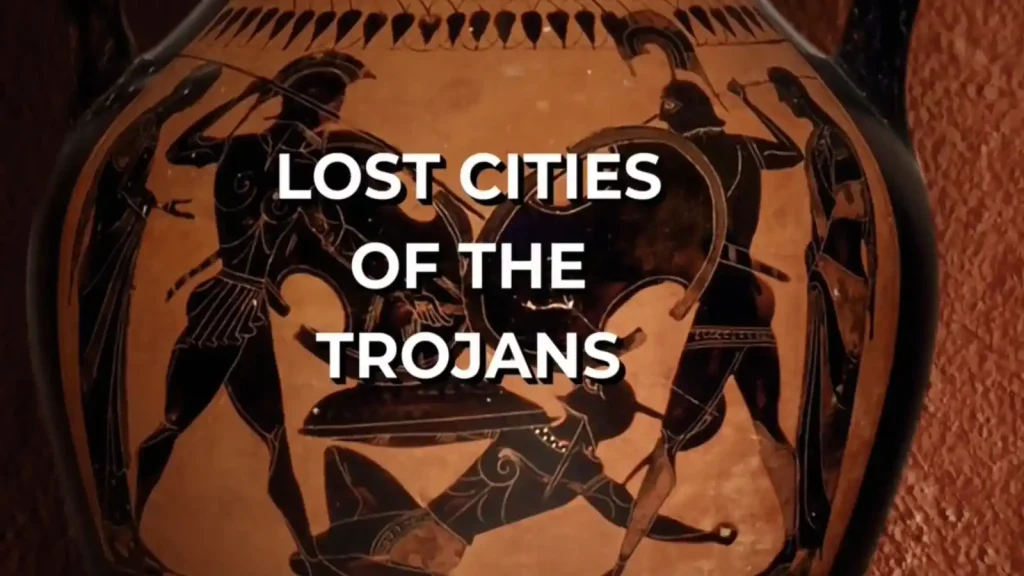
Lost Cities of the Trojans: Archaeology Unearths the Truth Behind Homer’s Epic War
Lost Cities of the Trojans represents one of archaeology’s most compelling pursuits, a centuries-long quest to separate historical reality from literary imagination. The Trojan War stands as Western civilization’s foundational conflict, a ten-year siege celebrated by Homer, the oldest known poet whose works have survived across three millennia. For generations, scholars dismissed this epic battle as pure mythology, a symbolic tale featuring legendary heroes such as Helen, Agamemnon, Priam, Hector, Odysseus, and Achilles. Yet beneath the windswept hills of northwestern Turkey, buried under layers of earth and time, evidence began to emerge that transformed scholarly assumptions entirely.
The transformation began in the second half of the nineteenth century when archaeological excavations in Turkey yielded discoveries that defied conventional wisdom. A German businessman turned archaeologist named Heinrich Schliemann arrived at a modest hill called Hisarlik in 1870, convinced that beneath its surface lay the ruins of legendary Troy. What he found would revolutionize our understanding of ancient civilizations and prove that Homer’s verses contained more than mere fiction. Schliemann discovered an extraordinary treasure hidden within ancient walls, and he declared with absolute certainty that this citadel was Troy itself, that the gold he unearthed belonged to King Priam. The academic world would never view Bronze Age history the same way again.
The site of Hisarlik has since become the most extensively excavated archaeological location in all of Asia Minor. Successive generations of researchers have applied increasingly sophisticated scientific methods to unlock its secrets. The hill’s summit has literally shrunk, losing fifteen meters in altitude due to continuous excavation campaigns spanning more than a century. Each archaeological season reveals new elements that seem to confirm Homer’s poem drew inspiration from actual events, from real battles fought on this strategic border between Europe and Asia. The lost cities of the Trojans did not belong solely to myth but occupied genuine space in the ancient world.
Across the Aegean Sea, parallel investigations have uncovered additional evidence supporting Trojan historical reality. Greek archaeologist Elena Korka has identified remains of another mythical city called Tenea, which ancient legend claims Trojan survivors founded after their homeland’s destruction. This dual archaeological pursuit spans two continents, two research teams, and thousands of years of accumulated history. The questions driving these excavations remain fundamental: Where exactly did the Trojan War occur? Who were the Trojans as a people and civilization? Why did Greeks sail across treacherous waters to fight them? Perhaps most intriguingly, what became of those who survived the city’s fall?
Modern archaeological science has developed remarkable capabilities for answering such questions. Researchers now employ satellite imagery, ground-penetrating radar, ceramic analysis, and metallurgical testing to reconstruct vanished worlds. The investigators exploring Troy and Tenea combine traditional excavation techniques with cutting-edge technology, revealing information that previous generations could never have obtained. Their findings challenge simplistic interpretations while confirming that substantial truth underlies Homer’s epic verses. The Trojan civilization did not merely inspire poetry; it shaped history across the ancient Mediterranean world.
The investigation encompasses multiple timelines simultaneously. Archaeological teams must navigate backward through approximately thirty-two centuries of accumulated deposits, distinguishing between successive occupations that built upon earlier ruins. They must also trace forward, following the trail of Trojan refugees who supposedly established new settlements after their city burned. This dual trajectory reveals a civilization far more complex and influential than Homer’s focused account suggests. The Trojans maintained extensive trade networks, diplomatic relationships, and cultural practices that connected them to the great powers of their age.
Contemporary researchers approach this evidence with scientific rigor that Schliemann never possessed. They recognize that separating verifiable fact from poetic embellishment requires patience, methodological consistency, and willingness to revise conclusions when new data emerges. The story of Troy represents both an ancient conflict and a modern detective investigation, with each excavation season providing fresh clues to centuries-old mysteries. What emerges from this careful work transcends simple validation of Homeric accuracy; it reveals a sophisticated Bronze Age world that shaped subsequent Mediterranean civilizations.
The journey from mythological speculation to archaeological verification spans more than one hundred fifty years of dedicated research. Throughout this period, investigators have steadily accumulated evidence supporting Trojan historical existence while simultaneously discovering that reality differed significantly from poetic representation. The lost cities of the Trojans, plural rather than singular, emerge from the earth as layered testament to human persistence, cultural continuity, and the enduring power of place. Their excavation illuminates not only ancient history but also the evolution of archaeological science itself.
Lost Cities of the Trojans
Heinrich Schliemann and the Discovery of Priam’s Treasure
Heinrich Schliemann arrived at Hisarlik driven by unshakeable conviction that Homer’s Troy awaited discovery beneath Turkish soil. Unlike academically trained archaeologists who dominated nineteenth-century scholarship, Schliemann came from commercial backgrounds, having made his fortune in business before pursuing his archaeological obsession. This unconventional path gave him both advantages and limitations that would shape his excavation methods and interpretations. His wealth provided resources for sustained investigation; his lack of formal training led to destructive techniques that obliterated valuable evidence.
Schliemann began excavating in 1870, cutting enormous trenches through the hill’s accumulated layers with minimal attention to stratigraphic detail. The methods standard in his era were crude by modern standards, prioritizing spectacular finds over systematic documentation. Nevertheless, his persistence produced extraordinary results. Deep within the mound, Schliemann encountered massive walls constructed from carefully worked stone, clear evidence of a substantial fortified settlement. The scale of these defenses confirmed that whoever built them commanded significant resources and faced serious military threats.
The treasure Schliemann discovered hidden in a corner of these walls captured public imagination worldwide. Gold jewelry, silver vessels, bronze weapons, and other precious objects emerged from centuries of concealment. Schliemann immediately announced he had found the treasure of King Priam himself, the aged monarch whom Homer depicted defending Troy during its final hours. This dramatic identification perfectly suited nineteenth-century romantic sensibilities, transforming archaeological finds into tangible connections with heroic literature. Newspapers across Europe and America spread news of the discovery, making Schliemann famous and inspiring subsequent generations of researchers.
Modern analysis has definitively established that Schliemann’s treasure predates Homer’s Trojan War by approximately a thousand years. The objects belong to an earlier phase of settlement, far too ancient to connect with Priam or the Bronze Age conflict described in the Iliad. This chronological displacement does not diminish the treasure’s significance; rather, it reveals that Hisarlik housed multiple sophisticated civilizations across many centuries. Schliemann had indeed found Troy, but not the specific Troy Homer celebrated. The site contained many Troys, each built upon the ruins of predecessors.
Nine Cities Built Upon Nine Cities at Hisarlik
Archaeologist Rüstem Aslan has devoted years to investigating the Hisarlik site, building upon work conducted by dozens of predecessors throughout the twentieth century. His research confirmed a remarkable discovery that fundamentally altered understanding of Trojan history: the hill contains not one ancient city but nine distinct settlement phases, each constructed atop earlier occupation levels. This vertical accumulation resulted from a pattern common in ancient settlement practice, where inhabitants rebuilt on existing locations rather than relocating to new ground.
The earliest settlement at Hisarlik dates to approximately 3000 BCE, predating Homer’s Trojan War by nearly two millennia. Successive occupations continued through the Bronze Age, Classical Greek period, and into Roman times, creating an archaeological layer cake that records human activity across three thousand years. Each layer represents a distinct community with its own architectural styles, ceramic traditions, burial practices, and material culture. Excavators must carefully distinguish between these deposits to avoid conflating evidence from different eras.
The layer most likely corresponding to Homer’s Troy is designated Troy VI or Troy VIIa by archaeological convention. These occupation phases date to the late Bronze Age, roughly 1700 to 1180 BCE, the period during which the Trojan War traditionally occurred. The architecture from these levels demonstrates substantial fortification, with massive defensive walls featuring towers and gates designed to repel attackers. The scale of these defenses indicates that Troy faced genuine military threats and possessed resources sufficient to construct impressive protection.
Troy VI shows evidence of destruction through earthquake activity rather than military assault. Its successor, Troy VIIa, demonstrates hasty rebuilding using salvaged materials from earlier structures. This phase also shows signs of violent destruction, including fire damage and human remains in contexts suggesting warfare. Many researchers identify Troy VIIa as the most plausible candidate for the city Homer immortalized, a prosperous trading center that met catastrophic end around 1180 BCE, precisely when traditional chronology places the Trojan War.
The Strategic Position of Troy Between Continents
Understanding why Greeks would launch such extensive military operations against Troy requires appreciating the city’s extraordinary strategic position. Troy occupied a location controlling access between the Aegean Sea and the Dardanelles strait, the narrow passage connecting Mediterranean waters to the Black Sea. Any ship seeking to trade with Black Sea communities or extract resources from those regions needed to pass through waters Troy commanded. This geographic chokepoint gave the city enormous economic and military leverage.
Bronze Age trade networks depended heavily on maritime transportation, and the Black Sea region offered resources highly valued throughout the ancient world. Metals, timber, grain, and other commodities flowed through the straits, enriching whoever controlled passage rights. Troy extracted tribute, trading privileges, and political influence from this advantageous position. The city grew wealthy not primarily through agricultural production but through its command of maritime traffic moving between regions.
The walls archaeologists have uncovered reflect this accumulated wealth. Constructing massive stone fortifications required substantial labor mobilization, skilled craftsmen, and material resources that only prosperous communities could afford. The defensive architecture also indicates that Trojan leaders recognized their city attracted envy and potential aggression. Their position brought wealth but also vulnerability, making them targets for rivals seeking either to seize or destroy this strategic hub.
Greek interest in eliminating or capturing Troy therefore possessed clear economic motivations beyond romantic legends of abducted queens. While Homer’s poetry emphasizes personal honor, revenge, and heroic glory, underlying political economy provided more practical incentives for costly military expeditions. The lost cities of the Trojans controlled something Greek merchants and warriors wanted, and the decade-long siege Homer describes represents, in archaeological interpretation, an extended campaign to break that Trojan stranglehold on trade routes.
Archaeological Methods Transform Understanding of the Lost Cities of the Trojans
Each generation of researchers working at Hisarlik applied the most advanced scientific methods available to their era. This methodological evolution transformed understanding of the site while simultaneously revealing how much earlier investigators had missed or misinterpreted. Schliemann’s massive trenches, designed to reach bedrock quickly, destroyed contextual information that would have answered countless questions. Later archaeologists adopted stratigraphic techniques, carefully excavating layer by layer and recording the precise position where each artifact appeared.
Modern archaeological science brings capabilities previous researchers could scarcely imagine. Satellite imagery reveals subsurface features across broad areas without disturbing soil. Ground-penetrating radar maps buried structures before excavators lift their first trowel. Chemical analysis of pottery sherds identifies clay sources, reconstructing ancient trade networks from ceramic distribution patterns. Radiocarbon dating provides absolute chronologies independent of artifact typologies. DNA analysis recovers genetic information from ancient bones, revealing population movements and biological relationships.
These technological advances have confirmed certain aspects of traditional accounts while contradicting others. The existence of a substantial Bronze Age settlement at Hisarlik is beyond dispute; thousands of artifacts and extensive architectural remains document continuous occupation across many centuries. Evidence for violent destruction during the late Bronze Age supports the possibility that military conflict, not merely natural disaster, ended at least one occupation phase. However, distinguishing a ten-year Greek siege from other potential causes of destruction remains challenging with current evidence.
The archaeological pursuit of Troy exemplifies how scientific methods and mythological texts can inform each other productively. Researchers use Homer’s descriptions as hypotheses to test against material evidence, neither accepting nor rejecting literary claims without physical verification. This skeptical engagement has gradually separated verifiable elements from poetic elaboration, producing increasingly nuanced understanding of what actually occurred at Hisarlik during the late Bronze Age.
Tenea and the Fate of Trojan Survivors
According to ancient tradition, not all Trojans perished when their city fell. Some survivors supposedly escaped the destruction and eventually established new settlements in distant lands. Greek sources mention several such refugee foundations, including a city called Tenea located in the Peloponnese region of mainland Greece. This settlement reportedly emerged when Trojan captives, brought to Greece after the war, eventually gained freedom and established their own community.
Archaeologist Elena Korka has led excavations at Tenea that have uncovered remarkable evidence supporting aspects of this foundation legend. The site contains occupation layers dating to periods shortly after the traditional date of Troy’s destruction, consistent with refugee settlement timing. Artifact styles show cultural connections to Anatolian traditions, the region where Troy stood, suggesting population movement from east to west across the Aegean. These material correlations do not prove the specific legendary account but demonstrate that migration from Trojan territories to Greek lands occurred during relevant periods.
The Tenea excavations reveal a prosperous community that flourished throughout Classical antiquity. Far from remaining marginal refugees, Tenean inhabitants achieved considerable success in their new homeland. Archaeological remains include elaborate burials with rich grave goods, substantial domestic architecture, and evidence of participation in broader Greek commercial networks. Whatever their precise origins, Tenea’s founders built a lasting settlement that maintained its identity across many generations.
The investigation of Tenea complements Hisarlik research by following Trojan cultural influence beyond the original city’s boundaries. If Trojan refugees indeed founded settlements elsewhere, then Trojan civilization survived its capital’s destruction, persisting through transplanted communities across the Mediterranean. The lost cities of the Trojans potentially include not only the layered settlement at Hisarlik but also descendant communities scattered throughout the ancient world.
The Lost Cities of the Trojans as Archaeological and Cultural Legacy
The sustained investigation of Troy represents more than three millennia of human fascination with a single conflict. Homer composed his epic verses approximately 2,800 years ago, drawing upon oral traditions extending even further into the past. Schliemann began excavating roughly 150 years ago, initiating systematic archaeological engagement that continues today. Throughout this extended span, each generation has approached Troy through its own interpretive frameworks, finding different meanings in the same fundamental story and material remains.
Nineteenth-century investigators sought confirmation of romantic literary traditions, hoping to touch artifacts that legendary heroes had handled. Twentieth-century researchers applied scientific methods to separate fact from fiction, developing increasingly sophisticated techniques for extracting information from physical remains. Contemporary archaeologists synthesize these approaches, combining technical analysis with cultural interpretation to understand both what happened at Troy and why subsequent generations cared so intensely about that history.
The dual excavations at Hisarlik and Tenea demonstrate how archaeological investigation expands beyond single sites to encompass broader cultural phenomena. Trojan civilization did not exist in isolation but participated in networks spanning the Bronze Age eastern Mediterranean. Understanding Troy requires understanding its trading partners, military rivals, diplomatic correspondents, and religious connections. Modern researchers increasingly adopt this relational perspective, viewing sites as nodes within larger systems rather than isolated phenomena.
The scientific pursuit of Trojan truth remains ongoing, with each excavation season potentially revealing information that transforms current understanding. Researchers continue developing new methods for extracting evidence from previously excavated materials and newly exposed deposits alike. The accumulated record from 150 years of investigation provides baseline data against which new findings can be compared, enabling increasingly refined interpretations.
Interpreting Evidence Across Three Thousand Years of Lost Cities of the Trojans
The challenge confronting Trojan researchers involves navigating between excessive credulity and excessive skepticism. Simply accepting Homeric accounts as literal history ignores clear evidence of poetic elaboration, divine intervention, and dramatic compression that served literary rather than documentary purposes. Yet dismissing the poems as pure fiction ignores equally clear evidence that they preserve authentic information about Bronze Age places, practices, and material culture. The middle path requires careful discrimination between verifiable and unverifiable claims.
Current archaeological consensus holds that a significant fortified settlement occupied Hisarlik during the late Bronze Age, that this settlement maintained extensive trade connections and possessed considerable wealth, that it experienced violent destruction around 1180 BCE, and that its fall coincided with broader Bronze Age collapse affecting civilizations throughout the eastern Mediterranean. These conclusions rest on solid material evidence recovered through systematic excavation and analyzed using reliable scientific methods.
Whether this destruction resulted specifically from Greek military action remains less certain. The archaeological record preserves evidence of burning and violence but cannot definitively identify attackers. The coincidence between Troy’s destruction date and broader regional instability suggests that multiple factors contributed to the city’s end. Greek assault may have represented one element within a more complex process involving climate change, trade disruption, population movement, and political fragmentation affecting the entire Bronze Age world.
The investigation continues precisely because questions remain unanswered. Future excavations may uncover textual evidence directly documenting the conflict, similar to tablets recovered from other Bronze Age sites. Genetic analysis of human remains may reveal whether population discontinuity occurred between Troy VIIa and subsequent occupation phases. Remote sensing technologies may identify previously unknown features that alter current site interpretations. The lost cities of the Trojans have revealed much but retain mysteries that await future discovery.
The story of Troy ultimately demonstrates how historical memory persists across extraordinary timescales. A conflict fought more than three thousand years ago continues generating scholarly investigation, public fascination, and cultural reference today. The archaeological sites at Hisarlik and Tenea provide physical anchors for this enduring memory, tangible locations where modern visitors can stand where ancient people lived and died. These lost cities of the Trojans have been found, yet their full significance remains subject to ongoing discovery, interpretation, and appreciation across generations yet to come.
FAQ Lost Cities of the Trojans
Q: What archaeological evidence confirms that Troy actually existed?
A: Heinrich Schliemann discovered massive fortification walls, precious treasures, and extensive ruins at Hisarlik, Turkey in 1870. Subsequently, archaeologists identified nine distinct cities built upon each other over three thousand years. Furthermore, destruction layers dating to approximately 1180 BCE show evidence of burning and violence consistent with military conflict.
Q: Why was Schliemann’s treasure not actually King Priam’s?
A: Modern scientific analysis revealed that Schliemann’s treasure predates Homer’s Trojan War by approximately one thousand years. Consequently, the gold and artifacts belong to a much earlier civilization at Hisarlik. The discovery remains significant, however, because it proved sophisticated cultures occupied the site across many centuries.
Q: How many ancient cities did archaeologists discover at the Troy site?
A: Researchers identified nine distinct settlement phases at Hisarlik, each built atop earlier ruins. This vertical accumulation spans from approximately 3000 BCE through Roman times. Additionally, archaeologist Rüstem Aslan confirmed that Troy VI and Troy VIIa most likely correspond to Homer’s legendary city based on dating evidence.
Q: What made Troy’s location strategically valuable in the ancient world?
A: Troy controlled access between the Aegean Sea and the Dardanelles strait, commanding all maritime traffic to the Black Sea. Therefore, the city extracted enormous wealth from trade passing through this chokepoint. Metals, timber, and grain flowed through waters Troy dominated, making it both prosperous and a target for rivals.
Q: Which layer of Troy most likely represents Homer’s city?
A: Archaeologists consider Troy VIIa the most plausible candidate for Homer’s Troy. This layer dates to around 1180 BCE and shows clear evidence of violent destruction including fire damage. Moreover, human remains found in contexts suggesting warfare support the theory of military assault during this period.
Q: What happened to Trojan survivors after the city fell?
A: Ancient traditions claim survivors escaped and founded new settlements elsewhere. Notably, archaeologist Elena Korka excavated Tenea in Greece, reportedly established by Trojan refugees. Her discoveries revealed artifacts with Anatolian cultural connections, suggesting population movement from Troy’s region to Greek lands occurred after the war.
Q: What modern technologies help archaeologists study Troy today?
A: Contemporary researchers employ satellite imagery and ground-penetrating radar to map buried structures before excavation begins. Additionally, radiocarbon dating provides absolute chronologies while DNA analysis reveals population movements. Chemical analysis of pottery identifies clay sources, thereby reconstructing ancient trade networks with remarkable precision.
Q: How much has Hisarlik changed due to archaeological excavations?
A: The hill has lost fifteen meters in altitude due to successive excavation campaigns over more than one hundred fifty years. Hisarlik remains the most extensively excavated archaeological site in Asia Minor. Nevertheless, each season continues revealing new discoveries that refine our understanding of Trojan civilization.
Q: Did Greeks have practical reasons beyond myth to attack Troy?
A: Economic motivations likely drove Greek military interest more than romantic legends suggest. Troy’s stranglehold on Black Sea trade routes threatened Greek commercial interests significantly. Consequently, a prolonged siege to eliminate this strategic competitor would have served clear political and economic objectives for Greek kingdoms.
Q: What questions about Troy remain unanswered by current archaeology?
A: Researchers cannot definitively confirm Greek forces specifically caused Troy’s destruction. The archaeological record shows violence but cannot identify attackers with certainty. Future excavations may uncover textual evidence or genetic data revealing population discontinuity. Meanwhile, the investigation continues as new technologies emerge.