MasterChef The Professionals 2026 episode 11 arrives at a pivotal moment. The series has delivered weeks of extraordinary cooking, fierce competition, and nerve-shredding pressure. Now, the final heat brings four fresh professional chefs into the kitchen, each carrying ambition, skill, and everything to prove.
The MasterChef kitchen has a way of revealing character. It strips away pretence and exposes the truth beneath the whites. Four new contestants step through the doors knowing that only the strongest will move forward. The rest go home. That reality hangs over every knife stroke, every sauce reduction, every carefully timed moment in this culinary competition.
Before the contestants face the judges, they must first impress someone who has stood exactly where they stand. Matthew Ryle, a 2018 finalist, returns to the MasterChef Professionals kitchen not as a competitor but as the man setting the skills tests. His journey once took him to the final four of the competition. His cooking was precise, classical, and quietly exceptional.
Today, Matthew is the founder and executive chef of both Café François and Maison François in central London. His standards have only grown sharper since his competition days. Therefore, when he walks into the kitchen to brief the contestants, the atmosphere changes immediately. This is someone who understands pressure from the inside out.
The first two chefs face a challenge that is deceptively beautiful. Matthew asks them to create a raviolo, a single, generous pasta parcel stuffed with pea and ricotta. Alongside it, they must produce a cacio e pepe sauce, a Roman classic built on pecorino cheese and cracked black pepper. The combination is elegant and demanding in equal measure.
However, the real test lies within the parcel itself. Matthew wants a whole egg yolk nestled inside the filling. When the raviolo is cut at the table, that yolk must ooze slowly outward, enriching the sauce beneath it. Achieving this requires precise timing and a steady hand. Cook it too long and the yolk sets solid. Rush the process and the pasta tears.
Specifically, the risk of the parcel bursting during cooking adds another layer of tension. Each chef must manage heat, water, and delicate dough simultaneously. The margin for error is razor thin. Matthew joins the judges at the tasting table, offering feedback that is exacting but fair. His insight reflects years of professional cooking at the highest level.
Meanwhile, the other two chefs face an entirely different challenge. Their skills test centres on a poached pear mille-feuille with hazelnut praline cream. This classic French dessert demands patience, precision, and a deep respect for pastry. Mille-feuille, which translates roughly as a thousand leaves, relies on perfectly laminated puff pastry that shatters on contact yet holds its structure beneath a weight of cream and fruit.
Pastry is an exact science. Unlike savoury cooking, where instinct and adjustment can rescue a dish, pastry punishes hesitation and rewards discipline. The contestants have everything they need at their stations. Nevertheless, success depends entirely on technique and attention to detail. Every layer of pastry must bake evenly. The praline cream must be smooth and stable. The poached pear must be tender without falling apart.
This particular skills test divides professionals from those merely playing at the level. The judges watch closely. Every decision the chefs make tells a story about their training, their confidence, and their capacity to perform when it matters most.
MasterChef The Professionals 2026 episode 11
After the skills tests, the kitchen shifts energy. The signature dish round opens the floor to each chef’s individual voice. This is where personality meets plate. Four professionals now have the opportunity to cook something that genuinely represents who they are and what they believe food can be.
The signature dish round carries enormous weight in this cooking show. It is not simply about flavour. The judges look for originality, technical execution, and the kind of confident storytelling that only comes from a chef cooking in their element. A signature dish should feel inevitable, as though no other chef in the room could have produced it.
Therefore, the pressure here is different from the skills tests. There, the benchmark was set by Matthew’s own version. Here, the only benchmark is the chef’s own ambition. Consequently, the signature round is where dreams either crystallise or dissolve.
This culinary competition has always been about more than food. It is about identity. Each chef who enters MasterChef Professionals carries a history of long kitchen shifts, early mornings, precise repetition, and the slow accumulation of skill. They have spent years learning their craft. This one episode tests everything simultaneously.
The chefs in MasterChef The Professionals 2026 episode 11 understand that reality TV rarely captures the full texture of professional cooking life. However, it does capture something equally important. It captures how a person responds when the familiar safety net of their own kitchen disappears. It shows who rises and who retreats.
MasterChef The Professionals 2026 episode 11
MasterChef The Professionals 2026 episode 11 arrives at the most consequential moment of the series so far, delivering four fresh professional chefs into the Birmingham kitchen for the final heat of the competition. Thirty-two chefs entered this culinary competition with ambitions of becoming Professional MasterChef Champion. Now, the last four step through the kitchen doors, knowing that only two will survive the day. The rest go home.
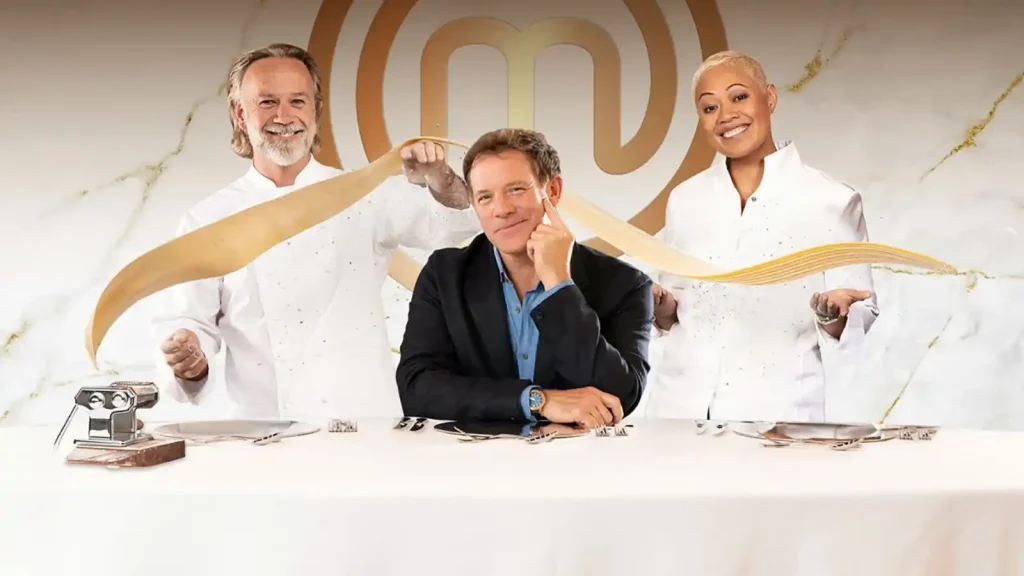
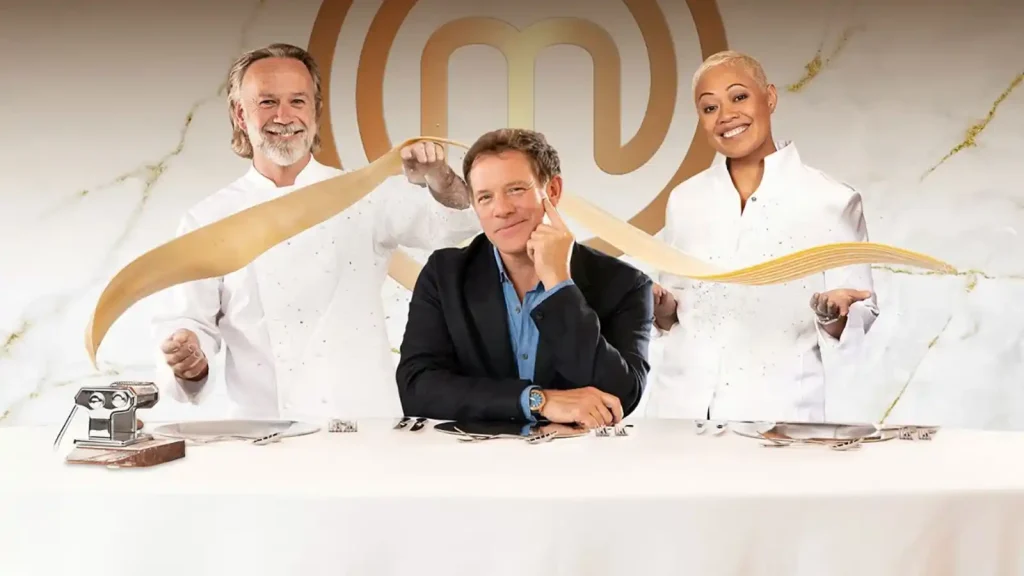
This episode marks the end of the heat stages in MasterChef Professionals. Every previous week of competition has funnelled toward this point, and the judges — Matt Tebbutt, Monica Galetti, and Marcus Wareing — have made clear that the standard expected of these professionals is uncompromising. The competitors are not gifted amateurs finding their feet. They are working chefs with years of service behind them, and they are judged accordingly.
The episode opens with a special addition: the skills test for this final heat is set not by the judges alone, but by Matthew Ryle, a former MasterChef finalist from 2018 who has since gone on to open two restaurants built around classic French cookery. His return to the kitchen he once competed in carries genuine weight. Ryle acknowledges that being on the other side feels, in his own words, “very kind of full-circle.” He remembers the skills test from his own year on the show with particular vividness, recalling that he was asked to make a pork meat ravioli and had, fortunately, spent the previous day practising exactly that preparation.
The skills test Ryle sets is split into two distinct challenges. Two of the four chefs face the first test — an egg yolk raviolo with pea and ricotta, served with a cacio e pepe sauce. The other two face the second — a poached pear mille-feuille with hazelnut praline cream. Both are formidable tasks. Together, they represent a precise examination of classical technique under severe time pressure.
What follows over the course of ninety minutes is a masterclass in how professional cooking intersects with temperament, experience, and composure. MasterChef The Professionals 2026 episode 11 does not merely test culinary ability. It tests character. Four chefs walk in. All four bring genuine ambition. But ambition, as the judges know well, is not the same as execution.
The two rounds of cooking — the skills test and the signature dish cook-off — expose strengths and weaknesses with an unsparing clarity. One chef who excels in the structured rigour of the skills test stumbles when given freedom. Another who struggles with an unfamiliar pastry challenge recovers through sheer instinct and intelligent kitchen management. Every moment matters. Decisions made in the first thirty seconds of a twenty-minute window can determine whether a dish succeeds or collapses.
The four chefs in this episode bring varied backgrounds. Lana, 29, is a sous-chef at a hotel restaurant in Shrewsbury with around thirteen years of professional experience. Anthony, 27, is a sous-chef at a Michelin-starred restaurant in Lichfield with Italian heritage that has shaped his entire food philosophy. Seb, 32, was born in Ecuador, moved to the UK a decade ago, and now works as a sous-chef in a fine dining restaurant in Birmingham. Gareth, 39, is a private chef who came to professional cooking later in life, starting with supper clubs before working his way through fine dining kitchens.
These are chefs with real professional credentials. And yet, as MasterChef The Professionals 2026 episode 11 makes abundantly clear, credentials do not cook the food. The kitchen does that alone.
The Skills Test in MasterChef The Professionals 2026 Episode 11: The Egg Yolk Raviolo
Matthew Ryle demonstrates his first skills test before the chefs compete: an egg yolk raviolo with pea and ricotta, served with a cacio e pepe sauce. The demonstration is, in itself, instructive. Ryle begins by toasting the peppercorns — a detail he explains enhances and elevates the flavour of the sauce. He then prepares the filling, breaking down the peas to avoid any pressure points that might rupture the pasta during cooking, combining them with ricotta, crème fraîche, mint, and a touch of lemon zest. The mint, he notes with a hint of pleasure, provides a surprise element that transforms a deceptively simple filling into something more considered.
The pasta challenge is substantial. The raviolo — a single, large version of the ravioli — must be rolled to the correct thickness. Too thin and it risks bursting during cooking, which Ryle calls “game over.” Trapped air inside the seal will cause the raviolo to explode in the water. He emphasises the importance of making at least two, as a safety net in case the first fails. The egg yolk, nestled inside the filling, must remain liquid after cooking. This requires a precise four-minute cook at a gentle simmer — enough to cook the pasta without setting the yolk.
The cacio e pepe sauce itself carries hidden complexity. Equal quantities of Parmesan and pecorino are slowly emulsified into starchy pasta water over low heat, with butter added to bring the sauce together. Monica Galetti explains the critical risk: if the pan is too hot when the cheese is added, the proteins will coagulate and the sauce will curdle back into the pan. Only three ingredients, yet the margin for error is small at every stage.
Lana faces this test first. She enters the kitchen with visible confidence — she has ravioli on her current restaurant menu — and her performance is broadly measured and assured. She works calmly through the filling and handles the pasta with competence, though Matthew Ryle observes that the sheet is slightly thin for a raviolo holding a liquid egg yolk. She makes only one raviolo rather than two, a decision that generates collective tension around the kitchen. She also opts not to toast her peppercorns, which Ryle notes is a missed opportunity for depth of flavour in the sauce.
Ultimately, the sauce lacks sufficient cheese to create the full cacio e pepe character the dish demands, relying more heavily on cream and butter. However, the raviolo itself survives intact, the egg yolk oozes beautifully on cutting, and Marcus Wareing declares the pasta cooked perfectly and the overall result good enough that he would be happy to receive it in a restaurant.
Anthony follows Lana. Where Lana was calm, Anthony comes in with nerves openly simmering. He acknowledges that this culinary competition represents his first time cooking competitively. His filling uses whole peas rather than breaking them down — a choice Matthew Ryle flags as potentially risky for sealing. In the pivotal moment of the test, Anthony breaks his egg yolk while placing it on the filling, then cuts his disc too small. He adapts, cutting a larger disc and resealing, but the setback costs him time.
When he turns his attention to the sauce, he opts for tap water rather than pasta water to build his emulsion, losing the natural starch that would have helped bind the cheese. Ryle also notes that without enough pasta water, Anthony would need almost an entire block of cheese to achieve the right consistency. Despite the errors, the raviolo itself survives cooking, the yolk runs beautifully, and the judges acknowledge that the plate, while imperfect, represents genuine skill.
The Skills Test in MasterChef The Professionals 2026 Episode 11: The Poached Pear Mille-Feuille
The second skills test sends the remaining two chefs into more unfamiliar territory. A poached pear mille-feuille with hazelnut praline cream is a dessert that requires careful management of temperature, timing, and structure. The name itself — mille-feuille means “a thousand leaves” — describes the layered architecture of the finished dish. Pre-made puff pastry is provided because there is no time to make and rest dough from scratch. The pastry must be baked flat, cooled completely, and then layered with praline cream and poached pears. Ryle demonstrates with efficiency and clarity, building his three-layer tower in twenty minutes. Monica Galetti, watching, remarks that she is transported straight back to Paris.
Ryle’s technique is notable for its discipline around temperature. He puts the pastry, caramel, and cooked pears into the freezer to cool rapidly, because warm puff pastry and cream are incompatible at assembly. His poaching liquor combines Sauternes, cinnamon, star anise, vanilla, and a little caster sugar. He cuts the pears into wedges for faster cooking, uses a cartouche to keep them submerged, and takes his caramel to a deep amber before freezing it solid. The praline cream combines mascarpone, double cream, vanilla, icing sugar, and folded-in hazelnut praline. Wareing declares the result absolutely flawless.
Seb enters this challenge in honest uncertainty. He readily admits he is not familiar with a mille-feuille. What follows is a demonstration of instinct under extreme pressure. He begins with the pears rather than the pastry — an ordering decision that draws immediate concern from Matthew Ryle, who observes that the pastry needs the most time. Seb recognises the misjudgement himself and redirects quickly. However, his pastry goes into the oven without a weighted rack on top, allowing it to rise far beyond what is practical for assembly. He uses a hand whisk for the cream rather than a stand mixer in a twenty-minute window, a choice Ryle watches with quiet resignation.
The pears go into the freezer only seconds before Seb attempts to assemble the dish. Predictably, the warm fruit causes the cream to begin melting on contact. The result is described as “almost like a sandwich” — not a mille-feuille in any structural sense. Nevertheless, Seb has cooked puff pastry, produced a praline, poached pears, and whipped a cream filling under enormous pressure without any prior familiarity with the dish. Monica Galetti tells him that she is looking forward to finding out what his actual style of cooking can produce.
Gareth enters last and takes a considered approach from the first moment. He pauses deliberately before touching any ingredient, explaining that he needs to think through the sequence before committing to action. Monica Galetti acknowledges this composure later, saying that those first few seconds of deliberate thought helped him navigate the whole challenge. He sets his pears poaching, gets his pastry into the oven with a rack on top, toasts his hazelnuts, builds his caramel, and folds mascarpone through his praline cream.
His pears cool adequately before assembly. The resulting mille-feuille is very tall — Marcus Wareing jokes about needing a ladder — because Gareth cannot press the pastry layers flat enough in the time remaining. But the structural problems are cosmetic. The cream carries the praline properly, the pears are soft, and the pastry is cooked. The judges declare it a very decent attempt at a tough skills test.
The Signature Dish Round: MasterChef The Professionals 2026 Episode 11 Raises the Stakes
With one cook already behind them and the judges’ initial impressions formed, all four chefs enter the signature dish round knowing the full consequences. Two will advance to the quarterfinals. Two will leave the competition permanently. They have ninety minutes to cook the dish that best represents who they are as professional chefs.
Gareth dedicates his signature dish to his fiancée. He explains that when he asked her for her most memorable moment of him, she said it was the first meal he ever cooked her — duck with roasted squash. He has built a refined version around that memory: dry-aged duck breast with squash puree, an elderflower-pickled squash cylinder filled with roasted and shredded duck leg, torched fennel, and a duck sauce finished with pickled wild bilberries and miso.
The bilberries and star anise carry boldness, but as Marcus Wareing observes, duck can carry big flavours. Gareth cooks his duck on the crown, slowly rendering the fat to achieve a golden, even crust while keeping the breast pink. The judges receive the dish with genuine warmth. Monica Galetti praises the presentation and calls the duck beautiful. Marcus Wareing loves the elderflower pickled squash cannelloni and the braised fennel. Matt Tebbutt notes the bilberry-enriched sauce carries a pleasing acidity and vinegar kick. Monica Galetti identifies Gareth as a chef still learning, with considerable potential still to be unlocked.
Anthony builds his signature dish around his Italian heritage — a roasted loin of lamb with a courgette flower stuffed with lamb sweetbread farce, polenta fritter, confit tomatoes, asparagus, goat’s curd, and a lamb sauce. The courgette flower, stuffed with caramelised sweetbread and seasoned with anchovies, lemon zest, mint, and parsley, is described by Anthony as the heart of the dish — the place where the Tuscan flavour profile most clearly comes through.
He acknowledges the inspiration of his Italian father’s influence and his family trips to Italy, which broadened his food perspective from, as he puts it, “sausage and beans.” Marcus Wareing calls it a really nice plate of food with a lovely Mediterranean feel. Monica Galetti praises the freshness of the goat’s curd, the weight of the sweetbread filling, and the integration of flavours. Matt Tebbutt notes the polenta fritters bring a critical textural contrast. The lamb itself is cooked beautifully — pink and tender — which Marcus Wareing identifies as the single most important technical success of the dish.
Where Seb and Lana Fell Short
Both Seb and Lana delivered dishes with genuine ideas and personal meaning. Neither delivered with sufficient technical precision to secure a place in the quarterfinals.
Seb’s signature dish is inspired by a childhood memory of escaping his mother’s peas and bacon dinners to eat at his grandmother’s house nearby. He has elevated the combination: pan-fried guinea fowl breast with smoked pancetta, peas and broad beans wrapped in romaine lettuce, chardonnay vinegar gel, pea puree, and a Madeira sauce. The concept is compelling — personal, specific, emotionally rooted. However, the execution falls short at every critical point.
The guinea fowl is dry, a result of the lean breast meat being overcooked without sufficient fat to protect it. The pea and bacon parcel comes apart on the plate. The chardonnay vinegar gel, which should provide an acidic counterpoint, is almost impossible to locate in the dish. Monica Galetti can barely find it. The Madeira sauce overshoots its sweetness and simply needs less Madeira. Marcus Wareing delivers the most direct verdict of the tasting: it is just not Seb’s day in the kitchen. Monica Galetti adds that she does not feel the dish represents the story Seb wanted to tell.
Lana’s dish is more technically ambitious — pan-fried halibut with a nettle and wild garlic raviolo, hen-of-the-woods mushrooms, tenderstem broccoli, toasted hazelnuts, cep puree, and a pancetta sauce. The judges note immediately that Lana’s comfort with pasta, evident in the skills test, has returned here: she has put raviolo in her signature dish too, and the judges exchange knowing glances. However, the execution of several components does not match the ambition.
The halibut is slightly scorched on the top surface, though beautifully soft in the centre. The raviolo filling has dried out, and the pasta itself is judged to be approximately two minutes from being fully cooked. The pancetta sauce is the most significant problem — it is so salty that Marcus Wareing describes it as just barely palatable. The hazelnuts and tenderstem broccoli are presented in large, unrefined pieces where more finesse was needed. Matt Tebbutt concludes that with a few targeted tweaks and refinement, the dish could be transformed, but as submitted it falls below the standard required for progression.
The Verdict and Quarterfinal Places
The decision is not straightforward. The judges deliberate with care. Matthew Ryle, who returns for the tasting after setting both skills tests, has provided a technically exacting standard against which all four performances can be measured. His presence adds a dimension of authority to the feedback — he has competed in this culinary competition, he has built a career from the skills being tested, and he can assess what he sees without sentiment.
Seb is the first chef to be eliminated. The judges acknowledge his spirit and the genuine warmth of his inspiration, but the food simply does not perform. Lana is the second chef to leave, a more difficult decision given the evidence of considerable skill she showed in the skills test. Her exit is greeted with genuine encouragement from the judges and from Lana herself, who takes pride in acknowledging that her skills test performance was strong.
Gareth and Anthony advance to the MasterChef Professionals quarterfinals, where they will face the week’s most talented chefs returning for two further challenges, with only the strongest earning a place in Knockout Week.
What MasterChef The Professionals 2026 Episode 11 Reveals About the Competition
This episode illuminates something important about the structure of this culinary competition that distinguishes the professional version from its amateur counterpart. The skills test is not a warmup. It is an examination conducted at restaurant standard, set by someone who has lived the same experience from the other side of the bench. Matthew Ryle does not ask for perfection, but he expects the fundamentals — proper seasoning, correct technique, intelligent sequencing — to be present as a baseline. When they are absent, he names the gap directly.
The signature dish round then asks something different. It asks each chef to be themselves — to bring a coherent food identity to a plate and defend it with technical skill. Anthony does this most successfully. His dish is not merely competent; it is characterful. The courgette flower, the polenta fritter, the anchovies and mint in the stuffing — these are choices that speak with a clear voice. Gareth’s duck dish carries similar intentionality, rooted in personal memory and executed with the composure he demonstrated throughout the day.
For Seb and Lana, the gap between idea and execution is the story of their departure. Both chefs brought genuine personality to their food. Neither brought enough technical control at the decisive moment. In MasterChef The Professionals 2026 episode 11, as in every episode of this series, that difference is everything.
FAQ MasterChef The Professionals 2026 episode 11
Q: What happens in MasterChef The Professionals 2026 episode 11?
A: MasterChef The Professionals 2026 episode 11 is the final heat of Series 18. Four professional chefs compete across two rounds: a skills test and a signature dish cook-off. Judges Matt Tebbutt, Monica Galetti, and Marcus Wareing assess each performance. Only two chefs advance to the quarterfinals. Additionally, former 2018 finalist Matthew Ryle returns to set both skills tests, adding a unique full-circle dimension to the episode.
Q: Who are the four chefs competing in MasterChef The Professionals 2026 episode 11?
A: The four competing professional chefs are Lana, a 29-year-old sous-chef from Shrewsbury with thirteen years of experience; Anthony, a 27-year-old sous-chef at a Michelin-starred Lichfield restaurant; Seb, a 32-year-old Ecuadorian-born sous-chef based in Birmingham; and Gareth, a 39-year-old private chef who came to professional cooking through supper clubs. Furthermore, each brings a distinct food philosophy shaped by personal background.
Q: What is the first skills test set in MasterChef The Professionals 2026 episode 11?
A: The first skills test requires chefs to produce an egg yolk raviolo with pea and ricotta, served with a cacio e pepe sauce. Matthew Ryle sets this challenge, completing the demonstration himself in twenty minutes. The raviolo must house a perfectly liquid egg yolk sealed inside fresh pasta. Additionally, the cacio e pepe sauce demands precise temperature control to prevent the cheese from curdling during emulsification.
Q: What makes the egg yolk raviolo so technically demanding in this culinary competition?
A: The raviolo presents multiple simultaneous technical challenges. The pasta must be rolled thick enough to contain a liquid egg yolk without bursting during cooking. Any trapped air will cause the parcel to explode in the water. The cacio e pepe sauce, though made from just cheese and pepper, will curdle if overheated. Furthermore, Matthew Ryle recommends making at least two raviolos as insurance against failure during the four-minute poaching window.
Q: What is the second skills test in MasterChef The Professionals 2026 episode 11?
A: The second skills test challenges chefs to construct a poached pear mille-feuille with hazelnut praline cream. Pre-made puff pastry is provided due to time constraints. Chefs must bake the pastry flat, cool all components thoroughly, and assemble three uniform layers. The poaching liquor combines Sauternes, cinnamon, star anise, and vanilla. However, the critical technical requirement is that every element — pastry, pears, and praline cream — must be completely cold before assembly begins.
Q: How does Gareth perform across both rounds of MasterChef The Professionals 2026 episode 11?
A: Gareth demonstrates measured composure throughout the episode. In the mille-feuille skills test, he deliberately pauses to plan his approach before touching any ingredient, a decision the judges later praise. His mille-feuille rises too tall due to unpressed pastry, but the cream, praline, and pears are all correctly prepared. Furthermore, his signature dish — dry-aged duck breast with elderflower-pickled squash cannelloni and pickled bilberry sauce — draws genuine praise for creativity, technical execution, and personal storytelling.
Q: What signature dish does Anthony cook and how do the judges respond?
A: Anthony roasts a loin of lamb and serves it with a courgette flower stuffed with lamb sweetbread farce, polenta fritters, confit tomatoes, asparagus, goat’s curd, and a lamb sauce. The dish reflects his Italian heritage directly, incorporating anchovies, mint, and lemon zest in a Tuscan-influenced preparation. Marcus Wareing calls it a really nice plate of food. Additionally, Matt Tebbutt praises the polenta fritters for delivering an essential textural contrast. Anthony is ultimately named the strongest performer of the day.
Q: Why are Seb and Lana eliminated in MasterChef The Professionals 2026 episode 11?
A: Both chefs produce dishes with genuine concept but insufficient technical execution. Seb’s guinea fowl breast is overcooked and dry, the pea and bacon parcel collapses on the plate, and the Madeira sauce carries excessive sweetness. Lana’s halibut dish suffers from an oversalted pancetta sauce, slightly undercooked raviolo, and garnish components that lack refinement. However, both chefs receive encouragement from the judges, who acknowledge the clear potential each displays throughout the competition.
Q: What role does Matthew Ryle play in MasterChef The Professionals 2026 episode 11?
A: Matthew Ryle serves as the guest skills-test setter for this final heat. He became a MasterChef Professionals finalist in 2018 and has since opened two restaurants focused on classic French cookery. Ryle demonstrates both the raviolo and mille-feuille challenges live before each competitor attempts them. Additionally, he returns to the judging table for the tasting, offering technically informed feedback shaped by his own experience as a competitor in the same culinary competition.
Q: Which chefs qualify for the quarterfinals after MasterChef The Professionals 2026 episode 11?
A: Gareth and Anthony earn the two available quarterfinal places. Both chefs demonstrate consistent technical ability and a coherent personal food identity across both rounds of cooking. In the next stage of MasterChef Professionals, this week’s strongest performers return alongside qualifiers from previous heats to face two further challenges. Only those who succeed will advance to Knockout Week. Furthermore, both Gareth and Anthony express that the episode represents the most demanding single day of their professional careers.