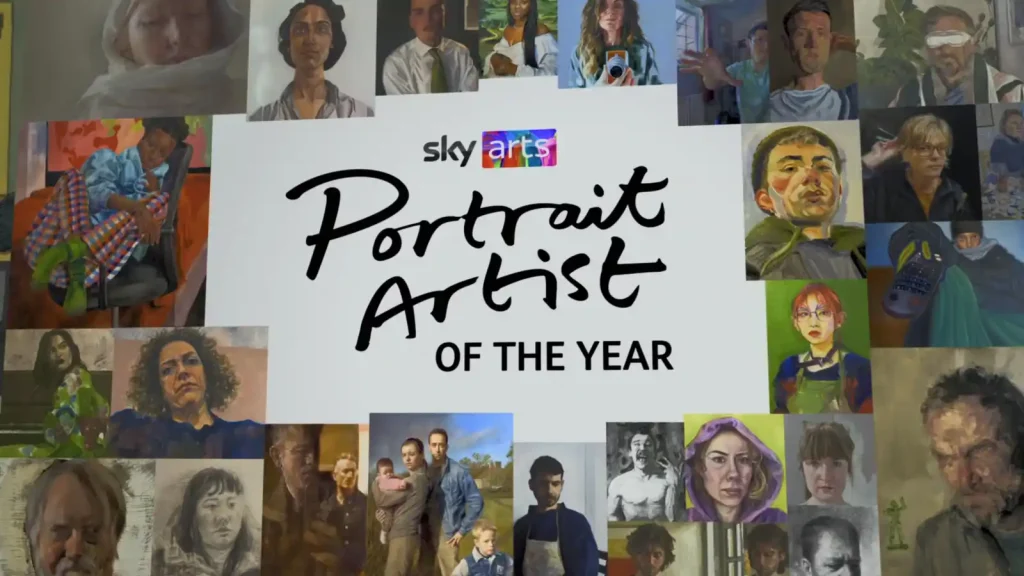
The competition intensified in the Portrait Artist of the Year 2025 episode 3, as nine new artists vied for a coveted spot in the semifinal. Following the previous week’s success by Paulina Kritnievska, the pressure mounted for the next group of hopefuls. Each artist arrived with a unique style, ready to tackle the immense pressure of a timed challenge. The day promised a showcase of diverse talents and artistic philosophies. Ultimately, the stakes of this art competition are exceptionally high. The overall winner receives a prestigious £10,000 commission to create a portrait for a celebrated institution.
This year’s grand prize involves painting the award-winning mathematician and broadcaster Professor Hannah Fry. The resulting artwork will be displayed by the Royal Society. Moreover, this commission celebrates the 80th anniversary of the first women elected to its fellowship. These women were Professor Kathleen Lonsdale and Professor Marjorie Stevenson. This significant context adds a layer of historical importance to the artists’ endeavors. It transforms the contest from a simple painting challenge into a chance to contribute to a lasting legacy. Every brushstroke carries the weight of this opportunity.
This detailed exploration of the Portrait Artist of the Year 2025 episode 3 will unpack the day’s events. We will examine the nine competing artists and their distinct self-portraits. Furthermore, we will introduce the three celebrity sitters who presented unique creative obstacles. The article delves into the various artistic processes on display during the four-hour session. It also captures the crucial insights from the judges and the personal reflections of the sitters. Finally, the journey culminates in the judges’ difficult decision-making process and the selection of the episode’s winner.
The foundation for the day’s events was set by the artists’ submitted self-portraits. These pieces offered the first glimpse into their skills and creative voices. The judges—award-winning artist Tyshan Sheeranberg, curator Kathleen Soriano, and art historian Kate Bryan—analyzed these works before the competition began. They noted a range of quirky and narrative-heavy styles. For instance, some portraits included cats, while another referenced a dead romantic poet. This variety hinted at the rich and complex approaches to portrait painting that would unfold. The judges anticipated a day filled with drama and psychological depth.
The atmosphere in the studio was thick with anticipation. Artists expressed a mix of nerves and excitement. Ellie Karsmiley, a portrait painter from Berkshire, admitted that a painting can take her weeks or even longer. Therefore, completing a work in just four hours felt ridiculously fast. Similarly, Aidan Feeney, a digital construction coordinator from Galway, confessed his practice paintings had been “50-50.” He acknowledged the uncertainty of whether his efforts on the day would be successful. This vulnerability underscored the high-pressure environment of the competition.
The introduction of the three sitters officially launched the day’s central challenge. Each celebrity brought a distinct personality and a meaningful object, adding another layer for the artists to interpret. Broadway legend Billy Porter, presenter James May, and broadcaster Emma Barnet took their seats. The artists were given four hours to capture a likeness and an essence. They had to work quickly, shifting into top gear to impress the judges. The clock started, and the intense process of creating Celebrity Portraits under pressure began, with each artist hoping to secure their place in the semifinal.
Portrait Artist of the Year 2025 episode 3
The Artists and Their Submissions
The nine artists competing in this heat brought a remarkable diversity of backgrounds and artistic styles, first showcased in their self-portraits. Roger Stevenson, an architect from Macclesfield, submitted a work in acrylics that reflected his profession’s precision. His piece, which included a layout for a plan, was described as screaming “architect.” Meanwhile, Ellie Karsmiley, a portrait painter, presented a narrative-filled submission in oils and acrylic. It depicted her on her wedding day in her parents’ garden, holding her cat, Yoly. The judges noted the striking language at play, combining realism with more graphic, illustrative elements.
Other artists explored personal themes and art historical references. Arthur Bloy, an art teacher from Beckenham, created an homage to the pre-Raphaelite painting The Death of Chatterton. His sumptuous work was full of narrative and, as one judge put it, was “doing nothing but showing off.” Stu Lee, an artist from London, was inspired by a Lucian Freud self-portrait for their submission in oils. In contrast, Eileen Healy, an artist and musician from Cork, submitted a self-portrait in oils on board that was completed in just one hour during lockdown, showcasing her rapid and confident style.
The remaining contestants demonstrated equally personal and varied approaches. Shioni Drury, a lead commercial manager, painted her self-portrait in two hours on a gloomy day, viewing it as a celebration of life. Shirley Chi, an art school coordinator, held a sculpting tool in her oil painting to reflect her love of crafting. Aidan Feeney’s oil self-portrait featured his cat, Buddy, who had recently lost a leg, creating a piece with a “thousand-yard stare” and a compelling narrative. Finally, Katie Jones, an artist from Somerset, used water-mixable oils on watercolor paper for a self-portrait that was part of a series exploring identity.
The Celebrity Sitters and Their Challenges
The three celebrity sitters for the day were Billy Porter, James May, and Emma Barnet, each offering a distinct challenge to the portrait artist contestants. Billy Porter, an Emmy, Grammy, and Tony Award winner, arrived with a clear artistic message. He explained that he wanted to have a conversation with the world about how “serious and fabulous do coexist.” He brought a deeply personal item: a necklace his stylist made for him after his mother passed away. This object represented his hero, a black woman born in America in 1945 who always maintained hope through her spirituality.
Presenter James May brought his characteristic wit and a surprising request for the artists. He presented his Brompton folding bicycle, an object he has owned since 1996 and rides almost daily. More significantly, he expressed a desire for a portrait that went beyond mere likeness. He stated, “I want something that doesn’t simply look like me, something that reveals my weaknesses.” When asked about his strengths, he quipped, “Well, if you can find them, I’d love to see those as well.” This prompted the artists to dig deeper for character and vulnerability rather than aiming for flattery.
Award-winning journalist and broadcaster Emma Barnet presented a visually striking look and a thoughtful perspective. Known for her work on Radio 4, she brought a glamorous pair of spectacles she found in a London shop. Her own glasses, she explained, are an integral part of her identity. “It is my face,” she said, “I don’t exist without them.” As a journalist, she turned the challenge back to the artists, stating, “I would like for you to see what you see.” Her strong look—glasses, great hair, and lipstick—offered a wealth of visual information for the artists to interpret.
Creative Processes and Artistic Philosophies
Throughout the four-hour painting challenge, the artists employed a fascinating range of techniques and philosophies. Katie Jones began with a very systematic approach, using a grid method with inch squares to draw out her subject. This meticulous start contrasted sharply with Eileen Healy’s process. Eileen worked quickly and entirely from life, immediately diving into the paint without preliminary drawings. She expressed a desire not to waste any time, even when her sitter, Billy Porter, began to fall asleep. Instead of pausing, she simply shifted her focus to his hands and clothes, adapting to the moment.
Color and medium played a central role in other artists’ strategies. Arthur Bloy, who is color blind, chose to work with very unambiguous, non-naturalistic colors. He explained this allows him to be playful, and if a color is “wrong,” he can pretend it was on purpose. He aimed to capture Billy Porter’s serious pose but inject so much color that it would read as fabulous. Meanwhile, Shirley Chi opted for pastels instead of paint to achieve specific textures. She worked from dark to light, intending to capture personality quickly and add details like glasses on top of her base layers.
Other artists focused on building likeness and narrative through their specific methods. Aidan Feeney concentrated on key features first, believing the eyes and mouth are critically important for achieving a good likeness. He appreciated James May’s face for its character, including lines and wrinkles. Ellie Karsmiley took a more intuitive approach, starting with a bold pink underpainting. She explained her process is not predetermined; she lets the painting talk to her. Roger Stevenson, drawing on his architectural background, decided on a full-length portrait of James May to create a dynamic composition, planning to leave parts like the chair as a simple line drawing.
Mid-Challenge Reflections from Judges and Sitters
At the halfway point, the judges offered their analysis of the artists’ progress, noting the variety of game plans in action. They observed that many painters were methodical and meticulous, requiring significant time to execute their vision. Kate Bryan pointed out that one of Eileen’s strengths was her ability to adapt when her sitter fell asleep, a challenge for any portrait artist working from life. The judges also discussed Arthur’s work, praising his sensitive drawing of Billy Porter while questioning the very strong yellow background. They felt it was a significant risk that could either pay off or overwhelm the piece.
The judges’ assessment of the artists painting James May was largely positive. They noted that all three artists in that section were happy with their sitter, feeling he had a great face full of character. They considered Aidan’s likeness to be “spot on,” capturing a crumpled, well-lived-in quality that was not flattering but full of personality. In contrast, they observed that Katie seemed to be flattering James, despite his request to see his weaknesses revealed. The result was a super-rendered portrait with a “lovely likeness.” They felt Roger’s work was also progressing well, though the likeness could still be improved.
The group painting Emma Barnet presented the most confusion for the judges. They felt the artists were not fully engaging with her, perhaps because they were so focused on the time constraint. They worried that Stu might be playing it too safe, as key features like the mouth and its bright lipstick were not yet defined. They also expressed concern about Shirley’s plan to add the glasses at the end, arguing that for Emma, the glasses are not an addition but an integral part of her. Finally, they felt Ellie’s drawing of the lower part of Emma’s face was not correct, creating a puzzling composition.
The Final Reveal in Portrait Artist of the Year 2025 episode 3
After four intense hours, the artists stepped away from their easels, and the sitters saw their portraits for the first time. The reveal was an emotional moment for everyone involved. Billy Porter was visibly moved by the three interpretations of him. He praised Arthur’s work for its use of color and for capturing his mom in the necklace. More profoundly, he felt Arthur had captured his grief, stating, “When you lose a parent, the grief never goes away. You have captured that.” He called Eileen’s powerful profile portrait “beautiful” for its presence and seriousness. Ultimately, he chose to take Eileen’s painting home with him.
James May reacted to his portraits with his typical humor and insight. He felt Aidan’s painting looked like him but wished it did not, noting its “mournful quality.” He saw Katie’s version as more optimistic, capturing a sense of longing. In Roger’s full-length portrait, he saw himself as more detached. Joking that he had not come out as the “dragon-slaying warrior” he hoped for, he grappled with the difficult choice. The transcript does not explicitly state which one James chose, but he was clearly impressed by the skill of all three artists.
Emma Barnet described the experience as thrilling and was excited for the reveal. She was impressed by all three portraits of her. She found a wonderful softness and pensiveness in Shirley’s pastel work. She was fascinated by Ellie’s vision, noting that the longer you look at the vibrant pink painting, the more you stop seeing the color itself. She called Stu’s piece “really incredible” for its intensity and the rich textures of the skin and hair. In the end, Emma chose to take home Stu’s intense and textural portrait.
Judging Deliberations and the Winner of Portrait Artist of the Year 2025 episode 3
With the sitters’ choices made, the judges began their final deliberations to select a shortlist of three. They found the overall quality of the work fantastically strong. They praised Eileen’s portrait of Billy, highlighting its great three-dimensionality and sense of the person. However, they also commended Arthur’s balance between the necklace and the portrait itself. Regarding the James May group, they admired Roger’s delicate, architect-like work but pointed out an anatomical flaw in the leg. They were impressed by Katie’s ability to create realistic eyeballs and a solemn quality. They saw Aidan’s work as laden with angst, reminiscent of German expressionist art.
In the Emma Barnet group, the judges felt Stu successfully found drama and captured the hard-searching journalist. They thought Ellie had created a vibrant, narrative piece but that the strident pink made it hard to read the portrait. They liked Shirley’s work but felt the late addition of pink tipped it into a sweetness that detracted from its initial starkness. After reviewing all nine paintings, the judges announced their shortlist: Katie Jones, Eileen Healy, and Aidan Feeney. This set the stage for their most difficult decision of the day.
The final discussion centered on these three artists. The judges debated Katie’s psychological approach, noting how isolating the head in white space made the work feel as if “everything seems to come from within.” They were amazed she achieved a result so close to her highly finished submission. They described Eileen as an uncompromising artist who produces very strong paintings, admiring how her portrait of Billy grew organically. Finally, they analyzed Aidan’s work, pointing out the menacing shadows and sense of foreboding he created. Ultimately, the judges selected the artist who created a portrait with great psychological intensity. That artist was Katie Jones.
The Enduring Power of Portraits Under Pressure
Katie Jones’s victory in Portrait Artist of the Year 2025 episode 3 wasn’t just about technical prowess—it was a masterclass in finding truth beneath the surface. In a competition where nine talented artists had just four hours to capture not merely a face but an entire human story, Katie stood out by doing what portrait painting has always done best: revealing the invisible. Her ability to isolate James May’s head in white space, creating what the judges described as a sense that “everything seems to come from within,” demonstrated that great portraiture isn’t about flattery or photographic accuracy. It’s about understanding.
This episode brilliantly showcased the diverse philosophies that drive contemporary portrait artists. From Eileen Healy’s fearless dive straight into paint without preliminary sketches to Roger Stevenson’s architectural precision, from Arthur Bloy’s unapologetically vibrant colors to Shirley Chi’s strategic pastel layering—each approach offered a window into how artists see the world differently. The beauty of this competition lies not in declaring one method superior, but in celebrating how these varied techniques can all lead to profound artistic truth. Whether you work from grids or instinct, from dark to light or light to dark, what matters is whether you can see beyond the obvious and capture something essential about another human being.
The celebrity sitters added another crucial dimension to the challenge. Billy Porter’s request for portraits that balance “serious and fabulous,” James May’s plea to see his weaknesses revealed, and Emma Barnet’s invitation to “see what you see”—these weren’t just artistic prompts. They were invitations to genuine connection, reminders that the best portraits emerge from dialogue rather than mere observation. The emotional moments when sitters encountered their completed portraits—Billy recognizing his grief in Arthur’s work, Emma captivated by Stu’s intensity—proved that when portraiture succeeds, it creates a mirror that reflects back truths we sometimes struggle to articulate ourselves.
As this year’s competition builds toward its ultimate prize—a £10,000 commission to paint Professor Hannah Fry for the Royal Society, honoring the 80th anniversary of its first female fellows—the stakes extend far beyond individual achievement. Each week’s winner moves closer to contributing to a lasting legacy, their work becoming part of a conversation about representation, history, and who gets memorialized in our cultural institutions. Katie Jones now joins Paulina Kritnievska in the semifinals, carrying forward the torch of possibility.
For aspiring portrait artists watching, the lesson is clear: trust your unique vision, adapt to challenges with grace, and remember that the most compelling portraits don’t just show us what someone looks like—they reveal who they are. And for all of us who simply appreciate the transformative power of art, this competition offers a thrilling reminder that in an age of instant digital images, there remains something irreplaceable about an artist spending four hours truly looking at another human being, brush in hand, searching for truth.
FAQ Portrait Artist of the Year 2025 episode 3
Q: What is Portrait Artist of the Year and what makes it significant?
A: Portrait Artist of the Year is a prestigious British art competition where talented artists compete for a £10,000 commission to create a portrait for celebrated institutions. The 2025 season holds particular significance as the winner will paint award-winning mathematician Professor Hannah Fry, with the artwork displayed by the Royal Society. Furthermore, this commission commemorates the 80th anniversary of the first women elected to the Royal Society’s fellowship—Professor Kathleen Lonsdale and Professor Marjorie Stevenson—transforming the contest into an opportunity to contribute to lasting cultural legacy.
Q: Who won Portrait Artist of the Year 2025 episode 3 and why?
A: Katie Jones, an artist from Somerset, emerged victorious in episode 3. The judges selected her for creating a portrait with exceptional psychological intensity. Her systematic approach using a grid method resulted in a work where isolating James May’s head in white space made everything appear to come from within. Additionally, the judges were amazed that she achieved a result remarkably close to her highly finished submission despite the intense four-hour time constraint, demonstrating both technical mastery and psychological depth.
Q: What are the main challenges artists face during the timed competition?
A: Artists confront multiple intense pressures during the four-hour challenge. Many admitted that their typical portraits require weeks or even months to complete, making the compressed timeframe exceptionally demanding. Beyond speed, they must capture not merely physical likeness but psychological essence while working from life. Unexpected obstacles arise, such as when sitters fall asleep or when time constraints tempt artists to play it safe rather than take creative risks. The vulnerability of creating under constant observation by judges and cameras amplifies the pressure considerably.
Q: Who were the celebrity sitters in episode 3 and what did they request?
A: Episode 3 featured three distinctive personalities: Broadway legend Billy Porter requested portraits balancing ‘serious and fabulous,’ bringing a necklace commemorating his late mother. Presenter James May, arriving with his beloved Brompton bicycle, specifically asked for something revealing his weaknesses rather than flattery. Award-winning journalist Emma Barnet, known for her Radio 4 work, brought glamorous spectacles and invited artists to ‘see what you see.’ Each sitter offered unique interpretive challenges, pushing artists beyond conventional portrait approaches toward deeper psychological exploration.
Q: What artistic techniques and philosophies were showcased during the competition?
A: The competition revealed remarkable diversity in artistic approaches. Katie Jones employed meticulous grid methods with inch squares, while Eileen Healy dove immediately into paint without preliminary drawings. Arthur Bloy, who is color blind, strategically used unambiguous non-naturalistic colors to inject vibrancy into his work. Meanwhile, Shirley Chi chose pastels over paint for specific textural effects, working from dark to light. Ellie Karsmiley took an intuitive approach, letting the painting ‘talk to her’ rather than following predetermined plans, demonstrating that multiple valid paths exist toward compelling portraiture.
Q: How do the judges evaluate the portraits during and after the competition?
A: Judges—award-winning artist Tyshan Sheeranberg, curator Kathleen Soriano, and art historian Kate Bryan—assess multiple dimensions beyond technical skill. They evaluate psychological depth, compositional choices, risk-taking, and whether artists truly engaged with their sitters’ essence. At the halfway point, they analyze progress and game plans, noting adaptability when challenges arise. During final deliberations, they consider three-dimensionality, narrative strength, and whether bold choices like unusual color palettes enhance or overwhelm the work. Ultimately, they seek portraits revealing invisible truths about the human subjects.
Q: What role do the self-portraits play in the competition structure?
A: Self-portraits submitted before the competition provide crucial first impressions of each artist’s capabilities and creative voice. These works reveal technical proficiency, stylistic preferences, and narrative approaches that judges analyze to understand what each artist might bring to the challenge. The submissions in episode 3 ranged from Roger Stevenson’s architect-precise acrylics to Arthur Bloy’s pre-Raphaelite homage, from Eileen Healy’s one-hour lockdown piece to Katie Jones’s identity-exploring series. This diversity signals the rich interpretive approaches that will unfold during the main competition.
Q: What happened during the emotional portrait reveals to the sitters?
A: The reveals produced profoundly moving moments as sitters encountered their interpretations. Billy Porter was visibly emotional, particularly when Arthur captured his grief over losing his mother, stating that this pain never disappears. He ultimately selected Eileen’s powerful profile portrait to take home. James May responded with characteristic humor, wishing Aidan’s accurate but mournful portrayal looked less like him. Emma Barnet found the experience thrilling, ultimately choosing Stu’s intense and textural work. These reactions demonstrate how successful portraiture creates mirrors reflecting truths subjects sometimes struggle to articulate themselves.
Q: Which three artists made it to the episode 3 shortlist?
A: After reviewing all nine paintings, the judges selected Katie Jones, Eileen Healy, and Aidan Feeney for their shortlist. Katie impressed with her psychological intensity and isolation technique creating internalized emotion. Eileen earned recognition as an uncompromising artist whose portrait of Billy Porter grew organically with remarkable three-dimensionality. Aidan’s work captivated judges with its German expressionist qualities, featuring menacing shadows and palpable foreboding that gave James May’s portrait an angst-laden, crumpled character. These three demonstrated exceptional ability to transcend mere likeness.
Q: How does Portrait Artist of the Year contribute to contemporary art discourse?
A: The competition elevates portrait painting’s relevance in contemporary culture by demonstrating its continued power to reveal human truth. In an age dominated by instant digital images, the show celebrates artists spending hours genuinely observing another person, searching for essence beyond surface appearance. By awarding commissions for prestigious institutions like the Royal Society and honoring historical milestones such as the first female fellows, the competition connects portraiture to broader conversations about representation, legacy, and cultural memory. Consequently, it positions traditional portraiture as vital, evolving art rather than antiquated practice.
Katie made her sitter look too polished, he has much more of a rugged look and she managed to give him a more feminine look. I can totally understand why he didn’t select her painting to take home.