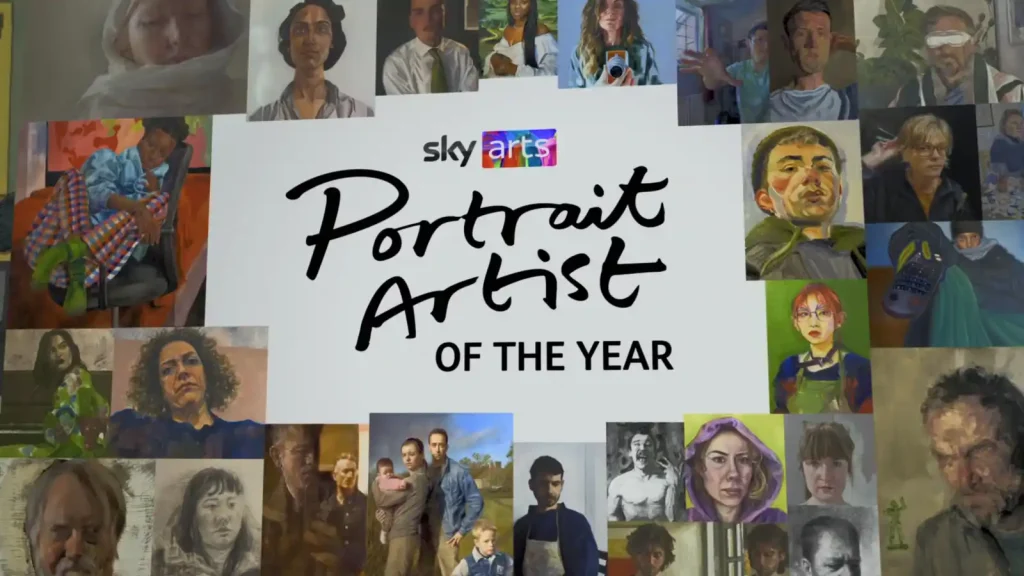
Portrait Artist of the Year 2025 episode 8 presents a compelling final heat filled with diverse artistic approaches and high-stakes pressure. This broadcast features a group of nine distinct competitors vying for the last remaining spot in the semi-finals. The participants range from an Olympic rower to a conservation biology student. Each artist brings a unique perspective to this intense art competition. Their hobbies and backgrounds, such as energy healing, influence their creative processes. Consequently, the episode offers a fascinating look at how personal experiences shape artistic output.
The stakes in this particular heat are exceptionally high for every aspiring portrait artist involved. The winner secures a prestigious £10,000 commission to create a work for the royal society. This commission celebrates the 80th anniversary of the first women elected to the society’s fellowship. specifically, the winning artist will portray the award-winning mathematician and broadcaster Professor Hannah Fry. This historical context adds a layer of significance to the challenge. Therefore, the artists must demonstrate not only technical skill but also the ability to capture gravitas.
Portrait Artist of the Year 2025 tasks these competitors with completing a portrait within a strict four-hour timeframe. This limitation tests their ability to make quick decisions and execute their vision under pressure. The episode highlights the mental and physical stamina required for such a feat. Furthermore, the artists must navigate the complexities of working from life. They face the challenge of capturing a living, breathing subject who may move or shift. This dynamic environment separates a studio painter from a true competitor.
Viewers of Portrait Artist of the Year 2025 episode 8 witness the unfolding drama as blank canvases transform into complex character studies. The episode structures the heat around three celebrity sitters, each bringing a unique visual identity. These sitters are not merely passive subjects but active participants in the artistic dialogue. Their costumes and personal items provide crucial visual cues for the painters. Moreover, the interaction between the sitter and the artist often dictates the success of the final piece.
The judges for this heat include award-winning artist Tai Shan Schierenberg, curator Kathleen Soriano, and art historian Kate Bryan. Their expert commentary guides the audience through the nuances of each painting challenge. They observe the artists’ techniques, choices of medium, and compositional strategies. The judges look for more than just a likeness; they seek an image that reveals something deeper. Consequently, their deliberations offer valuable insights into what makes a successful portrait.
This episode serves as a masterclass in observation and interpretation. The varying styles, from photorealism to abstract expressionism, demonstrate the breadth of contemporary portrait painting. As the clock ticks down, the tension in the studio mounts visibly. Portrait Artist of the Year 2025 episode 8 ultimately celebrates the enduring power of the painted image.
Portrait Artist of the Year 2025 episode 8
The Distinguished Sitters of Portrait Artist of the Year 2025 Episode 8
The production team selected three distinct public figures to sit for the artists in this final heat. The first sitter is Rhys Clark, a principal dancer at the Royal Ballet. His repertoire includes classical roles in productions such as Swan Lake and The Nutcracker Suite. For this sitting, Rhys wears the Act II costume of Count Albrecht from Giselle. The outfit represents a nobleman who is visiting a grave, adding a somber and elegant tone. He holds a pose that conveys both power and grace, challenging the artists to capture his physicality.
Sitting alongside the dancer is the gifted writer and performer Jack Rooke. Jack is known for his channel 4 comedy Big Boys, which won him a BAFTA. He brings a poignant and powerful presence to the studio. For his portrait, he wears the outfit he wore in the finale episode of his show. Additionally, he brings a personal object with deep sentimental value. This object is his late father’s black cab badge, which he displays on the podium.
The third sitter introduces an element of exploration and science to the room. Astronaut Tim Peake enters the studio to the excitement of the artists and judges. Tim spent six months on the International Space Station, making him accustomed to confined spaces. However, sitting still for four hours presents a different kind of challenge. He wears his blue training flight suit, a garment he wore for many hours during simulator sessions. This suit defines his professional identity, yet he notes that his true self prefers nature and the outdoors.
These Celebrity Portraits require the artists to navigate the balance between the person and their public persona. The costumes worn by Rhys and Tim are strong visual identifiers of their careers. Consequently, the artists must decide how much emphasis to place on the attire versus the face. Jack’s outfit and object tell a more personal story about family and memory. Each sitter offers a different narrative entry point for the painters.
The presence of such accomplished individuals adds to the prestige of the royal society commission at stake. The artists must rise to the occasion and produce work worthy of these subjects. The sitters themselves are curious about the process, often engaging with the artists. Rhys, for example, wonders if the artists will focus on his character role or his true personality. This dynamic creates a rich atmosphere of mutual observation.
Capturing the Grace of the Royal Ballet
Three artists focus their attention on the ballet dancer Rhys Clark. Among them is Lewis Meader, an artist from Hampshire who teaches online portraiture courses. Lewis approaches the task with a focus on traditional skills and realism. He aims to capture the likeness accurately while avoiding the look of a mere photograph. During the session, he uses his finger to blur edges and blend brushstrokes. This technique creates a soft transition between forms, enhancing the classical feel of his work.
Competing alongside Lewis is Courtney Bae, a creative marketer from Surrey with a Korean-American background. Courtney describes her style as capturing “beautiful ugliness” through muted tones. She takes an active approach by directing Rhys to try different poses before settling on a composition. Her process involves a risky strategy of using strong, dark lines to outline her subject. She seeks to convey Rhys’s vulnerability rather than just his stage presence.
The third artist in this group is Steve Cannon, a Galway-based painter. Steve brings a unique personal history to the competition, having lost his leg in 2001. He relates to Rhys through the concepts of power and grace. Steve adopts a minimalist approach, leaving large areas of the background empty. He sketches with the paint, using the side of his brush to mark out the figure. His goal is to highlight the strength and physical discipline of the dancer.
The judges closely monitor the progress of these three distinct interpretations. They praise Lewis for achieving a remarkable likeness early in the day. However, they also note that his classical style might need more risk. Courtney’s work draws attention for its stylized nature, which teeters on the edge of caricature. The judges appreciate her bold choices and serpentine shapes. Meanwhile, Steve’s decision to include the standing pose is lauded for its difficulty.
As the session progresses, the physical toll on the sitter becomes apparent. Rhys admits that his arms began to ache after holding the pose for so long. Despite this, he maintains his composure, allowing the artists to refine their work. The contrast between Lewis’s polish, Courtney’s stylization, and Steve’s minimalism highlights the versatility of portrait painting. Each artist sees a different version of the same man.
The Narrative of a Comedy Writer
The second group of artists tackles the challenge of painting writer Jack Rooke. Lucy Ambler, a commercial mural artist and student of energy healing, takes a radical approach. She uses colored pencils on card and begins with a grid-like composition. Lucy focuses on capturing specific elements that stand out to her rather than a literal representation. Her initial marks are abstract, leading the judges to wonder where the face will appear. She aims to free herself and enjoy the creative moment.
Eugene Evans, a social care worker from Middlesbrough, adopts a complex compositional strategy. Eugene decides to include the entire set in his painting, including the podium and the lighting. He wants to give Jack a sense of place rather than depicting him in a void. His painting also incorporates the shadow of the podium, mirroring the shape of Jack’s father’s badge. The judges admire Eugene’s ambition but worry he may have given himself too much to do.
Han Guo, an artist living in Guildford with a background in electronic engineering, takes a more meditative route. She uses a mirror in her practice to aid self-discovery and applies this focus to Jack. Han sees a sense of calm in the comedian and aims to capture his interesting character. She works by sketching with a pencil before applying washes of paint. The judges note her quiet and measured technique.
Jack proves to be an engaging sitter, maintaining a warm presence throughout the day. He jokes about feeling like a “new Gucci bag in a shop window” as people stare at him. He is particularly touched by Eugene’s decision to include the badge in the painting. The interaction between Jack and the artists is filled with mutual respect. He wants to empower them to create freely, just as he does in his writing.
Lucy’s work evolves into a mystical interpretation of Jack. The judges describe it as having a melancholic quality that peers through the mark-making. Eugene’s piece becomes a vibrant collection of colors and elements, capturing the “whole of the day.” Han’s portrait fills the canvas, though the judges debate the accuracy of the likeness. This section of the heat demonstrates how personality influences artistic style.
Interpreting an Astronaut’s Journey
The final trio of artists faces the task of painting astronaut Tim Peake. El Barrett, a conservation biology student, finds a crossover between art and science. El is accustomed to observational drawing from field notebooks and applies this skill to the portrait. They choose a dynamic composition, viewing Tim from a low angle. El asks Tim to think about the moment he first saw Earth from space. This prompt aims to capture a specific expression of wonder and reflection.
Fiona Land, a former Olympic rower, brings a competitive spirit to the easel. She admits to usually starting her paintings with blue tones, which coincidentally matches Tim’s suit. Fiona plans to create space around the figure, jokingly referring to it as “rock it.” She employs a technique she calls “smooshing” to blend the paint. The judges observe her speed increase as the deadline approaches.
Silas Archibong, an art student, infuses his work with deep symbolism. He reflects on his Nigerian heritage and Jesuit faith through his art. Silas aims to reconcile science and religion in his portrait of Tim. He depicts the astronaut with his eyes closed, suggesting a meditative state. He also incorporates planetary elements to create a halo effect around Tim’s head. The judges find his concept inventive but question the execution.
Tim Peake remains a disciplined sitter, offering a polite smile and focus. He notes that wearing the suit feels like “going to work” and that his operational self is different from his personal self. El attempts to manage the complex elements of the suit, the hands, and the background rocket. The judges worry that El’s composition might become too poster-like. However, they admire the sophisticated ambition behind the choice.
Fiona struggles initially with the pace but manages to resolve the portrait in the afternoon. The judges appreciate the natural expression she captures. Silas’s heavy symbolism draws mixed reactions, with some feeling it requires too much explanation. Nevertheless, the variety of interpretations of a single astronaut underscores the subjectivity of the art competition.
The Judges’ Deliberation and Shortlist
As the four-hour deadline expires, the artists down their brushes. The studio fills with applause as the sitters finally relax. The judges then take the floor to inspect the finished works up close. They must whittle the nine artists down to a shortlist of three. This process involves comparing the technical execution and the emotional resonance of each piece.
In the ballet section, the judges are torn between style and realism. Lewis Meader’s portrait of Rhys is praised for its incredible likeness. The judges note the beautiful touches of paint on the cheek and the accurate rendering of the eyes. Rhys himself comments on the detail, joking about his eyebrows. Courtney Bae’s stylized portrait also garners significant attention. The judges admire how she pushed the dynamics of the face while maintaining a likeness.
Turning to the portraits of Jack Rooke, the judges find a wide disparity in approaches. Lucy Ambler’s abstract work is described as “magical” by the judges. They are impressed by how she captured the essence of the man through unconventional mark-making. Eugene Evans is praised for his storytelling and ambition, though the judges feel the painting is somewhat overloaded. Jack is delighted with all the interpretations, particularly Lucy’s “mad” energy.
For the astronaut section, the decision proves difficult. El Barrett’s dynamic composition stands out for its perspective. The judges feel the painting invites the viewer to launch into space with the subject. Tim Peake selects El’s painting to take home, citing the thoughtful pose. Silas’s work is recognized for its conceptual depth, while Fiona is commended for capturing Tim’s warmth.
After intense discussion, the judges announce their shortlist. The first artist selected is Lewis Meader, recognized for his traditional skill and ability to capture a likeness. The second spot goes to Courtney Bae for her exciting and risk-taking style. The final place on the shortlist is awarded to Lucy Ambler for her unique and abstract vision. This selection represents a spectrum of styles, from the classical to the experimental.
The Winning Portrait and Future Implications
The final decision rests on which artist has the potential to handle the upcoming royal society commission. The judges compare the three shortlisted works, noting the strengths and weaknesses of each. Lewis provides a safe and competent pair of hands with his realism. Lucy offers a wild card with her fantasy and abstraction. Courtney occupies a middle ground, bridging modernism with recognizable portraiture.
The judges discuss Courtney’s ability to find “serpentine shapes” and use heavy outlines effectively. They feel she prioritizes making a great painting over just a standard portrait. This quality excites them, as it suggests she can bring something new to the genre. They hope she will maintain her boldness in the next round without tipping over into caricature.
Ultimately, the judges declare Courtney Bae the winner of the heat. Courtney is visibly shocked by the result, admitting she did not expect to be shortlisted. She expresses her joy and disbelief at the honor. The victory secures her a place in the semi-final, bringing her one step closer to the £10,000 prize.
Courtney’s win validates her philosophy of finding beauty in the unconventional. She plans to take time to process the win before strategizing for the semi-final. She intends to analyze her performance and develop a plan of attack. For now, she is content to enjoy the moment of success. The episode concludes with her looking forward to the next stage of the portrait artist journey.
The Enduring Magic of Portrait Art Under Pressure
Portrait Artist of the Year 2025 episode 8 reminds us why the ancient craft of portrait painting remains so captivating in our digital age. While smartphones can capture a likeness in milliseconds, these nine artists demonstrated that truly seeing someone—really observing their essence, their vulnerabilities, their hidden strengths—requires something technology cannot replicate: human intuition married to creative courage.
The episode’s final heat showcased more than technical prowess. It revealed how personal history shapes artistic vision. Steve Cannon channeled his understanding of physical resilience into capturing Rhys Clark’s balletic grace. Lucy Ambler translated her energy healing practice into abstract mark-making that somehow captured Jack Rooke’s melancholic warmth. El Barrett brought the observational discipline of conservation biology to interpreting Tim Peake’s astronaut composure. Each artist’s unique background became their superpower, transforming what could have been mere representation into genuine revelation.
Courtney Bae’s victory validates an essential truth about contemporary art competitions: judges increasingly value distinctive vision over safe competence. Her willingness to flirt with caricature, to embrace “beautiful ugliness,” to prioritize making a great painting over simply achieving likeness—these choices separated her from technically accomplished peers. In an era when artificial intelligence can generate realistic portraits instantaneously, what matters most is the irreplaceable human perspective, the stylistic fingerprint that announces “this artist saw something you might have missed.”
The diverse approaches to identical subjects proved particularly instructive. Three artists painting the same ballet dancer produced wildly different interpretations—Lewis’s classical realism, Courtney’s stylized serpentine shapes, Steve’s minimalist power study. This variety underscores a liberating message for aspiring artists: there is no single correct way to see. Your particular combination of technique, philosophy, and life experience creates a lens that only you possess. The challenge lies not in mimicking others but in trusting your unique vision enough to commit it boldly to canvas.
The four-hour time constraint added another layer of fascination. Unlike studio work where artists can endlessly refine, this competition format demands decisive action under pressure. It separates those who can analyze from those who can execute. It tests not just skill but stamina, confidence, and the ability to make peace with imperfection. For viewers hoping to improve their own artistic practice, this episode offers a masterclass in commitment—the necessity of trusting your initial instincts rather than second-guessing every brushstroke into mediocrity.
As the competition advances toward the semi-finals, the stakes intensify. That £10,000 royal society commission awaits—a genuine professional opportunity, not merely a trophy. For Courtney and her fellow heat winners, the journey continues. For viewers, whether practicing artists or appreciative audiences, Portrait Artist of the Year 2025 episode 8 delivered something increasingly rare: unscripted creative struggle, genuine artistic risk, and the quiet thrill of watching blank canvases transform into windows onto human complexity. The painted portrait endures precisely because it offers what our image-saturated culture desperately needs—depth, interpretation, and the irreplaceable touch of one human truly seeing another.
FAQ Portrait Artist of the Year 2025 episode 8
Q: What makes Portrait Artist of the Year 2025 episode 8 different from previous heats?
A: This episode serves as the final heat of the season, featuring nine diverse competitors battling for the last remaining semi-final spot. The stakes escalate considerably, as the winner secures a prestigious £10,000 commission to create a portrait of Professor Hannah Fry for the royal society. This commission celebrates the 80th anniversary of the first women elected to the society’s fellowship. Additionally, the episode showcases an exceptional range of artistic backgrounds, from an Olympic rower to a conservation biology student, each bringing unique perspectives to their creative process.
Q: Who are the three celebrity sitters featured in episode 8?
A: The production team selected three distinguished public figures representing different fields. Rhys Clark, a principal dancer at the Royal Ballet, appears in his Act II costume from Giselle, embodying both power and grace. Jack Rooke, the BAFTA-winning writer and performer behind Channel 4’s Big Boys, brings his late father’s black cab badge as a deeply personal element. Finally, astronaut Tim Peake arrives in his blue training flight suit, offering artists the challenge of capturing someone who spent six months on the International Space Station. Each sitter presents unique visual and narrative opportunities for the competing artists.
Q: How does the four-hour time constraint affect the artists’ work?
A: The strict four-hour timeframe transforms portrait painting from a contemplative studio practice into a high-pressure performance. Artists must make decisive compositional choices immediately, with no opportunity for extensive revision or endless refinement. This limitation tests not only technical skill but also mental stamina, confidence, and the ability to trust initial instincts. Furthermore, working from life means capturing subjects who may shift or move, adding another layer of complexity. The time pressure separates those who can analyze from those who can execute decisively under intense scrutiny.
Q: What judging criteria do Tai Shan Schierenberg, Kathleen Soriano, and Kate Bryan use?
A: The expert panel looks beyond mere technical accuracy or photographic likeness. They evaluate how effectively artists capture the subject’s essence, seeking images that reveal deeper truths about personality and character. The judges assess compositional choices, medium selection, mark-making techniques, and emotional resonance. Importantly, they value distinctive vision and creative risk-taking over safe competence. Throughout episode 8, they praise artists who push boundaries while maintaining recognizable portraiture, demonstrating that contemporary portrait competitions reward innovation alongside traditional skill.
Q: Why did Courtney Bae win the heat over more realistic painters?
A: Courtney’s victory validates her philosophy of capturing “beautiful ugliness” through stylized interpretation rather than photographic realism. The judges appreciated how she found serpentine shapes and used heavy outlines to prioritize making a great painting over simply achieving standard portraiture. Her approach bridged modernism with recognizable representation, offering something fresh to the genre. While Lewis Meader demonstrated impeccable traditional technique, the judges felt Courtney’s risk-taking and distinctive vision gave her greater potential for the royal society commission. Her willingness to flirt with caricature while maintaining likeness ultimately separated her from technically accomplished competitors.
Q: How do the artists’ personal backgrounds influence their portrait styles?
A: Episode 8 demonstrates that life experiences profoundly shape artistic vision in unexpected ways. Steve Cannon channeled his understanding of physical resilience—gained after losing his leg in 2001—into capturing Rhys Clark’s balletic grace and power. Lucy Ambler translated her energy healing practice into abstract mark-making that mysteriously captured Jack Rooke’s essence. El Barrett applied observational skills from conservation biology field notebooks to their astronaut portrait. Even Fiona Land’s competitive Olympic rowing background influenced her approach to the painting challenge. These connections reveal how personal history becomes artistic superpower.
Q: What technical approaches did artists use for different sitters?
A: The competing artists employed remarkably diverse techniques suited to their subjects and personal styles. Lewis Meader used his finger to blur edges and blend brushstrokes, creating soft transitions for classical realism. Courtney Bae deployed strong, dark outlines in a risky strategy that emphasized vulnerability. Lucy Ambler worked with colored pencils on card using grid-like compositions. Eugene Evans painted the entire studio set to give his subject a sense of place. Fiona Land employed a technique she calls “smooshing” to blend paint rapidly. These varied approaches demonstrate that portrait painting encompasses a vast spectrum of valid methodologies.
Q: What challenges do celebrity sitters present to portrait artists?
A: Painting accomplished public figures creates tension between capturing the person versus their professional persona. Artists must decide whether to emphasize career-defining costumes—like Rhys’s ballet attire or Tim’s flight suit—or focus primarily on revealing the individual beneath. The presence of such distinguished subjects raises expectations significantly, as artists must produce work worthy of their accomplishments. Additionally, sitters like Jack Rooke bring personal objects with deep symbolic meaning, requiring artists to balance literal representation with emotional storytelling. This dynamic creates rich opportunities for mutual observation and artistic dialogue.
Q: How did the shortlisted artists differ in their artistic philosophies?
A: The three shortlisted artists represented a fascinating spectrum of contemporary portrait approaches. Lewis Meader offered traditional realism with impeccable technique, providing what judges called “safe and competent hands.” Lucy Ambler presented a wild card approach, using abstraction and fantasy to capture essence through unconventional mark-making that the judges described as magical. Courtney Bae occupied compelling middle ground, bridging modernist sensibilities with recognizable portraiture through her distinctive serpentine shapes. This range illustrates how Portrait Artist of the Year celebrates diverse visions rather than prescribing a single correct methodology for successful portraiture.
Q: What lessons can aspiring portrait artists learn from episode 8?
A: This episode teaches that distinctive vision matters more than perfect technical execution in contemporary art competitions. Artists should trust their unique perspective rather than mimicking established approaches. The four-hour constraint demonstrates the importance of decisive action and commitment over endless revision. Furthermore, personal background and life experience provide invaluable creative resources when channeled into artistic practice. Successful competitors showed that capturing essence transcends achieving photographic likeness. Perhaps most importantly, episode 8 proves that judges increasingly value artists who take risks and bring fresh perspectives to traditional portrait painting, even when those choices challenge conventional expectations.
I couldn’t believe the Judges short listed and then chose Courtney Bae as the artist moving on to the semi final. The likeness was terrible, she actually made her sitter look ugly, and the proportions were totally off. I thought it looked like a really bad cartoon caricature you get at a carnival or street fair rather than an actual portrait created for the royal society.