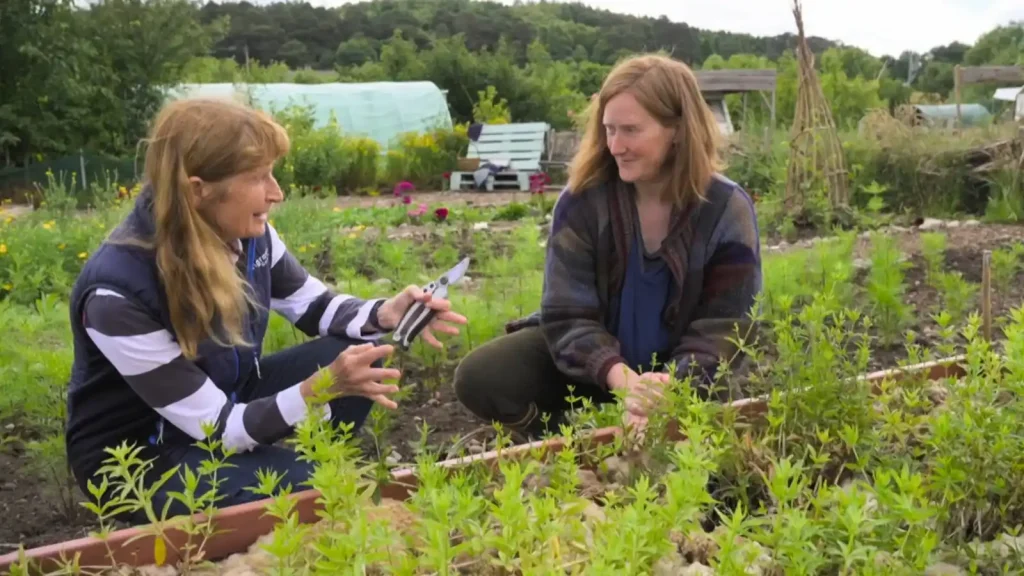
Welcome back to your favourite green escape. In The Beechgrove Garden 2025 episode 17, we dive deep into the heart of late summer gardening. This is a time of vibrant celebration in the garden. However, it is also a moment for thoughtful preparation. Our team of experts is ready to guide you. They will share their passion and wisdom. Consequently, you can help your own garden flourish. Join us for an episode packed with colour, care, and creativity. This week at the Beechgrove Garden 2025, we are getting our hands dirty and our spirits lifted.
Two years ago, Kirsty embarked on a brilliant creative project. She dreamed of a border that would blaze with colour. A space that captured the fiery spirit of high summer. Thus, her magnificent “hot border” was born. This special area was designed to be a living tapestry. It weaves together the most vibrant plants and flowers. In this episode, Kirsty thoughtfully revisits her creation. She assesses what has truly thrived in this bold experiment. Indeed, some plants have been spectacular performers. They stand tall like triumphant soloists in an orchestra of colour.
However, as all experienced gardeners know, gardening is a journey of learning. Not every plant has performed as expected. Therefore, Kirsty candidly shows us what hasn’t worked so well. She explains the possible reasons with gentle expertise. Perhaps the soil was not quite right for some. Or maybe others found the sunlight too shy. With a positive spirit, she begins the exciting task of refreshing the border. She introduces new varieties, ensuring the display remains a showstopper. This segment offers invaluable lessons for your own colourful borders.
Meanwhile, Brian turns his attention to the garden’s strong, silent guardians: the trees. With his trusty saw and loppers in hand, he is on a mission. He explains that this time of year is perfect for a summer prune. This isn’t just about tidying up. Instead, it is a crucial act of care for the tree’s future health. Brian demonstrates his technique with precision and purpose. He shows us how to make clean cuts. Furthermore, he explains which branches to remove and, importantly, which to leave. This is about shaping the tree for better light and air circulation.
Brian’s work is like giving the tree a strategic haircut for health. This careful pruning helps prevent disease. It also encourages a more robust structure for the seasons ahead. For those with fruit trees, his advice is golden. A summer prune can actually lead to a better harvest next year. Brian’s clear, step-by-step guidance removes any fear you might have about this task. He empowers all gardeners to care for their trees with confidence. His segment transforms a potentially daunting job into a rewarding gardening activity that will pay dividends for years to come.
Later in the episode, Brian addresses a very modern gardening scenario. Many of us can’t resist a beautiful plant during our weekly shop. Brian has visited a local supermarket to prove a point. An expert garden can start anywhere. He returns with a selection of common, accessible plants. These are the beautiful orchids, miniature roses, and potted herbs we all see. Subsequently, he demystifies their care. He provides simple, effective tips to help these impulse buys not just survive, but truly thrive in your home. This is wonderfully practical advice.
The Beechgrove Garden 2025 episode 17
Brian proves you do not need a specialist nursery for every green addition. He shows how to repot a supermarket herb. He also reveals the secret to making an orchid flower again and again. His friendly approach builds confidence. He connects the world of the professional Beechgrove Garden 2025 to our own windowsills and kitchen counters. This segment beautifully illustrates that the joy of nurturing plants is for everyone. It shows that successful gardening is about knowledge and care, not where you buy your flowers. It’s a truly inclusive message for all.
Furthermore, The Beechgrove Garden 2025 episode 17 takes us on a trip. We leave the main garden for an update from Calum. He reports from his beloved allotment in Leven. Allotments are special places, full of community spirit and shared effort. Calum’s latest report captures this perfectly. He provides an authentic glimpse into the rewards and challenges of allotment life. This week, he might be showcasing a bumper crop of late-summer vegetables. Or perhaps he is preparing his soil for the cooler months ahead. His practical, down-to-earth perspective is always a highlight.
Calum’s segment is a story from the front lines of gardening. It resonates deeply with anyone who tends a small patch of land. His successes feel like our own victories. Likewise, his challenges remind us that we are all part of a larger community of gardeners. He connects with viewers on a personal level. Calum’s updates are always filled with useful hints and a dose of genuine enthusiasm. They serve as a wonderful reminder of the simple, profound joy that comes from growing your own food.
As always, the episode is sprinkled with a host of handy hints. These quick, clever tips are designed to solve common gardening problems. They cover a wide range of topics. For example, you might learn a new way to deter slugs. Or you could discover a simple trick for propagating your favourite plants. These little gems of wisdom are a hallmark of the show. Ultimately, The Beechgrove Garden 2025 episode 17 is a rich and inspiring hour. It celebrates the vibrant beauty of the late summer garden. Moreover, it equips you with the knowledge to make your own green space even better.
The Beechgrove Garden 2025 episode 17 review
In The Beechgrove Garden 2025 episode 17, the focus shifts to the vibrant yet demanding tasks of late summer gardening. This period in the garden is a celebration of life, marked by the simple joy of picking fragrant sweet peas. These beautiful flowers, planted in mid-May in soil enriched with well-rotted manure, serve as a reminder of the rewards of careful preparation. Having been diligently fed with liquid seaweed and tied into their hazel and willow supports, they now offer a continuous harvest. Indeed, the fundamental rule of sweet peas is that the more you pick, the more flowers you will receive, ensuring a summer-long display.
This time of year presents a dual role for gardeners. On one hand, it is about enjoying the fruits of their labour. On the other, it involves essential maintenance to sustain the garden’s health and beauty. The tasks are varied, ranging from the artistic shaping of shrubs to the practical necessity of ensuring plants survive a holiday absence. Guidance from an expert garden team is invaluable, helping to navigate the specific challenges that arise as the season progresses. This includes learning how to care for popular plants, understanding the nuances of pruning, and even exploring creative uses for the garden’s bounty.
The scope of late summer care is broad, as demonstrated throughout The Beechgrove Garden 2025 episode 17. It covers both aesthetic refinements and horticultural necessities. Viewers are guided through the intricate process of cloud pruning, a technique that transforms a simple shrub into a living sculpture. Furthermore, the episode addresses the care of common plant purchases, which often require more specific attention than their labels suggest. It also provides clever, low-cost solutions for holiday watering and delves into the maintenance of a vibrant herbaceous border, ensuring it remains at its peak.
At its core, successful gardening is about understanding and responding to the needs of your plants. For instance, sweet peas are described as hungry plants, demanding rich soil to thrive. This principle of providing the right conditions extends to every corner of the garden. Whether dealing with a newly acquired supermarket plant or a well-established tree, a little research and observation go a long way. The ability to identify a plant’s needs and foresee potential problems is a skill that distinguishes proficient gardeners. This proactive approach ensures the long-term health and structure of the garden.
Specialised techniques often have deep historical and cultural roots. The Japanese art of niwaki, or cloud pruning a plant in the ground, is a perfect example. It is a meticulous process of creating definition and shape, turning a dense shrub into an architectural feature with distinct layers. This contrasts with the more familiar term bonsai, which applies to the same techniques performed on a containerised tree. Understanding these distinctions provides a richer context for the gardening practices we undertake, transforming a simple task into a more mindful and artistic endeavor.
The challenges of gardening are often practical and immediate. One of the most common concerns for any plant owner is how to ensure their pots and baskets survive a trip away from home. The solutions offered are both ingenious and accessible, relying on simple physics and household items. These hacks demonstrate that effective gardening does not always require expensive technology. Rather, a little creativity and understanding of how water moves can solve a persistent problem, allowing gardeners to enjoy a well-deserved break without worry.
The Art and Science of Pruning
Pruning is one of the most transformative actions a gardener can perform, blending artistic vision with scientific precision. A prime example is the Japanese technique of cloud pruning, referred to as niwaki for plants rooted in the ground. The objective is to create a clear branch stem with a distinct ‘cloud’ of foliage at the end, much like a lollipop.
This method gives the plant a more defined, architectural structure. A year after the initial shaping of a Pieris, for instance, maintenance involves carefully ‘nibbling’ away at the new growth to redefine the cloud-like layers. While precise secateurs can be used for a clean cut, topiary shears, which resemble sheep shears, allow for a much faster clipping process around the foliage clouds.
For gardeners wanting to try cloud pruning on a new plant, the process begins with removing any deadwood. This simple step immediately opens up the plant and improves air circulation. The next stage involves identifying and removing any reverted shoots, which are pure green branches on a variegated shrub.
These shoots are the plant returning to its parent form and tend to grow more vigorously, so they should be taken out completely. This selective removal helps to create definition between layers, revealing the twisted stems and flaky bark beneath, which become a beautiful feature in their own right. The process is forgiving; as plants show significant growth in a single year, any perceived mistakes will soon merge back into a single mass if left alone.
The Beechgrove Garden 2025 episode 17 also explores the more functional aspects of pruning, particularly for large trees during the summer. While the dormant winter months are the ideal time for major tree work, the second-best time is when you notice a problem. Summer pruning is effective because once a tree’s leaves have fully developed, it enters a suspended state before it begins storing energy in its roots for the next season. This makes it a good window for carefully considered cuts. For removing a large, heavy branch, a three-step pruning cut is essential to prevent the bark from tearing, which can create a wound vulnerable to pests and diseases.
This three-step method begins with an undercut about 20-30cm from the trunk, cutting about a third of the way through the branch. This prevents the bark from ripping downwards under the branch’s weight. The second cut is made from the top, just a few centimetres further out from the undercut, removing the bulk of the branch.
With the weight gone, the final, precise cut can be made. It is crucial to locate the branch collar—the slightly swollen area where the branch joins the trunk. The final cut should be made just outside this collar, avoiding both a flush cut against the trunk and leaving a stub. This technique ensures the wound heals quickly and cleanly, protecting the tree’s long-term health.
Plant Care and Border Maintenance in The Beechgrove Garden 2025 episode 17
Many gardeners are tempted by impulse plant purchases from supermarkets, but these plants often require immediate and specific care. Due to their placement, often near windy front doors, they can be severely dehydrated. The first step upon bringing them home is to ensure they have plenty of water and to check that all the plants in the pack are healthy.
Beyond immediate hydration, it is vital to research the specific needs of these plants, as their labels may be generic and not suited to all regional climates. Supermarket chains supply plants across the entire country, from the south of England to the north of Scotland, so a plant labelled for ‘outdoors’ might not survive a harsh winter in a colder region.
For example, a Passiflora, or passion flower, is unlikely to survive a Scottish winter outdoors and is best grown in a container that can be moved indoors. Similarly, a tropical-looking banana plant, such as the ‘Ever Red’ variety, should be treated like a dahlia. It needs to be lifted and stored in a dry, frost-free place before the first frost arrives.
In contrast, plants like Coleus are more versatile. They can be grown as outdoor bedding, overwintered as houseplants, or easily propagated from cuttings in late summer. For olive plants, gardeners must be vigilant for signs of the devastating disease Xylella, which has wiped out plantations in the Mediterranean. Any signs of wilting, leaf drop, or a scorched appearance should be reported to the relevant authorities immediately to prevent its spread in the UK.
Maintaining an established garden border is an ongoing summer task. A ‘hot border’, filled with herbaceous perennials in fiery shades of red, orange, and yellow, requires regular attention to stay vibrant. A key job is deadheading. Removing the spent flowers from a plant like Geum ‘Totally Tangerine’ encourages a second flush of blooms and keeps the plant tidy. This process can create gaps, which are perfect opportunities to introduce new plants. When adding new perennials, such as Rudbeckia ‘Early Bird’ or Geum ‘Mrs J Bradshaw’, planting them in groups of three creates a more natural, cohesive look in the border.
Over time, some herbaceous perennials can develop a dead patch in the middle with growth only around the edges, a classic ‘doughnut’ shape. This is a sign that the clump needs to be rejuvenated. The best course of action for a plant like Knautia ‘Red Knight’ is to lift the entire clump in the autumn or spring, then split and divide it.
This not only reinvigorates the plant, preventing it from flopping over, but it also provides new plants to place in other areas of the garden. To add height and drama to the back of the border, gardeners can introduce tall perennials like the red-flowered Bistorta ‘Blackfield’ or the striking Achillea ‘Terracotta’, which offers aromatic, silver-tinged foliage in addition to its colourful, pollinator-friendly flowers.
Innovative Gardening and Creative Uses for Plants
One of the most common anxieties for gardeners is keeping their plants watered while on holiday. Fortunately, several ingenious, do-it-yourself irrigation systems can be created with simple household items. For hanging baskets, the easiest solution is to give them a thorough soaking until water runs out of the bottom, then move them into a shady location. The shade will significantly slow down the rate at which they dry out, helping them survive for a few days. This simple relocation can make a huge difference in preserving your flowers.
For potted plants, a simple wicking system provides a steady supply of moisture. This involves placing one end of a piece of cotton twine into a container of water, such as a bucket or a full watering can. The other end is secured into the plant’s pot with a cocktail stick. It is important that the water source is positioned higher than the pot, as this allows gravity and capillary action to draw water down the twine and into the soil, acting like an automatic watering system. The key is to use cotton twine, as its natural fibres are highly absorbent.
For a more direct drip-feed, a recycled plastic bottle can be turned into a simple irrigation dripper. A smaller bottle can have a hole drilled in the lid and another in the base. A halved cotton bud pushed into the lid’s hole helps regulate the flow of water into the soil. For a larger container or a longer trip, a two-litre bottle can be used.
By drilling several small holes in the lid and burying the inverted bottle next to a plant, it will release water slowly. The sun hitting the bottle creates pressure, causing water to drip out during the day, and then it stops in the cooler evening. This clever use of solar energy ensures the plants receive water as needed.
Beyond practical care, the garden can be a source of natural materials for creative projects, such as making plant dyes. This historical technique uses common garden plants to produce a surprising range of colours. The leaves of woad, a traditional dye plant, produce a beautiful blue, although the process is complex. A more straightforward option is dyer’s chamomile, identifiable by ‘tinctoria’ in its botanical name, which indicates it’s a dye plant. Its flowers yield a vibrant yellow, while its leaves and stems produce green. Another traditional dye plant is madder, whose root provides a red or orange colour, though it needs to mature for at least three years before harvesting.
The process for extracting these colours varies. For weld, another yellow-producing plant, the flowering tops are chopped, steeped overnight in boiling water, and then the liquid is strained. For dyer’s chamomile, the process is even simpler: the flowers are placed in a jar with boiling water and left on a sunny windowsill. The sunshine deepens the colour over time.
Even kitchen scraps like onion skins can be steeped in water to create a lovely orangey-russet dye. It is crucial for health and safety to use dedicated pots for dyeing that are never used for cooking. These ancient techniques connect gardeners to nature on a deeper level, revealing that everything needed for vibrant colour can be sourced directly from the plants around us.
Cultivating Tomorrow’s Garden Today
The beauty of late summer gardening lies not just in the spectacular displays we’ve nurtured, but in the quiet wisdom we’ve gathered along the way. As we’ve journeyed through Kirsty’s blazing hot border, witnessed Brian’s careful pruning artistry, and discovered the ingenious simplicity of holiday watering solutions, one truth emerges: successful gardening is about understanding that every plant, every season, and every challenge is a teacher in disguise.
Think of your garden as a living library where each plant holds stories of triumph and lessons learned. Kirsty’s honest assessment of her hot border—celebrating the spectacular performers while candidly acknowledging the plants that didn’t quite meet expectations—reminds us that gardening is fundamentally about experimentation and adaptation. This isn’t failure; it’s evolution. Every gardener’s journey is paved with these moments of recalibration, and they’re precisely what transform novices into nurturing experts.
The episode’s exploration of cloud pruning beautifully illustrates how traditional techniques can breathe new life into our modern gardens. When we understand that niwaki isn’t just about cutting branches but about creating living architecture, we begin to see our gardens as three-dimensional canvases. Brian’s methodical approach to tree care—his three-step pruning method and emphasis on timing—demonstrates that gardening mastery isn’t about expensive tools or exotic plants, but about developing an intuitive understanding of plant behavior and seasonal rhythms.
Perhaps most refreshingly, the show’s practical approach to common challenges speaks directly to the real-world gardener. Whether it’s transforming supermarket impulse buys into thriving specimens or creating DIY irrigation systems from household items, these solutions remind us that effective gardening often requires more creativity than cash. The cotton twine watering system isn’t just a clever hack—it’s a testament to the fact that understanding basic principles trumps sophisticated gadgets every time.
As we stand at the threshold between summer’s abundance and autumn’s preparation, remember that your garden is uniquely yours. The techniques shared in this episode aren’t rigid rules but flexible frameworks to adapt to your specific conditions, preferences, and aspirations. Whether you’re nurturing a single windowsill herb or maintaining acres of borders, the fundamental principle remains the same: observe, learn, and respond with patience and purpose.
Your next steps are delightfully simple. Walk through your garden with fresh eyes, noting what has flourished and what might benefit from change. Try one new technique that resonated with you—perhaps that cloud pruning on an overgrown shrub, or experimenting with natural dyes from your own plants. Most importantly, embrace the ongoing conversation between you and your green space, knowing that each season brings new opportunities to grow, both as a gardener and as a steward of the natural world.
The garden, after all, is never truly finished—and that’s precisely what makes it so endlessly rewarding.
FAQ The Beechgrove Garden 2025 episode 17
Q: What is the best time of year for summer pruning in the garden?
A: Summer pruning is most effective once a tree’s leaves have fully developed, typically in mid to late summer. During this period, trees enter a suspended state before storing energy in their roots for the next season. This timing creates an ideal window for carefully considered cuts that promote healthy growth and better harvests for fruit trees.
Q: How do you properly maintain a hot border filled with herbaceous perennials?
A: Maintaining a vibrant hot border requires regular deadheading of spent flowers to encourage second flushes of blooms. Additionally, watch for perennials developing a ‘doughnut’ shape with dead centers, which indicates the need for autumn or spring division. Furthermore, plant new additions in groups of three for a natural, cohesive appearance throughout the border.
Q: What is cloud pruning and how does it differ from bonsai?
A: Cloud pruning, or niwaki, involves creating distinct ‘clouds’ of foliage on clear branch stems for plants rooted in the ground. This Japanese technique transforms dense shrubs into architectural features with defined layers. In contrast, bonsai applies similar principles to containerized trees. Both methods require patience and artistic vision to achieve their sculptural effects.
Q: How can you keep plants watered during holiday absences using household items?
A: Create simple irrigation systems using cotton twine and water containers positioned higher than your pots. Gravity and capillary action draw water down the twine automatically. Alternatively, drill holes in plastic bottle lids to create drip-feed systems. For hanging baskets, thoroughly water them and move to shady locations to significantly slow drying rates.
Q: What special care do supermarket plants need when brought home?
A: Supermarket plants often suffer severe dehydration from windy store entrances and require immediate thorough watering. However, research their specific needs beyond generic labels, as these plants are distributed nationwide with varying climate tolerances. For instance, passion flowers may need indoor overwintering in colder regions, while tropical-looking banana plants should be treated like dahlias.
Q: What is the three-step method for safely removing large tree branches?
A: Begin with an undercut 20-30cm from the trunk, cutting one-third through the branch to prevent bark tearing. Next, make a top cut slightly further out to remove the branch’s bulk. Finally, locate the branch collar and make a precise cut just outside this swollen area. This technique ensures clean healing and protects the tree’s long-term health.
Q: How do you successfully grow sweet peas for continuous blooms?
A: Sweet peas require rich, well-manured soil and regular feeding with liquid seaweed to satisfy their hungry nature. Plant them in mid-May with proper support structures of hazel and willow. Most importantly, follow the fundamental rule: the more you pick, the more flowers you receive, ensuring a spectacular summer-long display of fragrant blooms.
Q: What plants can be used to create natural dyes from the garden?
A: Traditional dye plants include woad for blue (though complex to process), dyer’s chamomile for vibrant yellow from flowers and green from stems, and madder root for red-orange after three years of maturation. Even kitchen scraps like onion skins create lovely orangey-russet dyes. Always use dedicated pots never used for cooking to ensure safety.
Q: When should herbaceous perennials be divided to rejuvenate them?
A: Divide herbaceous perennials when they develop a classic ‘doughnut’ shape with dead centers and growth only around edges. Autumn or spring provides the best timing for lifting entire clumps and splitting them. This process not only reinvigorates the original plant and prevents flopping but also provides new specimens for other garden areas.
Q: How does understanding plant behavior improve gardening success?
A: Successful gardening centers on observing and responding to individual plant needs rather than following generic advice. For example, recognizing that sweet peas are hungry plants demanding rich soil, or understanding seasonal timing for pruning, separates proficient gardeners from beginners. This proactive approach ensures long-term garden health through informed decision-making and adaptive management techniques.