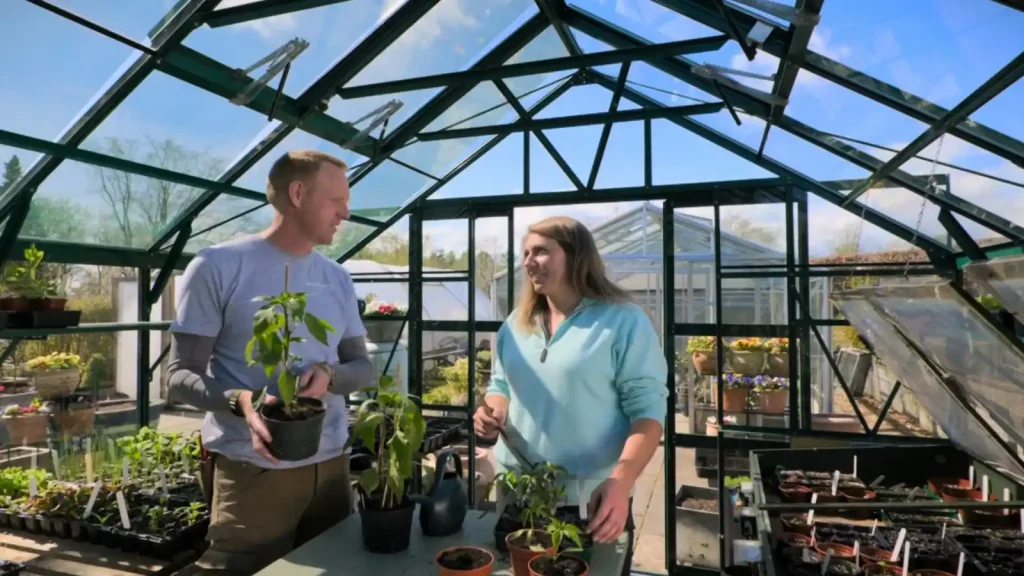
The Beechgrove Garden 2025 episode 5 – Adapting to Change
Spring has finally arrived at Beechgrove, bringing with it the promise of new growth and fresh possibilities. As always, our dedicated gardeners Kirsty and Brian are thinking several steps ahead, planning for the seasons to come while tackling the challenges of Scotland’s ever-changing climate.
Inside the greenhouse, Kirsty’s sweet peas are thriving under protection, their delicate tendrils reaching skyward in anticipation of their eventual outdoor home. With careful hands, she’s preparing their future dwelling—filling sturdy containers with nutrient-rich compost and constructing an elegant support arch. This framework will eventually disappear beneath a cascade of fragrant blooms, but for now, it stands ready and waiting for warmer days.
“Sweet peas are the quintessential cottage garden flower,” Kirsty explains, her enthusiasm evident as she works. “They reward you with armfuls of scented blooms throughout summer, but timing is everything. Although they’re hardy plants, putting them out too early can set them back significantly.”
Meanwhile, her chili project is heating up—quite literally. Seeds sown during the winter’s dark days have sprouted into promising seedlings that now require attention. Today’s task involves the meticulous process of pricking out, where smaller seedlings make way for their stronger siblings. Like a gardener conducting an orchestra, Kirsty selects which plants will continue the journey and which must bow out.
“Each variety has its own personality,” she notes, carefully transferring a tiny seedling to its new pot. “Some are fiery and fast-growing, while others take their time but reward you with incredible flavor. The key is patience and observation.”
Across the garden, Brian faces a different challenge altogether. Last year’s excessive rainfall transformed many Scottish gardens into waterlogged wastelands, pushing gardeners to rethink their approach. Rather than fighting against nature’s whims, Brian has decided to embrace them by creating a specialized rain garden.
“A rain garden isn’t just practical—it’s also beautiful,” Brian explains, sketching his vision in a notebook before breaking ground. “Instead of watching helplessly as water pools in unwanted areas, we’re redirecting it to nourish plants that thrive in those conditions.”
His design incorporates clever drainage solutions that capture rainfall from surrounding areas. With picks and shovels at the ready, he’s creating subtle contours in the landscape—small berms and shallow depressions that will guide water precisely where it’s needed. It’s gardening as water management, a skill increasingly valuable in our changing climate.
“The traditional Scottish garden wasn’t designed for weeks of continuous rainfall,” Brian reflects, pausing to wipe his brow. “But we can adapt. By selecting the right plants and creating appropriate conditions, we can turn a challenge into an opportunity.”
The plants destined for this innovative space have been carefully selected for their ability to withstand periods of both saturation and drought. Moisture-loving irises, sedges, and primulas wait in the wings, ready to transform what was once a problematic area into a vibrant ecosystem.
Beyond the walls of Beechgrove, the program’s reach extends to other Scottish gardens facing similar challenges. For the first time this season, viewers are treated to a report from Calum’s allotment in Leven, where coastal conditions create a unique growing environment.
“The sea air brings both benefits and challenges,” Calum shares, gesturing toward rows of newly planted vegetables. “We get fewer frosts here, but the wind can be merciless. Everything needs anchoring well, and windbreaks are essential for tender crops.”
The Beechgrove Garden 2025 episode 5
His allotment represents the democratic nature of gardening—a small plot transformed through knowledge, persistence, and a willingness to learn from both successes and failures. With soil under his fingernails and pride in his voice, Calum demonstrates that gardening isn’t just for those with extensive grounds.
The episode concludes with a return visit to a spectacular garden in Dumfries and Galloway, where an expert gardener has created a haven that works with, rather than against, the local conditions. Lush borders overflow with texture and color, proving that understanding your environment is the foundation of successful gardening.
Throughout the program, one message resonates clearly: gardening is about anticipation and adaptation. Whether you’re nurturing seedlings through their infancy, redirecting rainfall to create new growing opportunities, or learning from experienced practitioners, the gardener’s mindset remains the same—always looking ahead while fully present in today’s tasks.
As Kirsty and Brian conclude their day at Beechgrove, the greenhouse lights dim and tools are returned to their places. Tomorrow brings new challenges, but for now, seeds have been sown, both literally in the soil and metaphorically in the minds of viewers inspired to apply these lessons in their own gardens.
Conclusion The Beechgrove Garden 2025 episode 5: The Gardener’s Journey – Embracing Nature’s Rhythm
As the sun sets on another enlightening episode of The Beechgrove Garden, we’re left with more than just gardening tips—we’ve witnessed a philosophy of life itself. The lessons from Kirsty, Brian, and Calum remind us that successful gardening mirrors our own journey through changing seasons and unexpected weather.
First and foremost, adaptation stands as the cornerstone of modern gardening. Moreover, as Scotland’s climate shifts toward wetter patterns, Brian’s innovative rain garden demonstrates how challenges can transform into beautiful opportunities. Rather than fighting against nature, we learn to dance with her rhythms.
The sweet peas stretching toward the light in Kirsty’s greenhouse tell another profound story. They remind us that timing is everything—a lesson that applies beyond the garden fence. Furthermore, patience rewards us with the sweetest blooms, whether in horticulture or in life’s other pursuits.
Calum’s coastal allotment speaks to the diversity of growing conditions across Scotland. Despite facing persistent winds, his creativity and adaptability have turned limitations into strengths. Additionally, his humble plot proves that gardening belongs to everyone, regardless of space constraints.
The gardener’s mindset is inherently optimistic. Each seed planted represents a vote of confidence in tomorrow, a partnership with future seasons. Through this lens, every failure becomes simply information—valuable data for next year’s success.
What ties these varied experiences together? The willingness to observe, learn, and modify approaches as needed. Like the flexible stems of the sweet pea that climb whatever support they find, successful gardeners bend without breaking.
As you apply these insights to your own garden, remember that you’re participating in an ancient and ever-evolving tradition. Your hands join countless others across generations who have coaxed food and beauty from the soil. Meanwhile, your innovations contribute to gardening’s continuing story.
The changing climate presents new challenges, but gardeners have always been adaptability experts. By embracing techniques like rain gardens, appropriate plant selection, and mindful positioning, your garden can thrive despite uncertainty.
Next time you dig your hands into the soil, consider yourself part of this greater community—past, present, and future gardeners united by curiosity and hope. After all, every garden begins the same way: with vision, effort, and a profound trust in nature’s generous response to our care.
FAQ The Beechgrove Garden 2025 episode 5
Q: What is a rain garden and why should I consider creating one?
A: A rain garden is a specialized growing area designed to capture, redirect, and utilize excess rainfall in your garden. Moreover, it serves as both a practical solution to waterlogging and an aesthetically pleasing feature in your landscape. By incorporating subtle contours, berms, and depressions, rain gardens channel water to plants that thrive in wetter conditions, such as irises, sedges, and primulas. Furthermore, as climate patterns shift toward increased rainfall in many regions, rain gardens offer an adaptive approach that works with nature rather than against it. Consider creating one if you regularly experience pooling water or soggy areas in your garden.
Q: When is the best time to plant out sweet peas in Scotland?
A: The optimal time to plant out sweet peas in Scotland typically falls between mid-April and early May, depending on your specific microclimate. First, ensure all risk of frost has passed, as premature exposure can significantly set back these otherwise hardy plants. Additionally, sweet peas benefit from a hardening-off period of 7-10 days before permanent outdoor placement. Remember, timing truly is everything with these fragrant bloomers! While they eagerly anticipate their outdoor adventure, patience rewards gardeners with stronger plants and ultimately more abundant flowers. Always check local weather forecasts before making the final decision to move your sweet peas outdoors.
Q: How do I properly prick out seedlings for stronger plant development?
A: Pricking out seedlings requires a gentle touch and careful selection. First, wait until seedlings develop their first true leaves beyond the initial seed leaves (cotyledons). Next, prepare individual pots with fresh compost and make a hole in the center using a pencil or dibber. Then, carefully lift seedlings from beneath using that same tool, holding them by a leaf rather than the delicate stem. Subsequently, place each seedling into its new home at the same depth it was growing previously. Finally, water gently and keep out of direct sunlight for a day or two while they recover. This process, much like a conductor selecting the strongest musicians for an orchestra, allows the best plants to flourish without competition.
Q: What are the challenges of coastal gardening like Calum’s allotment in Leven?
A: Coastal gardening presents unique challenges, particularly regarding wind exposure and soil conditions. First and foremost, persistent strong winds can damage tender plants and increase water evaporation. Consequently, effective windbreaks become essential elements in coastal gardens. The soil often contains higher salt levels, which can affect plant growth and selection. On the positive side, coastal areas typically experience fewer frosts due to the moderating influence of nearby water bodies. Gardeners like Calum must therefore anchor plants securely, create wind protection, select salt-tolerant varieties, and utilize the extended growing season that coastal microclimates sometimes offer.
Q: How can I adapt my garden to Scotland’s increasingly wet climate?
A: Adapting to Scotland’s wetter climate requires strategic planning and plant selection. Initially, assess your garden’s drainage patterns during rainfall to identify problem areas. Subsequently, consider installing raised beds in particularly waterlogged sections, which provide better drainage for plants that dislike wet feet. Additionally, incorporate more moisture-loving plants like astilbes, hostas, and primulas in naturally damp spots. Furthermore, improve soil structure with organic matter to enhance drainage while still retaining appropriate moisture. Finally, consider water management features like rain gardens, swales, or decorative drainage channels that transform excess water from problem to resource. Remember, adaptation represents opportunity rather than compromise when approached creatively.
Q: What support structures work best for growing sweet peas?
A: Sweet peas thrive with sturdy, tall support structures that accommodate their vigorous climbing habit. Arches, obelisks, and teepees made from bamboo or metal offer excellent options that double as decorative garden features. Alternatively, create a traditional sweet pea support using garden netting stretched between posts. For container-grown sweet peas, spiral supports or fan-shaped trellises work wonderfully. Whichever structure you choose must reach at least 6 feet in height to accommodate these ambitious climbers. Most importantly, install your support at planting time to avoid disturbing established roots later. As sweet peas grow, gently guide their tendrils toward the support initially, after which they’ll happily continue climbing independently.
Q: How do I successfully grow chili plants in Scotland’s climate?
A: Growing chilies in Scotland requires creating a microclimate that mimics their native tropical conditions. First, start seeds indoors between January and March using a heated propagator to ensure germination. Once seedlings develop, maintain temperatures above 18°C (64°F) for optimal growth. Additionally, provide maximum sunlight by placing plants near south-facing windows or using grow lights during darker months. When summer arrives, chilies can vacation outdoors or in a greenhouse, though they’ll need protection if temperatures drop below 12°C (54°F). Furthermore, feed regularly with a high-potash fertilizer once flowering begins. Finally, improve pollination by gently shaking plants or using a small brush to transfer pollen between flowers.
Q: What plants work best in Scottish rain gardens?
A: The ideal plants for Scottish rain gardens can handle both periodic saturation and drier intervals. Native selections often perform exceptionally well, including yellow flag iris (Iris pseudacorus), ragged robin (Lychnis flos-cuculi), and various sedges (Carex species). For more ornamental appeal, consider Japanese primroses (Primula japonica), which produce stunning tiered blooms. Furthermore, many astilbes thrive in these conditions, offering feathery plumes in various colors. Hostas also appreciate consistent moisture without standing water. When selecting plants, consider creating different zones within your rain garden based on anticipated water levels. Most importantly, choose species that align with your soil type and specific conditions while creating visual interest throughout the seasons.
Q: How can I start gardening with limited space like in an allotment?
A: Starting with limited space requires thoughtful planning but can yield impressive results. First, prioritize crops you love eating and those offering good value compared to store-bought alternatives. Next, embrace vertical growing techniques using trellises, arches, and wall-mounted planters to maximize your growing area. Additionally, practice succession planting, where one crop follows another in the same space throughout the season. Interplanting compatible vegetables together, such as the classic combination of corn, beans, and squash, utilizes space efficiently. Furthermore, container gardening extends your growing area to patios, balconies, or windowsills. Finally, remember that small spaces often receive more consistent attention, potentially resulting in higher yields per square foot than larger, less intensively managed gardens.
Q: What are the key principles of gardening in Scotland’s changing climate?
A: Successful gardening in Scotland’s evolving climate centers around flexibility and observation. First and foremost, develop water management strategies for both excess rainfall and occasional dry periods. Additionally, extend your growing season using protective structures like cloches, cold frames, or polytunnels. Select plants with greater adaptability to weather fluctuations rather than those requiring precise conditions. Furthermore, improve soil health through regular addition of organic matter, which helps manage both drainage and water retention. Monitor local microclimates within your garden to match plants with appropriate locations. Finally, maintain detailed records of weather patterns, planting dates, and results to refine your approach each year. Like skilled jazz musicians, successful Scottish gardeners now improvise around changing conditions while maintaining the core melody of good horticultural practice.