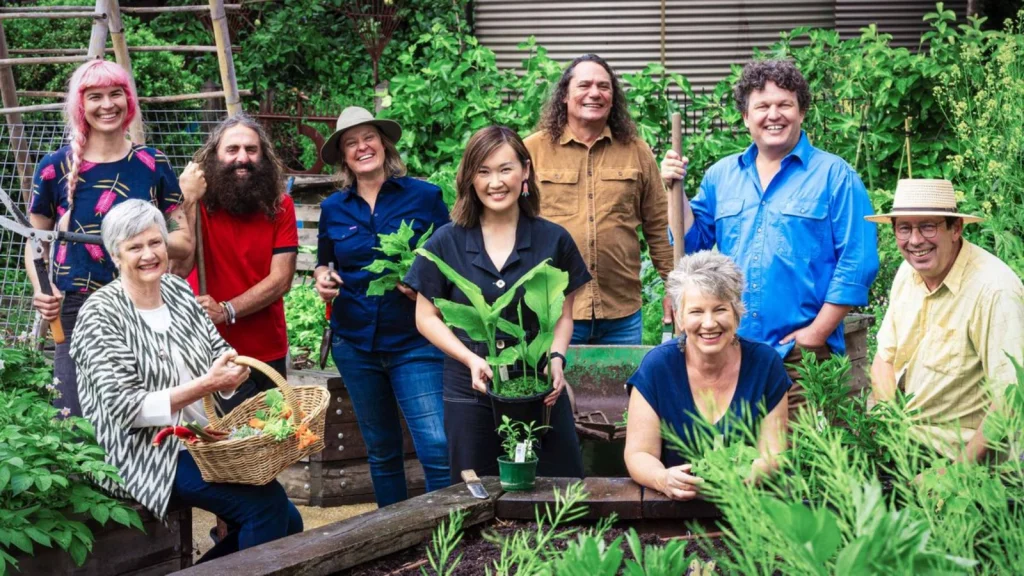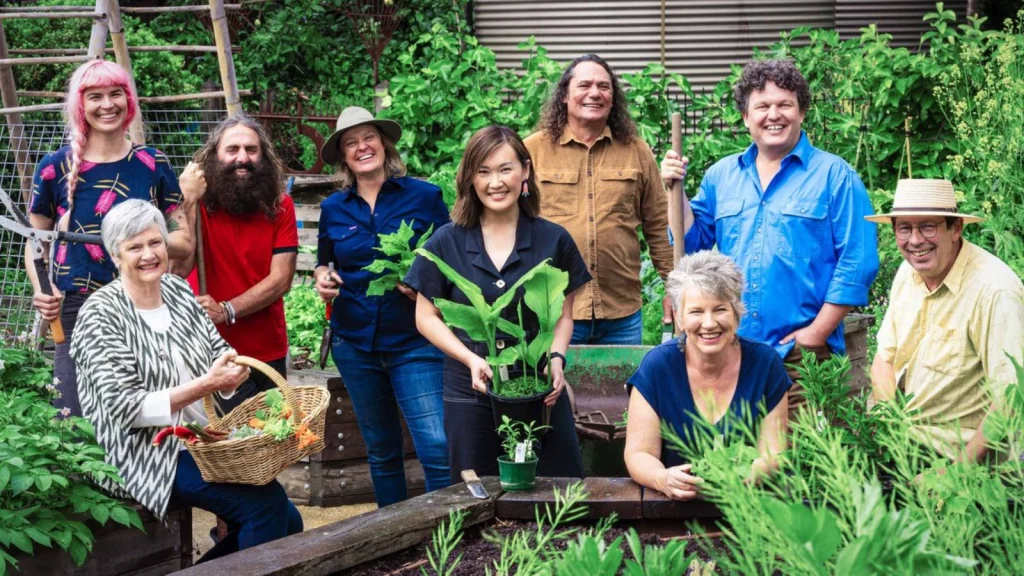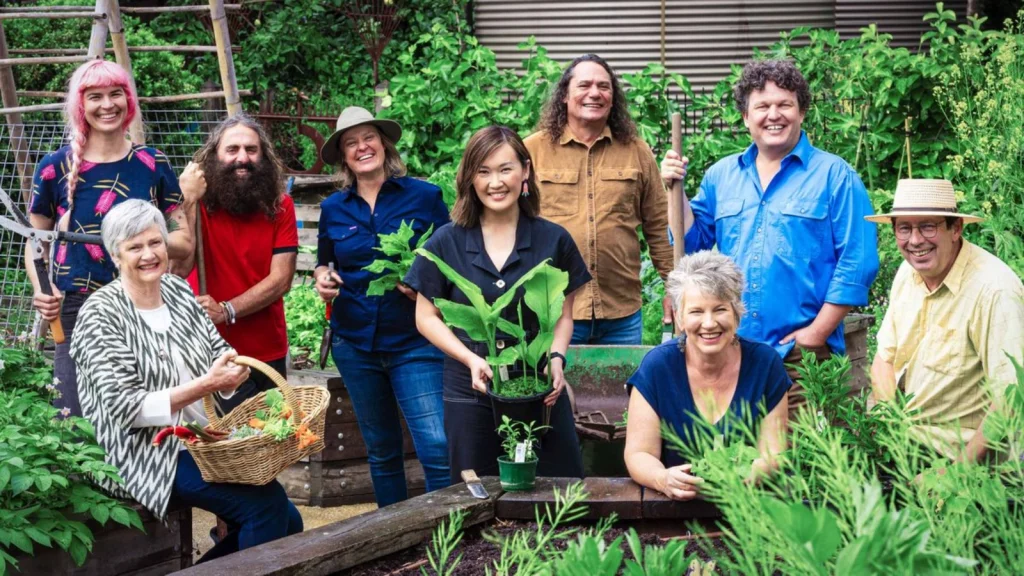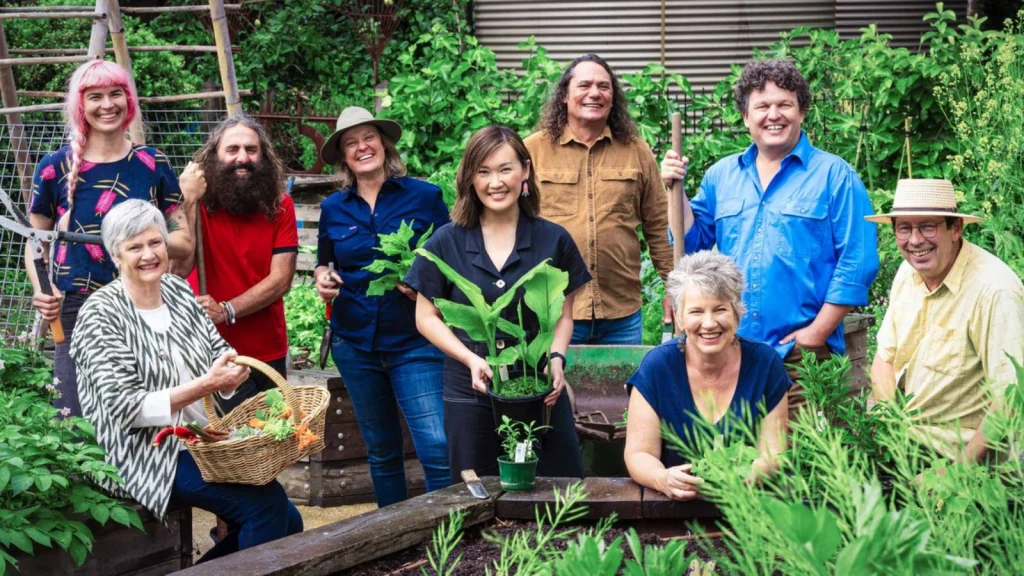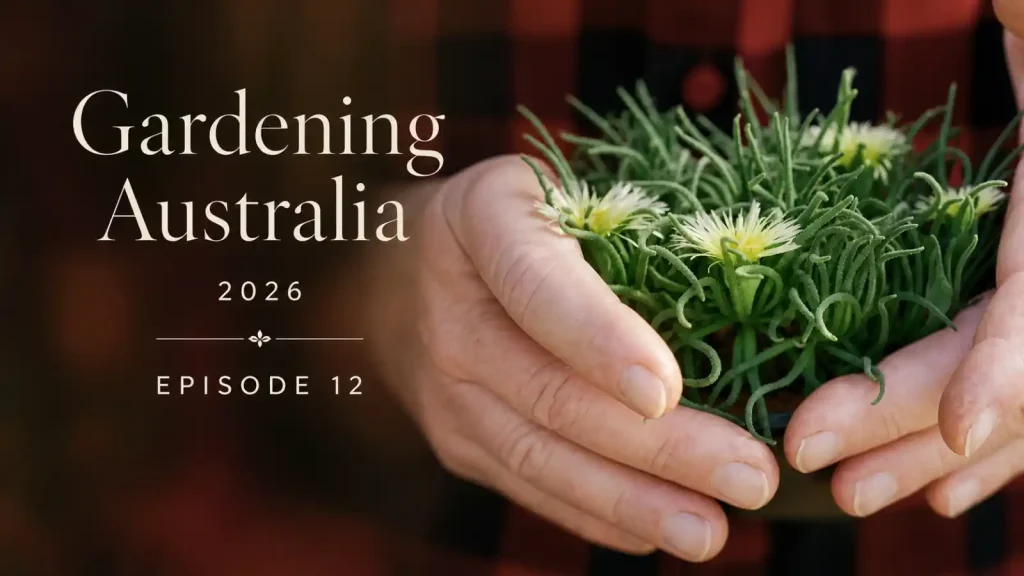
Gardening Australia 2026 Episode 12 arrives with the full breadth of the Australian gardening year on display, capturing autumn’s particular generosity across climates and communities. This episode moves between urban balconies and sprawling heritage orchards, between cottage gardens blazing with late-season colour and potato trials conducted with the rigour of a seasoned grower. Each segment adds a distinct layer to an understanding of what Australian gardening means in practice — not as an abstract pursuit but as a daily, physical, sometimes political relationship with the land. The diversity of contributors alone signals something important: gardening in this country belongs to everyone, regardless of setting, background, or the square meterage available.
Autumn is a season that rewards patience, and that quality runs through every story in this episode. Josh Byrne travels to a property in New South Wales where rare and heritage fruits have been collected with near-obsessive dedication over decades. The collection he visits is not simply impressive in scale — it is a living archive, a safeguard against the commercial narrowing of food diversity that has quietly accelerated through the twentieth and twenty-first centuries. Meanwhile, Hannah Moloney arrives at a cottage garden in southern Tasmania where a couple have built something genuinely extraordinary from limited space and an abundance of creative intent. The garden reflects a philosophy as much as an aesthetic.
Alongside these longer segments, the episode weaves in material that addresses everyday gardening challenges with the same seriousness it applies to heritage conservation. Costa Georgiadis explores native plants suited to urban gardens and streetscapes, making a case for planting choices that connect domestic spaces to the broader Australian landscape. His enthusiasm for plants that feed both people and wildlife is consistent and persuasive, grounded in species knowledge that prevents it from ever feeling merely sentimental. Native plants, for Costa, are not a gesture toward ecological correctness but a genuine design opportunity.
Millie Ross brings her characteristic intensity to the humble potato, running a trial of twelve varieties to determine which perform best in her conditions. Her approach is methodical and her conclusions are specific — she names varieties, describes their characteristics, and draws distinctions that matter to any serious kitchen gardener. Potatoes occupy a curious position in Australian gardening: nutritionally dense, culturally significant, and yet often treated as an afterthought beside more fashionable crops. Millie’s enthusiasm reclaims them as worthy of real attention. Secondary keywords like garden hacks and diy gardening surface naturally in this kind of practical, trial-based segment.
Perhaps the most vivid introduction in this episode belongs to Beverly Kills, a drag queen and dedicated balcony gardener whose small urban space has been transformed into a layered, productive, and deeply personal garden. Her segment challenges assumptions about what a garden needs to be — in size, in style, and in the identity of the person tending it. Beverly’s approach to diy gardening is imaginative and resource-conscious, making use of every vertical surface and demonstrating that the principles of good garden design scale downward just as effectively as they scale up. Her presence expands the episode’s sense of who gardening belongs to and what it can look like.
The episode builds its momentum through accumulation. Each segment adds texture to a broad but coherent exploration of autumn gardening across Australia’s varied climates and communities. What connects Josh’s heritage orchard visit to Beverly’s balcony is not geography or scale but a shared commitment to growing things well and growing them with purpose. The contributors to Gardening Australia 2026 Episode 12 are not simply presenting techniques; they are advocating for a way of relating to the living world that is careful, curious, and actively resistant to the homogenising pressures of modern consumer culture. That advocacy never becomes preachy because it is always grounded in practical demonstration.
The timing of this episode within the broadcast year is itself meaningful. Autumn sits at the hinge of the gardening calendar in most Australian climates — a season of harvest and transition, of planting cool-season crops and taking stock of what summer produced. Gardening Australia 2026 Episode 12 mirrors that structure, balancing reflection and forward momentum. The rare fruit collection that Josh visits has been built over decades, but the work of expanding and documenting it continues. Hannah’s cottage garden grows and changes with each season. Millie’s potato trial yields conclusions that will shape next year’s planting decisions. Nothing in this episode is static.
Throughout the hour, the production maintains its characteristic balance between inspiration and instruction. Viewers encounter ideas that stretch their thinking about Australian gardening while also receiving concrete, actionable guidance that can be applied in the coming weeks. The result is an episode that functions simultaneously as a celebration of horticultural diversity and as a genuinely useful gardening resource. The segments that follow examine each story in closer detail, drawing out the specific knowledge, specific plants, and specific people that make Gardening Australia 2026 Episode 12 one of the more substantial entries in the current series.
Gardening Australia 2026 Episode 12
Josh Byrne and the Rare Fruit Collection in Gardening Australia 2026 Episode 12
Josh Byrne’s visit to the rare fruit collection in New South Wales sits at the emotional and intellectual centre of this episode. The collection belongs to a grower who has spent years — decades, in some cases — sourcing, propagating, and documenting fruit varieties that have largely disappeared from commercial production. The scale of what has been assembled is difficult to convey in abstract terms. Josh walks through rows of trees representing varieties of apple, pear, quince, and stone fruit that most Australians will never encounter in a supermarket or even a farmers’ market.
The motivation behind the collection is explicitly conservationist. Commercial fruit production in Australia and globally has narrowed to a relatively small number of varieties selected for shelf life, uniformity, and yield rather than flavour, nutritional complexity, or adaptability to diverse growing conditions. The grower at this property has systematically worked against that narrowing, locating old varieties through horticultural networks, heritage seed organisations, and personal contacts. Each tree represents a decision to preserve something that the market has otherwise abandoned.
Josh engages with the collection as a gardener and as someone genuinely curious about the practical implications of this kind of preservation work. He tastes fruit, asks about cultivation requirements, and explores the question of how this material can be made accessible to other growers. Grafting and propagation are central to that accessibility. Many of these varieties cannot be grown from seed true to type — they must be propagated vegetatively, making the preservation of healthy, disease-free stock a constant priority. The collection is therefore not merely a display but an active propagation resource for Australian gardening enthusiasts and small-scale orchardists.
The segment raises questions about the intersection of garden design and food diversity that are rarely addressed in mainstream horticultural media. An orchard designed around rare varieties requires different thinking from a standard home fruit garden — different spacing decisions, different training systems, different relationships with rootstocks. Josh navigates these technical dimensions without letting them overwhelm the broader story of why this work matters. The rare fruit collection is, above all, an act of horticultural generosity toward future growers.
Hannah Moloney’s Cottage Garden and the Principles of Abundant Garden Design
Hannah Moloney’s visit to a cottage garden in southern Tasmania offers a masterclass in what abundant planting can achieve in a relatively small area. The garden belongs to a couple who have developed it over a number of years, working with the specific microclimate of their site and making choices that reflect both aesthetic ambition and practical function. The result is a space that feels simultaneously wild and intentional — a difficult balance that reveals genuine design skill.
The planting palette is rich and seasonal. Autumn brings its own particular colours to the garden, and Hannah is clearly moved by what she encounters. The couple grow a wide range of flowering perennials, shrubs, and bulbs alongside productive plants, integrating food production into an ornamental framework that never feels compromised by either function. This integration is a defining principle of good garden design in the cottage tradition, and this garden executes it with confidence. Paths wind through dense plantings that reward close attention while also reading clearly from a distance.
Hannah’s conversation with the gardeners reveals the thinking behind the planting decisions. They discuss soil preparation, the importance of autumn planting for establishing perennials before winter, and the way the garden has evolved as their understanding of the site has deepened. This kind of iterative refinement — planting, observing, adjusting — is characteristic of experienced gardeners, and it produces gardens that feel genuinely settled rather than recently installed. The soil health here is visibly excellent, and the gardeners attribute their success in part to consistent composting and mulching practice.
The segment also touches on the community dimension of the garden. The couple share plants, swap seeds, and contribute to the local horticultural culture of their region. This generosity with plant material echoes the ethos of the rare fruit collection, suggesting a theme that runs through the episode: the best gardening is fundamentally connective, linking people to each other and to the broader living world. For viewers interested in diy gardening at a cottage scale, this segment provides both inspiration and specific practical guidance.
Costa Georgiadis on Native Plants for Urban Gardens and Streetscapes
Costa Georgiadis brings his signature energy to a segment focused on native plants and their role in contemporary urban garden design. His argument is straightforward and well-grounded: Australian native plants offer extraordinary ecological value, structural interest, and low-maintenance performance that makes them ideal candidates for urban spaces of every size. The challenge, as Costa frames it, is one of perception as much as horticulture — native plants are still too often seen as alternatives to more desirable ornamentals rather than as the primary design medium they deserve to be.
The segment explores specific plant choices suitable for streetscapes and small urban gardens. Costa discusses the value of plants that provide multiple functions simultaneously — screening, habitat, edible value, and seasonal interest. He names specific species and explains their particular qualities, giving viewers concrete recommendations rather than general encouragement. This specificity is what separates Costa’s advocacy from vague ecological sentiment. He understands plants deeply enough to match them precisely to contexts.
Native plants in urban settings face particular challenges. Soil compaction, drainage issues, heat loading from paving and buildings, and competition with existing vegetation all affect establishment and long-term performance. Costa addresses these challenges directly, describing preparation and establishment techniques that improve outcomes. His approach to diy gardening with native species is realistic rather than idealistic — he acknowledges the difficulty while demonstrating that it is entirely manageable with the right approach.
The segment connects naturally to broader themes in contemporary Australian gardening. As cities grow denser and the pressures on remnant natural vegetation increase, urban plantings of native species take on a significance beyond individual gardens. They create corridors for insects and birds, reduce urban heat, manage stormwater, and contribute to the ecological connectivity of urban landscapes. Costa makes this case compellingly without ever losing sight of the individual gardener’s perspective. A well-chosen native plant is also simply a beautiful thing to grow, and that argument needs no ecological justification.
Millie Ross and the Potato Trial: Gardening Australia 2026 Episode 12 in the Kitchen Garden
Millie Ross approaches the kitchen garden with the systematic rigour of someone who genuinely wants to know what works. Her potato trial in this episode of Gardening Australia 2026 involves twelve distinct varieties grown under comparable conditions and evaluated across a range of criteria: yield, disease resistance, flavour, skin finish, and suitability for different culinary purposes. The trial is, in structural terms, an experiment — and Millie applies experimental discipline to it, maintaining consistent growing conditions and recording observations across the season.
The twelve varieties she trialled span the full range of potato types available to Australian home growers. Waxy varieties with firm, moist flesh sit alongside floury types that collapse into fluff under heat. Coloured varieties — those with purple, red, or yellow flesh — are assessed for both ornamental value and culinary performance. Millie is particularly interested in flavour complexity, tasting cooked samples of each variety and distinguishing between them with the confidence of someone who has spent considerable time developing her palate for home-grown produce.
Her conclusions are practical and specific. Some varieties performed exceptionally well in her conditions while others disappointed despite strong reputations. The reasons for this variability are multiple: soil type, drainage, the timing of the season, and local disease pressure all interact with a variety’s inherent characteristics to produce outcomes that no catalogue description can fully predict. Millie’s honest assessment of this variability is one of the segment’s strengths. She does not pretend that the trial produces universal conclusions — rather, she presents her specific results while encouraging viewers to run their own comparisons.
The segment functions as a garden hack of sorts, demonstrating that systematic comparison of varieties produces more reliable knowledge than any single-variety approach. For gardeners who have settled into growing one or two familiar potato types, Millie’s trial suggests a compelling reason to experiment. The diversity of the potato as a species — its extraordinary range of forms, flavours, and growing habits — makes it one of the most rewarding crops for this kind of structured exploration. Her enthusiasm for the trial is infectious, and the results she presents are genuinely useful to any kitchen gardener working in similar conditions.
Beverly Kills and the Art of Balcony Gardening
Beverly Kills represents something genuinely new in the context of a long-running programme like Gardening Australia. She is a drag queen and a committed urban gardener whose growing space is a balcony — compact, vertical, and intensely productive. Her segment challenges the implicit assumptions of much mainstream gardening media, which tends to privilege large outdoor spaces and experienced growers. Beverly brings fierce creativity and practical resourcefulness to a space that many gardeners would dismiss as inadequate.
The balcony itself is a revelation. Beverly has used every available surface — railings, walls, overhead structures — to create a layered planting environment that mimics the vertical complexity of a mature garden. Climbing plants move upward through trellises and frames. Container-grown vegetables occupy tiered staging. Hanging planters and wall-mounted pockets add further layers. The overall effect is of density and abundance that belies the limited floor area. This is diy gardening elevated to an art form, and the results demonstrate what is possible when genuine creativity is applied to constraint.
Beverly talks about her relationship with gardening in personal terms. Growing things on her balcony is, for her, a form of care and self-expression — an extension of the values that drive her drag practice. The connection between gardening and identity runs through the segment with a naturalness that suggests it reflects her genuine experience rather than a narrative imposed by the programme. She discusses plant choices, potting mixes, watering routines, and the particular challenges of balcony microclimates with evident expertise.
The segment also addresses the practical realities of container gardening at scale. Weight loading on balconies is a genuine constraint, and Beverly has worked within it by choosing lightweight growing media and container materials wherever possible. Watering frequency is another challenge — containers dry out faster than in-ground beds, particularly on exposed balconies in warm climates — and Beverly has developed efficient routines that prevent moisture stress without creating waterlogging. Her segment is full of the kind of specific, earned knowledge that comes from sustained engagement with a particular growing environment.
Garden Hacks, Seasonal Timing, and the Autumn Planting Window in Gardening Australia 2026
Across the various segments, Gardening Australia 2026 Episode 12 reinforces a set of principles about autumn as a gardening season. The cool-season planting window is perhaps the most important period in the horticultural calendar for many Australian climates, particularly in the temperate south and east. Soil temperatures remain warm enough from summer to promote rapid root establishment, while cooling air temperatures reduce the stress on newly planted specimens. The combination produces ideal establishment conditions for a wide range of vegetables, perennials, bulbs, and woody plants.
Hannah’s cottage garden segment illustrates this principle beautifully. The gardeners she visits have clearly planned their autumn planting with precision, using the season to establish the flowering perennials that will carry the garden through late winter and spring. The planting of bulbs — species that require a cold period to initiate flowering — is another autumn task shown in the episode, and it connects to the broader rhythm of a garden that is designed to deliver interest across the full year rather than in a single season.
The rare fruit orchard visit reinforces a different dimension of autumn timing. Autumn is the season for harvesting the last of the stone fruit and the first of the winter apples and pears. At the heritage collection Josh visits, the harvest season extends across a long window because the varieties in the collection ripen at different times. This spread of harvest dates is itself a feature of heritage variety growing — commercial orchards select for varieties that ripen simultaneously to simplify harvesting logistics, but a diverse collection extends the season for weeks or months.
Garden hacks related to autumn soil preparation appear in several segments. The importance of adding organic matter to garden beds in autumn, allowing it to break down over winter and improve soil structure before spring planting, is a recurring theme. Composting, sheet mulching, and green manure cropping are all mentioned in contexts that make their value concrete rather than theoretical. These are low-cost, high-return interventions that improve garden performance year on year, and they represent some of the most accessible garden hacks available to Australian home growers regardless of their level of experience or the size of their growing space.
What Gardening Australia 2026 Episode 12 Reveals About the Future of Australian Gardening
The episode as a whole suggests something significant about the direction of Australian gardening as a practice and as a cultural phenomenon. The contributors gathered in this episode represent an exceptionally diverse cross-section of Australian gardening experience. They differ in age, background, location, available growing space, and approach to garden design. What unites them is a seriousness of intent and a commitment to growing things well.
The emphasis on heritage and rare varieties — in the orchard segment but also in the broader ethos of the episode — reflects a growing awareness of what is at stake when horticultural diversity is allowed to narrow. The same commercial forces that have reduced supermarket fruit to a handful of optimised varieties have also affected the seed supply for vegetables, the availability of heritage rose varieties, and the genetic diversity of many food crops. The work being done by the grower Josh visits is part of a broader network of conservation effort that operates largely outside commercial channels and depends on the commitment of individuals.
Native plants occupy an increasingly central role in Australian gardening practice, and Costa’s segment articulates the reasons for that centrality more clearly than a purely aesthetic case could. The ecological value of native planting in urban environments is now well documented, and the practical performance of well-chosen native species in domestic gardens is consistently high. The barrier to their wider adoption is cultural rather than horticultural, and programmes like Gardening Australia play a genuine role in shifting that culture.
Beverly Kills’ inclusion in this episode is, in retrospect, a statement about the future of the programme as much as about the present of Australian gardening. Gardening shows have historically skewed toward particular demographics, and the expansion of that audience to include urban renters, container gardeners, and people whose relationship with growing is inflected by aspects of identity not typically represented in horticultural media is both welcome and overdue. Beverly demonstrates that the fundamentals of good gardening — soil health, plant selection, moisture management, seasonal timing — apply universally, and that the creativity required to adapt them to constrained conditions is itself a form of horticultural skill.
Gardening Australia 2026 Episode 12 offers a generous and varied account of what the current moment in Australian gardening looks like. From a heritage orchard in New South Wales to a drag queen’s balcony in an unnamed city, from a potato trial to a Tasmanian cottage garden in full autumn colour, the episode maps a practice that is simultaneously ancient and contemporary, personal and ecological, local and connected to global concerns. It is an episode that rewards repeated viewing, not because it is dense with technical instruction but because the people and places it features repay sustained attention.
FAQ Gardening Australia 2026 Episode 12
Q: What rare fruit collection does Josh Byrne visit in Gardening Australia 2026 Episode 12?
A: Josh visits a heritage orchard in New South Wales where a dedicated grower has spent decades collecting fruit varieties that have largely disappeared from commercial production. The collection includes rare apples, pears, quinces, and stone fruit. It functions as a living conservation archive, preserving horticultural diversity that commercial markets have gradually abandoned.
Q: Why does Gardening Australia 2026 Episode 12 emphasise heritage and rare fruit varieties?
A: Commercial fruit production has narrowed to a small number of varieties chosen for shelf life and uniformity rather than flavour or adaptability. The episode highlights conservation efforts that work against this narrowing. Preserving rare varieties through propagation and documentation protects food diversity for future Australian gardening enthusiasts and small-scale orchardists.
Q: How does Beverly Kills manage productive gardening on a small urban balcony?
A: Beverly uses every available vertical surface, including railings, walls, and overhead structures, to create layered planting zones. She employs tiered staging, hanging planters, and wall-mounted pockets to maximise space. Additionally, she selects lightweight growing media to manage balcony weight loads and maintains efficient watering routines to prevent moisture stress in containers.
Q: What native plants does Costa Georgiadis recommend for urban gardens and streetscapes?
A: Costa recommends Australian native plants that deliver multiple functions simultaneously, including screening, wildlife habitat, edible value, and seasonal interest. He emphasises species suited to urban conditions such as soil compaction and heat loading from paving. Furthermore, he provides specific establishment techniques to improve performance in challenging urban garden environments.
Q: What did Millie Ross discover in her twelve-variety potato trial in Gardening Australia 2026 Episode 12?
A: Millie trialled twelve potato varieties and evaluated each across yield, disease resistance, flavour, skin finish, and culinary suitability. Her results showed that local growing conditions strongly influence outcomes, meaning no variety performs equally well everywhere. She recommends that kitchen gardeners run their own comparative trials rather than relying solely on catalogue descriptions.
Q: Why is autumn considered the ideal planting window for Australian gardeners?
A: Autumn offers warm soil temperatures that promote rapid root establishment while cooling air temperatures reduce stress on newly planted specimens. This combination benefits vegetables, perennials, bulbs, and woody plants alike. Additionally, adding organic matter to garden beds in autumn allows it to break down over winter, improving soil structure before spring planting begins.
Q: How does Hannah Moloney’s cottage garden segment demonstrate effective garden design principles?
A: Hannah visits a Tasmanian cottage garden where flowering perennials, shrubs, and productive plants integrate within a single coherent design. The gardeners achieve a balance of wild abundance and clear structure through thoughtful path placement and layered planting. Consistent composting, mulching, and iterative seasonal adjustment have produced visibly excellent soil health and year-round garden interest.
Q: What propagation methods preserve rare fruit varieties in heritage collections?
A: Most heritage fruit varieties cannot grow true to type from seed and must be propagated vegetatively through grafting. This makes maintaining healthy, disease-free propagation stock a constant priority for collectors. The New South Wales orchard Josh visits actively supplies propagation material to other growers, ensuring rare varieties remain accessible across the broader Australian gardening community.
Q: How do native plants benefit urban ecosystems beyond individual garden design?
A: Native plants in urban settings create insect and bird corridors, reduce urban heat, and improve stormwater management. However, their wider adoption remains limited by cultural perception rather than horticultural performance. Costa argues that well-chosen native species deliver consistent beauty and ecological value simultaneously, making them the most practical choice for sustainable Australian gardening in dense urban environments.
Q: What broader themes does Gardening Australia 2026 Episode 12 explore across its contributors?
A: The episode connects heritage conservation, urban diy gardening, native plant advocacy, cottage garden design, and kitchen garden trials through a shared commitment to purposeful growing. Contributors range from a heritage orchardist to a drag queen balcony gardener, collectively demonstrating that Australian gardening belongs to every setting and identity. Furthermore, each segment reinforces the value of biodiversity, seasonal timing, and community generosity within gardening practice.