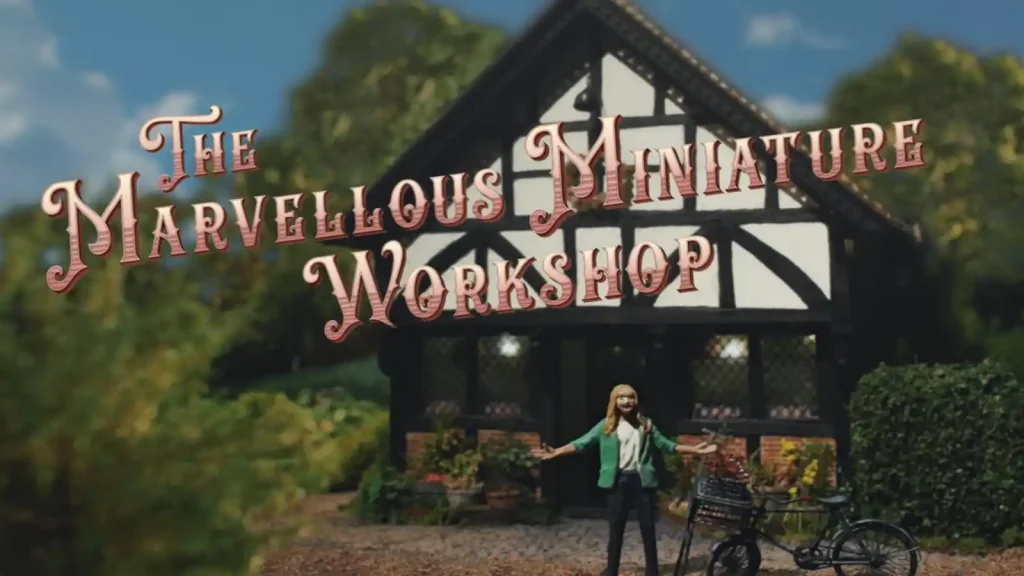
The Marvellous Miniature Workshop Episode 3: Reconstructing Silverwood Colliery in Miniature
The Marvellous Miniature Workshop Episode 3 brings Sara Cox and renowned miniaturist Lee Robinson together to recreate Silverwood Colliery, a Yorkshire pit that closed in 1994, leaving behind memories that still resonate with the men who worked there. This episode focuses on two former mining community members: Reg, who spent decades underground, and Neil, whose father worked at the pit. The miniature project aims to capture not just the physical structures of the colliery but the emotional weight of a workplace that defined an entire community’s identity. The model will recreate the winding wheel, the pithead baths, the canteen, and the miners’ banner—each element serving as a tangible connection to a vanished world.
British daytime TV continues to explore heartwarming stories through craft and creation, and this series exemplifies that tradition by combining artisan skills with deeply personal human stories. The commission represents more than a collectible model; it embodies the hardships, solidarity, and defiance that characterized the 1984 miners’ strike. Reg and Neil carry memories of that year when their community stood together against pit closures, enduring months without wages while maintaining their dignity and resolve. The detailed miniatures will serve as a permanent memorial to Silverwood, preserving its architecture and atmosphere for future generations who will never experience the soot, noise, and camaraderie that defined colliery life.
The Marvellous Miniature Workshop Episode 3 explores how miniaturisation transforms memory into physical form. Lee Robinson works in 1:24 scale, a proportion that allows intricate craft while maintaining manageable dimensions. Each component—from the brick patterns on the winding engine house to the individual lockers in the pithead baths—requires meticulous attention. The process involves historical research, technical problem-solving, and artistic interpretation, blending craftsmanship with documentary storytelling. Sara Cox guides viewers through the emotional journey, connecting the miniaturists’ work with Reg and Neil’s lived experiences.
Mining defined British industrial history for centuries, shaping communities, politics, and social movements. Silverwood Colliery opened in 1900 and operated for nearly a century before economic pressures and political decisions led to its closure. The pit employed thousands over its lifetime, creating a self-contained community with its own social structures, traditions, and shared identity. Men descended daily into dangerous conditions, extracting coal that powered the nation while developing bonds forged through mutual dependence and shared risk. The 1984 strike represented the mining community’s last major stand against an industry’s systematic dismantling, making Silverwood’s story emblematic of broader social transformations.
The miniature workshop receives detailed briefs for each commission, but this project carries particular emotional complexity. Reg and Neil want specific elements included: the winding wheel that dominated the skyline, the pithead baths where miners cleaned away coal dust, the canteen where they gathered, and crucially, the miners’ banner that led their marches during the strike. Each element connects to specific memories—Reg remembers the rhythmic clang of the winding mechanism, the relief of hot water after shifts, the taste of canteen tea. Neil, though never a miner himself, absorbed the pit’s significance through his father’s experiences and the community’s collective memory.
Lee Robinson faces technical challenges unique to industrial architecture. The winding wheel’s geometric complexity requires precise engineering in miniature. The brick textures must convey decades of weathering and industrial grime without appearing crude or oversimplified. Windows need individual frames at 1:24 scale, each measuring mere millimeters. The pithead structure demands accurate proportions to capture its imposing presence, while the surrounding buildings require contextual placement to recreate the colliery’s spatial relationships. Fine detail becomes paramount when attempting to evoke authenticity—a miniature that merely approximates will fail to trigger the emotional recognition that makes these models meaningful.
The project involves multiple artisans beyond Lee Robinson. Specialist miniaturists contribute expertise in specific areas: one focuses on metalwork for the winding mechanism, another handles architectural detailing, a third creates the miners’ banner using fabric and paint at impossibly small scale. This collaborative approach mirrors the collective nature of mining itself, where specialized roles combined to extract coal safely and efficiently. The workshop becomes a creative workspace where individual skills merge into a unified vision, paralleling the underground environment where hewers, putters, and deputies each contributed essential functions.
The 1984 strike provides the commission’s emotional core. When the National Coal Board announced pit closures, mining communities faced existential threats. Silverwood’s miners joined the broader strike that lasted nearly a year, testing resolve, finances, and community cohesion. Reg remembers picket lines, solidarity rallies, and the gradual erosion of hope as months passed without resolution. Families struggled without wages, relying on community kitchens and mutual support. The strike’s failure accelerated colliery closures nationwide, transforming the social and economic landscape. The miners’ banner, carried during marches, symbolized collective identity and determination—making its inclusion in the miniature non-negotiable.
The Marvellous Miniature Workshop Episode 3
The Marvellous Miniature Workshop Episode 3: Technical Challenges of Industrial Miniaturisation
Industrial architecture presents distinct challenges for miniaturists compared to domestic or commercial buildings. Collieries combined functional engineering with architectural presence, creating structures defined by mechanical necessity rather than aesthetic considerations. The winding wheel, for instance, served purely practical purposes—raising and lowering the cage that transported miners and coal—but became the pit’s most recognizable feature. Recreating it requires understanding both its mechanical function and visual impact. Lee Robinson must determine which details to include for authenticity while ensuring the model remains structurally sound at reduced scale.
The winding mechanism itself involves multiple components: the wheel’s spoked structure, the winding drum, the electric motor, the steel cables, and the support framework. Each element requires different materials and techniques. Lee uses brass for structural components, carefully soldering joints for strength. The wheel’s spokes demand precise cutting and filing to achieve uniform thickness. The drum’s cylindrical form needs lathing on a miniature scale, requiring specialized equipment. Steel cables become fine wire, wrapped to suggest the thick ropes that bore immense weight. The support framework uses styrene plastic, shaped and textured to replicate weathered steel girders.
Cherished memories attach to specific architectural details. Reg particularly remembers the pithead baths, introduced in the 1930s to improve miners’ welfare. Before their construction, men traveled home in work clothes, carrying coal dust into their houses. The baths provided hot water, lockers, and communal washing facilities, representing a significant improvement in working conditions. For the miniature, Lee must recreate not just the building’s exterior but suggest its interior function. He installs tiny locker doors, each individually hinged, painted in the distinctive colors miners used to identify their belongings. The attention to such details transforms a model building into an evocative memorial.
The colliery’s brick architecture requires particular care. Yorkshire industrial buildings used specific brick types, their color and texture distinct from southern England’s stock brick or Midlands’ engineering brick. Lee researches historical photographs, identifying the warm orange-red tone characteristic of Yorkshire coal measure clay. He then creates brick texture through multiple techniques: some sections use embossed plastic sheet, others employ individually scribed lines, and prominent areas receive hand-laid miniature bricks made from colored polymer clay. The variation in technique creates visual interest while suggesting the complex construction history of buildings modified and expanded over decades.
Windows present another technical challenge. Industrial buildings featured different window types depending on function and era. The winding engine house had small, high windows for ventilation while protecting machinery from weather. Administrative buildings used larger windows with multiple panes. Canteen windows were positioned to provide light during meal breaks. Each type requires different construction methods. Lee uses clear acetate for glazing, carefully cutting and fitting it behind frames constructed from styrene strip. The frames themselves measure under two millimeters wide, requiring magnification and steady hands during assembly.
Weathering and aging separate convincing miniatures from mere scale models. New buildings look too pristine, lacking the accumulated patina of decades of use. Lee applies weathering through layered techniques: base coats in appropriate colors, followed by washes of diluted paint to settle in recesses, then dry-brushing to highlight raised details, and finally powdered pigments to simulate dirt, rust, and coal dust. The process requires judgment—too little weathering appears unconvincing, too much becomes caricature. Reg’s memories guide the work; he describes how coal dust penetrated everything, how rain streaked down brick faces, how rust bloomed on steel supports.
Creating the Miners’ Banner in 1:24 Scale
The miners’ banner represents the commission’s most emotionally charged element. Trade union banners date to the nineteenth century, serving as rallying points during demonstrations and symbols of collective identity. Silverwood’s banner featured the pit’s name, the National Union of Mineworkers logo, and imagery representing mining work and community solidarity. During the 1984 strike, the banner led marches through Yorkshire towns, its presence signaling unity and determination. For Reg and Neil, the banner embodies everything the pit meant—pride, solidarity, struggle, and community.
Creating a banner at miniature scale tests specialist skills. Fabric behaves differently at reduced dimensions; conventional textiles become too thick and stiff, losing the drape and movement that characterize full-size banners. The miniaturist assigned to this element uses silk, chosen for its fine weave and flowing properties. The silk receives careful preparation: washing to remove sizing, dyeing to achieve the banner’s deep crimson background, then stretching on a small frame to prevent distortion during painting. The process mirrors traditional banner-making techniques adapted to miniature scale.
The banner’s imagery requires painstaking reproduction. The original featured painted or embroidered details—the pit’s name in gold lettering, the union logo, symbolic representations of miners and their tools. The miniaturist works under magnification, using fine brushes and acrylic paints to recreate these elements. Gold lettering demands particular care; the paint must maintain opacity while following curves and serifs accurately. The union logo’s crossed hammers and lamp require precise geometry at millimeter scale. Each brushstroke must be deliberate and controlled, as corrections risk damaging the delicate silk.
Mounting the completed banner presents final technical challenges. Full-size banners hung from wooden poles carried during marches. The miniature requires similar presentation while remaining structurally sound. The miniaturist creates a frame from brass rod, carefully bent to shape and soldered at joints. The silk attaches using adhesive applied with surgical precision—too much stiffens the fabric, too little risks detachment. The finished banner measures approximately fifty millimeters wide, yet captures the visual impact and symbolic weight of its full-size counterpart.
The Marvellous Miniature Workshop Episode 3: Contextualizing the Colliery Within Its Landscape
Silverwood Colliery existed within a specific Yorkshire landscape, and the miniature must suggest this broader context. Lee Robinson designs a base incorporating surrounding elements: access roads, railway sidings, slag heaps, and vegetation. These contextual details ground the colliery within its environment, transforming isolated buildings into a functioning industrial site. The challenge involves balancing detail against available space—too much context overwhelms the central structures, too little leaves them floating in undefined space.
Railway infrastructure connected collieries to the national network, transporting coal to power stations, ports, and industrial users. Silverwood had extensive sidings where full coal wagons accumulated before departure and empty wagons awaited loading. Lee recreates these sidings using commercial model railway track modified for 1:24 scale. The track receives weathering to suggest decades of use—rust on rail sides, oil stains on sleepers, ballast discolored by coal dust. A few wagons, permanently positioned, suggest the constant movement that characterized colliery operations.
Slag heaps formed unavoidable features of mining landscapes. Waste rock extracted alongside coal accumulated in huge conical mounds that dominated skylines and transformed topography. Silverwood’s slag heap, visible for miles, marked the pit’s location and symbolized its industrial character. For the miniature, Lee sculpts the heap from expanding foam, carving its characteristic shape before coating with textured plaster. He paints it in dark grays and browns, then applies scatter material—fine gravel and artificial grass—to suggest both the heap’s barren surfaces and nature’s gradual reclamation after closure.
Vegetation provides softening contrast to industrial harshness. Even operating collieries featured trees, grass, and weeds wherever maintenance didn’t require their removal. Post-closure, nature rapidly colonized abandoned sites. Lee uses various techniques for miniature vegetation: static grass fibers for lawn areas, lichen and foam for bushes, twisted wire armatures covered with foliage material for trees. The vegetation receives careful placement—clustering around less-used areas, lining access roads, softening building edges. This greenery humanizes the industrial scene while acknowledging nature’s persistence.
Human interest series benefit from environmental context that grounds stories in specific places. The miniature’s base includes small details suggesting human presence: a car parked near the administrative building, a bicycle leaning against a wall, discarded equipment near the winding house. These elements, though tiny, imply the daily routines and casual accumulations that characterized working sites. They transform architecture into lived space, supporting the emotional storytelling that drives the series.
Documentary Series Approach to Personal Memory
The Marvellous Miniature Workshop functions as documentary series, using craft as a vehicle for exploring personal and collective memory. Each episode centers on individuals with emotional connections to the subject being miniaturised. The format allows extended engagement with subjects’ stories, creating space for reflection and reminiscence. Reg and Neil’s participation isn’t passive; they contribute memories, photographs, and specific requests that shape the miniature’s details. This collaborative approach ensures authenticity while deepening emotional investment.
Reg’s memories span decades at Silverwood. He started as a young man, learning the pit’s rhythms and dangers. He progressed through various roles, eventually becoming a experienced face worker. He remembers colleagues killed in accidents, near-misses that demonstrated mining’s constant risks, and the dark humor miners used to manage fear. He recalls the strike’s tensions—picket line confrontations, community divisions when some returned to work, the deepening financial desperation as months passed without wages. His memories are specific, detailed, and visceral—the cold when descending the shaft, exhaustion after shifts, the sudden silence when the pit finally closed.
Neil’s perspective differs, shaped by growing up in a mining community rather than working underground himself. His memories center on the strike’s impact on families and community. He remembers his father’s determination during the strike, the strain on his mother managing household finances without income, the community kitchen where families received hot meals. He observed the strike’s end and the subsequent closures, watching his father’s generation lose not just employment but identity and purpose. His emotional connection to Silverwood is inherited but no less genuine, carrying forward collective memory into a generation that never experienced colliery work directly.
Sara Cox’s role involves facilitating these conversations, drawing out memories, and connecting them to the miniaturists’ work. She visits Reg and Neil, discussing what elements matter most, what details will trigger recognition and emotional response. These conversations inform the project’s direction, ensuring the miniature serves its intended purpose as memorial and trigger for reminiscence. Cox balances empathy with journalistic inquiry, creating safe space for difficult memories while maintaining the documentary’s narrative momentum.
The series recognizes that memory is imperfect and subjective. Reg and Neil don’t always remember identical details. Their perspectives on events sometimes differ. The documentary embraces this complexity rather than seeking definitive versions. The miniature, consequently, represents a negotiated vision—incorporating elements both men prioritize while acknowledging that complete historical reconstruction remains impossible. This honest approach strengthens rather than weakens the emotional impact, admitting memory’s limitations while honoring its power.
Handmade Miniatures as Emotional Artifacts
Collectible models serve various purposes—some are purely decorative, others appeal to hobbyist craft enthusiasts, and some function as investments. The miniatures created in this series occupy different territory: they’re primarily emotional artifacts, designed to evoke specific memories and feelings rather than displaying technical virtuosity alone. This purpose shapes every creative decision, prioritizing authenticity and emotional resonance over theoretical perfection. A miniaturist creating for exhibition might choose different approaches than one creating for someone with lived experience of the subject.
The distinction between scale modeling and miniaturism merits examination. Scale modelers typically recreate specific objects—aircraft, vehicles, ships—with emphasis on accuracy and finish quality. Miniaturists, particularly those working in dollhouse scales, create environments and buildings, often prioritizing atmosphere and character over precise measurement. Intricate craft defines both disciplines, but their goals differ. Lee Robinson’s work combines both approaches: he maintains accurate proportions and architectural details while pursuing the atmospheric qualities that transform models into meaningful artifacts.
Dioramas represent related art forms, creating three-dimensional scenes within defined spaces. Military modelers create battlefield dioramas, railroad modelers build scenic layouts, and museum exhibits use dioramas for historical interpretation. The Silverwood colliery miniature functions as diorama, presenting the pit within environmental context. However, its purpose extends beyond display; it’s designed for intimate viewing by specific individuals whose memories it’s meant to trigger. This personal dimension distinguishes it from public exhibition pieces.
The handmade quality carries significance beyond technical necessity. Mass-produced collectibles, however detailed, lack the touch of individual makers. Hand-crafting introduces subtle variations, imperfections that paradoxically enhance rather than diminish authenticity. When Reg and Neil examine the completed miniature, they’ll see evidence of human labor—brushstrokes in paint, slight irregularities in brick texture, the particular way weathering has been applied. These traces of making connect the miniature to traditional craftsmanship that characterized the pit itself, where skilled tradesmen maintained equipment and infrastructure through hands-on work.
The Marvellous Miniature Workshop Episode 3: The 1984 Strike’s Lasting Impact
The 1984 miners’ strike represents British labor history’s most significant industrial action. It lasted nearly a year, involved over 150,000 miners, and divided communities while dominating national politics. The strike began in March 1984 when the National Coal Board announced plans to close twenty pits with potential loss of 20,000 jobs. The National Union of Mineworkers, led by Arthur Scargill, called members out, initiating action that would test resolve, finances, and unity. Silverwood’s miners joined immediately, standing with colleagues across Yorkshire’s coalfield.
The strike’s conduct proved contentious. The NUM pursued action without a national ballot, arguing urgency precluded time-consuming democratic processes. Some mining regions continued working, notably Nottinghamshire, creating bitter divisions. Police deployed in unprecedented numbers, leading to confrontations that culminated in the Battle of Orgreave in June 1984. Pickets attempting to prevent coke deliveries to steel plants clashed with police in scenes that shocked the nation. Miners and their families endured months without wages, relying on union hardship funds, community support, and personal savings.
Silverwood’s community demonstrated remarkable solidarity. The Women’s Action Group organized support kitchens, serving free meals to striking families. Local shops extended credit. Fundraising efforts reached beyond Yorkshire, with support arriving from unexpected sources. Despite hardship, most Silverwood miners maintained their strike, refusing to cross picket lines even as financial pressure intensified. The solidarity reflected deep bonds forged through shared work and community identity. Breaking the strike meant betraying colleagues, an unthinkable act for most.
The strike’s end came in March 1985 when miners voted to return without achieving their primary objectives. Pit closures proceeded, accelerating through the late 1980s and early 1990s. Silverwood survived until 1994, but the strike marked the beginning of the end for British deep mining. The industry that once employed over a million men contracted dramatically, leaving former mining communities struggling with unemployment, social problems, and lost identity. The strike’s failure demonstrated shifting political and economic power, marking a decisive moment in Britain’s deindustrialization.
Reg carries complex feelings about the strike. Pride in standing with colleagues coexists with recognition that they ultimately failed to prevent closures. The hardship his family endured left lasting marks—financial insecurity, stress-related health problems, strained relationships. Yet he doesn’t regret striking; the alternative would have meant abandoning principles and comrades. His generation’s sacrifice, though unsuccessful in immediate terms, preserved dignity and demonstrated that working people wouldn’t accept their industry’s destruction without resistance. The miniature’s inclusion of the miners’ banner honors this complex legacy.
Craft Competition Elements and Workshop Dynamics
While The Marvellous Miniature Workshop isn’t structured as craft competition, competitive elements exist in the miniaturists’ pursuit of excellence. Each artisan brings specialist skills and reputation. They’re aware that their work will be scrutinized not only by Reg and Neil but by viewers with their own miniaturism interests. This awareness drives quality without creating adversarial dynamics. The workshop atmosphere emphasizes collaboration over competition, with artisans freely sharing techniques and problem-solving jointly.
Lee Robinson oversees the project, but specialist contributors work semi-independently within their areas. The metalworker creating the winding mechanism operates from his own workshop, using equipment unavailable in Lee’s facility. He fabricates components, test-fits assemblies, then delivers completed elements for integration into the main structure. This distributed approach allows access to specialized skills while maintaining project cohesion. Lee coordinates timelines, ensures stylistic consistency, and makes final decisions about placement and finishing.
Creative workshops function effectively when participants understand both individual responsibilities and collective goals. Clear communication prevents duplicated effort or incompatible approaches. Regular meetings allow progress review and problem identification before issues become critical. The Silverwood project involves multiple artisans working simultaneously on different elements—someone creates the banner while another details the pithead baths while Lee works on main structures. Coordination ensures everything reaches completion simultaneously, ready for final assembly.
Time pressure adds intensity. The series format requires completion within defined schedules, creating deadlines that focus effort but risk compromising quality. The miniaturists balance speed against their professional standards, finding efficiency without cutting corners that would undermine authenticity. Some techniques offer faster results with acceptable quality trade-offs—using commercial components modified rather than scratch-building everything, for instance. Other elements demand traditional time-intensive approaches because shortcuts would be visible and disappointing.
The reveal, when Reg and Neil first see the completed miniature, represents the project’s emotional culmination. The miniaturists wait anxiously, hoping their work successfully captures what the pit meant. This moment validates months of effort, transforming technical craft into meaningful communication. The subjects’ reactions—recognition, emotion, appreciation—confirm the miniature’s success as memorial. For the miniaturists, this validation provides satisfaction beyond technical achievement, knowing they’ve preserved and honored significant memories through their artisan skills.
Preserving Industrial Heritage Through Miniaturisation
British industrial heritage faces preservation challenges. Many historic industrial sites have been demolished, leaving only photographs and memories. Buildings that survive often lack protection, falling victim to development pressure or decay. Collieries present particular challenges—many were systematically demolished after closure, with land sold for redevelopment. Winding wheels and buildings that dominated landscapes for decades disappeared within months of closure. This wholesale destruction means that for many communities, physical traces of their industrial past have vanished entirely.
Museums preserve some industrial artifacts, but resources and space limit what can be saved. Former colliery sites occasionally become heritage centers, maintaining surface buildings and equipment. However, most closed pits leave minimal physical legacy. This creates gaps in material culture—future generations will understand mining history primarily through documents, photographs, and survivors’ memories rather than direct engagement with physical structures. As mining generations age, urgency grows around preserving memories before they’re lost.
Miniaturisation offers one preservation approach. While miniatures can’t replace full-scale preservation, they provide accessible, maintainable records of lost structures. The Silverwood miniature will exist long after the last person with direct colliery memories has died, offering future generations tangible connection to industrial heritage. Grandchildren and great-grandchildren of miners will be able to examine the model, understanding spatial relationships and architectural character in ways photographs alone can’t convey.
Digital documentation provides complementary preservation. Photographs, oral histories, architectural drawings, and increasingly, 3D scanning create comprehensive records. However, digital preservation faces its own challenges—technological obsolescence, data corruption, accessibility barriers. Physical miniatures offer permanence and immediate accessibility that digital resources sometimes lack. They require no equipment to view, they age gracefully, and they communicate information through direct sensory engagement.
The emotional dimension distinguishes heritage miniatures from purely documentary approaches. Reg and Neil won’t relate to the Silverwood miniature as historical record but as memorial embodying personal and collective memory. It will occupy honored place in their homes, regularly viewed and discussed with family. This intimate relationship with heritage artifacts creates living preservation—memories remain active and shared rather than archived and forgotten. The miniature becomes inheritance, passed through generations carrying stories forward.
2025 TV Shows Embracing Slow Craft and Emotional Storytelling
The Marvellous Miniature Workshop exemplifies current television trends toward slow craft, detailed processes, and emotional storytelling. 2025 TV shows increasingly reject fast-paced editing and artificial drama in favor of contemplative approaches allowing viewers to observe skilled work and authentic human connections. This shift reflects audience appetite for meaningful content contrasting with reality television’s manufactured conflicts and competition formats’ high-stakes pressure.
The series joins other programs celebrating traditional crafts—pottery, woodworking, textile arts, metalworking. These shows recognize that watching skilled practitioners work provides satisfaction and relaxation. The miniaturists’ careful attention, their problem-solving, their incremental progress toward completed works offers viewers respite from typical television’s intensity. There’s therapeutic quality to watching paint dry in miniature, bricks being placed individually, tiny trees being positioned—processes that would bore in other contexts become meditative when presented with care.
Emotional storytelling anchors craft content, preventing it from becoming merely technical demonstration. Reg and Neil’s stories transform miniature-making from showcase of skill into meaningful communication. Viewers invest not just in whether the miniaturist succeeds technically but whether the finished work satisfactorily honors the subjects’ memories. This emotional dimension creates narrative tension without manufactured drama—genuine stakes exist because real people’s feelings matter.
The BBC and Channel 4 have pioneered this approach, commissioning programs that trust audiences to engage with slower rhythms and substantial content. Commercial pressures traditionally pushed television toward accessibility and broad appeal. However, streaming services and changing viewing patterns have demonstrated that niche content can build loyal audiences. Craft shows have proven particularly successful, attracting viewers who return reliably and engage deeply with programs’ subjects and participants.
International interest in British craft programming has grown significantly. The Great British Bake Off’s global success demonstrated appetite for gentle competition and craft excellence. Similar formats have been adapted worldwide, while original British programs export successfully. The Marvellous Miniature Workshop’s combination of technical skill, human stories, and production values positions it for international distribution, potentially introducing wider audiences to British industrial history through accessible, emotionally engaging storytelling.
The series represents heartwarming TV that avoids sentimentality. Emotional content never becomes manipulative or excessive. Reg and Neil’s stories carry inherent power without requiring production enhancement. The miniaturists’ dedication speaks through their work rather than through dramatic proclamations. Sara Cox’s presentation style remains warm without becoming cloying. This restraint respects viewers’ intelligence while creating space for genuine emotional response. The result is television that feels honest and substantial, worthy of audience investment and attention.
FAQ The Marvellous Miniature Workshop Episode 3
Q: What is The Marvellous Miniature Workshop and what makes Episode 3 significant?
A: The Marvellous Miniature Workshop is a British documentary series where Sara Cox and miniaturist Lee Robinson create detailed 1:24 scale models of meaningful locations for individuals with emotional connections to those places. Episode 3 focuses on recreating Silverwood Colliery, a Yorkshire pit that closed in 1994, for ex-miner Reg and miner’s son Neil. This episode stands out because it commemorates the 1984 miners’ strike while preserving industrial heritage that has been physically demolished, transforming collective memory into a tangible miniature complete with the iconic winding wheel, pithead baths, and the miners’ banner that led strike marches.
Q: Why did Reg and Neil commission a miniature of Silverwood Colliery?
A: Reg spent decades working underground at Silverwood, experiencing both the daily dangers of mining and the hardships of the 1984 strike when the community endured months without wages. Neil, whose father worked at the pit, witnessed the strike’s impact on families and watched his father’s generation lose their identity when the colliery closed. Since Silverwood was demolished after closure, leaving no physical trace, the miniature serves as their only tangible connection to a workplace that defined their community’s identity. The model preserves specific memories—the winding wheel’s rhythmic clang, the relief of hot water in pithead baths, and the solidarity symbolized by the miners’ banner.
Q: What technical challenges does Lee Robinson face when creating industrial miniatures at 1:24 scale?
A: Industrial architecture presents unique difficulties because structures served mechanical functions rather than aesthetic purposes. The winding wheel requires precise engineering with brass components, carefully soldered joints, and fine wire cables that suggest the thick ropes bearing immense weight. Brick textures must convey decades of weathering using embossed plastic sheet, individually scribed lines, and hand-laid miniature bricks made from colored polymer clay. Additionally, windows at this scale measure under two millimeters wide, demanding magnification and steady hands during assembly. Furthermore, weathering techniques—layered paint washes, dry-brushing, and powdered pigments—must simulate coal dust and rust accumulation without becoming caricatured.
A: Creating a banner at 1:24 scale requires specialist skills because conventional fabrics become too thick and stiff at reduced dimensions. The miniaturist uses silk chosen for its fine weave and flowing properties, washing it to remove sizing, dyeing it to achieve the deep crimson background, then stretching it on a small frame to prevent distortion. Working under magnification, the artisan uses fine brushes and acrylic paints to recreate gold lettering, the union logo, and symbolic imagery representing miners and their tools. Each brushstroke must be deliberate since corrections risk damaging the delicate silk. The finished banner measures approximately fifty millimeters wide yet captures both the visual impact and symbolic weight that made it so meaningful during strike marches.
Q: What role did the 1984 miners’ strike play in Silverwood Colliery’s history?
A: The 1984 strike began when the National Coal Board announced plans to close twenty pits, threatening 20,000 jobs across Britain’s coalfields. Silverwood’s miners joined immediately, standing with colleagues throughout Yorkshire for nearly a year without wages. The community demonstrated remarkable solidarity through Women’s Action Groups organizing support kitchens, local shops extending credit, and families relying on mutual support despite deepening financial desperation. However, the strike ended in March 1985 without achieving its primary objectives, and pit closures accelerated throughout the late 1980s. Although Silverwood survived until 1994, the strike marked the beginning of the end for British deep mining and represented the last major stand by mining communities against their industry’s systematic dismantling.
Q: What contextual elements does Lee Robinson include beyond the main colliery buildings?
A: The miniature incorporates surrounding landscape features that ground the colliery within its Yorkshire environment. Railway sidings receive commercial model railway track modified for 1:24 scale, then weathered with rust, oil stains, and coal-dust-discolored ballast to suggest decades of use. The slag heap, sculpted from expanding foam and coated with textured plaster, dominates the skyline just as it did in reality. Moreover, vegetation provides softening contrast through static grass fibers, lichen and foam for bushes, and twisted wire armatures for trees, positioned to suggest both active maintenance areas and nature’s gradual reclamation. Small details like parked cars, discarded equipment, and bicycles leaning against walls transform architecture into lived space, implying the daily routines that characterized working sites.
Q: How does The Marvellous Miniature Workshop differ from traditional craft competition shows?
A: Unlike competitive formats that create artificial drama through eliminations and high-stakes judging, this series functions as a documentary using craft as a vehicle for exploring personal and collective memory. The workshop atmosphere emphasizes collaboration rather than competition, with specialist artisans freely sharing techniques and problem-solving jointly. Sara Cox facilitates conversations that draw out memories, ensuring the miniature serves its intended purpose as memorial rather than merely showcasing technical virtuosity. Consequently, success is measured not by judges’ scores but by whether Reg and Neil recognize their experiences in the finished model. This approach creates genuine emotional stakes because real people’s feelings matter, generating narrative tension without manufactured conflict.
Q: Why are handmade miniatures more meaningful than mass-produced collectibles for heritage preservation?
A: Handmade miniatures carry evidence of individual makers through subtle variations and imperfections that paradoxically enhance authenticity. When Reg and Neil examine the completed model, they’ll see brushstrokes in paint, slight irregularities in brick texture, and the particular way weathering has been applied—traces of making that connect the miniature to traditional craftsmanship characterizing the pit itself. Furthermore, these models function as emotional artifacts designed to evoke specific memories rather than displaying technical virtuosity alone. Mass-produced collectibles lack this intimate dimension; they’re created for anonymous consumers rather than individuals with lived experience of the subject. Therefore, the Silverwood miniature will occupy honored place in their homes, regularly viewed and discussed with family, becoming inheritance that carries stories forward through generations.
Q: What television trends does The Marvellous Miniature Workshop represent in 2025?
A: The series exemplifies current trends toward slow craft, detailed processes, and emotional storytelling that reject fast-paced editing and artificial drama. Audiences increasingly seek meaningful content contrasting with reality television’s manufactured conflicts, finding therapeutic quality in watching miniaturists’ careful attention and incremental progress. Additionally, the BBC and Channel 4 have demonstrated that niche content can build loyal audiences when programs trust viewers to engage with slower rhythms and substantial material. International interest in British craft programming has grown significantly following The Great British Bake Off’s global success, with similar gentle competition formats adapted worldwide. The Marvellous Miniature Workshop’s combination of technical skill, human stories, and production values positions it for international distribution while introducing wider audiences to British industrial history through accessible storytelling.
Q: How do miniatures preserve industrial heritage that photographs and documents cannot?
A: While photographs document appearance and architectural drawings record dimensions, miniatures provide tangible three-dimensional understanding of spatial relationships that two-dimensional sources cannot convey. Future generations will be able to examine the model from multiple angles, understanding how buildings related to each other within the colliery site and grasping the winding wheel’s imposing presence relative to surrounding structures. Physical miniatures also offer permanence and immediate accessibility that digital resources sometimes lack, requiring no equipment to view and aging gracefully without technological obsolescence concerns. Most importantly, miniatures communicate information through direct sensory engagement, allowing grandchildren and great-grandchildren of miners to connect with industrial heritage through tangible objects rather than abstract historical records, keeping memories active and shared rather than archived and forgotten.